Wayground logo

Free Printable Worksheets

Font size

S
M
L
XL
Worksheets

Benchmark 1 Review

Total questions: 93

Worksheet time: 1hrs 25mins

Name
Class
Date
1.
Which part of an atom is POSITIVELY charged?
a)
protons
b)
neutrons
c)
electrons
d)
atoms
2.
What part of an atom is NEGATIVELY charged?
a)
protons
b)
neutrons
c)
electrons
d)
atoms
3.
Which part of an atom has no charge?
a)
protons
b)
neutrons
c)
electrons
d)
atoms
4.
What is the term for combining 2 or more DIFFERENT atoms together?
a)
atoms
b)
elements
c)
molecules
d)
compounds
5.
What is the picture displayed?
a)
atom
b)
element
c)
molecule
d)
compound
6.
the central region of an atom where its neutrons and protons are is its 
a)
nucleus 
b)
electron cloud
c)
core 
d)
center 
7.
an atom with atomic number 6 would have how many protons 
a)
6
b)
12
c)
3
d)
cannot be determined 
8.
What is the atomic number for an element with three protons?
a)
2
b)
1
c)
3
d)
6
9.
True or False? Neutrons have a negative charge
a)
True
b)
False
10.
A particle that moves around the nucleus is a(n)...
a)
Proton
b)
Neutron
c)
Electron
d)
Quark
11.
What is the atomic mass of "F"
a)
9
b)
18
c)
17
d)
19
12.
The first energy level can hold up to how many electrons?
a)
8
b)
4
c)
2
d)
5
13.
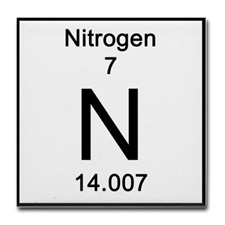
What is the number of protons that the element in this image contain?
a)
14
b)
7
c)
15
d)
18
14.
Electrical Energy is transferred to _____ Energy.
a)
Thermal
b)
Solar
c)
Electrical
d)
None
15.
Which of the following is a good conductor of heat?
a)
Metal
b)
Nonmetal
c)
Metalloid
16.
The blue atoms are called 
a)
metals
b)
nonmetals
c)
metalloids
d)
noble gases
17.
The atoms along the staircase are called 
a)
metals
b)
nonmetals
c)
metalloids
d)
noble gases
18.
The atomic number tells you what?
a)
number of electrons
b)
number of protons
c)
number of neutrons
d)
both electrons and protons in an atom.
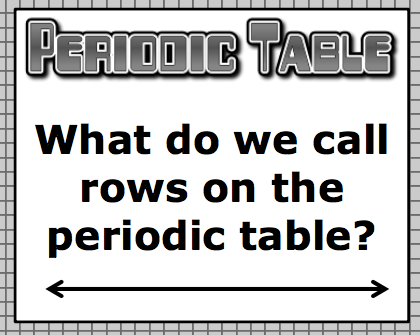
19.
a)
Periods
b)
Groups
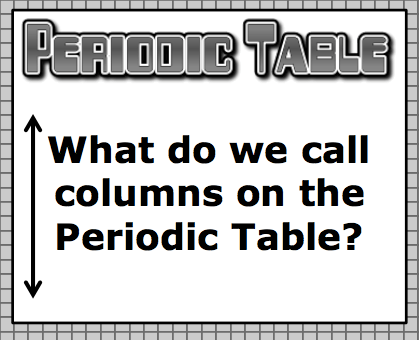
20.
a)
Periods
b)
Groups
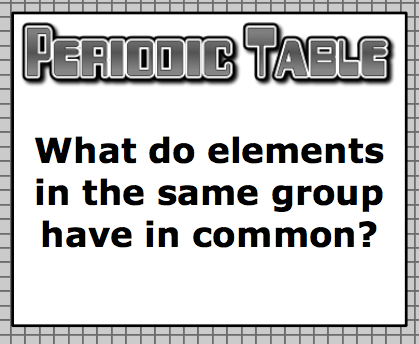
21.
a)
energy levels
b)
valence electrons
c)
protons
d)
neutrons
22.
a)
energy levels
b)
valence electrons
c)
protons
d)
neutrons
23.
a)
Same group
b)
Same period
24.
a)
Group 1
b)
Group 17
c)
Group 2
d)
Group 18
25.
Calcium is most like which of the following?
a)
Barium
b)
Potassium
c)
Cesium
d)
Nitrogen
26.
In this picture, the Electrons are found in which color?
a)
Blue
b)
Red
c)
Green
27.
Which Period would this element be found on just by looking at the shells/levels?
a)
1
b)
2
c)
3
d)
4
28.
How many atoms TOTAL does the compound CO2 have?
a)
1
b)
2
c)
3
d)
4
29.
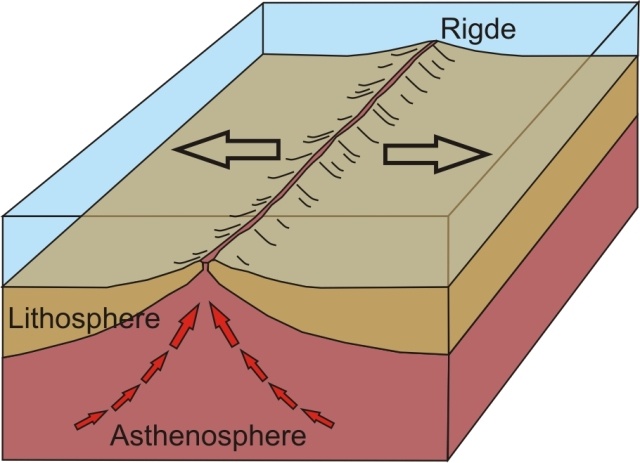
What kind of plate boundary is shown here?
a)
divergent
b)
convergent
c)
transform
d)
subducting
30.
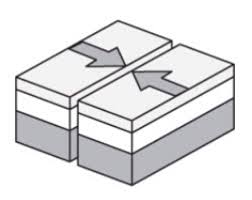
What kind of plate boundary is shown here?
a)
divergent
b)
convergent
c)
transform
d)
submergent
31.
What kind of plate boundary is shown here?
a)
divergent
b)
convergent
c)
transform
d)
strike slip
32.
What geologic feature/event you be most likely to find at a transform boundary?
a)
Earthquakes
b)
Volcanoes
c)
Mountains
d)
Rift Valleys
33.
What geologic feature/event would you most likely to find at a divergent boundary between two pieces of oceanic crust?
a)
Rift Valley
b)
Mid-Ocean Ridge
c)
Island Arc
d)
Flat land
34.
What geologic feature/event would you most likely to find at a divergent boundary between two pieces of continental crust?
a)
Mid-Ocean Ridge
b)
Mountain
c)
Rift Valley
d)
Island Arc
35.
What geologic feature/event would you most likely to find at a convergent boundary between two pieces of continental crust?
a)
Volcano
b)
Mountain
c)
Rift
d)
Island Arc
36.
A subduction zone is formed...
a)
when one tectonic plate sinks below another
b)
at every type of convergent plate boundary
c)
at every type of divergent plate boundary
d)
at transform boundaries
37.
Name the boundary
a)
convergent boundary
b)
divergent boundary
c)
transform boundary
d)
sergent boundary
38.
In which type of boundary do the plates move away from each other?
a)
convergent
b)
normal
c)
divergent
d)
transform
39.
Name the boundary
a)
convergent boundary
b)
divergent boundary
c)
transform boundary
d)
sergent boundary
40.

The Great Rift Valley in Africa and the Mid-Ocean Ridge were all created by this boundary

a)

Divergent

b)

Convergent

c)

Reform

d)

Transform

41.

At which point is potential energy greatest?

a)

W

b)

X

c)

Y

d)

Z

42.

__________ energy is stored energy.

a)

Potential

b)

Kinetic

c)

Force

d)

Gravity

43.

The faster an object moves, the ________ kinetic energy it has.

a)

more

b)

less

44.

Energy in motion is ____________ energy.

a)

Potential

b)

Energy

c)

Kinetic

d)

Friction

45.
What subatomic particle(s) would be found orbiting the nucleus?
a)
Neutrons only
b)
Electrons only
c)
Protons and Neutrons
d)
Protons and Electrons
46.
What is the person doing from 5 seconds to 10 seconds?
a)
Walking 
b)
Running
c)
Standing Still 
d)
Walking Fast
47.
F = mass x ____
a)
force
b)
velocity
c)
acceleration
48.
What is the net force?
a)
17 N Right
b)
3 N Right
c)
3 N Left
d)
17 N Left
49.
What is the acceleration of a 50 kg object pushed with a force of 500 newtons?
a)
100 m/s2
b)
25,000 m/s2
c)
10 m/s2
d)
25 m/s2
50.
Net force?
a)
6 N to the left
b)
0 N
c)
3 N to the left
d)
6 N to the right
51.
The number of Na's in Na₂CO₃
a)
1
b)
2
c)
3
d)
6
52.
How many Elements are in the compound C2H8O ?
a)
2
b)
1
c)
3
d)
0
53.
How many total atoms are in the compound C2H8O ?
a)
11
b)
2
c)
8
d)
1
54.
How many Aluminum are in Al2O3?
a)
3
b)
2
c)
5
55.

When an unbalanced force acts on an object, the force ______________________.

a)

changes the motion of the object

b)

is cancelled by another force

c)

does not change the motion of an object

d)

is equal to the weight of the object

56.

When two equal forces act in opposite directions on an object, they are called ______________________.

a)

frictional force

b)

balanced force

c)

centripetal force

d)

gravitational force

57.
"For every action, there is an equal and opposite reaction."
a)
Newton's 1st Law
b)
Newton's 2nd Law
c)
Newton's 3rd Law
d)
Newton's 4th Law
58.
Which of these is a result of a chemical change?
a)
A mixture
b)
A solution
c)
A new substance
d)
Melting or freezing
59.
Is mold growing on cheese a physical or chemical change?
a)
Physical 
b)
Chemical
60.

Which of the following IS a physical change?

a)

Getting a haircut

b)

Rusty metal

c)

sour milk

d)

A compound

61.

Which of the following is a chemical reaction that takes place in the body?

a)

moving your arms up and down

b)

acid in the stomach breaking down food

c)

grinding food with your teeth

d)

cutting your hair

62.
What is speed?
a)
how far you go
b)
how much distance is covered over a period of time
c)
how fast you accelerate
d)
the change in the location of a object
63.
What is the formula to calculate speed?
a)
Speed = time/distance
b)
Speed = distance/time
c)
Speed = distance x time
d)
Speed = time x distance
64.
A runner races in the 100 meter dash.  It takes her 10 seconds to finish.  What is her average speed?
a)
10 m/s
b)
1000 m/s
c)
100 seconds
d)
10 seconds
65.
What is velocity?
a)
the quickness of an object
b)
the location of an object
c)
acceleration
d)
speed in a specific direction
66.
Which is an example of VELOCITY?
a)
A dog running at 3 m/s
b)
A deer sprinting at 4 m/s
c)
A migrating bird headed south for the winter at 3 m/s
d)
A person not moving at all
67.
Which of the following is a unit for acceleration?
a)
km/s
b)
m/s2
c)
mi/hr
d)
ft
68.
When a car goes around a corner at 20 mph, why do we say it  accelerates?
a)
The car is accelerating because of the velocity is constant
b)
The car accelerates because it's going 20 mph
c)
Cars always accelerate when they are in motion
d)
The car is accelerating because it's changing direction
69.
Acceleration can be classified as _______________
a)
Speeding up
b)
Slowing Down
c)
Changing directions
d)
All of the above
70.
Which two groups on the Periodic Table are the MOST reactive?
a)
Group 1 and Group 17
b)
Group 2 and Group 16
c)
Group 13 and Group 15
d)
Group 17 and Group 18
71.
What determines the reactivity of an element?
a)
Size of its nucleus
b)
Number of total electrons
c)
Number of valence electrons
d)
Number of shells
72.
What is a PUSH or PULL of an object?
a)
Motion
b)
Force
c)
Friction
d)
Gravity
73.
a copper penny turning greenish after a few years.
a)
Chemical Change
b)
Physical Change
74.
Which of the following causes Earth's tectonic plates to move?
a)
Energy from the Sun
b)
Magnetic Pole Reversal
c)
Convection currents in the mantle
d)
Faults in Mountain Ranges
75.
What are the two types of crust
a)
continental and oceanic
b)
ocean and upper
c)
lower and upper
d)
pizza and subway
76.
The San Andreas Fault in California is an example of a ________.
a)
divergent boundary
b)
convergent boundary
c)
transform fault
d)
subduction zone
77.

Volcanoes would most likely be found at what type of boundary?

a)

convergent

b)

divergent

c)

transform

78.

Match the description to the graph:

"The car is coming back."

a)
b)
c)
d)
79.

Choose the graph that matches the scenario. Tom walked slowly along the road to school, stopped to look at his watch, realized he was late, and then started running.

a)
b)
c)
d)
80.

Choose the graph that matches the scenario. Tom walked to the store at the end of his street, bought a newspaper, and then ran all the way back.

a)
b)
c)
d)
81.
Name group 18 on the periodic table.
a)
alkali metals
b)
alkaline earth metals
c)
transition metals
d)
noble gases
82.
Which group of the periodic table is composed of inert (not reactive)  gases?
a)
alkali metals
b)
alkaline earth metals
c)
halogens
d)
noble gases
83.
How many electrons does an Iodine atom have?
a)
53
b)
126
c)
73
d)
179
84.
How many neutrons does an Oxygen atom have?
a)
8
b)
16
c)
24
d)
7.999
85.

How many neutrons are in Beryllium?

a)

4

b)

9

c)

5

d)

2

86.

How many total protons, neutrons, and electrons does Lithium have?

a)

p:3 + n:3+ e:3 = 9

b)

p:3 + n:4 + e:3 = 10

c)

p:3 + n:7 + e:3 = 13

d)

p:3 + n:4 + e:7 =14

87.
What is the speed of an object that travels 60 meters in 4 seconds?
a)
240 m/s
b)
15 m/s
c)
0.067 m/s
d)
15 mph
88.
What is the equation to calculate time?
a)
time = speed/distance
b)
time = distance/speed 
c)
time = speed x distance 
d)
time = distance x speed
89.
Dave runs a 400 m race with a speed of 4 m/s. What time will it take him to finish the race?
a)
400 minutes
b)
100 minutes
c)
100 seconds 
d)
.25 seconds 
90.
Frank has a paper clip. It has a mass of 9g and a volume of 3cm3. What is its density?
a)
3 g/cm3
b)
1/3 g/cm3
c)
27 g/cm3
d)
39 g/cm3
91.
What is the formula for density?
a)
density = mass x volume
b)
density = mass / volume
c)
density = mass + volume
d)
density = mass - volume
92.
How many O's are in Al₂(SO₄)₃
a)
4
b)
12
c)
7
d)
24
93.

How many total atoms are in Al₂(SO₄)₃?

a)

7

b)

17

c)

10

d)

24