
 Worksheets
Matter and its Interactions - Unit Test #2 Review
Total questions: 78
Worksheet time: 55mins


What is made up of two or more elements that are chemically combined?
Element
Mixture
Compound
Solids
Na2CO3
What happens when elements combine chemically?
All elements retain their original properties
New properties are formed
Only metals retain their original properties
New elements are formed
Which of the following is a chemical formula?
Ca
Cl (lower case "L")
CaCl2
C
H2O
Water and rubbing alcohol may be separated from each other through using...
a filter funnel
a sieve
an evaporating basin
a distillation
Two or more substances mingled together, but not chemically combined are known as a __________
element
compound
distillate
mixture
The separation technique that involves heating a solution until the liquid changes into a gaseous state, leaving behind a solid is known as ____________
decanting
evaporation
loading
chromatography
In a coffee machine, the ground coffee is separated from the coffee solution by using..
sand paper
filter paper
toilet paper
tissue paper
Which of the following terms identifies the change from a liquid to gas?
Evaporation
Condensation
Deposition
Sublimation
Which of the following terms identifies the change from a liquid to solid?
Melting
Condensation
Evaporation
Freezing
Phase change from a liquid to a gas
evaporation
freezing
sublimation
melting
What is the boiling point of water (in degrees Celsius)
0
32
100
212
What is the freezing point of water (in degrees Celsius)
0
32
100
212
What is the melting point of water (in degrees Celsius)
0
32
100
212

Between what two letters is the substance completely solid?
Between D & E
Between E & F
Between A & B
Between B & C
Between C & D
Between what two letters is the substance melting?
Between D & E
Between E & F
Between A & B
Between B & C
Between C & D
Between what two letters is the substance completely liquid?
Between D & E
Between E & F
Between A & B
Between B & C
Between C & D
Between what two letters is the substance boiling/vaporizing?
Between E & F
Between D & E
Between A & B
Between B & C
Between C & D
Between what two letters is the substance completely a gas?
Between E & F
Between D & E
Between A & B
Between B & C
Between C & D
Every substance has a different melting point and boiling point
True
False
Every substance melts at 0oC and boils at 100oC
True
False
Why doesn't the temperature increase when a substance is going through a phase change?
Actually, It does
Because phase changes are endothermic
The heat is turned off at these points
All of the energy is used to break bonds when heat is being added and when heat is being removed, the bonds are reforming
Which of the following best describes exothermic reactions?
They never release heat.
They always release heat.
They never occur spontaneously.
They always occur spontaneously.
Which change of phase is exothermic?
solid to liquid
gas to liquid
solid to gas
liquid to gas
Which change of phase is endothermic?
liquid to solid
liquid to gas
gas to solid
gas to liquid


An example of a synthetic material is _____________.
plastic
organic cotton
coal
silk
A synthetic material is a product made __________ and changed ________________.
by nature, chemically
by nature, only physically
by man, chemically
by man, only physically
Which of the following is an example of a natural material?
plastic
nylon
kevlar
cotton
Which of the following would be considered a natural resource?
rock
steel
glass
concrete
Why does society create synthetic materials?
Needs
Value
Desires
All of the above
What is a synthetic material?
Any material that is man made
Any material that is only made from natural resources
Any material that is made of recycled materials
Any material that is found in nature.
What is a synthetic material?
Any material that is man made
Any material that is only made from natural resources
Any material that is made of recycled materials
Any material that is found in nature.
Which word means the same thing as synthetic?
real
artificial
natural
true
Which of the following is an example of a natural material?
plastic
nylon
syngas
cotton
Which is NOT a benefit of synthetic products?
pests don't like it as much
more biodegradable
more durable
stronger
True or False: Synthetic materials are never made from natural resources
True
False
Which changes MUST happen for elements to become a compound?
elements are heated
a gas becomes a liquid
elements dissolve in water
chemical bonds form between atoms.
Water (H2O), is not found on the periodic table because water is a...
atom
liquid
mixture
compound
When the elements copper (Cu) and oxygen (O) chemically combine, they form...
an ion
a gas
a compound
a mixture

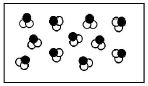
This image is a model of...
an element
a compound
a homogenous mixture
a heterogeneous mixture

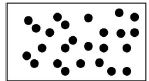
This picture is a model of a...
element
compound
homogeneous mixture
heterogeneous mixture
made up of?
Which is a form of heterogeneous mixture?
gravel and water
sugar and water
powdered milk and water
powdered coffee and water
When sand and pebbles are mixed, they are best separated through the use of _________.
decantation
filtration
manual separation
magnetic separation
Which of the following mixtures may be separated using filtration?
oil and water
salt from salt water
sand and iron fillings
coconut milk from grated coconut fruit
Salt is dissolved in water. How can you separate the salt from water?
add more salt
filter the water
dispose the water
boil the water and let it evaporate

