wayground logo

Free Printable Worksheets

Font size

S
M
L
XL
Worksheets

Year 12 OCR Biology Revision Quiz

Total questions: 88

Worksheet time: 1hrs 16mins

Name
Class
Date
1.
What is the function of the mitochondria?
a)
Pack and ship proteins
b)
Make proteins
c)
Make energy (ATP)
d)
Removes waste
2.
What organelle is labeled with "D"?
a)
Mitochondria
b)
Golgi Apparatus
c)
Nucleus
d)
Endoplasmic Reticulum
3.
What organelle is labeled with "A"?
a)
Mitochondria
b)
Golgi Apparatus
c)
Nucleus
d)
Endoplasmic Reticulum
4.
What organelle is labeled with "B"?
a)
Mitochondria
b)
Golgi Apparatus
c)
Nucleus
d)
Endoplasmic Reticulum
5.
I am the "mail room" and aid in packaging and shipping proteins and nutrients. Who am I?
a)
Golgi Apparatus
b)
ER
c)
Lysosome
d)
Chloroplast
6.
Which types of organisms are Prokaryotes?
a)
Animals
b)
Plants
c)
Fungi
d)
Bacteria
7.
What is the difference between rough and smooth ER?
a)
There is no difference.
b)
Plants have rough ER, animals have smooth ER.
c)
What type of injuries the Doctors treat.
d)
Rough has ribosomes, smooth does not.
8.
Find the total magnification: 
Eyepiece = 10X 
Objective lens = 55X
 
a)
10x
b)
55x
c)
65x
d)
550x
9.

A specimen appears 1mm

under a light microscope at a

magnification of x1500.

What is its actual length?

a)

0.0006mm

b)

0.0007mm

c)

1500mm

d)

0.7μm

10.

If a specimen was 0.008mm long, and it was magnified 1,400 times, what would its magnified length be?

a)

10mm

b)

11.2mm

c)

17500mm

d)

5.7nm

11.

Which of the following would impact a chemical's ability to enter through the cell membrane?

a)

size

b)

polarity (charges it has)

c)

concentration

d)

A + C

e)

A, B + C

12.

The organic macromolecule that is the LEAST likely to assist in deciding what goes in and what goes out of a cell is the

a)

nucleic acids

b)

carbohydrates

c)

proteins

d)

lipids

13.

A possible function of C as shown on the model above could be which of the following?

a)

To make the membrane less liquid

b)

To act as a cell surface marker

c)

To attract water

d)

To act as a protein channel

14.

Which of the following enters the cell by active transport?

a)

Glucose

b)

Water

c)

Lactose

d)

Potassium ion

15.

The tails of a phospholipid are…

a)

Hydrophobic

b)

Hydrophilic

16.

What can increase fluidity in cell membranes?

a)

Proteins

b)

Cholesterol

c)

Saturated fatty acids

d)

Glucose

17.
Which isomer of glucose is this?
a)
Beta glucose
b)
Alpha glucose
c)
Neither
18.
Which isomer of glucose is this?
a)
Beta glucose
b)
Alpha glucose
c)
Neither
19.
Which type of reaction joins monomers together?
a)
Hydrolysis
b)
Condensation
c)
Glycosidic
d)
Peptide
20.
Which of these is not a disaccharide?
a)
Maltose
b)

Galactose

c)
Sucrose
d)
Lactose
21.
Which two monosaccharaides is sucrose made from? 
a)
1 glucose and 1 galactose
b)
2 glucose molecules
c)
1 maltose and 1 glucose
d)
1 glucose and 1 fructose
22.
What is the name of the bond that forms from a condensation reaction of two monosaccharaides?
a)
Ester
b)
Peptide
c)
Glycosidic
d)
Phosphodiester
23.
Which two polysaccharides contains 1,6 glycosidic bonds?
a)
Amylose and Amylopectin
b)
Amylopectin and Glycogen
c)
Cellulose and Glycogen
d)
Glycogen and Amylose
24.
What is the test for starch?
a)
Benedict's
b)
Iodine
c)
Biuret
d)
Bernard's
25.
Which type of bond is found in lipids?
a)
Glycosydic
b)
Ester
c)
Peptide
26.
How many fatty acid tails do phospholipids have?
a)
3
b)
1
c)
2
d)
4
27.
Which of these bonds is not found in proteins
a)
Peptide
b)
Disulphide
c)
Hydrogen
d)
Sulphate
28.
The Biuret test is for which group and what colour is a positive result?
a)
Protein, Blue
b)
Sugar, Purple
c)
Sugar, Blue
d)
Protein, Purple
29.
Which of these is the correct equation for calculating an Rf value?
a)
Distance moved by spot/ distance moved by baseline
b)
Distance moved by solvent/Distance moved by spot
c)
Distance moved by spot/ distance moved by solvent
d)
Distance moved by baseline/distance moved by spot
30.
Capillary action is the result of adhesion. Which aspect of water is responsible for this?
a)
Nonpolar covalent bonds that enable water to dissolve other substances
b)
Polar covalent bonds that join molecules of water to other substances
c)
Hydrogen bonds between water and another substance
d)
Ionic bonds that enable electrons to flow through water and into another substance
31.
Which of the following properties of water enables it to move from the roots to the leaves of plants?
a)
Water expands as it freezes.
b)
Water is an excellent solvent.
c)
Water exhibits cohesive behavior.
d)
Water moderates temperature.
32.
Large bodies of water do not quickly fluctuate in temperature. Why?
a)
Water is a solvent.
b)
Water has a high heat capacity.
c)
Water acts as a buffer.
d)
Water is non-polar.
33.
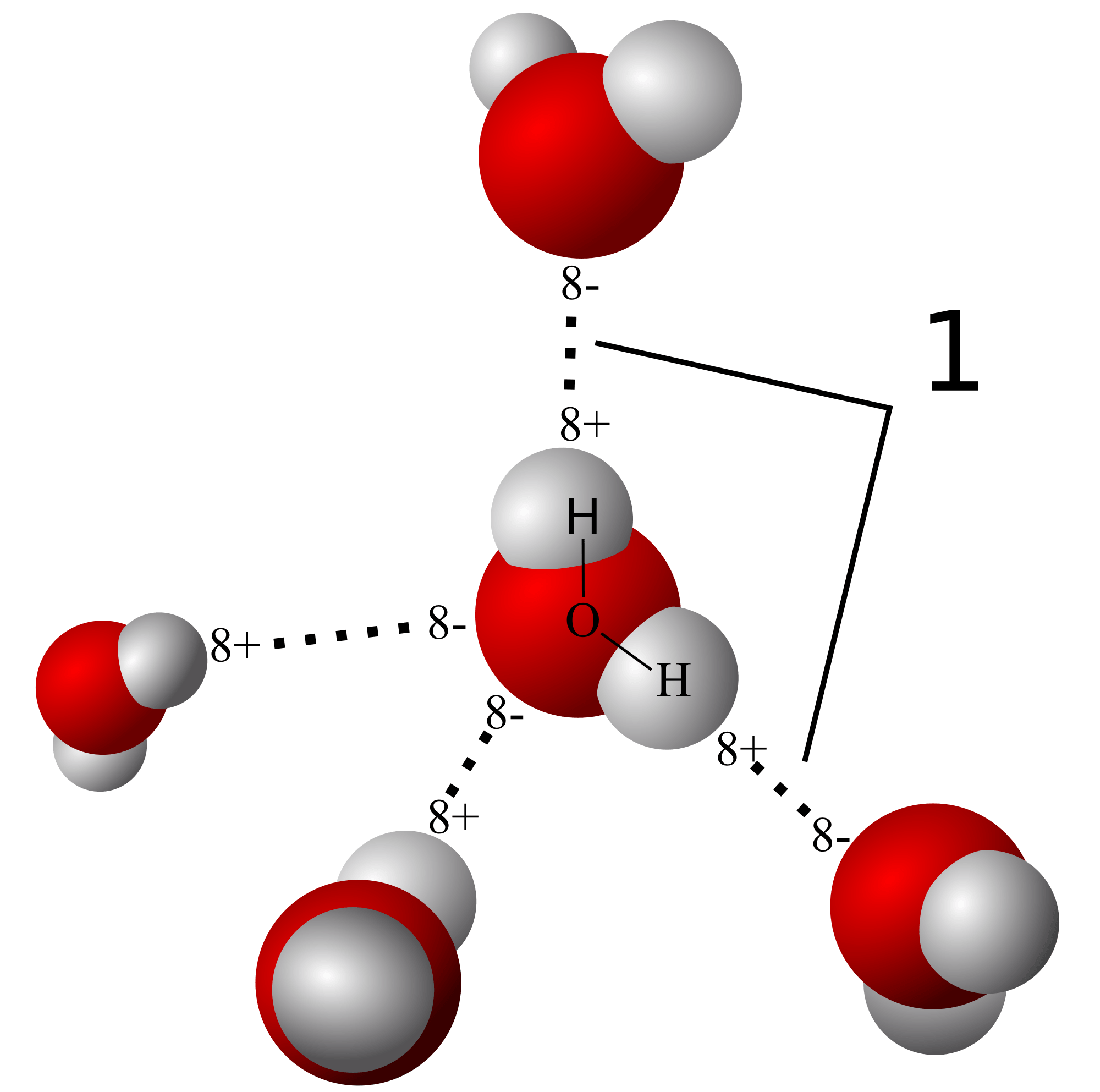
Why can water have no net charge but have slight charges in different parts of the molecule?
a)
The oxygen end is slightly negative and the hydrogen end is slightly positive
b)
The hydrogen end is slightly negative and the oxygen end is slightly positive
c)
The hydrogen and oxygen ends change in polarity
d)
Because it is hydrophobic
34.
Attractions between water molecules are called
a)
Covalent bonds
b)
Ionic bonds
c)
Polar bonds
d)
Hydrogen bonds
35.
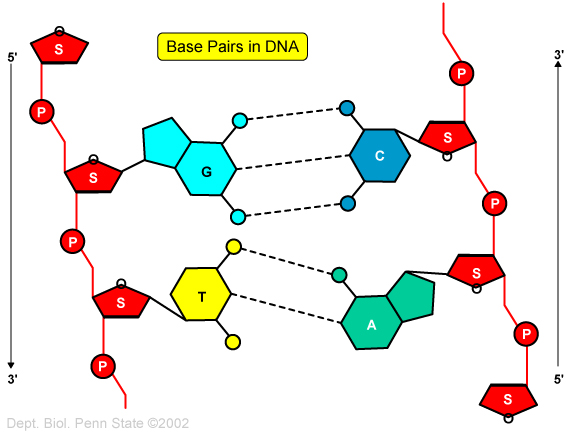
In a molecule of double-stranded DNA, the amount of Adenine present is always equal to the amount of
a)
cytosine
b)
guanine
c)
thymine
d)
uracil
36.
Guanine bonds with ______________.
a)
Adenine
b)
Guanine
c)
Cytosine
d)
Thymine
37.
Which 2 molecules form the sides (backbone) of the DNA ladder?
a)
deoxyribose sugar and adenine
b)
deoxyribose sugar and a hydrogen bond
c)
deoxyribose sugar and the nucleus
d)
deoxyribose sugar and phosphate
38.
Nitrogenous bases are joined by which type of bond?
a)
polar bonds
b)
ionic bonds
c)
covalent bonds
d)
hydrogen bonds
39.
The enzyme that unzips the DNA to prepare for replication
a)
helicase
b)
replicase
c)
polymerase
d)
synthase
40.
Enzymes are capable of increasing the rate of a chemical reaction within a living cell.  Enzymes accomplish this through which of the following means?
a)
reducing the number of products   
b)
reducing the activation energy
c)
increasing the temperature of the cell
d)
increasing the concentration of reactants 
41.
Each enzyme only has 1 substrate that will fit its active site.  What is this called?
a)
reusable
b)
catalyst
c)
specific
d)
fragile
42.
Which of the following conclusions can be drawn from this graph?
a)
The optimum pH of the enzyme is 6.6.
b)
The optimum pH of the enzyme is 5.8
c)
The enzyme’s activity increases as pH increases 5.0 to 9.0
d)
The enzyme’s activity is greater around pH of 8.0 .
43.
Which of the following are features of the alveoli that adapt them to gas exchange?
I. High surface area
II. Thin walls
III. Dry surfaces
a)
I and II only
b)
I only
c)
II and III
d)
I, II and III
44.
What gas diffuses out of a leaf?
a)
oxygen and water vapour
b)
carbon dioxide and water vapour
45.
Which is the correct order of structures that air passes through?
a)
Trachea --> bronchi --> bronchioles --> alveoli
b)
Bronchi ---> trachea--> bronchioles --> alveoli
c)
Bronchioles --> bronchi --> trachea --> alveoli
d)
Trachea --> bronchioles --? bronchi --> alveoli
46.
In Insects these branch out like the tributaries of a river to deliver oxygen
a)
tracheal tubes
b)
wings
c)
filter feeders
d)
circulation 
47.
Tiny holes in the side of an insect (oxygen in, carbon dioxide out)
a)
gills
b)
spiracles
c)
crop
d)
nerve net 
48.
the three parts of a gill
a)
filament, lamellae, gill arch
b)
filament, lamellae, operculum
c)
surface area, filaments, gill
49.

What vein takes blood back into the left atrium

a)

pulmonary vein

b)

vena cava

c)

renal vein

d)

coronary vein

50.

which artery returns blood to the lungs?

a)

pulmonary artery

b)

aorta

c)

hepatic artery

d)

vena cava

51.

name the part of the heart that starts every heart beat

a)

av node

b)

sa node

c)

purkyne fibres

d)

bundle of His

52.

which part of the heart carries the nervous impulses from the apex up the ventricular walls

a)

bundle of his

b)

sa node

c)

av node

d)

purkyne fibres

53.

during which phase of the cardiac cycle are the AV valves closed and the semilunar valves are open

a)

diastole

b)

atrial diastole

c)

ventricular systole

d)

atrial systole

54.

This is a normal ECG trace, during which phase is ventricular systole occuring?

a)

P wave

b)

QRS complex

c)

T wave

d)

recovery wave

55.

what condition is the top trace showing

a)

ventricular fibrillation

b)

cardiac arrest

c)

myocardial infarction

d)

arhythmia

56.

What pathway of water through the roots uses the cytoplasm of every cell

a)

symplastic

b)

apoplastic

c)

vacuolar

d)

osmosis

57.

Which water pathway in the roots does the Casparian Strip block

a)

osmosis

b)

apoplastic

c)

symplastic

d)

vacuolar

58.

the ions involved in the active loading process are

a)

Ca2+

b)

H+

c)

Mg2+

d)

Cl-

59.

Lignin in the xylem does what of the following

a)

strengthens the stem

b)

makes the xylem waterproof

c)

kills the xylem cells

d)

helps with adhesion of water molecules

60.

the link between companion cells and sieve tube cells is by

a)

plasmodesmata

b)

cross bridge

c)

pili

d)

glycoproteins

61.
Mosquitoes and Ticks are examples of organisms that can spread disease.  These types of organisms are refereed to as?
a)
Vectors
b)
Fungi
c)
Pathogens
62.
Athlete's foot is an example of this pathogen
a)
Bacteria
b)
Virus
c)
Fungus
d)
Protozoan
63.
 is a microscopic organism, and is able to multiply only within the living cells of a host.
a)
bacteria
b)
virus
c)
parasite
d)
fungus
64.

What type of disease is tobacco mosaic?

a)

Fungal

b)

Viral

c)

Bacterial

d)

Deficiency

65.
Which of the following are ways that pathogens can spread?
a)
direct contact (hand shakes, high fives, hugs, kissing etc.)
b)
indirect contact (sitting at a desk after someone else has, touching a door knob or railing after someone else had etc)
c)
Sharing food, drink or personal items 
d)
All of the above 
66.

__________ is typically the first response the body's immune system can have to an invader or injury.

a)

inflammation

b)

lymphocyte

c)

immune system

d)

fungi

67.

True or False: Vaccines help strengthen immune systems by introducing a small amount of a pathogen into our bodies so that we can build immunity in the form of antibodies.

a)

True

b)

False

68.
what does cell mediated immunity NOT involve 
a)
antibodies
b)
t cells
69.

Fluid of the immune system that circulates through the body:

a)

blood

b)

GALT

c)

phagocytes

d)

lymph

70.

A phagocytic white blood cell that becomes a macrophage once it leaves the blood and enters tissue.

a)

monocyte

b)

neutrophil

c)

lymphocyte

d)

eosinophil

71.

Which type of lymphocyte is involved in cell-mediated immunity?

a)

C-lymphocyte

b)

B-lymphocyte

c)

T-lymphocyte

d)

Plasma cell

72.

Which type of lymphocyte is involved in Humoral immunity?

a)

B-cell

b)

T-Cell

c)

T- lymphocyte

d)

B-lymphocyte

73.
What is the first phase of Mitosis?
a)
Prophase
b)
Metaphase
c)
Anaphase
d)
Telophase
74.
What phase of mitosis is occuring in the picture?
a)
Prophase
b)
Metaphase
c)
Cytokinesis
d)
Telophase
75.
What phase of mitosis is pictured?
a)
Metaphase
b)
Telophase
c)
Prophase
d)
Anaphase
76.
Which phase comes NEXT?
a)
prophase
b)
metaphase
c)
anaphase
d)
telophase
77.
These structures pull the spindle fibers and attached chromosomes to opposite ends of the cell.
a)
Spindle fiber
b)
Centriole
c)
Nucleus
d)
Centromere
78.
Structure (b) is a ____.
a)
chromosome
b)
chromatid
c)
centromere
79.
What is the difference between biotic and abiotic?
a)
Biotic are non-living things
b)
Abiotic are living organisms
c)
Biotic is life,
Abiotic is non-living
d)
Biotic is non-living, Abiotic is living
80.
Which option is abiotic?
a)
Plants
b)
Bacteria
c)
Water
d)
Fungi
81.
Which option is biotic?
a)
Plants
b)
Air
c)
Water
d)
Energy
82.
All living and nonliving things in an environment and the many ways they interact are called ______
a)
ecosystem
b)
community
83.
Which domain is capable of living in extreme environments like hot springs, geysers, or very salty waters?
a)
Bacteria
b)
Archaea
c)
Eukarya
84.
Which domain includes all animals and plants?
a)
Archaea
b)
Eukarya
c)
Bacteria
85.
Which two kingdoms are entirely multicellular?
a)
Animalia and Plantae
b)
Animalia and Protista
c)
Protista and Plantae
86.
Organisms whose cells have NO nucleus are classified as...
a)
Eukaryotic
b)
Prokaryotic
c)
Dead
87.
What is the genus name here:
Canis lupus
a)
Canis
b)
lupus
88.
Choose the correct way to write the scientific name for humans:
a)
homo sapiens
b)
Homosapiens
c)
Homo sapiens
d)
Homo Sapiens