Wayground logo

Free Printable Worksheets

Font size

S
M
L
XL
Worksheets

unit 3 review

Total questions: 101

Worksheet time: 1hrs 6mins
Name
Class
Date
1.
Succession that occurs in an area with NO SOIL
a)
ecological succession 
b)
primary succession 
c)
secondary succession
d)
pioneer speciles
2.
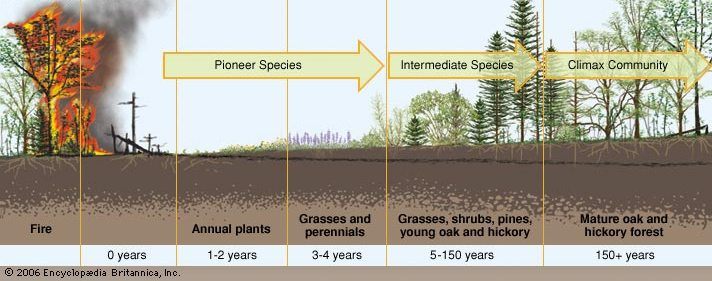
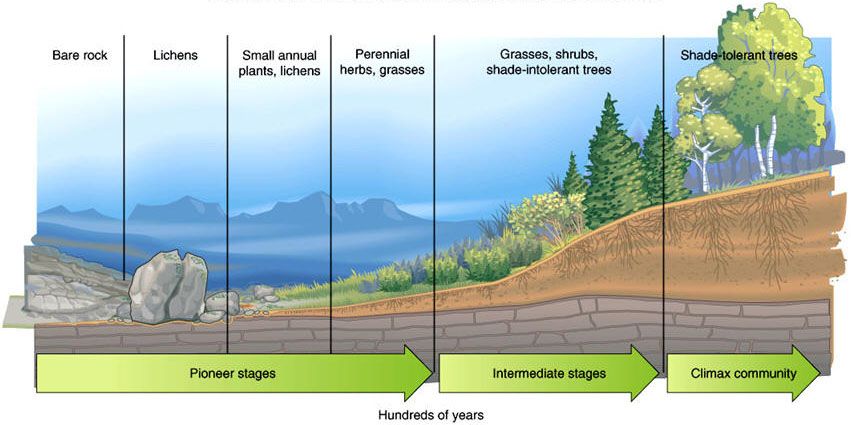
The picture shows what type of succession?
a)
primary
b)
secondary
c)
tertiary
d)
quadanary
3.
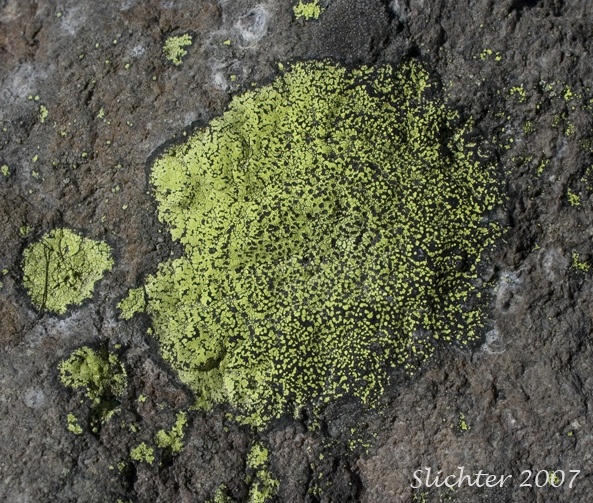
Starts with BARE ROCK followed by lichen
a)
primary succession 
b)
secondary succession
c)
both types of succession
4.
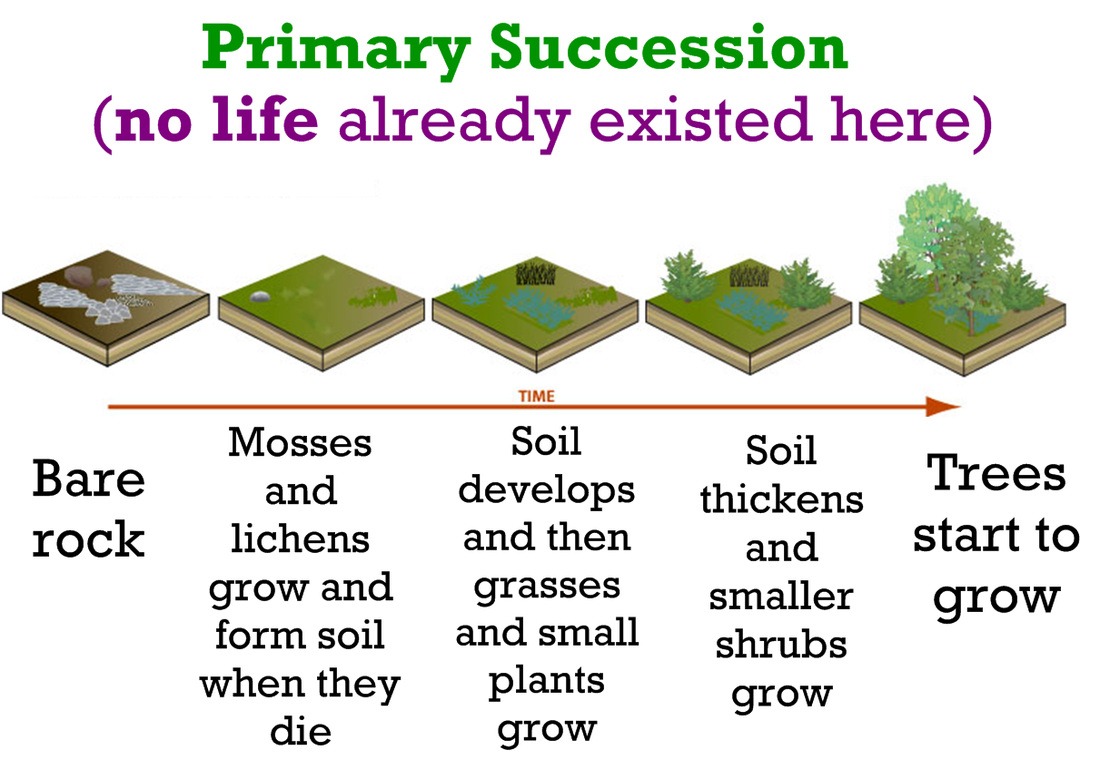
The picture shows what type of succession?
a)
primary
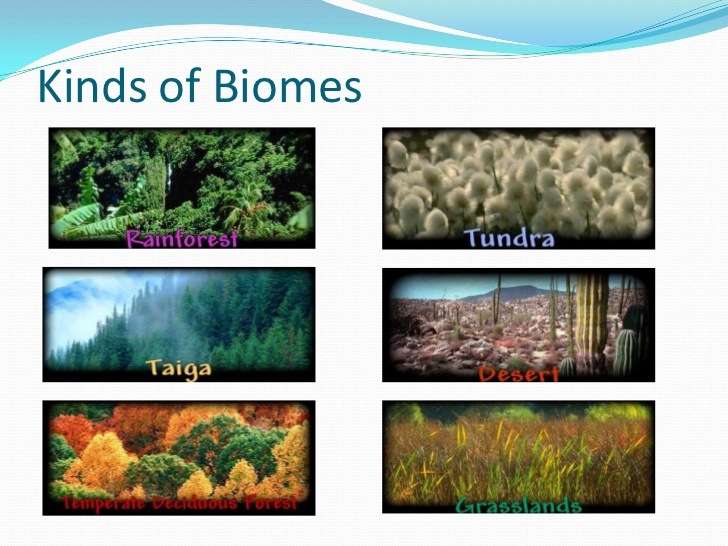
b)
secondary
c)
tertiary
d)
quadanary
5.
How do lichens contribute to primary succession?
a)
Lichens decompose organic matter from animals and plants
b)
Lichens begin to break down rock to form soil
c)
Lichens are nitrogen fixing bacteria
d)
Lichens convert carbohydrates into fossil fuels.
6.
Which type of succession occurs over time?
a)
primary succession 
b)
secondary succession
c)
both types of succession
7.
Reaches a climax community quicker because soil is already present
a)
primary succession 
b)
secondary succession
c)
both types of succession
8.
What is the first species you will see after a primary succession? (in picture)
a)
lichens
b)
grasses
c)
small plants
9.
What are the pioneer species for secondary succession?
a)
lichen
b)
moss
c)
grass
d)
algae
10.
Secondary succession occurs where an ecosystem has previously existed. 
a)
false
b)
true
11.
The process by which a new community forms where no community lived before 
a)
resource
b)
invasive (non- native) species
c)
primary succession
d)
competition
12.
After a volcanic eruption, lava covers the land. What is the order that plants grow to repopulate the area?
a)
Lichens → Shrubs → Grasses → Trees
b)
Lichens → tree → shrubs→Grasses
c)
Grasses → Lichens → Shrubs → Trees
d)
Lichens → Grasses → Shrubs → Trees
13.
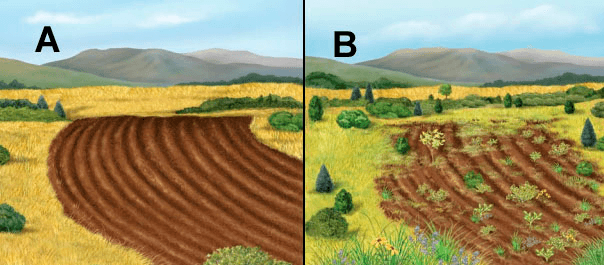
What type of succession is shown going from figure A to figure B?
a)
primary succession
b)
ecological succession
c)
secondary succession
d)
intermediate
14.
What does the final picture (#8) show?
a)
pioneer species
b)
a climax community
c)
only biotic factors
d)
only abiotic factors
15.
After a forest fire, an ecosystem would start regrowth through -
a)
primary succession
b)
secondary succession
c)
climax community
d)
limiting factors
16.
What could happen to the water table if all the wells start pumping at once?
a)
the water table may fall
b)
the water table may rise
c)
the boat will sink
d)
the wells will overflow
17.
Porosity is the space between particles of soil.  This is different from permeability which is the ability of water to flow through the soil.  What kind of soil will retain, or hold, water most tightly?
a)
sandy soils
b)
clay soils
18.
Permeability is the ability of a liquid to flow through a solid.  It is different than porosity because when pores are isolated they are still not permeable.  The word IMpermeable means NOT permeable.  Which of the three soil samples shown is most impermeable?
a)
sand
b)
sandy loam
c)
clay
19.
The use of pesticides and fertilizers must be carefully monitored 
because of the effect they can have on the environment. 
Which of the following is a possible negative effect of the use 
of these chemicals on the environment?
a)
Runoff carries these chemicals into lakes and streams.
b)
Theses chemicals cannot be purchased in large bulk.
c)

These chemicals are expensive to produce.
d)
Storage space for these chemicals is limited.
20.
Humans affect watersheds and wetlands by :
a)
polluting
b)
destroying
c)
overbuilding
d)
all of the above
21.
Rapid growth of algae in a pond is a result of what?
a)
loss of habitat
b)
flooding
c)
excess nutrients from fertilizer runoff
d)
clogged river tributaries
22.
Water from precipitation that flows into a stream, which then flows into a lake, river or ocean is what?
a)
groundwater
b)
surface water
c)
aquifer
d)
subsidence
23.
An area of land where surface water and groundwater drains into a particular body of water, separated from each other by drainage divides-
a)
water table
b)
porosity
c)
watershed
d)
aquifer
24.
The top of the saturation zone-
a)
water table
b)
permeability
c)
watershed
d)
saturation zone
25.
Which is the amount of empty space in a material?
a)
water table
b)
permeable rock
c)
permeability
d)
porosity
26.
Pollutants introduced into surface or groundwater that are without a specific location source is what?
a)
non-point source water pollution
b)
zone of aeration
c)
point source water pollution
d)
surface water
27.
Which is a single identifiable and localized source of water pollution? 
a)
point source water pollution
b)
non-point source water pollution
c)
zone of aeration
d)
surface water
28.
Which is a single identifiable and localized source of water pollution? 
a)
point source water pollution
b)
non-point source water pollution
c)
zone of aeration
d)
surface water
29.
What collects in cracks and pores in underground soil and rock layers?
a)
porosity
b)
runoff
c)
surface water
d)
groundwater 
30.
Weathering involves the movement of rocks and minerals by agents such as water, wind and gravity.
a)
True
b)
False
31.
The process of carrying away weathered bits of rocks is called
a)
weathering
b)
erosion
c)
deposition
32.
The process of moving weathered rock and depositing it in another location is called?
a)
weathering
b)
erosion
c)
deposition
33.
A small stream or other source of flowing water cannot form a canyon?
a)
True
b)
False
34.
The process of slowly breaking rocks into smaller pieces is called
a)
weathering
b)
erosion
c)
deposition
35.
Deposited material at the end of a river is called?
a)
landform
b)
delta
c)
canyon
36.
Glaciers shape and carve away the land beneath them and can drastically reshape the landscape over hundreds or even thousands of years.
a)
True
b)
False
37.
A natural land feature on Earth's surface is called
a)
landform
b)
delta
c)
canyon
38.
Weathering and erosion are the same thing.
a)
True
b)
False
39.
Deltas forming at the mouths of rivers is called?
a)
Weathering
b)
Erosion
c)
Deposition
40.
Deltas forming at the mouths of rivers is called?
a)
Weathering
b)
Erosion
c)
Deposition
41.
Water getting into cracks, freezing, and breaking the rocks or pavement apart is called?
a)
Weathering
b)
Erosion
c)
Deposition
42.
Waves dropping sand on the beach is called?
a)
Weathering
b)
Erosion
c)
Deposition
43.
A mudslide flowing down a steep hill is called?
a)
Weathering
b)
Erosion
c)
Deposition
44.
Rocks at the top of a mountain are smoother than rocks at the bottom of a mountain.
a)
True
b)
False
45.
A crack in a sidewalk is probably caused by root wedging?
a)
True
b)
False
46.
Which biome is characterized by low temperatures and low amounts of rainfall?
a)
tundra
b)
desert
c)
temperate deciduous forest
d)
tropical rain forest
47.
Which biome covers most of the land mass near the Earth's equator?
a)
tundra
b)
desert
c)
grassland
d)
tropical rainforest
48.
Which biome is found on the mountain above the tree line?
a)
grassland
b)
deciduous forest
c)
tundra
d)
tropical forest
49.
Which biome, because of its climate, has the largest number of species of plants and animals?
a)
tundra
b)
desert
c)
tropical rainforest
d)
pine forest
50.
Which type of trees is found in a temperate forest?
a)
deciduous
b)
evergreen
c)
ginko
d)
palm
51.
Which major biome is home to cacti, mesquite, white thorn, pack rats, small reptiles, and coyotes?
a)
desert
b)
taiga
c)
tundra
d)
grassland
52.
What is the main factor that separates the biomes?
a)
Land
b)
Water
c)
Climate
d)
Longitude
53.
You observe earthworms in a microhabitat in your schoolyard. Why are earthworms and other decomposers an essential part of a healthy ecosystem?
a)
Decomposers make resources available to producers by breaking down waste materials.
b)
Decomposers extract energy from sunlight as they break down plant materials, adding returning energy to the system.
54.
A/n ___ consists of all the communities that live in an area and the abiotic features of their environment.
a)
community
b)
population
c)
biome
d)
ecosystem
55.
All the organisms of one species that live in an area are called the ___.
a)
population
b)
ecosystem
c)
biome
d)
community
56.
What factor contributes the most to the sustainability of a habitat?
a)
competition among large predators
b)
large variety of organisms
c)
presence of volcanic rock
d)
absence of bacterial species
57.
Where  does  the energy of most of the ecosystems come from?
a)
Batteries 
b)
Air
c)
Sun
d)
Electricity
58.
Temperature, light, air, water, and soil are all  _____  parts of the environment
a)
alive
b)
biotic 
c)
abiotic
d)
living
59.
A ____________ breaks down waste or dead organisms and recycles nutrients.
a)
consumer
b)
producer
c)
decomposer
d)
omnivore
60.

Functions of animals that help them survive in their environment are —

a)

structural adaptations

b)

modifications

c)

physical characteristics

d)

behavioral adaptations

61.

What is turgor pressure?

a)

when plants don't have enough water

b)

pressure caused by water inside the cell wall

c)

pressure caused by minerals inside the cell membrane

d)

when plants wilt

62.

Plants need turgor pressure to maintain....

a)

rigidity and structure

b)

nutrients and water

c)

sunlight and water

d)

sunlight and structure

63.

The plant wilts when pressure .....

a)

increases

b)

decreases

c)

stays the same

d)

none of the above

64.

The plant reamins rigid when the pressure....

a)

increases

b)

decreases

c)

stays the same

d)

none of the above

65.

Plant growth in response to an EXTERNAL stimuli is ....

a)

turgor pressure

b)

tropism

c)

photosynthesis

d)

all of the above

66.

What is the tropism where plants response is to grow towards light?

a)

gravitropism/geotropism

b)

phototropism

c)

thigotropism

d)

none of the above

67.

What is the tropism where plant responds to external stimiuli of gravity?

a)

gravitropism/geotropism

b)

phototropism

c)

thigotropism

d)

none of the above

68.

What is the tropism where plants respond to external stimulus of touch?

a)

geotropism

b)

phototropism

c)

thigotropism

d)

none of the above

69.

What is the tropism where plants response is to grow towards light?

a)

gravitropism/geotropism

b)

phototropism

c)

thigotropism

d)

none of the above

70.
Which of the following is an organism’s reaction to a change in its surroundings?
a)
response 
b)
distraction
c)
stimulus
d)
development
71.
 A stimulus is ___________
a)
a change in an organisms surroundings.
b)
 process in which organisms grow larger.
c)
a reaction to a change in surroundings
d)
the result of sexual reproduction.
72.
Which of the following responses is a plant growing toward or leaning toward light?
a)
thigmotropism
b)
hydrotropism
c)
phototropism
d)
gravitropism
73.

Plant’s roots grow down, anchoring it into the soil. To what stimulus is the plant responding?

a)

thigmotropism

b)

hydrotropism

c)

phototropism

d)

gravitropism

74.
What term refers to a plant growing or moving away from a stimulus?
a)
Touch
b)
Tropism
c)
Dormancy
d)
Development
75.
A vine plant brushes against a fence and wraps itself around the fence.  To what stimulus is the plant responding? 
a)
phototropism
b)
hydrotropism
c)
thigmotropism
d)
gravitropism
76.
The ___________ is the basic unit of life
a)
organ
b)
cell
c)
atom
d)
tissue
77.
If the environment gets cold, we will often shiver in order to:
a)
keep body temperature the same as the external temperature
b)
decrease body temperature
c)
increase body temperature
d)
regulate blood pressure
78.
The maintenance of an organism’s internal environment is called:
a)
compensating
b)
homeostasis
c)
balancing
d)
routine
79.
chemical made by glands that tell cells to make something or respond in some way.
a)
acid
b)
enzyme
c)
perspiration
d)
hormone
80.

Homeostasis means to

a)

maintain a stable internal environment

b)

eliminate waste

c)

divide cells

d)

make energy using the sun

81.

Photosynthesis is the process that allows an organism to

a)

maintain a stable internal environment

b)

eliminate waste

c)

divide cells

d)

make energy using the sun

82.

To maintain homeostasis, a tree will do this

a)

lose its leaves

b)

absorb the sun

c)

hibernate

d)

shiver

83.
As the season turns from winter to spring, what is the most likely response that a bear's body has to the changing season?
a)
The bear stores more body fat to maintain the necessary body heat and more nutrition because there may be less prey.
b)
The bear produces less fur and begins shedding to allow its body temperature to adjust the warming climates
c)
The bear's fur becomes darker so it is easier to hide from its prey
d)
The bear begins to store food and find shelter for hibernation
84.
Which of the following is an example of an external Stimuli?
a)
Becoming dehydrated and then taking a drink of water
b)
Getting a headache and then taking Excedrin
c)
Having hunger pains and then eating a sandwich
d)
Smelling Pizza and then eating a piece
85.
Which of the following is an example of internal stimuli?
a)
Smelling pizza and then eating a piece of pizza
b)
Seeing ice cream on television and then eating a bowl of ice cream
c)
After working out feeling sore in your legs and then placing ice on the sore spot
d)
After working out seeing a bottle of water and drinking water
86.

A forest fire can have which of the following positive effects?

a)

Provides heat mammals need in colder seasons

b)

Increases annual rainfall by forming more clouds

c)

Clears underbrush to allow new plants to grow

d)

Drives away predators that eat smaller animals

87.

The extremely strong winds associated with a tornado will have the greatest negative effect on which of the following kinds of organisms?

a)

Fish that feed around coral reefs

b)

Smaller mammals that burrow underground

c)

Birds and other animals that use trees for shelter

d)

Organisms that feed on decaying plants and animals

88.

3. Tornadoes can be more damaging than a hurricane to trees in a habitat because tornadoes produce -

a)

more rain.

b)

stronger winds.

c)

thicker clouds.

d)

higher flooding.

89.

Which of the following is an example of how flooding can impact ecosystems?

a)

Burial and uprooting of plants

b)

Removing the leaves from tall trees

c)

Increasing the nutrients in the soil

d)

Preventing plants from photosynthesis

90.

Which of the following is the most likely effect of flooding on an ecosystem?

a)

Nutrients will increase in deeper layers of the soil

b)

Decrease in organisms that reproduce in freshwater.

c)

Land animals will have more habitat available to them.

d)

Increase in organisms that reproduce in fresh water

91.

What is a possible effect of severe beach erosion?

a)

Deltas will increase in size.

b)

Boulders will be carried inland.

c)

Sand bars will form offshore.

d)

Canyons will be created nearby.

92.

Sand bars are large deposits of sand that appear close to the shoreline of a beach. Which of the following processes is responsible for creating sand bars?

a)

Constant light breezes

b)

Wave action and currents

c)

Hurricane precipitation

d)

Aquatic organism activity

93.

What change would most likely be observed in the non-living parts of an ecosystem after a hurricane? A B C D

a)

Taller sand dunes on the beach

b)

Increase in oxygen in the atmosphere

c)

Less sunlight reaching ground level

d)

Higher levels of soil nutrients

94.

In a marsh ecosystem that experiences a hurricane, which of the following would be the most likely effect?

a)

Increase in diversity of organisms due to more competition.

b)

More burrowing animals living in the deeper soil layers

c)

Death of most organisms due to fires from lightning strikes

d)

A loss of plant life from saltwater brought in by storm surge.

95.

From the distinct shapes of sand dunes and their features in a desert, a geologist could most likely determine which of the following?

a)

Direction of the prevailing wind

b)

Daily high and low temperatures

c)

Amount of water nearby

d)

Age of the formations

96.

Which of the following correctly matches a catastrophic weather event with its effects on an ecosystem?

a)

A flood can damage plants with high winds.

b)

A hurricane can kill off plants in deep water.

c)

A thunderstorm’s lightning can start forest fires.

d)

A tornado can move a lot of seawater onto land.

97.

Which catastrophic event would most likely result in trees being knocked over and the disappearance of most of the plants and animals along a narrow path in a forest ecosystem?

a)

A volcanic eruption

b)

A tornado

c)

A flash flood

d)

An earthquake

98.

3. A flood will have a greater effect on a habitat than a heavy rainfall event because a flood -

a)

is followed by strong winds that greatly affect a habitat.

b)

strikes more quickly, not allowing organisms to migrate.

c)

brings salt and other substances that harm plants.

d)

happens more often and lasts much longer

99.

High rains cause the flow in a river to increase. The increase in the river’s flow will most likely have which of the following effects on the environment?

a)

The banks of the river will experience increased erosion.

b)

The river will deposit less material onto its delta.

c)

The path of the river will become more crooked.

d)

The river will dry out completely in a few days.

100.

Tornadoes are catastrophic events that create change in ecosystems in which of the following ways?

a)

Heavy flooding increases areas where trees can grow.

b)

High winds damage areas of important plant life.

c)

Wildfires started by lightning reduce carbon dioxide.

d)

Salt water kills many ground dwelling animals.

101.

Tornadoes can negatively affect an ecosystem when -

a)

the saltwater they bring kills off burrowing insects.

b)

the rise in water level they produce introduces harmful salt.

c)

their strong winds uproot many of the important plants.

d)

they bring higher temperatures favored by birds.