wayground logo

Free Printable Worksheets

Font size

S
M
L
XL
Worksheets

Chemistry review for Alexia

Total questions: 81

Worksheet time: 1hrs 10mins

Name
Class
Date
1.
Which step of the scientific method does this describe?
Design a test of confirm or disprove your hypothesis.
a)
hypothesis
b)
purpose
c)
experiment
d)
conclusion 
2.

Choose the term used to describe a testable explanation of a situation or phenomena.

a)

Theory

b)

Model

c)

Hypothesis

d)

Conclusion

3.
The _______ is the thing you are manipulating or controlling to see the effects of during the experiment. 
a)
Independent Variable
b)
Dependent Variable
c)
Control Group
d)
Experimental Group
4.
What are factors that do NOT change during the experiment? 
a)
Participants 
b)
Experimental Group
c)
Control Group
d)
Constants
5.
What is the thing you are measuring or recording in an experiment? 
a)
Independent Variable
b)
Dependent Variable
c)
Control Group
d)
Constants
6.
Statement: How does the amount of light affect bacteria growth in a pond?
Question: Determine the independent variable. 
a)
bacteria growth 
b)
human mouth
c)
amount of light 
d)
bacteria
7.
Statement: How does the amount of light affect bacteria growth in a pond?
Question: Determine the dependent variable. 
a)
bacteria growth
b)
human mouth 
c)
amount of light 
d)
bacteria
8.
A broad and comprehensive statement of what is thought to be true; it is supported by much evidence.
a)
hypothesis
b)
theory
c)
guess
d)
fact
9.
Kalinda was trying to explain to her friend the difference between a theory and a law in science.  She used the theory of plate tectonics and the law of superposition as examples.  Kalinda explained the difference by using nonscientific language.  Which statement did Kalinda use to correctly describe the difference between a theory and a law in science?
a)
A theory describes a natural event, while a law explains it.
b)
A theory explains a natural event, while a law predicts it.
c)
A theory explains a natural event, while a law describes it.
d)
A theory predicts a natural event, while a law explains it.
10.
Convert 15.34 cm to nm.
a)
4351 nm
b)
1.534 nm
c)
1.534 x 10 ^8 nm
d)
15.34 x 10^5 nm
11.
Complete the statement:
5 cm/min = ______ m/day
(100 cm = 1 m)
a)
72
b)
840
c)
7.2
d)
5,040,000
12.
How many atoms are in 55.8 grams of iron (Fe)?
a)
55.8 atoms
b)
1 atom
c)
1 mole
d)
6.02 x 10²³ atoms
13.
How many grams of Sulfur are there in 2 moles of Sulfur?
a)
64 grams S
b)
6.4 grams S
c)
16 grams S
d)
1.2 x 1024 grams S
14.
Which is the product of these numbers, to the appropriate number of significant digits?
 56.2 x 9.2057 = 
a)
517
b)
517.4
c)
517.36
d)
517.00
15.
Which is the sum of these values, to the appropriate number of significant digits?
17.358 + 3.502 + 20.14 =  
a)
41
b)
41.00
c)
41.000
d)
41.0
16.
Jack has a rock. The rock has a mass of 14g and a volume of 2cm3. What is the density of the rock?
a)
7 mL
b)
7 g/cm3
c)
28 g/cm3
d)
1/7 g/cm3
17.
24.1% of all the isotopes of a an element have a mass of 75.23 amu, 48.7% have a mass of 74.61 amu, and 27.2% have a mass of 75.20 amu.
What is the average mass of this element?
a)
74.92 amu
b)
24.97 amu
c)
75.01 amu
d)
74.51 amu
18.
What does the 1.00794 stand for?
a)
Hydrogen
b)
atomic number
c)
atomic mass
d)
atomic explosion
19.
Atom 1 has Mass=12  Protons=6
Atom 2 has Mass= 14 Electrons=6
Are these atoms isotopes of each other or different elements?
a)
Different Elements - Mg & Si
b)
Different Elements - Ar & Ca
c)
Isotopes of Carbon
d)
Isotopes of Magnesium
20.
Isotopes have different numbers of
a)
protons
b)
neutrons
c)
electron
d)
properties
21.
What is the mass number of this nucleus?
a)
1
b)
3
c)
4
d)
7
22.
What is the molar mass of Fe?
a)
26 g/mole
b)
55.85 g/mole
c)
56 g/mole
d)
6.02 x 10²³ g/mole
23.
How many moles are in 225 g of CO?
a)
28.01 mole
b)
4.82 x 1024 mole
c)
6,302,25 mole
d)
8.03 mole
24.
What is the molar mass of Ca(NO3)2?
a)
164.03 g/mole
b)
228.32 g/mole
c)
150.02 g/mole
d)
218.05 g/mole
25.

How close a measurement is to the true value is called..

a)

Accuracy

b)

Precision

c)

Significant

d)

Estimate

26.
This bullseye demonstrates...
a)
High Accuracy & High Precision
b)
High Accuracy & Low Precision
c)
Low Accuracy & High Precision
d)
Low Accuracy & Low Precision
27.
what is the definition of chemical change?
a)
any change that results in the formation of new chemical substances. 
b)
changing clothes
c)
matter cannot be created or destroyed, only change form
d)
changes affecting the form of a chemical substance, but not its chemical composition.
28.
which one is a chemical property?
a)
odor
b)
combustibility
c)
solubility
d)
all of the above
29.
what is burning?
a)
physical change
b)
physical property
c)
chemical change
d)
chemical property
30.
which one is a physical change?
a)
evaporation
b)
energy
c)
sublimation
d)
evaporation and sublimation
31.
What is a pure substance made of two or more elements that are chemically combined called?
a)
A. element
b)
B. compound     
c)
C. mixture
d)
D. solution
32.
This picture represents which of the following?
a)
Element
b)
Compound
c)
Mixture
33.
This picture represents which of the following?
a)
element
b)
compound
c)
mixture
34.
This picture represents which of the following?
a)
element
b)
compound
c)
mixture
35.
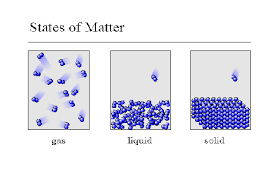
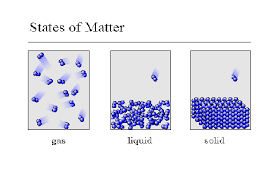
At higher temperatures
a)
particles in an object have less energy
b)
particles in an object move faster
c)
a gas contracts
36.
A gas
a)
has a definite shape but no definite volume
b)
has a definite volume but no definite shape
c)
has fast-moving particles
37.
When the temperature of matter decreases the particles ...
a)
speed up and move farther apart
b)
speed up and move closer together
c)
slow down and move farther apart
d)
slow down and move closer together
38.
Which of the following statements is NOT true of all different types of matter?
a)
They are made of atoms and molecules
b)
The particles are always in motion
c)
The particles always move at the same speed
d)
They are made of particles that are too small to see
39.
What is the difference between a homogenous mixture and a heterogenous mixture?
a)
In a homogenous mixture, the particles are hard to separate out, while in a heterogenous mixture, it is easy to separate  them out.
b)
Homogenous mixtures can be separated using a magnet; however, filtration separates out heterogenous mixtures
c)
Heterogenous mixtures are so well mixed you can't see the elements, while homogeneous mixtures are not well mixed. 
d)
Heterogeneous mixtures are single units, but homogeneous mixtures are made up of 2 or more. 
40.
The image demonstrates what process to separate mixtures?
a)
Distillation
b)
Filtration
c)
Magnetic Attraction
d)
Evaporation
41.
As shown in the picture, this process separates liquids by heating them up to a point where the liquid boils. 
a)
Magnetic attraction
b)
Filtration
c)
Evaporation
d)
Distillation 
42.

Choose the substances that are homogeneous

a)

Sugar

b)

Granola Bar

c)

Cement sidewalk

d)

Iron filling

43.
Which of these grouping of elements could have the characteristic of luster (shiny)?
a)
Metal
b)
Nonmetal
c)
metalloids
d)
Both metals and metalloids
44.
Which of the following is a good conductor of heat?
a)
Metal
b)
Nonmetal
c)
Metalloid
45.
Which of the following properties refers to the ability of metals to be drawn into wires?
a)
A. malleability 
b)
B. compressibility
c)
C. ductility
d)
D. luster
46.
Metals appear to the _______ of the dark ziz-zag line on the periodic table. 
a)
A. right
b)
B. middle
c)
C. left
47.
Nonmetals occur to the ________of the dark zig-zag on the periodic table. 
a)
A. right
b)
B. middle
c)
C. left
48.
What element in Group 1 is not a metal but a nonmetal?
a)
Helium
b)
Lithium
c)
Hydrogen
d)
Oxygen
49.
how were the elements arranged in the early 1800's?
a)
by atomic mass
b)
by atomic number
c)
by name
d)
by date discovered
50.
what is the charge of a metal ions
a)
positive
b)
negative
c)
they do not form ions
d)
neutral
51.
Oxygen is in group 6, what is the charge of an Oxygen ion?
a)
-2
b)
+2
c)
-6
d)
+6
52.
what is the charge of a group 1 ion?
a)
+1
b)
-1
c)
-7
d)
0
53.
lithium reacts with chlorine to form.....
a)
lithium chloride
b)
lithium chlorine
c)
chlorolithium
d)
lithium oxide
54.
the reactivity increases as you go down group 1 because...
a)
electrons are more easily lost
b)
protons are more easily lost
c)
electrons are more easily gained
d)
the atomic mass increases
55.
what is the type of bonding between two group 7 atoms?
a)
covalent
b)
ionic
c)
metallic
d)
halogen
56.
why does chlorine not react with sodium fluoride?
a)
chlorine is a gas
b)
sodium is a reactive metal
c)
fluorine is more reactive that chlorine
d)
chlorine is more reactive than fluorine
57.
the reactivity decreases as you go down group 7 because...
a)
the atoms get heavier
b)
the atoms become solids
c)
harder to gain an electron
d)
more neutrons
58.

A measure of the size of an atom, and is generally defined as the distance from the nucleus to the outermost electron orbit

a)

chemical reactivity

b)

atomic radius

c)

energy levels

d)

orbit

59.
The minimum energy required to remove an electron from the ground state of an atom
a)
electron configuration
b)
energy levels
c)
ionization energy
d)
ionic bond
60.
Which of the following will have a higher electronegativity than arsenic (As)?
a)
Carbon (C)
b)
Neon (Ne)
c)
Antimony (Sb)
d)
Germanium (Ge)
61.

Who developed the quantum theory that said that particles have a wave like motion?

a)

Linus Pauli

b)

Louis deBroglie

c)

J. J. Thompson

d)

Albert Einstein

62.

Who developed the solar system model?

a)

Albert Einstein

b)

Neils Bohr

c)

John Dalton

d)

Democritus

63.

Which particle has essentially no mass in comparison to the size of the atom?

a)

electron

b)

proton

c)

neutron

d)

nucleus

64.

The vertical (up /down) columns are called

a)

groups

b)

periods

c)

series

d)

rows

65.
What is the atomic number of the atom pictured? 
a)
9
b)
10
c)
18
d)
19
66.
What is the element name of the atom pictured? 
a)
Fluorine
b)
Neon
c)
Argon
d)
Potassium
67.
Which scientist conducted experiments using alpha particles and thin gold foil, which later helped him develop his model for the atom? 
a)
Ernest Rutherford
b)
Kneels Bore
c)
Niels Bohr
d)
Earnest Rutherfraud
68.
The modern description, primarily mathematical, of the behavior of electrons in atoms.
a)
Quantum mechanical model
b)
Hurds law
c)
Hurds rule
d)
Paulis Inclusion Law
69.
electrons are ejected by certain metals when they absorb light with a frequency above a threshold frequency.
a)
Photoelectric effect
b)
Hunds Rule
c)
Atomic Energy
70.
the number of wave cycles that pass a given point per unit of time; there is an inverse relationship between the frequency and wavelength of a wave.
a)
Frequency
b)
Amplitude
c)
wavelength
d)
orbit
71.
the orbital of an electron shell in an atom in which the electrons have the second lowest energy.
a)
P-orbital
b)
s-orbital
72.
an electron in the highest occupied energy level of an atom
a)
Valence electrons
b)
Velence Electrons
c)
Valance Electrons
d)
Velance Electrons
73.
a series of energy waves that travel in a vacuum at 3.0 x10^10 cm/s. includes radio waves, microwaves, visible light, infrared and ultraviolet light, xrays, and gamma rays
a)
Electromagnetic Radietion
b)
Electromagnetic Radiation
74.

What is the correct Lewis Dot Structure for ammonia NH3

a)
b)
c)
d)
75.

Which is the correct molecular structure for carbon dioxide?

a)
b)
c)
d)
76.

CO2 has how many lone pairs?

a)

0

b)

1

c)

2

d)

3

e)

4

77.
What atom matches this electron configuration?
1s22s22p63s23p64s23d10
a)
Zinc
b)
Copper
c)
Nickel
d)
Germanium
78.
What atom matches this electron configuration?
1s22s22p63s2
a)
Neon
b)
Magnesium
c)
Aluminum
d)
Potassium
79.
What electron configuration matches an oxygen atom?
a)
1s22s22p63s2, 3p64s23d104p5
b)
1s22s22p4
c)
1s22s22p6
d)
1s22s22p63s23p64s23d1
80.
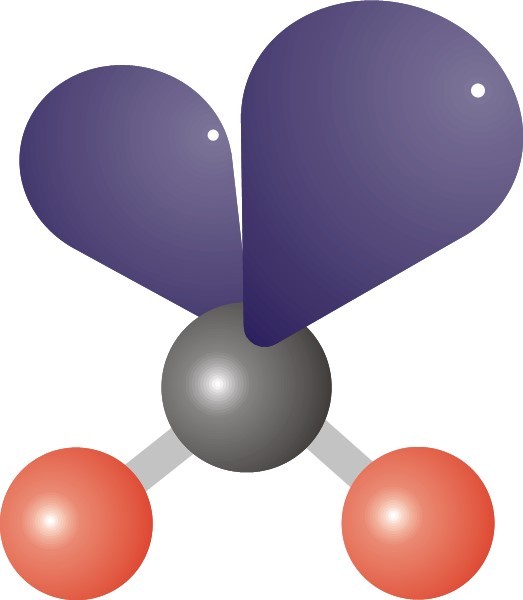
What is the the shape of this molecule according to VSPER theory?
a)
Linear
b)
Tetrahedral
c)
Bent
d)
Trigonal pyramidal
81.
Who could this be? 
a)
CO2
b)
NH3
c)
H2S
d)
CH4