wayground logo

Free Printable Worksheets

Font size

S
M
L
XL
Worksheets

PWC Mid- Term

Total questions: 99

Worksheet time: 2hrs 25mins
Name
Class
Date
1.
What is a PUSH or PULL of an object?
a)
Motion
b)
Force
c)
Friction
d)
Gravity
2.
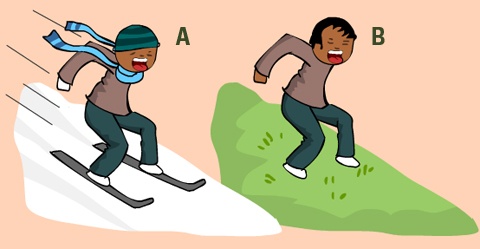
Why is it harder for the boy in Image B to get down the hill?
a)
Motion
b)
Friction
c)
Work
d)
Displacement
3.
Which force produces a change in motion?
a)
unbalanced force
b)
balanced force
c)
gravitational force
d)
frictional force
4.
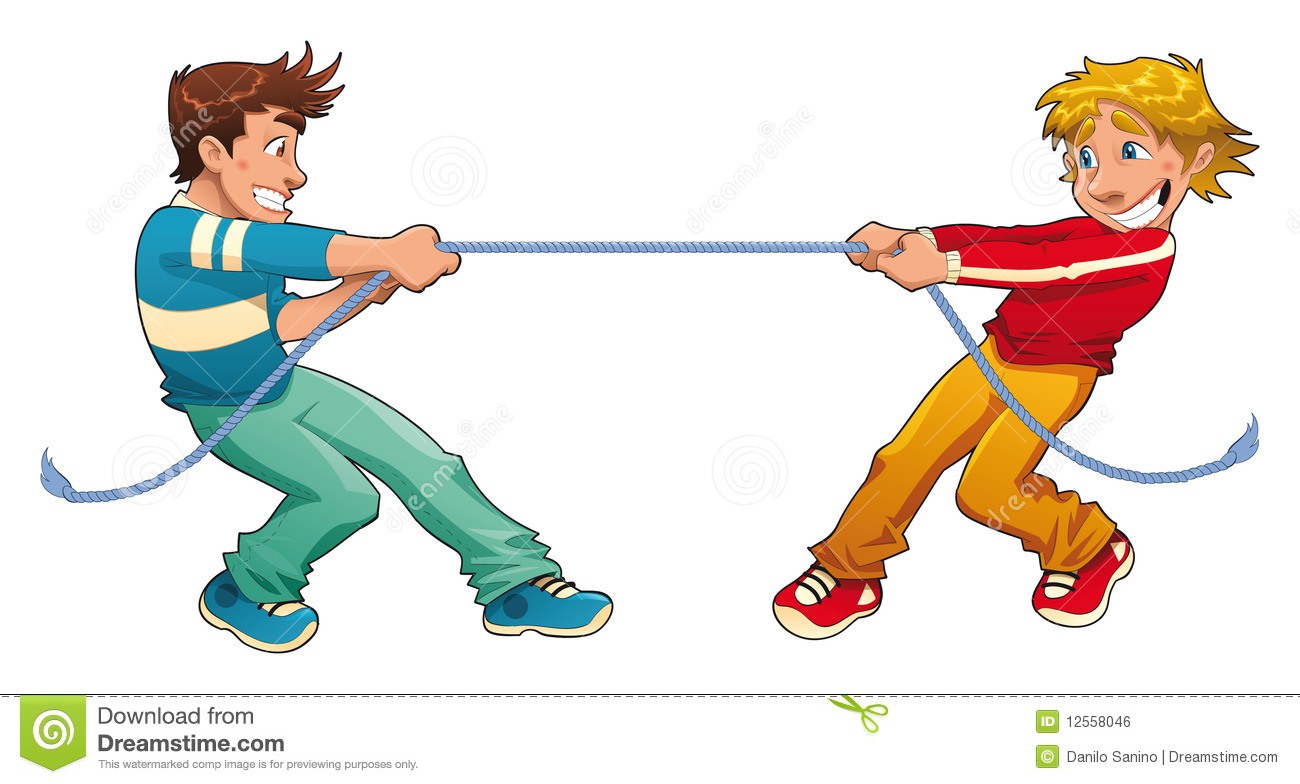
If these boys are pulling with the same amount of force.  What will happen?
a)
The boy in blue will win.
b)
They will not move at all.
c)
The boy in red will win.
d)
Both will fall down.
5.
What is the formula for force?
a)
F=M/A
b)
F=A/M
c)
F=M*A
d)
F=M*F
6.
What happens when two forces act in the same direction?
a)
They cancel each other out.
b)
The stronger one prevails.
c)
Their strengths are added.
d)
Their sum divided by the two is the total force.
7.
Any time the forces are unbalanced, an object will remain at rest. True or false?
a)
true
b)
false
8.
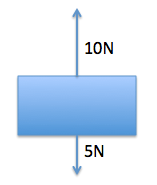
What is the net force on the block? (click on the words to view the picture)
a)
5 Newtons up
b)
5 Newtons down
c)
15 Newtons up
d)
15 Newtons down
9.
Which of the following statements is true? 
a)
Balanced forces cause a change in motion. 
b)
Unbalanced forces cause a change in motion. 
c)
Forces do not effect the change in motion. 
10.

If a 10 kilogram object accelerates suddenly at 15 m/s2, how much force was applied to the object?

a)

150 Newtons

b)

1.5 Newtons

c)

15 Newtons

d)

100 kilograms

11.
Which of the following objects has the least acceleration?
a)
a. an empty shopping cart pushed with a hard force
b)
b. a full shopping cart pushed with a hard force
c)
c. an empty shopping cart pushed with a light force
d)
d. a full shopping cart pushed with a light force
12.
A baseball is thrown a distance of 50 meters. What is the speed if it takes 2 seconds to cover that distance?
a)
100 m/s2
b)
25 m/s2
c)
52 m/s2
d)
100 seconds
13.
A runner has a momentum of 720 kg m/s and is traveling at a velocity of 5 m/s. What is his mass?
a)
14.4 kg
b)
1400 kg
c)
144 kg
d)
360 kg
14.
A 2 kg cart has a momentum of 10 kg m/s. What is its velocity?
a)
22 m/s
b)
.2 m/s
c)
5.0 m/s
d)
20 m/s
15.
A 9300 kg railroad car traveling at a velocity of 5 m/s strikes a second boxcar that weighs 5000 kg at rest. At what speed will the second boxcar move?
a)
18.6 m/s
b)
9.3 m/s
c)
7.5 m/s
d)
1.86 m/s
16.
A 9 kg blob moving at 5 m/s collides and sticks to a second blob with a mass of 5 kg. If the two bobs stick together, what will the velocity of the two blobs move at?
a)
3.57 m/s
b)
3.2 m/s
c)
10.0  m/s
d)
9.0  m/s
17.
An object with a mass of 2000 kg at rest has what momentum?
a)
2000 kg m/sec
b)
0 kg m/sec
c)
2000 kg
d)
2000 m/sec
18.
What is the average speed of the person during the first 5 seconds?
a)
0 m/s
b)
1 m/s 
c)
3 m/s
d)
6 m/s 
19.

In a game of pool, when the cue ball breaks the rack, momentum is _____from the cue ball to the rack, which is why cue ball stops moving.

a)

shared

b)

stationary

c)

transferred

20.

Which has a greater momentum: a 2-ton roller coaster moving 50 km/hr or a 2.5 ton truck moving at 35 km/hr?

a)

truck

b)

roller coaster

c)

both

21.
The total momentum before a collision is _________ the total momentum after a collision.
a)
equal to 
b)
less than 
c)
more than
d)
It depends on the type of collision
22.
Rahim observed a collision in lab where the kinetic energy after the collision was equal to the kinetic energy before the collision.  This type of collision is
a)
Completely Inelastic
b)
Elastic
c)
Inelastic
23.
A 2.5 kg ball moving at 4.2 m/s collides with a 2.5 kg stationary ball. If the first ball is at rest after the collision, what is the velocity of the second ball? 
a)
2.1 m/s
b)
2.5 m/s
c)
4.2 m/s
d)
8.4 m/s
24.

A baseball bat applies a force of 500 N to a ball for 0.1 seconds. What was the impulse on the ball?

a)

5 Ns

b)

50 Ns

c)

500 Ns

d)

5,000 Ns

25.

A car crashes into a barrier with an impulse of 40,000 kg x m/s. The collision took 2 seconds. How much force did the barrier exert?

a)

80,000 N

b)

60,000 N

c)

40,000 N

d)

20,000 N

26.

A 3 kg skateboard is at rest on a sidewalk. What is its momentum?

a)

0 Ns

b)

3 Ns

c)

Not enough information.

27.
A magician pulls a tablecloth out from under dishes and glasses on a table without disturbing them.
a)
Newton's 1st Law
b)
Newton's 2nd Law
c)
Newton's 3rd Law
28.
Pushing a child on a swing is easier than pushing an adult on the same swing, because the adult has more mass and requires more force to accelerate.
a)
Newton's 1st Law
b)
Newton's 2nd Law
c)
Newton's 3rd Law
29.
This person bought coffee and put it on the seat next to them. If they stopped quickly and the coffee spilled which law would that represent?
a)
Newton's 1st Law
b)
Newton's 2nd Law
c)
Newton's 3rd Law
30.
When you step on a Lego. You push on the Lego and the Lego pushes back on you.
a)
Newton's 1st Law
b)
Newton's 2nd Law
c)
Newton's 3rd Law
31.

When two equal forces act in opposite directions on an object, they are called ______________________.

a)

frictional force

b)

balanced force

c)

centripetal force

d)

gravitational force

32.

When an unbalanced force acts on an object, the force ______________________.

a)

changes the motion of the object

b)

is cancelled by another force

c)

does not change the motion of an object

d)

is equal to the weight of the object

33.

The resistance of an object to any change in its motion is called ______________________.

a)

inertia

b)

friction

c)

gravity

d)

weight

34.
"For every action, there is an equal and opposite reaction."
a)
Newton's 1st Law
b)
Newton's 2nd Law
c)
Newton's 3rd Law
d)
Newton's 4th Law
35.
Force = Mass x Acceleration
a)
Newton's 1st Law
b)
Newton's 2nd Law
c)
Newton's 3rd Law
d)
Newton's 4th Law
36.
"An object in motion (or at rest) will to stay in motion (or at rest) until an outside force acts upon it."
a)
Newton's 1st Law
b)
Newton's 2nd Law
c)
Newton's 3rd Law
d)
Newton's 4th Law
37.
Any push or pull on an object.
a)
force
b)
velocity 
c)
inertia
d)
momentum
38.
The force that opposes motion between two surfaces in contact with each other.
a)
inertia
b)
friction
c)
momentum
d)
gravity
39.
The force of attraction between all matter.
a)
inertia
b)
friction
c)
net force
d)
gravity
40.
A Newton is a unit of...
a)
force
b)
inertia
c)
acceleration
d)
velocity
41.
When all the forces on an object are equal and opposite, & the net force is zero, that's...
a)
balanced forces
b)
unbalanced forces
c)
terminal velocity
d)
reaction forces
42.
The combination of all the forces acting on an object is the...
a)
net force
b)
action force
c)
reaction force
d)
balance force
43.
The Law of Inertia
a)
Newton's
1st
Law of Motion
b)
Newton's
2nd
Law of Motion
c)
Newton's
3rd
Law of Motion
44.
F=ma
a)
Newton's
1st
Law of Motion
b)
Newton's
2nd
Law of Motion
c)
Newton's
3rd
Law of Motion
45.
For every action, there is an equal and opposite reaction.
a)
Newton's
1st
Law of Motion
b)
Newton's
2nd
Law of Motion
c)
Newton's
3rd
Law of Motion
46.
An automobile you are riding in suddenly stops, but you continue to go forward.
a)
Newton's
1st
Law of Motion
b)
Newton's
2nd
Law of Motion
c)
Newton's
3rd
Law of Motion
47.
When the force on a car is doubled, the acceleration is doubled.
a)
Newton's
1st
Law of Motion
b)
Newton's
2nd
Law of Motion
c)
Newton's
3rd
Law of Motion
48.
A stationary bumper car is set in motion by the outside force of another bumper car colliding with it.
a)
Newton's
1st
Law of Motion
b)
Newton's
2nd
Law of Motion
c)
Newton's
3rd
Law of Motion
49.
A rocket in outer space continues to move.
a)
Newton's
1st
Law of Motion
b)
Newton's
2nd
Law of Motion
c)
Newton's
3rd
Law of Motion
50.
A magician pulls a table cloth from under a table of dishes.
a)
Newton's
1st
Law of Motion
b)
Newton's
2nd
Law of Motion
c)
Newton's
3rd
Law of Motion
51.
A skater pushes another skater forward, but the one pushing moves backwards.
a)
Newton's
1st
Law of Motion
b)
Newton's
2nd
Law of Motion
c)
Newton's
3rd
Law of Motion
52.
120 inches = ? Feet
a)
12 feet
b)
11 feet
c)
10 feet
d)
7 feet
53.
If 1 yard is 0.914 meters. How many meters is 4 yards? 
a)
3 m
b)
3.5 m
c)
3.656 m
d)
3.987 m
54.
If 1 kg is 2.205 pounds, how many pounds is 4 kg? 
a)
8.82 lbs
b)
10.52 lbs
c)
12.71 lbs
d)
7.36 lbs
55.
1 gallon is 3.785 Liters. How many Liters is 30 gallons? 
a)
112.54 L
b)
126.89 L
c)
113.55 L
d)
134.23 L
56.
1 gram is 0.035 ounces. How many ounces is 200 grams? 
a)
6 oz
b)
7 oz
c)
8 oz
d)
9 oz
57.
A type of medicine is given in a 100 miligram dosage.  The medicine comes in a  12 gram bottle. How many 100 milligram doses are in a bottle?
a)
1200
b)
.12
c)
120
d)
12,000
58.
How many significant digits are there in "0.94"?
a)
1
b)
2
c)
3
d)
none
59.
How many significant digits are there in "8003"?
a)
1
b)
2
c)
3
d)
4
60.
How many significant digits are there in "0.0805"?
a)
2
b)
3
c)
4
d)
5
61.
Round "3.14159" to three significant digits.
a)
3.14
b)
3.15
c)
3.142
d)
3.1416
62.
Round "0.002927" to three significant digits.
a)
0.01
b)
0.00293
c)
0.00292
d)
0.0029
63.

Round "124,500" to three significant digits.

a)

124,000

b)

125,000

c)

124

d)

125

64.
Round "0.265" to two significant digits.
a)
0.3
b)
0.27
c)
0.25
d)
0.2
65.
Solve and round accordingly.
"7.9 + 9.19 + 75.351"
a)
92.4
b)
92.441
c)
92.44
d)
92
66.
Solve and round accordingly. 
"9.4991 - 7.3"
a)
2.2
b)
2.1991
c)
2.200
d)
2.20
67.
Solve and round accordingly. 
"7500 + 123.4 - 0.06"
a)
7600
b)
7623.34
c)
7623.3
d)
7623
68.
Solve and round accordingly. 
"730 / 1.89"
a)
390
b)
386.243
c)
386
d)
386.24
69.
If a laboratory fire erupts, immediately
a)
notify your instructor
b)
 run for the fire extinguisher
c)
throw water on the fire
d)
 open the windows
70.
Approved eye protection devices (such as goggles) are worn in the laboratory
a)
 to avoid eye strain
b)
to improve your vision
c)
only if you don’t have corrective glasses
d)
 any time chemicals, heat or glassware are used
71.
You are heating a piece of glass and now want to pick it up. You should 
a)
pour cold water on it
b)
use tongs
c)
pick up the end that looks cooler
d)
use a rag or paper towels
72.
 Personal eyeglasses provide as much protection as
a)
none of these answers
b)
splashproof chemical goggles
c)
safety glasses
d)
a face shield
73.
If a piece of equipment is not working properly, stop, turn it off, and tell 
a)
the science instructor
b)
your best friend in the class
c)
the custodian
d)
your lab partner
74.
When you finish working with chemicals, biological specimens, and other lab substances, always 
a)
wipe your hands on your clothes
b)
wipe your hands on a towel
c)
wash your hands thoroughly with soap and water
d)
treat your hands with skin lotion
75.
Return all unused chemicals to their original containers.
a)
True
b)
False
76.
All chemicals in the lab are to be considered dangerous
a)
True
b)
False
77.
Chipped or cracked glassware is okay to use.
a)
True
b)
False
78.
Laboratory work can be started immediately upon entering the laboratory even if the instructor is not yet present
a)
True
b)
False
79.
identify the following lab equipment
a)
glass triangle
b)
funnel
c)
stirring rod
d)
buret
80.
Name the lab equipment.
a)
Ring Stand
b)
Flask
c)
Beaker
d)
Bunsen Burner
81.
What is used to protect your eyes from chemicals, broken glass, and fire?
a)
Fire blanket
b)
Eye wash
c)
Goggles
d)
Flask
82.
What is measured with a graduated cylinder?
a)
Passage of time
b)
Distance from one thing to another
c)
Weight of an object
d)
Volume of liquid
83.
What SI unit is used to measure time?
a)
seconds
b)
amperes
c)
Kelvin
d)
mole
84.
What SI unit is used to measure mass?
a)
meters
b)
liters
c)
candelas
d)
kilograms
85.
Convert the following SI Units:  3.2 km to meters
a)
32
b)
320
c)
3200
d)
32000
86.
Convert the following SI Units: 5 cm to meters
a)
5
b)
0.5
c)
0.05
d)
0.005
87.
What is the group in an experiment that receives treatment with the independent variable?
a)
control group
b)
experimental group
c)
constant group
d)
variation group
88.
A possible explanation to a problem that has not yet been tested = 
a)
data
b)
theory
c)
hypothesis
d)
fact
89.
What is the first step in the scientific method?
a)
Make an observation
b)
Design and conduct an experiment
c)
Make an hypothesis
d)
Share your results
90.
What is the speed of a car that travels 400 m in 20 minutes?
a)
20 miles/hr
b)
20 m/min
c)
800 m/min
d)
200 miles/hr
91.
What is the equation to calculate speed?
a)
speed = distance/time
b)
speed = time/distance
c)
speed = time x distance 
d)
speed = speed/time 
92.
A car travels 30 miles/hr for 3 hours, calculate the distance it will travel
a)
90 miles
b)
10 miles
c)
600 miles
d)
90 km
93.
Dave runs a 400 m race with a speed of 4 m/s. What time will it take him to finish the race?
a)
400 minutes
b)
100 minutes
c)
100 seconds 
d)
.25 seconds 
94.
Which of the following is a unit of speed?
a)
km/hr
b)
hr
c)
km
d)
s
95.
Mr. Rudman speed walked 2 miles in 10 minutes, what is his speed?
a)
0.2 miles/min
b)
2 miles/min
c)
20 miles/min
d)
40 miles/min
96.
What is velocity?
a)
the quickness of an object
b)
the location of an object
c)
acceleration
d)
speed in a specific direction
97.
If a force of 26 N is exerted on two balls, one with a mass of 0.52 kg and the other with a mass of 0.78 kg, which ball will have the greater acceleration?  (F=ma)
a)
The one with a mass of .78 kg will have the greatest acceleration.
b)
The one with a mass of .52 kg will have the greatest acceleration.
c)
They will both accelerate at the same rate.
98.
If a 10 kilogram object accelerates suddenly at 15 m/s^2, how much force was applied to the object?
a)
150 Newtons
b)
15 Newtons
c)
150 kilograms
d)
100 kilograms
99.
What is the formula for force?
a)
F=M/A
b)
F=A/M
c)
F=M*A
d)
F=M*F