Wayground logo

Free Printable Worksheets

Font size

S
M
L
XL
Worksheets

8th grade Review

Total questions: 93

Worksheet time: 3hrs 2mins

Name
Class
Date
1.
What is the chemical symbol for the element hydrogen
a)
H
b)
He
c)
h
d)
he
2.
What is the chemical symbol for the element Carbon
a)
ca
b)
co2
c)
C
d)
Cd
3.
How many different elements are in this chemical formula: C2H2ClK3
a)
6
b)
8
c)
2
d)
4
4.
Which statement best describes an element?
a)
made from mixture 
b)
thousands in the world
c)
pure, made of only one atom
d)
can be separated 
5.
Examples are water (H2O) and carbon dioxide (CO2).
a)
elements
b)
mixtures
c)
compounds
6.

How many protons?

a)

197

b)

79

c)

element

d)

compound

7.

How many neutrons are found in Copper?

a)

Cu

b)

29

c)

35

d)

64

8.
Which of the following is a chemical compound?
a)
Co
b)
 CO2
c)
Mg
d)
Al
9.

How many atoms of Chlorine (Cl) are in Mg(Cl2)2 ?

a)

2

b)

4

10.

How many atoms total are in the compound Al2(SO4)2

a)

3

b)

8

c)

11

d)

12

11.
One of the signs of a chemical reaction taking place is:
a)
Bubbles are produced 
b)
Reactants are not combining
c)
Products are not forming
d)
Color is not changing
12.
Which of the following describes a precipitate?
a)
a liquid forms when a block of metal is heated
b)
a solid forms when one liquid is poured into another
c)
a gas forms when a solid is placed in a liquid
d)
bubbles form when an acid is poured on a rock
13.
Four students performed four different investigations by combining different substances. Which of the observations is most indicative of a chemical reaction?
a)
investigation 1
b)
investigation 2
c)
investigation 3
d)
investigation 4
14.

Which of these formulas contain equal numbers of nitrogen atoms?

a)

Formulas I and III

b)

Formulas I and IV

c)

Formulas II and III

d)

Formulas I, II, and V

15.

How many elements are in CH4COOH

a)

5

b)

3

c)

9

16.
The shrew provides energy for the _______?
a)
cricket
b)
grasshopper
c)
frog
d)
snake
17.
An organism that gets energy from breaking down dead organisms, non-living material or waste
a)
producer
b)
consumer
c)
decomposer
d)
autotroph
18.
An organism that gets energy from eating other organisms is a ______________
a)
producer
b)
consumer
c)
decomposer
d)
prey
19.
An animal that gets energy from eating both plants and animals is a 
a)
herbivore
b)
carnivore
c)
omnivore
d)
autotroph
20.
What is a herbivore?
a)
an animal that gets energy from eating other animals
b)
an organism that gets energy from eating only plants
c)
an animal that gets energy by eating both plants and other animals
d)
an animal that eats only herbs
21.
Examples of how humans negatively affect local ecosystems are
a)
Building dams, deforestation (cutting down trees), adding point sources to nearby streams to allow for run-off, building roads and structures, and salting roads.
b)
Creating laws to prohibit fishing from local streams.
c)
Planting trees and other plants to attract native species.
d)
Removing non-native species from the environment.
22.
How does energy enter an ecosystem? 
a)
sunlight
b)
soil 
c)
animals 
d)
invasive species 
23.
Which organism do the owl and the weasel compete for in the food web?
a)
Hawk
b)
Spider
c)
Grasshopper
d)
Shrew
24.
In the energy pyramid here, which organisms have the most energy available?
a)
Producers
b)
Carnivores
c)
Herbivores
d)
Top Predator
25.
Which has the greatest effect on the temperature of a region?
a)
The amount of plants it has.
b)
The amount of rainfall it gets.
c)
The amount of humans it has.
d)
The amount of sunlight it gets.
26.
A severe storm that involves strong winds and forms over warm water is:
a)
tornado
b)
thunderstorm
c)
hurricane
d)
blizzard
27.
This is the symbol for a... 
a)
Occluded Front
b)
Stationary Front
c)
Warm Front
d)
Cold Front 
28.
This is the symbol for a... 
a)
Cold Front
b)
Warm Front
c)
Stationary Front
d)
Occluded Front 
29.
A cold front is approaching Minneapolis. What will happen to the air temperature?
a)
stay the same
b)
increase
c)
decrease
30.
Which city is experiencing thunderstorms?
a)
Denver
b)
New York 
c)
Miami 
d)
Boise
31.

Choose the best forecast for Dallas on Saturday.

a)

thunderstorms

b)

snow

c)

warmer temperatures

d)

clear skies

32.
A drought has hit this grassland biome. How will this effect the rabbit population?
a)
The rabbits will increase in number.
b)
The rabbit population will stay the same.
c)
The rabbit population will decrease.
d)
The rabbit population will become extinct immediately.
33.

Some species tolerate pollution better than others. The image shows that the beetles, stone fleas, and may flies cannot tolerate pollutants well. Whereas, the crawfish, midges, snails, and dragonflies are not bothered as much. The stream has become contaminated with toxic waste. What will happen?

a)

Mayflies that were previously abundant are no longer present in the stream

b)

Stone flies and midges thrive and compete for the same food source

c)

Large numbers of crayfish are suddenly dead

d)

Riffle beetles have become more abundant in the stream

34.

What is a naturally occurring change to an environment?

a)

Pollution

b)

Hurricane

c)

Building roads

35.

If an invasive plant grows in a forest, then

a)

sunlight is more abundant.

b)

native plant growth decreases.

c)

windy days increase.

36.

When change occurs, organisms will

a)

only adapt.

b)

adapt, migrate, or die.

c)

migrate, or die.

37.

The pie chart shows what the white tail deer likes to eat. The farmers in the area are concerned about competition between the farm animals and the deer. Which farm animal are they most likely concerned about?

a)

Cattle that eat grass and feed

b)

Goats that eat weeds and shrubs

c)

Turkeys that eat seeds and fruit

d)

Hogs that eat fruit, seed and feed

38.

Which of the graphs displays a predator / prey relationship accurately?

a)

Graph F

b)

Graph G

c)

Graph H

d)

Graph J

39.

Depending on where a hurricane forms, it may be called something different. What are other names given to hurricanes depending on the oceans they form in?

a)

Typhoon

b)

Wet storm

c)

Cyclone

40.

Which of the following can weaken or diminish the strength of a hurricane?

a)

cold ocean water

b)

moving over land

c)

warm ocean water

41.

Which statement is true?

a)

Less biodiversity the better the sustainability.

b)

More biodiversity the better the sustainability.

c)

More biodiversity and sustainability ruin the ecosystem.

d)

Biodiversity and sustainability has no correlation.

42.
 Which biome is more likely to survive a change in the environment?
a)
High (rich) biodiversity
b)
Low (poor) biodiversity
43.
Which of the following are threats to ecosystem sustainability?
a)
Catastrophic events
b)
Invasive species
c)
Disease
d)
All of these
44.
The greater the biodiversity is, the ______ sustainable an ecosystem is. 
a)
less
b)
equal
c)
more
45.
What is an invasive species?
a)
A native (naturally found) species which are added to an area. 
b)
A non-native (not naturally found) species added to an area. 
c)
A keystone species in an environment
d)
none of the above
46.
Invasive species grow quickly due to the lack of predators, this leads to a decline or extinction of the native population. True or false? 
a)
false
b)
true
47.
Why do the populations of invasive species grow so quickly? 
a)
Invasive Species are native to an area. 
b)
Invasive species are prey to many animals.
c)
Invasive species have no predators.
d)
Invasive species keep the ecosystems in equilibrium.
48.

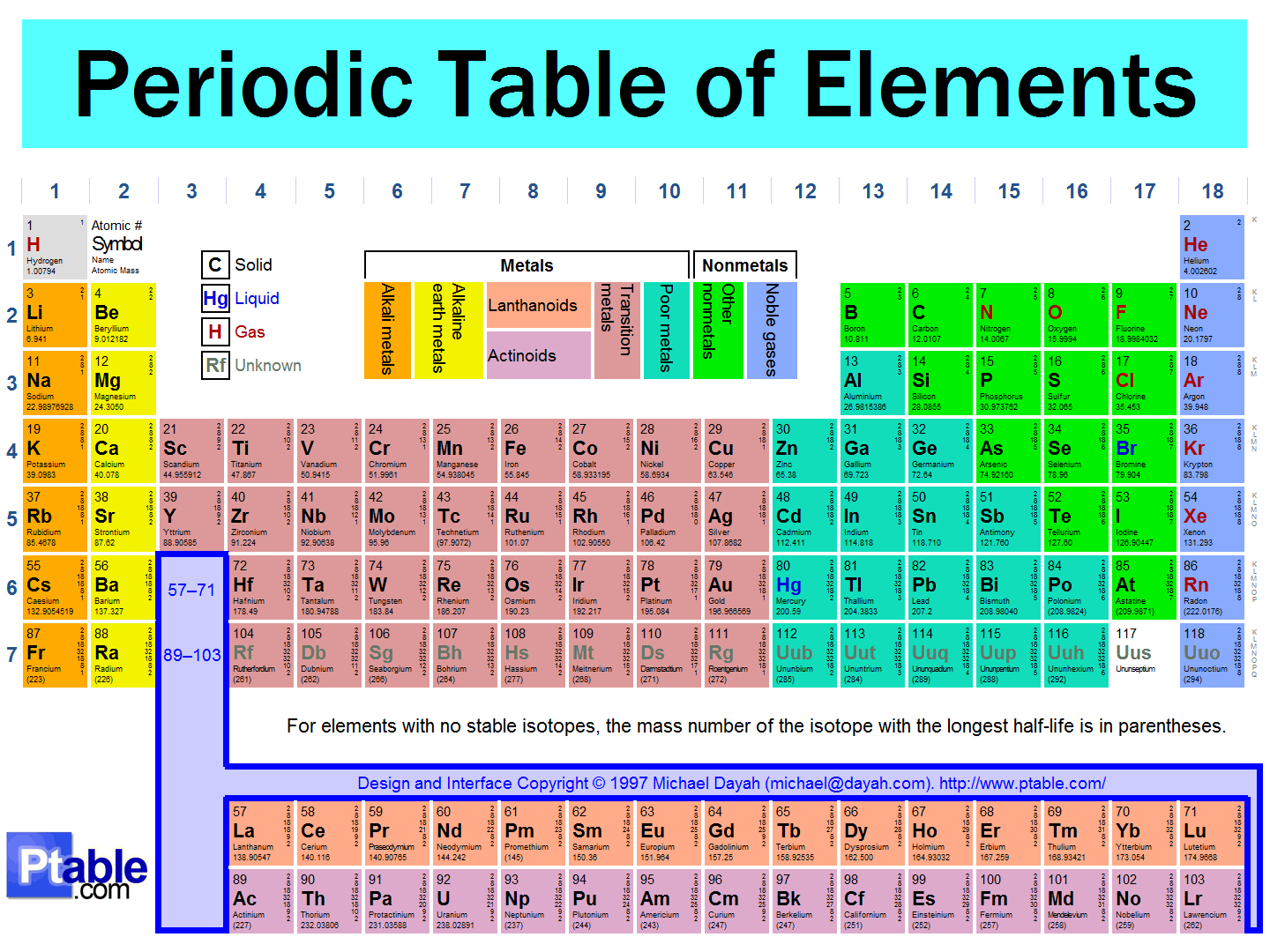
Use a periodic table to identify this atom.

a)

Beryllium (Be)

b)

Carbon (C)

c)

Magnesium (Mg)

d)

Argon (Ar)

49.

Which group on the periodic table is the most reactive group of metals because the atoms only contain 1 valence electron?

a)

Group 1

b)

Group 18

c)

Group 17

d)

Group 2

50.

Which group on the periodic table is the most stable because the atoms all contain a full outer shell?

a)

Group 1

b)

Group 2

c)

Group 17

d)

Group 18

51.

Elments left of the zig zag, except for Hydrogen, are known as ___

a)

Noble Gases

b)

Metals

c)

Nonmetals

d)

Metalloids

52.

Elements right of the zig zag are known as ___.

a)

Gases

b)

Metalloids

c)

Metals

d)

Nonmetals

53.

Electrons in the outer shell are known as ___.

a)

electron cloud

b)

varsity electrons

c)

vagrant electrons

d)

valence electrons

54.

Elements in the same group have ____.

a)

the same number of protons

b)

the same number of electrons

c)

similar properties

d)

the same mass

55.

Which category of elements share the following properties: malleable, ductile, lustrous, and good conductors of heat and electricity?

a)

metals

b)

nonmetals

c)

metalloids

d)

noble gases

56.
How many electrons does a Hydrogen atom have?
a)
1
b)
2
c)
3
d)
0
57.
How many neutrons does an Oxygen atom have?
a)
8
b)
16
c)
24
d)
7.999
58.
How many protons does Calcium have?
a)
40
b)
21
c)
20
d)
41
59.
What element is this?  What is the mass number of this atom?
a)
sodium, 23
b)
magnesium, 23
c)
magnesium, 12
d)
sodium, 11
60.
an atom with atomic number 6 would have how many protons 
a)
6
b)
12
c)
3
d)
cannot be determined 
61.
Particles in an atom that are neutral and have no charge are 
a)
negatrons 
b)
electrons 
c)
neutrons 
d)
protons 
62.
What is the atomic number for an element with three protons?
a)
2
b)
1
c)
3
d)
6
63.
2H2 + O2 ----> 2H2O What is the product?
a)
------>
b)
2H2O
c)
2H2+ O2
64.
2H2 + O2 --------> 2H2O What  are the reactants?
a)
----->
b)
2H2O
c)
2H2 +O2
65.
How many O's are in Al₂(SO₄)₃
a)
4
b)
12
c)
7
d)
24
66.

how many groups are there on the periodic table?

a)

10

b)

15

c)

7

d)

18

67.

how many periods are on the periodic table?

a)

6

b)

7

c)

18

d)

10

68.

how can you tell an atoms reactivity?

a)

the valence electrons

b)

protons

c)

neutrons

d)

atomic number

69.

how can you tell the number of energy shells an atom has?

a)

the period number

b)

the group number

c)

the atomic mass

d)

the valence electrons

70.
This class of elements are sometimes called "semiconductors."
a)
Metals
b)
Nonmetals
c)
Metalloids
d)
Groups
71.
Elements which are shiny, conduct electricity and heat are called
a)
metal
b)
nonmetal
c)
metalloid
d)
nonexistent
72.
Elements in a ..................have similar chemical properties.  
a)
period
b)
group
c)
row
73.
Which of the following is not a property of metals?
a)
brittle
b)
malleable
c)
lustrous
d)
conductive
74.
If a material can easily be drawn into the shape of a wire, it is
a)
Ductile
b)
Magnetic
c)
Malleable
d)
Reactive
75.
What do the following properties describe? : shiny, ductile, good conductor, high melting point
a)
metal
b)
nonmetal
c)
metalloid
76.
How many Valance electrons does Iodine Have?
a)
6
b)
16
c)
7
d)
17
77.

What element is this?

a)

Silicon

b)

Nitrogen

c)

Oxygen

78.

What do valence electrons determine?

a)

density

b)

conductivity

c)

malleability

d)

reactivity

79.

What event likely happened to cause this bird to be covered in oil?

a)

Deforestation

b)

Overgrazing

c)

Burning fossil fuels

d)

Oil spill

80.
Many different types of organisms. 
a)
Pioneer species
b)
Community
c)
Biodiversity
d)
Population
81.

What is a positive ways humans impact the environment?

a)

deforestation

b)

urbanization

c)

introducing invasive / alien species

d)

artificial reefs

82.
Who causes the most damage to coral reefs?
a)
Whales
b)
Fish
c)
Boats
d)
Humans
83.
A coral reef provides ________ for small fish.
a)
food
b)
shelter
c)
friends
84.
If the population of prey increases, the population of predators will ________because of the availability of food.
a)
decrease
b)
stay the same
c)
increase
85.
Pollution is anything that people add to the environment that__________________. 
a)
disappearing particles 
b)
benefits an ecosystem
c)
produces plants 
d)
harms living things 
86.
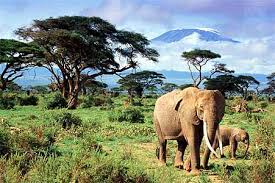
What are the biotic factors in this image?
a)
sunlight, elephants, and grasses
b)
sunlight, water,  and air
c)
elephants, plants, trees 
87.
Four students were asked to create a graph representing a typical predator–prey relationship.  
Which graph shows a situation in which the number of predators in a population depends on the number of prey?
a)
A
b)
B
c)
C
d)
D
88.
The organism in the photo is a daphnia, or water flea. Daphnia are tiny aquatic organisms that live in most freshwater habitats. Adults range from less than 1 to 5 mm in length. They are good swimmers and eat mostly algae. Daphnia become mature at 5 to 10 days, and an adult female can produce up to 100 eggs every 3 or 4 days during its 2-month life span. When harmful algae rapidly increase in the daphnia’s environment, daphnia can develop adaptations to tolerate the negative effects of the algae within 10 years. 
What characteristic of the daphnia allows the population to adapt to environmental change?
a)
Its small size.
b)
Its short generation time.
c)
Its freshwater environment.
d)
Its herbivorous diet. 
89.
A partial food web is shown. The numbers in the boxes represent animals in the food web. 

Which organisms have three carnivorous predators and a consumer–producer relationship with at least one organism?  
The organisms that fit in ...
a)
boxes 2, 3, and 7
b)
boxes 5 and 7
c)
boxes 4 and 6
d)
boxes 2 and 7 only 
90.
Temperature, light, air, water, and soil are all  _____  parts of the environment
a)
alive
b)
biotic 
c)
abiotic
d)
living
91.

Which of these human activities is most likely to cause the excessive growth of phytoplankton in the world's oceans?

a)

The use of fertilizers that are carried by runoff into rivers

b)

The logging of old-growth forests, which results in erosion

c)

The spraying of chemical herbicides that reduce carbon dioxide in the air

d)

The mining of fossil fuels, which requires digging underground tunnels

92.
DDT is a pesticide that was once widely used to control agricultural pests and mosquitoes. However, this pesticide caused the eggshells of certain birds, including the brown pelican, to become fragile and thin. The adults would then accidentally crush the eggs while trying to incubate them.  What happened to brown pelican populations as a result of DDT use by humans?
a)
The populations increased much more slowly.
b)
The populations decreased as fewer eggs survived long enough to hatch.
c)
The populations remained stable over time.
d)
The populations increased as pelicans laid more eggs so that more offspring would survive.
93.
A certain plant needs moisture, carbon dioxide, oxygen, light, and minerals to survive. This scenario shows that this particular living organism depends on .
a)
Biotic Factors 
b)
Abiotic Factors