
 Worksheets
Biology First Semester Review
Total questions: 95
Worksheet time: 1hrs 20mins
Name
Class
Date
1.
What do viruses need to reproduce?
a)
they need genetic material
b)
They need a host cell
c)
They need bacteria
d)
They need insulin
2.
How does a virus cause a person to develop the common cold?
a)
invades the host cell to reproduce
b)
removes energy from the host cell
c)
produces toxins in the host cell
d)
protects the host cell from bacteria
3.

A(n) _____ is a virus that enters a bacterial cell.
a)
endospore
b)
decomposer
c)
plasmid
d)
bacteriophage
4.
When a virus invades a living cell, its _______
takes over the cell's functions.
takes over the cell's functions.
a)
outer coat
b)
genetic material
c)
core
d)
cytoplasm
5.

What part of the phage is the DNA?
a)
A
b)
B
c)
C
d)
D
6.
Antibiotics kill viruses
a)
True
b)
False
7.
Which viral life cycle kills its host cell by lysing?
a)
lytic
b)
mitosis
c)
lysogenic
d)
S phase
8.
Which viral life cycle allows viral genetic material to lay dormant while the host cell reproduces?
a)
lytic
b)
mitosis
c)
lysogenic
d)
S phase
9.
What are the two parts of a virus?
a)
Nucleic acid and a protein coat (capsid)
b)
Nucleic acid and a Nucleus
c)
Cell membrane and mitochondria
d)
Chloroplast and a cell wall
10.
The first step of a virus infection is....
a)
The virus injects its DNA into the host cell
b)
The virus attaches to a host cell
c)
The viral DNA takes over the host cell and builds new viruses
d)
The host cell bursts and dies, spreading new viruses
11.
Which of the following is INCORRECT?
a)
Viruses contain genetic instructions like DNA.
b)
Viruses are surrounded by a protein coat.
c)
Viruses are made of cells.
d)
Viruses cannot maintain homeostasis.
12.
What is the correct order of events of virus replication?
a)
Attach to a host, inject DNA, produce new virus parts, release out of cell.
b)
Release out of cell, attach to a host, inject DNA, produce new virus parts,
c)
Attach to a host, release out of cell,, inject DNA, produce new virus parts,
d)
Inject DNA, attach to a host, release out of cell, produce new virus parts,
13.
How could you describe the size of a virus?
a)
Smaller than bacteria
b)
Larger than a parasite
c)
About the size of a dime
d)
Smaller than a proton
14.
what does a virus not have?
a)
cell wall
b)
Protein
c)
DNA
15.
Which of the following is the smallest unit of life that can carry out all life functions?
a)
the mitochondria
b)
the vacuoles
c)
the nucleus
d)
the cell
16.
Which structures are found in every living cell?
a)
cell membrane and cytoplasm
b)
chloroplasts and mitochondria
c)
a cell wall and nucleus
d)
chloroplasts and cell wall
17.
Which cell structure is found in plant and animals cells and controls what can come into or leave a cell?
a)
cell membrane
b)
cytoplasm
c)
nucleus
d)
vacuole
18.
What is the function of the cell nucleus found in both plant and animal cells?
a)
to produce energy
b)
to control cell activity
c)
to remove waste products
d)
to allow molecules to enter the cell
19.
Cell organelles that are responsible for digesting food, worn out organelles and other cellular wastes are called ___________________.
a)
Mitochondria
b)
Vacuoles
c)
Lysosomes
d)
Chlororplasts
20.
What is one basic function of the vacuoles?
a)
circulating oxygen
b)
producing food
c)
controlling cell processes
d)
storing water
21.
Chloroplasts in plant cells allow the plant to perform a function that animal cells cannot do. What is the main function of the chloroplasts found in plant cells?
a)
to absorb light energy and manufacture food
b)
to remove waste materials by active transport
c)
to manufacture chemical energy from food
d)
to control the shape of the cell
22.
All cells need energy to function. Which cell organelle is responsible for producing energy in the cell?
a)
chloroplasts
b)
mitochondria
c)
nucleus
d)
vacuoles
23.
What is the function of a cell wall?
a)
to protect and support the cell
b)
to perform different functions in each cell
c)
to prevent water from passing through it
d)
to prevent oxygen from entering the cell
24.
In what part of the plant cell does the process of photosynthesis take place?
a)
nucleus
b)
mitochondria
c)
chloroplasts
d)
vacuoles
25.
Cells with a nucleus and membrane-bound organelles are called ____________________.
a)
prokaryotes
b)
eukaryotes
c)
bacteria
d)
protists
26.
All cells come from___________ cells.
a)
pregnant
b)
pre-existing
c)
paternal
d)
pin size
27.

What do all of these organisms have in common?
a)
They all have uniform offspring
b)
They are all made of cells
c)
They possess the same features
d)
They have the same internal and external structures
28.
Prokaryotic
a)
are single celled organisms that do not have a nucleus or membrane bound organelles
b)
a protective layer that covers the the cells surface and acts as a barrier
c)
is the smallest unit that can preform all he processes necessary for life
29.
The Cell Theory states...
a)
atoms create all matter
b)
living things evolve
c)
the cell is the backbone of all matter
d)
cells are the basic unit of structure and organization of organisms
30.
Which of the following is NOT a cell theory.
a)
All non-living things are made of cells
b)
All cells come from pre-existing cells
c)
Cells are the basic unit of structure and function of all living things
31.
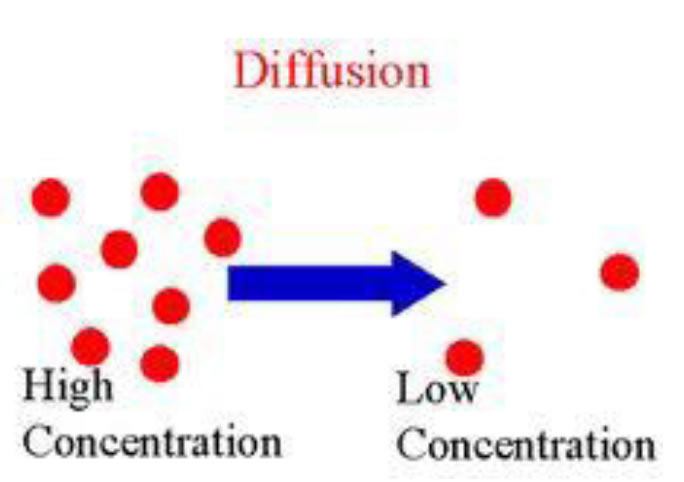
Movement of particles from high to low concentration.
a)
Passive Transport
b)
Active Transport
32.
Osmosis is a form of ______________.
a)
Passive Transport
b)
Active Transport
33.
Endocytosis
a)
Passive Transport
b)
Active Transport
34.
What is it called when molecules move across the cell membrane from an area of high concentration to an area of low concentration through a carrier protein?
a)
Diffusion
b)
Osmosis
c)
Active Transport
d)
Facilitated Diffusion
35.
While cleaning a saltwater aquarium, students placed the aquarium plants in a container of distilled water. What effect will this have on the plants?
a)
The plant cells will swell.
b)
The plant cells will remain the same.
c)
The plant cells will shrink.
d)
The plant cells will seperate.
36.
What would happen to a marine protozoan if removed from its normal habitat and placed into a freswater pool?
a)
loss of water through osmosis
b)
loss of water through active transport
c)
gain of water through osmosis
d)
gain of water through active transport
37.
Scenario: Ink that was released into the water by a squid moments later became unnoticeable. What type of diffusion is this?
a)
Osmosis
b)
Simple Diffusion
c)
Active Transport
d)
Facilitated Diffusion
38.
What is special about osmosis?
a)
Used only in regards to water
b)
It's not
c)
Only needs energy
d)
requires special transport proteins called Nasalis Zygaena
39.
What is exocytosis?
a)
The movement of relatively large quantities of material out of a cell at one time.
b)
The movement of relatively large quantities of material into a cell at one time.
c)
The movement of relatively small quantities of material into a cell at one time.
d)
The movement of relatively small quantities of material out of a cell at one time.
40.
What is endocytosis?
a)
The movement of relatively large quantities of material out of a cell at one time.
b)
The movement of relatively large quantities of material into a cell at one time.
c)
The movement of relatively small quantities of material into a cell at one time.
d)
The movement of relatively small quantities of material out of a cell at one time.
41.
A cell that is turgid
a)
Is a plant cell in a hypotonic environment
b)
is an animal cell in an isotonic environment
c)
is a plant cell in an isotonic environment
d)
is an animal cell in a hypotonic environment
42.

What is this cartoon representing?
a)
phagocytosis
b)
pinocytosis
c)
diffusion
d)
active transport
43.

Which bond of the ATP molecule is broken in order to release energy?
a)
A
b)
B
c)
C
d)
D
44.
Which of the following can be compared to a battery in need of recharging?
a)
ADP
b)
ATP
c)
Ribose
d)
Adenosine
45.
Which cellular organelle is responsible for manufacturing ATP?
a)
Ribosome
b)
Nucleus
c)
Mitochondria
d)
Chloroplast
46.
Which of the following results in the release of energy in terms of the ATP/ADP cycle?
a)
The breaking of the bond between the 5-carbon sugar and the 1st phosphate group
b)
The addition of a phosphate group
c)
The removal of a phosphate group
d)
The addition of glucose
47.
Which of the following results in the storage of energy in terms of the ATP/ADP cycle?
a)
The breaking of the bond between the 5-carbon sugar and the 1st phosphate group
b)
The addition of a phosphate group
c)
The removal of a phosphate group
d)
The addition of glucose
48.
Energy is released from ATP when
a)
a phosphate group is added
b)
adenine bonds to ribose
c)
ATP is exposed to sunlight
d)
a phosphate group is removed
49.

Which structures shown in the Figure make up the ATP molecule?
a)
A and B
b)
A, B and C
c)
A, B, C, and D
d)
C and D
50.

Which structures shown in the Figure make up the ADP molecule?
a)
A and B
b)
A, B and C
c)
A, B, C, and D
d)
C and D
51.
In which eukaryotic organelles does photosynthesis occur?
a)
mitochondria
b)
stomata
c)
xylem
d)
chloroplast
52.
The reactants of photosynthesis are
a)
sugar and water.
b)
sugar and oxygen.
c)
carbon dioxide and water.
d)
carbon dioxide and oxygen.
53.
Which statement about photosynthesis is correct?
a)
Plants get the energy they need for photosynthesis from water.
b)
Plants get the energy they need for photosynthesis from soil.
c)
Plants get the energy they need for photosynthesis from sunlight.
d)
Plants do not require energy to perform photosynthesis.
54.
What are the products of photosynthesis?
a)
Carbon dioxide and water
b)
Carbon dioxide and oxygen
c)
Glucose and oxygen
d)
Glucose and water
55.
Which of the following is the correct equation for PHOTOSYNTHESIS?
a)
6CO2 + 6H2O --> 6O2 + C6H12O6
b)
6CO2 + C6H12O6 + 6H2O --> O2
c)
6O2 + 6H2O --> 6CO2 + C6H12O6
d)
C6H12O6 + 6O2 ---> 6H2O + 6CO2
56.
Which gas is removed from the atmosphere during photosynthesis?
a)
hydrogen
b)
oxygen
c)
nitrogen
d)
carbon dioxide
57.

What is the source of energy for photosynthesis?
a)
carbohydrates-chemical
b)
sunlight-radiant
c)
heat-thermal
d)
television-electrical
58.

Which of the following structure is where cellular respiration occurs in the cell?
a)
nucleus
b)
cytoplasm
c)
mitochondria
d)
vacuoles
59.
What are the reactants in the equation for cellular respiration?
a)
oxygen and lactic acid
b)
carbon dioxide and water
c)
glucose and oxygen
d)
water and glucose
60.
What is the correct equation for cellular respiration?
a)
6O2 + C6H12O6 -> 6CO2 + 6H2O + Energy
b)
6O2 + C6H12O6 + Energy -> 6CO2 + 6H2O
c)
6CO2 + 6H2O -> 6O2 + C6H12O6 + Energy
d)
6CO2 + 6H2O + Energy -> 6O2 + C6H12O6
61.
Cellular Respiration's goal is to
a)
make water
b)
make ATP
c)
make glucose
d)
make oxygen
62.
What is cellular respiration?
a)
the breakdown of glucose to release ATP
b)
the breakdown of glucose to release NADH
c)
the breakdown of glucose to release FADH
d)
the breakdown of glucose to release carbon
63.
What are the products of photosynthesis?
a)
sugar and glucose
b)
carbon dioxide
c)
sugar and Oxygen
d)
water and energy
64.
What is the purpose of photosynthesis?
a)
make glucose
b)
make ATP
c)
make light
d)
release carbon dioxide
65.

What type of macromolecule is being represented in this image?
a)
carbohydrate
b)
lipid
c)
protein
d)
nucleic acid
66.
Which of the following decreases the activation energy necessary to initiate the chemical change within the body?
a)
nucleotides
b)
enzymes
c)
amino acids
d)
fatty acids
67.
What are the building blocks of proteins?
a)
amino acid
b)
fatty acid
c)
nucleotide
d)
lipid
68.
What are the single sugars that are the building blocks of carbohydrates?
a)
monosaccharides
b)
disaccharides
c)
polysaccharides
d)
amino acid
69.
Which macromolecule stores energy, insulates us, and makes up the cell membrane?
a)
lipids
b)
proteins
c)
carbohydrates
d)
nucleic acids
70.
DNA and RNA are examples of...
a)
proteins
b)
nucleic acids
c)
carbohydrates
d)
lipids
71.
Another name for fats and oils
a)
proteins
b)
sugar
c)
lipids
d)
nucleic acids
72.
What are the four macromolecules?
a)
proteins, nucleic acids, carbohydrates, and lipids
b)
monosaccharides, lipids, polysaccaharides, and proteins
c)
RNA, DNA, proteins, and carbohydrates
d)
proteins, DNA, RNA, and steroids
73.
What suffix (word ending) is used in the names of most carbohydrates?
a)
-ase
b)
-nic
c)
-ose
d)
-yme
74.
Most enzymes:
a)
speed up the chemical reaction
b)
have no effect on the rate of the chemical reaction
c)
slow the rate of the chemical reaction
d)
keep the rate of the chemical reaction the same
75.
Which is the monomer (building block) for lipids?
a)
fatty acids & glycerol
b)
nucleotide
c)
amino acids
d)
monosaccharide
76.
What is the function of carbohydrates?
a)
store genetic information
b)
store energy (long-term)
c)
store energy (short-term)
d)
build skin, hair, nails, muscles
77.
What molecule is used for LONG term energy storage?
a)
carbohydrates
b)
lipids
c)
protiens
d)
nucleic acid
78.
Which of the following elements make up nucleic acids?
a)
C, H, O
b)
C, H, O, N
c)
C, H, O, N, P
d)
C, H, O, Ca, S
79.
Carbohydrates are made of...
a)
C H O
b)
C H O N
c)
C H O N P
d)
C H O N S
80.
may be saturated or unsaturated
a)
carbs
b)
lipids
c)
proteins
d)
nucleic acids
81.

Which biomolecule is this a picture of?*
a)
polysaccharide
b)
saturated fat
c)
monounsaturated fat
d)
polyunsaturated fat
82.
Which of the following words is incorrectly matched with its meaning?
a)
Di = Two
b)
Mono = One
c)
Poly = Four
d)
Tri = Three
83.

Which major macromolecule is being represented in this image?
a)
carbohydrate
b)
lipid
c)
protein
d)
nucleic acid
84.
Which biomolecule stores genetic information?
a)
Carbohydrate
b)
Lipid
c)
Nucleic Acid
d)
Protein
85.

What is structure A?
a)
Substrate
b)
Active site
c)
Enzyme
d)
Products
86.

What is structure D?
a)
Substrate
b)
Active site
c)
Enzyme
d)
Products
87.

What is structure C?
a)
Substrate
b)
Active site
c)
Enzyme
d)
Products
88.

What is structure E, F, G?
a)
Substrate
b)
Active site
c)
Enzyme
d)
Products
89.
How do enzymes speed up chemical reaction?
a)
Increasing activation energy
b)
Decreasing activation energy
c)
Increasing deactivation energy
d)
Decreasing deactivation energy
90.
What is a substance called if it speeds up a chemical reaction?
a)
reusable
b)
catalyst
c)
specific
d)
fragile
91.
Once a new product leaves an enzyme, the enzyme is unchanged and ready for the next substrate. What is this called?
a)
reusable
b)
catalyst
c)
specific
d)
fragile
92.
The "lock and key hypothesis" attempts to explain the mechanism of?
a)
Vacuole formation
b)
Pinocytosis
c)
Sharing of electrons
d)
Enzyme specificity
93.
What happens when enzymes are heated to a high temperature?
a)
The enzymes die.
b)
The shapes of the enzyme are altered denature
c)
The enzymes' amino acid sequence changes.
d)
The enzymes remain the same
94.
Which of these is NOT true?
a)
Enzymes can denature (change shape) when the temperature gets too high.
b)
Enzymes can only be used once in a chemical reaction.
c)
Extreme pH can denature enzymes.
d)
Enzymes speed up chemical reactions.
95.
The pH at which an enzyme is most efficient is called the _________ pH of an enzyme.
a)
neutral
b)
optimum
c)
minimum
d)
experimental
100 %

