wayground logo

Free Printable Worksheets

Font size

S
M
L
XL
Worksheets

Fall Semester Review

Total questions: 142

Worksheet time: 2hrs 55mins

Name
Class
Date
1.
I am unicellular
I am prokaryotic
I am found in extreme ecosystems
What kingdom do I belong to?
a)
The Candy Kingdom
b)
Kingdom Plantae
c)
Kingdom Animalia
d)
Kingdom Archaebacteria
2.
I belong to Domain Bacteria, who am I?
a)
Kingdom Archaebacteria
b)
Kingdom Plantae
c)
Kingdom Fungi
d)
Kingdom Eubacteria
3.
I can be either a heterotroph or an autotroph-
I can be either multicellular or unicellular-
I can have cell walls or not-
The only thing for sure about me is that I have a nucleus in my cells...
I am Kingdom ____________ .
a)
Plantae
b)
Protista
c)
Animalia
d)
Oz
4.
Kingdom Plantae is
a)
autotroph
b)
heterotroph
c)
decomposer
5.
Kingdom Animalia is
a)
Eukayotic
b)
Prokaryotic
c)
Pick me!
d)
No, Pick me!!
6.
Kingdom Archaebacteria is...
a)
unicellular
b)
multicellular
c)
bigger than life!
7.
Kingdom Protista is...
a)
prokaryotic
b)
eukaryotic
8.
Kingdom Fungi are....
a)
autotrophs
b)
heterotrophs
9.
Members of  Kingdom Animalia are...
a)
heterotrophs.
b)
autotrophs
10.
Kingdom Archaebacteria is ...
a)
Prokaryotic
b)
Eukaryotic
c)
BOTH prokaryotic and Eukaryotic,
11.
My Kingdom includes mushrooms and yeast!
a)
Animalia
b)
Plantae
c)
Eubacteria
d)
Fungi
12.
We are unicellular- and we like it that way! 
a)
Eubacteria
b)
Animalia
13.
I'm always multicellular- get over it!
a)
Protista
b)
Animalia
c)
Eubacteria
14.
I am something that is alive or was once alive...
a)
Abiotic Factors
b)
Biotic Factors
c)
Bionic Flavors
d)
Biometric Robots
15.
If a tree is struck by lightning, and it begins to burn, we would say its pieces are ...
a)
biotic
b)
abiotic
16.
Sunlight, clouds, moisture, temperature
a)
these are biotic factors
b)
these are abiotic factors
17.
In the levels of organization, what comes after community?
a)
ecosystem
b)
organism
c)
biome
d)
biosphere
18.
I am a eukaryote and am heterotrophic. What kingdom do I belong to?
a)
Animalia
b)
Plantae
c)
Fungi
d)
Protista
19.
I am microscopic, and have several organelles. What kingdom do I belong to?
a)
Archaebacteria
b)
Eubacteria
c)
Fungi
d)
Protista
20.
I am eukaryotic, heterotrophic and have cell walls. What kingdom do I belong to?
a)
Archaebacteria
b)
Eubacteria
c)
Protista
d)
Fungi
21.
I am prokaryotic and am found everywhere. What kingdom do I belong to?
a)
Eubacteria
b)
Archaebacteria
c)
Fungi
d)
Protista
22.
Which kingdom is prokaryotic?
a)
Animalia
b)
Archaebacteria
c)
Planta
d)
Fungi
23.
 Archaebacteria... 
a)
Are eukaryotic
b)
live in extreme environments 
c)
Are non-living 
d)
Are heterotrophic
24.
What can an autotrophic organism due that a heterotrophic organism can NOT?
a)
Make their own food 
b)
Have a nucleus
c)
Reproduce through binary fission
d)
They're the same
25.
 You would find mushrooms in what kingdom?
a)
Plantae
b)
Protists
c)
Fungi
d)
Animalia
26.
All of the following have a nucleus except...
a)
Bacteria
b)
Animalia
c)
Plantae
d)
Protista
27.
Animals need to eat other organisms for food this classifies them as:
a)
Heterotroph
b)
Autotroph
c)
Eukaryotic
d)
Prokaryotic
28.
Organisms that are classified as autotrophic are able to-
a)
be seen with the human eye
b)
move
c)
reproduce
d)
make their own food
29.
I can be either a heterotroph or an autotroph-
I can be either multicellular or unicellular-
I can have cell walls or not-
The only thing for sure about me is that I have a nucleus in my cells...
I am Kingdom ____________ .
a)
Plantae
b)
Protista
c)
Animalia
d)
of Oz
30.
What field of study names living things?
a)
Taxonomy
b)
Taxidermy
c)
Taxi Driving
d)
Namology
31.
Type of cell with no nucleus
a)
Chloroplast
b)
Bacteria
c)
Eukaryotic
d)
Prokariotic
32.
All populations of different species living together in an area are called...
a)
Community
b)
Carnivores
c)
Population
d)
Ecosystem
33.
All of the living and nonliving things in an area that interact with each other are called a/an ______.
a)
community
b)
habitat
c)
population
d)
ecosystem
34.
Multiple organisms of the same species describes a
a)
organism
b)
population
c)
community
d)
ecosystem
35.
What do ecosystems have that the other three levels of organization do not have?
a)
living things
b)
biotic factors
c)
abiotic factors
d)
organisms
36.
A forest full of many kinds of trees and grasses is an example of a
a)
group
b)
organism
c)
population
d)
community
37.
Which is an example of an organism?
a)
a beetle
b)
a lake
c)
a rock
d)
a shell
38.
Which level of organization is more complex than a population and less complex than an ecosystem?
a)
organism
b)
population
c)
community
d)
ecosystem
39.
Which level of organization is the most complex?
a)
organism
b)
population
c)
community
d)
ecosystem
40.
Which of the following is not a biotic factor?
a)
mushroom
b)
air
c)
elephant
d)
coyote
41.
Which of the following is not a biotic factor that limits other organisms in its environment?
a)
Competition
b)
Predator-prey relationships
c)
Temperature
d)
Disease
42.
Lizards and cacti are biotic factors in a desert ecosystem that would rely on which abiotic factors?
a)
insects and sun
b)
water and insects
c)
snakes and temperature
d)
water and soil
43.
Which of the following correctly lists the levels of organization from least complex to most complex?
a)
Community, Biome, Organism, Population, Ecosystem
b)
Biome, Population, Community, Ecosystem, Organism
c)
Organism, Population, Community, Ecosystem, Biome
d)
Ecosystem, Population, Organism, Biome, Community
44.
Which organizational level of the ecosystem does a pack of wolves represent?
a)
Community
b)
Ecosystem
c)
Population
d)
Organism
45.
Which level of organization within an ecosystem includes abiotic and biotic factors?
a)
Organism
b)
Ecosystem
c)
Community
d)
Population
46.
The tool used to measure the mass of a substance or object is a ______________.
a)
balance
b)
graduated cylinder
c)
ruler
d)
thermometer
47.
Jack has a rock. The rock has a mass of 14g and a volume of 2cm3. What is the density of the rock?
a)
7 mL
b)
7 g/cm3
c)
28 g/cm3
d)
1/7 g/cm3
48.
What is the volume of Object X?
a)
10.0 cm3
b)
15.0 cm3
c)
20.0 cm3
d)
25.0 cm3
49.
True or False:  The density of a specific type of material never changes.  
a)
True
b)
False
50.
What is the formula for density?
a)
density = mass x volume
b)
density = mass / volume
c)
density = mass + volume
d)
density = mass - volume
51.
Frank has an eraser. It has a mass of 4g, and a volume of 2cm3. What is its density?
a)
8 g/cm3
b)
2 g/cm3
c)
1/2 g/cm3
d)
24 g/cm3
52.
An object with which of the following densities will float on water?
a)
0.7 g/cm3
b)
1.2 g/cm3
c)
3.5 g/cm3
d)
11.4 g/cm3
53.
A can of Coke will sink in a bowl of water.  A can of Diet Coke will float in a bowl of water.  What does this tell you about the density of the Diet Coke?
a)
it is bigger than 1
b)
it is smaller than 1
c)
it is equal to 1
d)
it is equal to -1
54.
The following liquids are poured together in a beaker: alcohol (density=0.79), corn syrup (density=1.38), water (density=1.0), and cooking oil (density=0.93).  Which of these liquids will sink to the bottom of the beaker?
a)
alcohol
b)
corn syrup
c)
water
d)
cooking oil
55.
A brick sinks in water while a wooden block of the same size floats.  This is because the brick has a
a)
lower volume than the wooden block
b)
lower density than the wooden block
c)
higher volume than the wooden block
d)
higher density than the wooden block
56.
What is the density of water?
a)
0 g/ml
b)
1 g/ml
c)
10 g/ml
d)
100 g/ml
57.
what is the definition of chemical change?
a)
any change that results in the formation of new chemical substances. 
b)
changing clothes
c)
matter cannot be created or destroyed, only change form
d)
changes affecting the form of a chemical substance, but not its chemical composition.
58.
which one is the definition of chemical property?
a)
a property or characteristic of a substance that is observed during a reaction where the chemical composition of a substance is changed
b)
any change that results in the formation of new chemical substances
c)
combustibility
59.
what is the definition of physical change?
a)
any change that results in the formation of new chemical substances. 
b)
rusting
c)
changes affecting the form of a chemical substance, but not its chemical composition.
d)
any property that is measurable, whose value describes a state of a physical system
60.
what is burning?
a)
physical change
b)
physical property
c)
chemical change
d)
chemical property
61.
which one is a chemical property?
a)
odor
b)
combustibility
c)
solubility
d)
all of the above
62.

what is solubility?

a)

chemical property

b)

physical property

c)

chemical change

63.
what happens when water freezes?
a)
ice is formed; chemical property
b)
cold water is formed; physical change
c)
ice is formed; physical change
d)
cold water is formed; chemical change
64.
Which of these is a chemical property?
a)
A pure substance
b)
A physical property
c)
Flammability
d)
A mixture
65.
Is chopping wood a Physical or a Chemical Property
a)
I don't know
b)
Physical
c)
Chemical
d)
None of the above
66.
What is an example of flammability?
a)
How quick it desolves.
b)
Burning paper.
c)
liquid nitrogen will burn you.
d)
freezing water
67.
Is wood burning a physical or chemical change?
a)
Physical 
b)
Chemical
68.
Is milk going sour a physical or chemical change?
a)
Physical 
b)
Chemical
69.

Which of the following is not a clue that a chemical reaction has taken place?

a)

Changing size

b)

Changing color

c)

A gas being formed

d)

Formation of a precipitate

70.
Which of the following IS a clue that a chemical change has occurred? 
a)
State of matter change
b)
Size Change
c)
Change in temperature
d)
Shape change
71.
Which of the following is NOT an example of a physical change?
a)
crumpled paper
b)
pencil sharpening
c)
shrunken clothing
d)
rust
72.
A mixture is the result of a physical change because...
a)
The parts can be separated
b)
A new substance is made
c)
There is a chemical reaction
d)
One part of the mixture disappears
73.
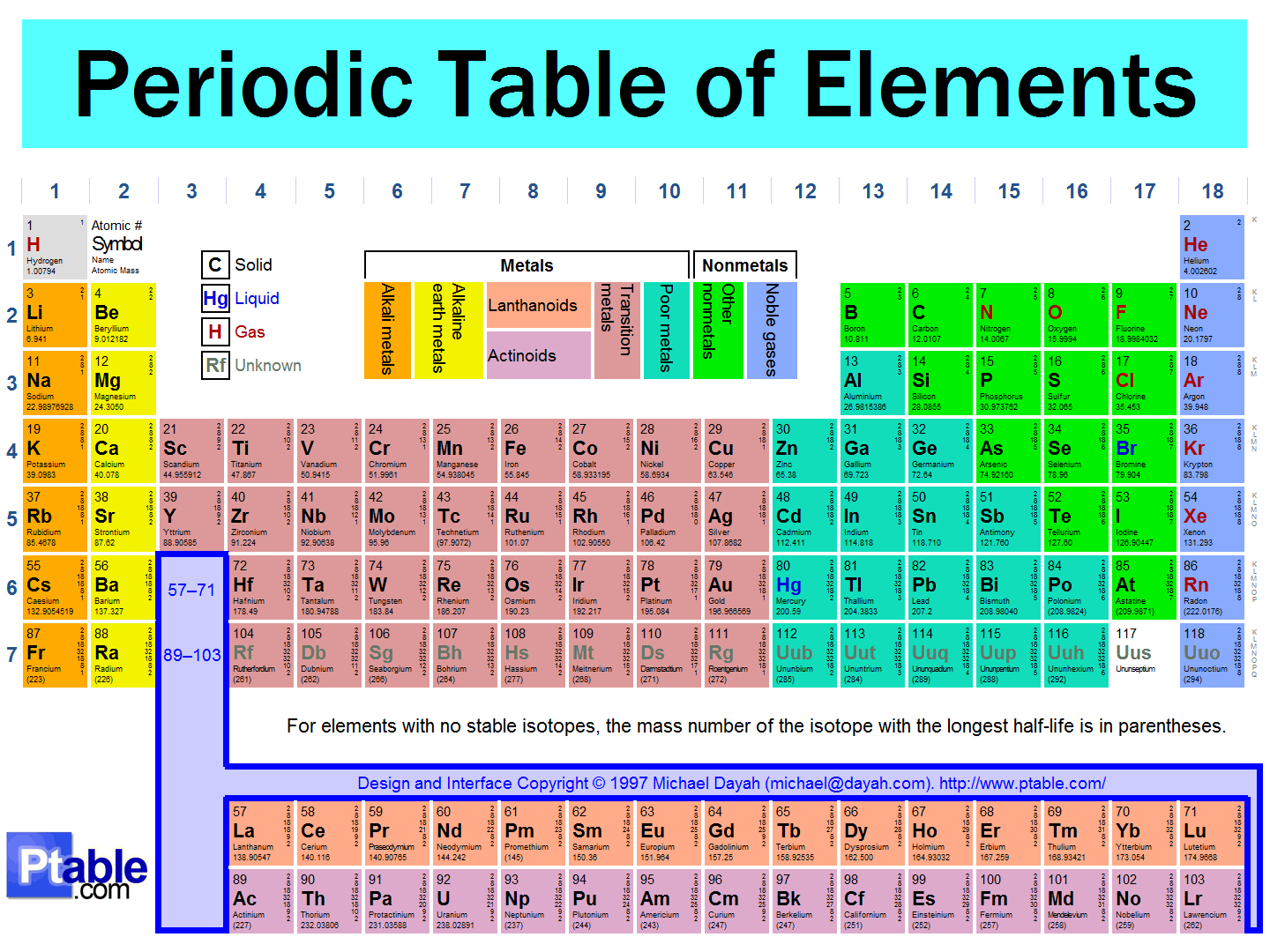
Most of the elements on the periodic table are classified as _____.
a)
Metals
b)
Nonmetals
c)
Metalloids
d)
Periods
74.
This class of elements are sometimes called "semiconductors."
a)
Metals
b)
Nonmetals
c)
Metalloids
d)
Groups
75.
Which of these grouping of elements could have the characteristic of luster (shiny)?
a)
Metal
b)
Nonmetal
c)
metalloids
d)
Both metals and metalloids
76.
Which of these is a property of metals?
a)
It's malleable
b)
It can't conduct electricity
c)
They are used in food
d)
It's very brittle
77.
All of the following would classify an element as a metal except?
a)
Dull
b)
Luster
c)
Malleable
d)
Hard
78.
Which of the following properties refers to the ability of metals to be drawn into wires?
a)
A. malleability 
b)
B. compressibility
c)
C. ductility
d)
D. luster
79.
Which of the following property of metal can reflect light
a)
A. malleability
b)
B. compressibility
c)
C. ductility
d)
D. luster
80.
If a substance breaks easily, it is said to be ________________.
a)
A. Magnetic
b)
B. Brittle
c)
C. Conductive
d)
D. Ductile
81.
Metals appear to the _______ of the dark ziz-zag line on the periodic table. 
a)
A. right
b)
B. middle
c)
C. left
82.
Nonmetals occur to the ________of the dark zig-zag on the periodic table. 
a)
A. right
b)
B. middle
c)
C. left
83.
What does malleable mean?
a)
able to bend
b)
will break easily
c)
can be used for wire
d)
is shiny
84.
What does ductile mean?
a)
electricity flows easily
b)
quacks like a duck
c)
can be drawn into a wire
d)
able to bend
85.
How would this element be classified?
a)
Metal
b)
Nonmetal
c)
Metalloid
d)
Metamorphic
86.
Silicon is a semiconductor and has properties of both metals and nonmetals. What type of element is Silicon? 
a)
Metal
b)
Nonmetal
c)
Metalloid
d)
Pretty
87.
A pure substance that cannot be broken down into anything simpler is a/an-
a)
atom
b)
element
c)
cell
d)
compound
88.
Which type of elements touch the zigzag line?
a)
Metals
b)
Nonmetals
c)
Metalloids
d)
Metals and Metalloids
89.
Which of the following tables correctly lists the physical properties of metals and nonmetals?
a)
A
b)
B
c)
C
d)
D
90.
Some students conducted a laboratory investigation to learn more about the physical properties of different elements. They observed four samples and recorded their observations in the table . Based on these observations, which sample is most likely a nonmetal?
a)
Sample 1
b)
Sample 2
c)
Sample 3
d)
Sample 4
91.
A student is given a sample of an unknown substance. He is asked to determine if it is classified as a metal, a metalloid, or a nonmetal. He discovered that the unknown element conducted some heat and electricity, had a shiny luster, and broke easily. This element is most likely a 
a)
metal
b)
nonmetal
c)
metalloid
d)
cannot be determined
92.
Anytime you see the word SEMICONDUCTOR - what substance do you have?
a)
Metal
b)
Nonmetal
c)
Metalloid
93.
How many elements are represented in the compound?
Na2CO3
a)
1
b)
2
c)
3
d)
4
94.
What is made up two or more elements that are chemically combined?
a)
Element
b)
Mixture
c)
Compound
d)
Solids
95.
What cannot be broken down into other substances?
a)
Compound
b)
Mixture
c)
Solids
d)
Element
96.
Which of the following represents an element?
a)
H2O
b)
H2
c)
NaCl
d)
CaCO3
97.
Which of the following is not a compound?
a)
HCl
b)
Cl
c)
NaCl
d)
CO2
98.
A combination of substances that are not chemically combined is called a(n)____________. 
a)
mixture
b)
compound
c)
physical
99.
How is a compound different from a mixture?
a)
Solids, liquids, and gases can form compounds
b)
Each substance in a compound loses its characteristic properties
100.
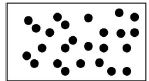
This picture represents which of the following?
a)
element
b)
compound
c)
mixture
101.
This picture represents which of the following?
a)
element
b)
compound
c)
mixture
102.
This picture represents which of the following?
a)
element
b)
compound
c)
mixture
103.
Salt has a chemical formula of NaCl.  Salt is a...
a)
Compound
b)
Element
c)
Mixture
d)
None of the Above
104.
How many elements are represented in the compound?
Na2CO3
a)
1
b)
2
c)
3
d)
4
105.
a)
Element
b)
Compound
c)
Mixture of compound and element
d)
Mixture of elements
106.
a)
Element
b)
Compound
c)
Mixture of compound and element
d)
Mixture of elements
107.
a)
Element
b)
Compound
c)
Mixture of compound and element
d)
Mixture of two elements
108.
a)
Element
b)
Compound
c)
Mixture of compound and element
d)
Mixture of two elements
109.

What is the length of the object in centimeters?

a)

3.4 cm

b)

4.3 cm

c)

3.5 cm

d)

1 1/4 inches

110.

What is the length of the object in millimeters (mm)?

a)

27 mm

b)

7.2 mm

c)

2.7 mm

d)

3 mm

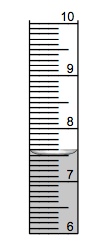
111.
What is the volume of the liquid in this graduated cylinder?
a)
8.5 mL 
b)
7.5 mL 
c)
8 mL 
d)
.1 mL
112.
What is the mass on this triple beam?
a)
200g
b)
44g
c)
244g
d)
4g
113.
Calculate the volume of the rock
a)
10.0 mL
b)
16.0 mL
c)
30.0 mL
d)
40.0 mL
114.
Sponge Bob's volume equals
a)
0.5 mL
b)
1.0 mL
c)
2.0 mL
d)
3.0 mL
115.
What Safety Symbol is this? 
a)
Electrical Safety
b)
Animal Safety
c)
Heat Protection
d)
Sharp Object Hazard
116.
What does this symbol mean 
a)
fire safety 
b)
eye protection safety 
c)
animal safety 
d)
extreme temperatures 
117.

What symbol is this?

a)

Open Flame

b)

Toxic

c)

Chemical

d)

Electrical

118.
What should you do if a glass breakage occurs?
a)
Touch it to see if it is safe?
b)
Run out of the classroom
c)
Immediately tell your teacher
d)
Leave without telling anyone
119.
What does this symbol indicate? 
a)
Extreme temperatures
b)
Corrosive materials
c)
Sharp surfaces
d)
Electrical hazard
120.

Which picture represent open flame warning?

a)
b)
c)
d)
121.
If plants are exposed to sunlight, then they will grow taller.
What part of the scientific method is this an example of?
a)
Procedure
b)
Hypothesis
c)
Question
d)
Results
122.
What is being changed in this experiment?
a)
ramp height
b)
the speed that the ball rolls
c)
type of ball
123.
What is being measured or the result/effect of this experiment?
a)
ramp height
b)
the speed that the ball rolls
c)
type of ball
124.
What is a hypothesis?
a)
A hypothesis is the right answer to an experiment.
b)
A hypothesis is the wrong answer to an experiment.
c)
A hypothesis is an educated guess.
d)
I don't know.
125.
True or False: Your hypothesis can never be wrong.
a)
True
b)
False
126.

Pay close attention to your surroundings. What do you see, hear, smell, touch, or taste?

a)

observe

b)

hypothesis

c)

experiment

d)

results

127.
This variable in an experiment is the one being deliberately changed by the scientist. 
a)
dependent variable
b)
independent variable
c)
data
d)
control group
128.
A series of steps used by scientists to solve a problem or answer a question. 
a)
scientific method
b)
recipe
c)
data collection
d)
metric system
129.
An experiment is performed on plants to see how different liquids affect plant growth. Each plant in the experiment is given a different liquid; water, apple juice, or milk. Each plant has the same amount of soil, sunlight, and listens to the same music. In this investigation, what is the dependent variable?
a)
Type of plant
b)
Water, apple juice, milk
c)
Plant growth
d)
Color of the plant's leaves
130.
Will a construction paper air plane fly faster than an airplane made from notebook paper? Choose the best hypothesis.
a)
If I make a paper airplane from notebook paper, then it will fly faster than construction paper.
b)
Yes.
c)
No.
d)
I think the construction paper air plane will fly faster.
131.
Which statement is an inference about this picture?
a)
The van is tan.
b)
The  van ran into KFC. 
c)
The driver was hungry. 
d)
Red and white are part of the KFC building. 
132.

Which of these contains steps in the right order?

a)

Ask a question, do background research, state your hypothesis, conduct an experiment, analyze data, make a conclusion

b)

State your hypothesis, ask a question, do background research, conduct an experiment, analyze data, make a conclusion

c)

Ask a question, state your hypothesis, do background research, conduct an experiment, make a conclusion, analyze data

d)

State your hypothesis, ask a question, do background research, make a conclusion, conduct an experiment, analyze data

133.
BooBoo believes that his plants grow so well because he is always playing music in his room. What is a question he might ask to test this?
a)
Does music have an affect on plant growth?
b)
Which music groups like plants?
c)
Does plant growth make music sound better?
d)
Why do dying plants hate music?
134.
Which of the following is considered a good, testable question?
a)
Why do some basketballs bounce higher than others?
b)
What is the coating on a basketball made of?
c)
Is basketball a more challenging sport than soccer?
d)
What is the effect of air pressure on a basketball's bounce height?
135.
True or False: A testable question compares how something I change affects something I measure.
a)
True
b)
False
136.
What is an observation?
a)
an opinion
b)
a fact
c)
what you decide
d)
a conclusion
137.
How many mountain bikes were sold?
a)
22
b)
28
c)
16
d)
6
138.
What is the title of the graph?
a)
Metro Bicycle Shop Weekly Sales
b)
Bicycles Sold
c)
Types of Bicycles
139.
What is the independent variable on the graph (x-axis)?
a)
Metro Bicycle Shop Weekly Sales
b)
Bicycles Sold
c)
Types of Bicycles
140.
What is the dependent variable on the graph (y-axis)?
a)
Metro Bicycle Shop Weekly Sales
b)
Bicycles Sold
c)
Types of Bicycles
141.
What is the dependent variable on the graph (y-axis)?
a)
Metro Bicycle Shop Weekly Sales
b)
Bicycles Sold
c)
Types of Bicycles
142.
How many total people took the survey?
a)
50
b)
150
c)
100
d)
200