
 Worksheets
Biology- Ch. 7 - Semester Final
Total questions: 83
Worksheet time: 1hrs 7mins
Name
Class
Date
1.
Which of the following is the smallest unit of life that can carry out all life functions?
a)
the mitochondria
b)
the vacuoles
c)
the nucleus
d)
the cell
2.
Which structures are found in every living cell?
a)
cell membrane and cytoplasm
b)
chloroplasts and mitochondria
c)
a cell wall and nucleus
d)
chloroplasts and cell wall
3.
Which cell structure is found in plant and animals cells and controls what can come into or leave a cell?
a)
cell membrane
b)
cytoplasm
c)
nucleus
d)
vacuole
4.
What is the function of the cell nucleus found in both plant and animal cells?
a)
to produce energy
b)
to control cell activity
c)
to remove waste products
d)
to allow molecules to enter the cell
5.
Cell organelles that are responsible for digesting food, worn out organelles and other cellular wastes are called ___________________.
a)
Mitochondria
b)
Vacuoles
c)
Lysosomes
d)
Chlororplasts
6.
What is one basic function of the vacuoles?
a)
circulating oxygen
b)
producing food
c)
controlling cell processes
d)
storing water
7.
Chloroplasts in plant cells allow the plant to perform a function that animal cells cannot do. What is the main function of the chloroplasts found in plant cells?
a)
to absorb light energy and manufacture food
b)
to remove waste materials by active transport
c)
to manufacture chemical energy from food
d)
to control the shape of the cell
8.
All cells need energy to function. Which cell organelle is responsible for producing energy in the cell?
a)
chloroplasts
b)
mitochondria
c)
nucleus
d)
vacuoles
9.
What is the function of a cell wall?
a)
to protect and support the cell
b)
to perform different functions in each cell
c)
to prevent water from passing through it
d)
to prevent oxygen from entering the cell
10.
In what part of the plant cell does the process of photosynthesis take place?
a)
nucleus
b)
mitochondria
c)
chloroplasts
d)
vacuoles
11.
Starch and water molecules in potato cells are stored in what organelle?
a)
mitochondria
b)
nucleus
c)
cell wall
d)
vacuole
12.
Cells with a nucleus and membrane-bound organelles are called ____________________.
a)
prokaryotes
b)
eukaryotes
c)
bacteria
d)
protists
13.
Which of the following is not part of the cell theory?
a)
cells must contain DNA
b)
all living things are made from cells
c)
cells can only come from other cells
d)
cells are the basic unit of life
14.
He discovered that all plants are made of cells:
a)
Anton van Leeuwenhoek
b)
Theordor Schwann
c)
Robert Hooke
d)
Mattias Schleiden
15.
Who was the first person to see cells under the microscope and give them their name?
a)
Mattias Schleiden
b)
Robert Hooke
c)
Theordor Schwann
d)
Anton van Leeuwenhoek
16.
In a plant cell, a stiff wall surrounds the membrane, giving the cell a rigid, boxlike shape?
a)
cell membrane
b)
cell
c)
ribosome
d)
cell wall
17.
A gel-like fluid in which many different organelles are found.
a)
cell membrane
b)
nucleus
c)
organelle
d)
cytoplasm
18.
The network of passageways carries materials from one part of the cell to another.
a)
endoplasmic reticulum
b)
golgi bodies
c)
vacuole
d)
cell
19.
This organelle receives materials from the endoplasmic reticulum and sends them to other parts of the cell.
a)
ribosomes
b)
mitchondria
c)
cytoplasm
d)
golgi bodies
20.
A tiny cell structure that carries out a specific function within a cell.
a)
organelle
b)
cell
c)
nucleus
d)
ribosomes
21.
These small structures function as factories to produce proteins.
a)
mitochondria
b)
golgi body
c)
endoplasmic reticulum
d)
ribosomes
22.
The diffusion of WATER across a semi-permeable membrane is
a)
osmosis
b)
diffusion
c)
endocytosis
d)
exocytosis
23.
What is diffusion
a)
active transport
b)
passive transport
c)
cell division
d)
cell mutation
24.
The movement of molecules from higher concentration to lower concentration is
a)
diffusion
b)
cell division
active transport
active transport
c)
active transport
d)
tonicity
25.
Active transport requires
a)
energy
b)
the nucleus
c)
chloroplasts
d)
lysosomes
26.
What organelles are only found in PLANT cells
a)
lysosomes & centrioles
b)
cell wall & chloroplasts
c)
nucleus & nucleolus
d)
mitochondria & ribosomes
27.
What organelles is NOT found in a PROkaryote
a)
nucleus
b)
cell membrane
c)
Chromosomes (DNA)
DNA
DNA
d)
ribosomes
28.
What is the membrane around the NUCLEus called?
a)
nuclear membrane
b)
mitochondria
c)
cell membrane
cell emmbrane
cell emmbrane
d)
nucleolus
29.
water moves from
a)
higher conc. H20 => lower conc H20
b)
lower conc. H20 => higher conc. H20
30.
If there is too much salt in your cells...
a)
you need more water
b)
you need to lose water
31.
What organelle PRODUCES proteins?
a)
ribosomes
b)
centrioles
c)
lysosomes
d)
nucleus
32.

Robert Hooke, Anton van Leeuwenhoek, Theodor Schwann, Rudolf Virchow, and Matthias Schliden were all responsible for what theory?
a)
The Theory of Gravity
b)
The Theory of Relativity
c)
The Cell Theory
d)
The Theory of Continental Drift
33.

What tool do you use to view the cells?
a)
metric ruler
b)
centrifuge
c)
microscope
d)
telescope
34.
All cells come from___________ cells.
a)
pregnant
b)
pre-existing
c)
paternal
d)
pin size
35.
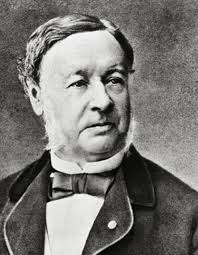
Which of the following scientists concluded that all animals are made of cells?
a)
Rudolf Virchow
b)
Matthais Schleiden
c)
Robert Hooke
d)
Theodor Schwann
36.

Which of the following scientists was the first to observe bacteria under a microscope?
a)
Anton van Leuwenhoek
b)
Matthais Schleiden
c)
Robert Hooke
d)
Theodor Schwann
37.
Prokaryotic
a)
are single celled organisms that do not have a nucleus or membrane bound organelles
b)
a protective layer that covers the the cells surface and acts as a barrier
c)
is the smallest unit that can preform all he processes necessary for life
38.
Which organism listed below is a prokaryote?
a)
dog
b)
human
c)
sunflower
d)
bacterial cell
39.
Animal and plant cells are both this type of cell.
a)
Eukaryote
b)
Prokaryote
40.
This scientist discovered and named the cell.
a)
Robert Hooke
b)
Anton Van Leeuwenhoek
c)
John Dalton
d)
Mathias Schleiden
41.
A typical animal cell is spherical in shape.
a)
True
b)
False
42.
A typical plant cell is rectangular in shape.
a)
True
b)
False
43.
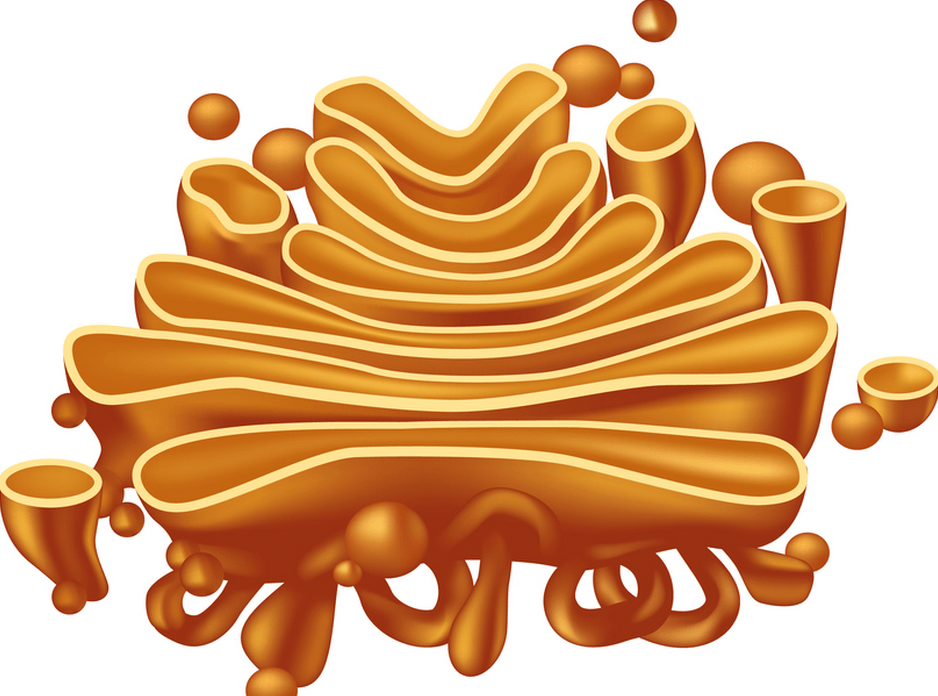
I am a protein packaging and shipping machine! Who am I?
a)
vacuole
b)
ribosome
c)
mitochondrion
d)
golgi apparatus
44.
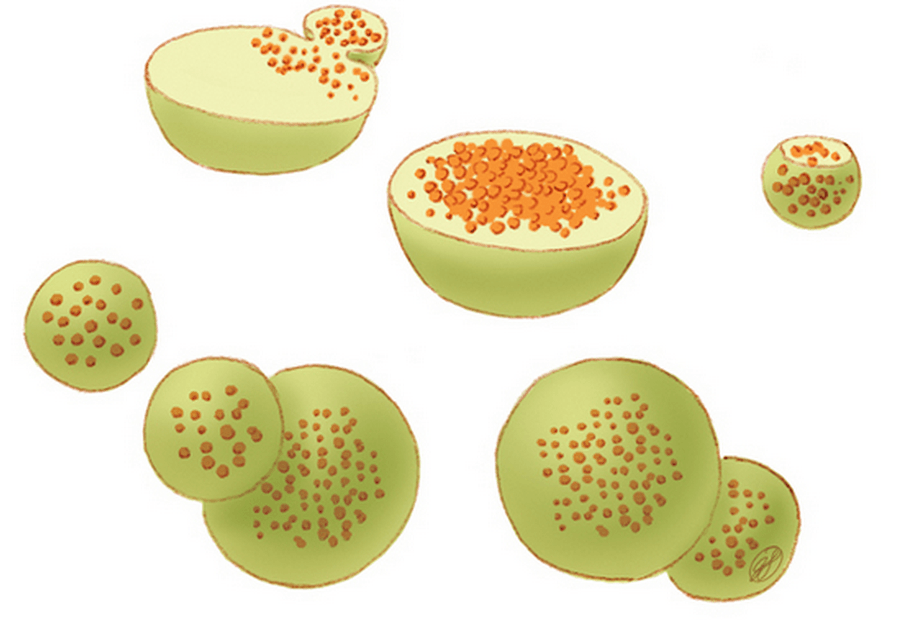
You might think of me as the trash collector, but recycler is maybe more accurate. What am I?
a)
mitochondria
b)
lysosome
c)
vacuole
d)
ribosome
45.
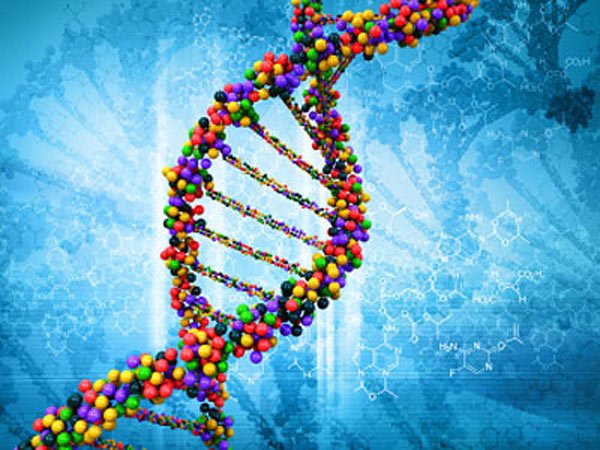
What is the name of the genetic material that is inside the nucleus?
a)
ER
b)
ATP
c)
YOLO
d)
DNA
46.

Which part of the cell is often called "the brain of the cell"?
a)
nuclear membrane
b)
endoplasmic reticulum
c)
nucleus
d)
mitochondria
47.
Which organelle belongs in plant cells only?
a)
Cytoplasm
b)
Mitochondrion
c)
Large Central Vacuole
d)
Cell Membrane
48.
Which organelle belongs in animal cells only?
a)
Chloroplast
b)
Cell Wall
c)
Many Small Vacuole
d)
Nucleus
49.
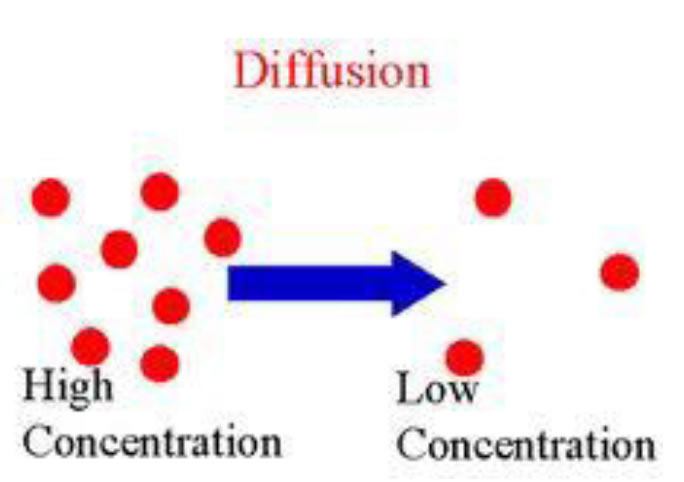
Movement of particles from high to low concentration.
a)
Passive Transport
b)
Active Transport
50.
Osmosis is a form of ______________.
a)
Passive Transport
b)
Active Transport
51.
Solutes move against the concentration gradient, therefore energy is needed.
a)
Passive Transport
b)
Active Transport
52.
Osmosis is the movement of _____ across a membrane.
a)
food
b)
energy
c)
oxygen
d)
water
53.

This picture represents what type of cell transport?
a)
endocytosis
b)
exocytosis
c)
osmosis
d)
passive transport
54.

This picture represents which type of cellular transport?
a)
passive transport
b)
endocytosis
c)
exocytosis
d)
osmosis
55.
Which is true about active transport?
a)
It requires energy
b)
it does not require energy
c)
It moves substances down the concentration gradient
d)
it moves material from high to low concentration
56.
The concentration of water is higher in the soil than in plant root cells. Water moves into root cells of a plant by...
a)
Facilitated Diffusion
b)
Simple Diffusion
c)
Active Transport
d)
Osmosis
57.
Molecules diffusing with the concentration gradient through a protein channel is...
a)
Facilitated Diffusion
b)
Simple Diffusion
c)
Active Transport
d)
Osmosis
58.
Due to the higher concentration of oxygen in the air than your blood, oxygen goes from the lungs into the red blood cells by....
a)
Facilitated Diffusion
b)
Simple Diffusion
c)
Active Transport
d)
Osmosis
59.
Waste products are moved out of the cell by ______________________.
a)
endocytosis
b)
diffusion
c)
exocytosis
d)
osmosis
60.
Food is moved into the cell by ________________________.
a)
endocytosis
b)
diffusion
c)
exocytosis
d)
osmosis
61.

The cell below is in a _________ solution.
a)
Hypotonic
b)
Hypertonic
c)
Isotonic
62.

The cell below is in a _____________ solution.
a)
Hypertonic
b)
Hypotonic
c)
Isotonic
63.
A cell in an isotonic solution will
a)
swell
b)
shrink
c)
stay the same size
d)
impossible to tell
64.
A cell in a hypotonic solution will
a)
swell
b)
shrink
c)
stay the same size
d)
impossible to tell
65.
When a cell is placed in a hypertonic (more concentrated) solution water
a)
moves from the inside of the cell to the solution
b)
moves from the solution to the inside of the cell
c)
moves equally in and out of the cell
d)
none of these
66.
When a cell is placed in a hypotonic solution (less concentrated), water
a)
moves from the inside of the cell to the solution
b)
moves from the solution to the inside of the cell
c)
moves equally in and out of the cell
d)
none of these
67.

What type of transport is this?
a)
facilitated diffusion
b)
active transport
c)
diffusion
d)
osmosis
68.

This is a picture of
a)
Cell wall
b)
Cell membrane
c)
chloroplast
d)
mitochondria
69.
The cell membrane is selectively permeable, which means...
a)
All materials can enter and leave the cell
b)
Certain things can enter while others cannot
c)
The cell manually sorts through all materials
d)
Only certain cells can interact with the cell.
70.
Another term for equilibrium is...
a)
Not enough
b)
Too little
c)
Homeostasis
d)
Too much
71.
A can of air freshener is sprayed in the opposite side of the room. Ten minutes later you start to smell the scent. This is an example of
a)
diffusion
b)
active transport
c)
endocytosis
d)
osmosis
72.
When molecules are spread evenly across the cell membrane, ______________________ is reached.
a)
difference
b)
transportation
c)
equilibrium
d)
solution
73.
What is the difference between active and passive transport?
a)
Active does not need energy and passive uses ATP (energy)
b)
Active uses ATP (energy) and passive does not need energy
c)
Active stores transport proteins and passive releases
d)
Active uses hormones and passive does not
74.
Which component of the cell membrane functions to isolate the cell from its environment?
a)
carbohydrates
b)
cholesterol
c)
phospholipids
d)
proteins
75.
Which component of the cell membrane functions to help move materials across the membrane?
a)
carbohydrates
b)
cholesterol
c)
phospholipids
d)
proteins
76.
The plasma membrane is a ___________ boundary of a cell
a)
rigid
b)
flexible
77.
The ____________ mosaic model describes the plasma membrane and its molecules
a)
solid
b)
fluid
78.
The plasma membrane is a ______________ of phospholipid molecules with protein molecules embedded in it
a)
bilayer
b)
trilayer
79.
The cell membrane that surrounds the cell is made of what material?
a)
Protein
b)
Carbohydrates
c)
Phospholipids (Fats)
d)
Nucleic Acids
80.
Phospholipids have a bilayer. What does bilayer mean?
a)
One layer
b)
Two layers
81.
Lipid tails are...
a)
Nonpolar
b)
Polar
82.
Lipid heads are...
a)
Polar
b)
Nonpolar
83.
Which of the following is NOT part of the cell membrane?
a)
Lipids
b)
Carbs
c)
Proteins
d)
Nucleic Acids
100 %

