
 Worksheets
Semester 1 Review
Total questions: 88
Worksheet time: 1hrs 21mins
Name
Class
Date
1.
What does every food chain start with? (Even if it's not drawn or written there!)
a)
producers
b)
sun
c)
consumer
d)
decomposers
2.

An organism that needs to eat other organisms to obtain energy is known as a:
a)
Autotroph
b)
Producer
c)
Consumer
d)
Mutualist
3.
Consumer that eats plants
a)
heterotroph
b)
herbivore
c)
producer
d)
community
4.

What does a food web represent?
a)
All connections of energy flow throughout all organisms in a habitat.
b)
The specific ways that mutualism is carried out.
c)
A single pathway or energy flow between organisms.
d)
How carnivores get their food.
5.

relationship in which two species live closely together
a)
resource
b)
mutualism
c)
succession
d)
symbiosis
6.

The rabbit in this food web would be considered a:
a)
Decomposer
b)
Producer
c)
Secondary Consumer
d)
Primary Consumer
7.
Where an organism lives
a)
habitat
b)
niche
c)
heterotrogh
d)
biosphere
8.

In this Food Web Pyramid Which type of consumer gets only 10% of the energy stored in plants?
a)
Herbivore
b)
Carnivore
c)
Omnivore
d)
Secondary Consumer
9.
Which one is not a consumer?
a)
anemone
b)
bear
c)
shark
d)
vulture
10.

The image provided is an example of a(n):
a)
Carnivore
b)
Herbivore
c)
Producer
d)
Autotroph
11.
The amount of energy that usually transfers from one trophic level to the next...
a)
10%
b)
20%
c)
80%
d)
50%
12.
An illustration that uses arrows to show the MANY possible directions in which matter and energy can pass through the organisms in an ecosystem.
a)
Food chain
b)
Food web
c)
Energy Pyramid
d)
Succession Map
13.
The nonliving aspects of an ecosystem.
a)
Abiotic factors
b)
Biotic factors
14.
The living portions of the ecosystem.
a)
Biotic factors
b)
Abiotic factors
15.
As you move upward, from level to level, in an energy pyramid, energy _____.
a)
increases
b)
decreases
c)
stays the same
d)
increases exponentially
16.
plants that convert energy from the sun
a)
decomposer
b)
primary consumer
c)
secondary consumer
d)
producer
17.

What are the Abiotic factors in this image?
a)
water, sunlight, dirt, air
b)
birds and plants
c)
birds, water, dirt
d)
plants, water
18.
The living part of an ecosystem
a)
Biotic
b)
Abiotic
c)
Mother Earth
d)
Flowers
19.
Two or more members of a particular species living and interacting in the same area
a)
Community
b)
Population
c)
Organisms
d)
Biosphere
20.
What is the original source of almost all energy in most ecosystems?
a)
carbohydrates
b)
sunlight
c)
water
d)
carbon
21.

which symbiosis is this
a)
parasitism
b)
mutualism
c)
commensalism
d)
nonalism
22.

symbiotic relationship in which both organisms benefit
a)
competition
b)
Mutualism
c)
nitrogen fixation
d)
energy pyramid
23.

A living relationship between two species in which one organism is harmed is called...
a)
mutualism
b)
commensalism
c)
parasitism
d)
niche
24.

The image provided is an example of a(n):
a)
Producer
b)
Autotroph
c)
Consumer
d)
Insect
25.
Organisms that can capture energy from inorganic, nonliving sources.
a)
Producers
b)
Consumers
c)
Detritivores
d)
Carnivores
26.
Organisms that feed on both living producers and other consumers.
a)
Carnivores
b)
Omnivores
c)
Herbivores
d)
Detritivores
27.
True or False: It is possible for a carnivore to be a producer.
a)
False
b)
True
28.
Water temperature would be an example of ...
a)
A biotic factor
b)
An abiotic factor
29.

A living relationship between two species in which one organism is harmed is called...
a)
mutualism
b)
commensalism
c)
parasitism
d)
niche
30.
What are the major differences between a species and a population?
a)
Populations consist of ALL of the individual organisms within a species in a given area/ecosystem that are fertile
b)
Populations are a collection of many different types of species that are not related to each other
c)
Populations are just a larger amount of individuals
d)
Populations are the number of individuals within a species that are identical
31.
An animal that is hunted and eaten for food is a
a)
predator
b)
prey
32.
An organism's niche is
a)
the entire role an organism has in the place it lives
b)
the range of temperatures that the organism needs to survive
c)
all the physical and biological factors in the organism's environment
d)
the nutrients that flow from the organism to the environment
33.
Which is an abiotic part of an ecosystem?
a)
bees
b)
squirrels
c)
rocks
d)
trees
34.
What is not an example of niche?
a)
Type of food it gets
b)
Type of predator
c)
How it gets its food
d)
physical conditions required to survive
35.

_____ have the longest wavelengths and lowest frequencies of all electromagnetic waves.
a)
microwaves
b)
radio waves
c)
gamma rays
d)
ultraviolet
36.

_______ carry the greatest amount of energy.
a)
x-rays
b)
gamma rays
c)
infrared rays
d)
visible light
37.
The _______________ determines the color of visible light.
a)
wavelength
b)
speed
c)
amplitude
d)
light
38.

High frequency waves have _________ wavelengths.
a)
varying
b)
long
c)
the same
d)
short
39.
All electromagnetic waves have the same...
a)
frequency
b)
speed
c)
wavelength
d)
energy
40.
Which of the following electromagnetic waves is given off as heat?
a)
ultraviolet light
b)
x-rays
c)
gamma rays
d)
infrared rays
41.
Which is the correct order of waves of the electromagnetic spectrum, from lowest energy to highest energy?
a)
radio waves, microwaves, infrared waves, visible light, ultraviolet light, x-rays, gamma rays
b)
gamma rays, x-rays, ultraviolet light, visible light, infrared light, microwaves, radio waves
c)
radio waves, gamma rays, x-rays, visible light, microwaves, ultraviolet light, infrared waves
42.
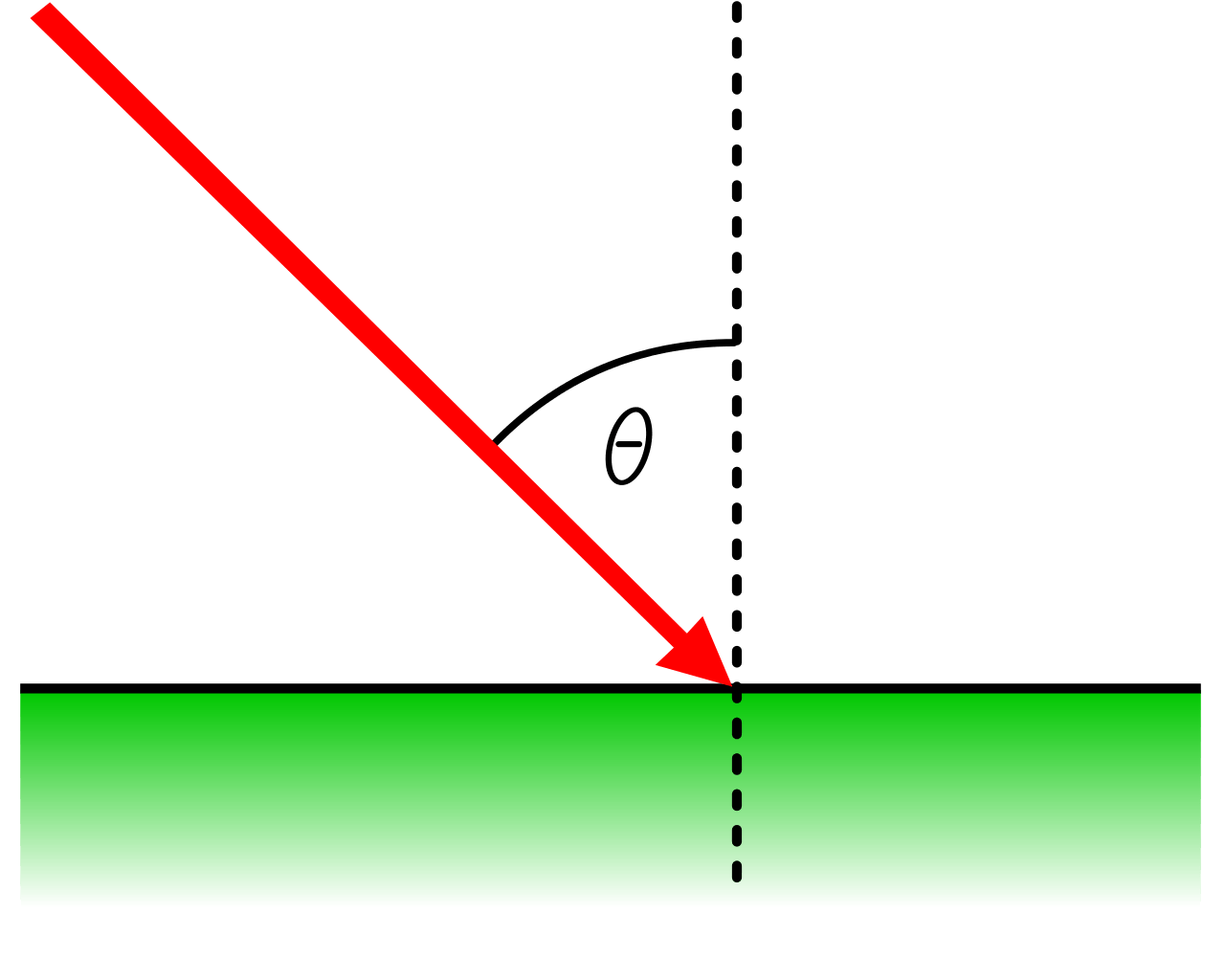
According to the Law of reflection, a light ray striking a mirror
a)
continues moving through the mirror in the same direction
b)
moves into the mirror at a slightly different angle
c)
bounces off the mirror toward the direction it came from
d)
bounces off the mirror at the same angle it hits.
43.

Why do you not see an image when light reflects off a rough surface?
a)
because not enough light is not reflected
b)
because the reflection is regular
c)
because the reflection is diffuse
d)
because the law of reflection does not apply
44.
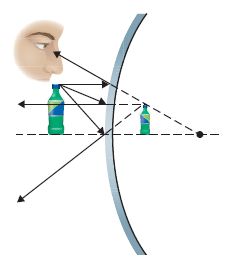
What kind of mirror is shown here?
a)
plane
b)
concave
c)
convex
d)
diffuse
45.

This is an example of a __________ mirror.
a)
Concave
b)
Convex
c)
Plane
d)
Magnifying
46.
The uneven reflection of light waves from rough surface is called ?????? reflection
a)
Surface
b)
Diffuse
c)
Equal
d)
IDK
47.

A surface that curves outward and causes light to spread out.
a)
convex mirror
b)
concave mirror
c)
plane mirror
48.

The pictures shows what a student observed when he looked through a hand lens at a penny.
What happens to light passing through a hand lens that makes the image of the penny appear larger? The light is-
What happens to light passing through a hand lens that makes the image of the penny appear larger? The light is-
a)
absorbed
b)
reflected
c)
refracted
d)
stopped
49.

A student placed a pencil in a cup of water. The pencil appears broken because light-
a)
always travels in a straight line
b)
bends when it passes through water
c)
makes the water in the glass evaporate
d)
reflects the pencil on the water's surface
50.
Transparent object that is thicker in the middle than at the edges is called?
a)
Concave Lens
b)
Refraction
c)
Convex Lens
51.
Refraction is the bending of a wave disturbance as it passes from one _________ into another.
a)
glass
b)
medium
c)
area
d)
boundary
52.
Which of the following can sound travel through?
a)
solid
b)
liquid
c)
gas
d)
all of the above
53.
When light travels from air to water it....
a)
Speeds up
b)
Slows down
c)
stays the same speed
54.
Convex Mirrors produce...
a)
Only right side up images
b)
Only upside down images
c)
both upside down and right side up images
55.
Concave mirrors can create upside down or right side up images.
a)
True
b)
False
56.
What does it mean to reflect?
a)
bounce off
b)
bend
c)
refract
d)
energy
57.
What does it mean to refract?
a)
bounce off
b)
to bend
c)
curve outward
d)
reflect
58.

What kind of lens is shown?
a)
Concave
b)
Convex
Convex
Convex
c)
Specular
Concord
Concord
d)
Diffuse
Plane
Plane
59.

Which objects on the table are "Transparent"?
a)
Rock; Pencil
b)
Cup; Goggles
c)
Supply Box; Fish Bowl
60.
Energy of motion is which type of energy?
a)
Potential
b)
Kinetic
c)
Sound
d)
Gravitational
61.
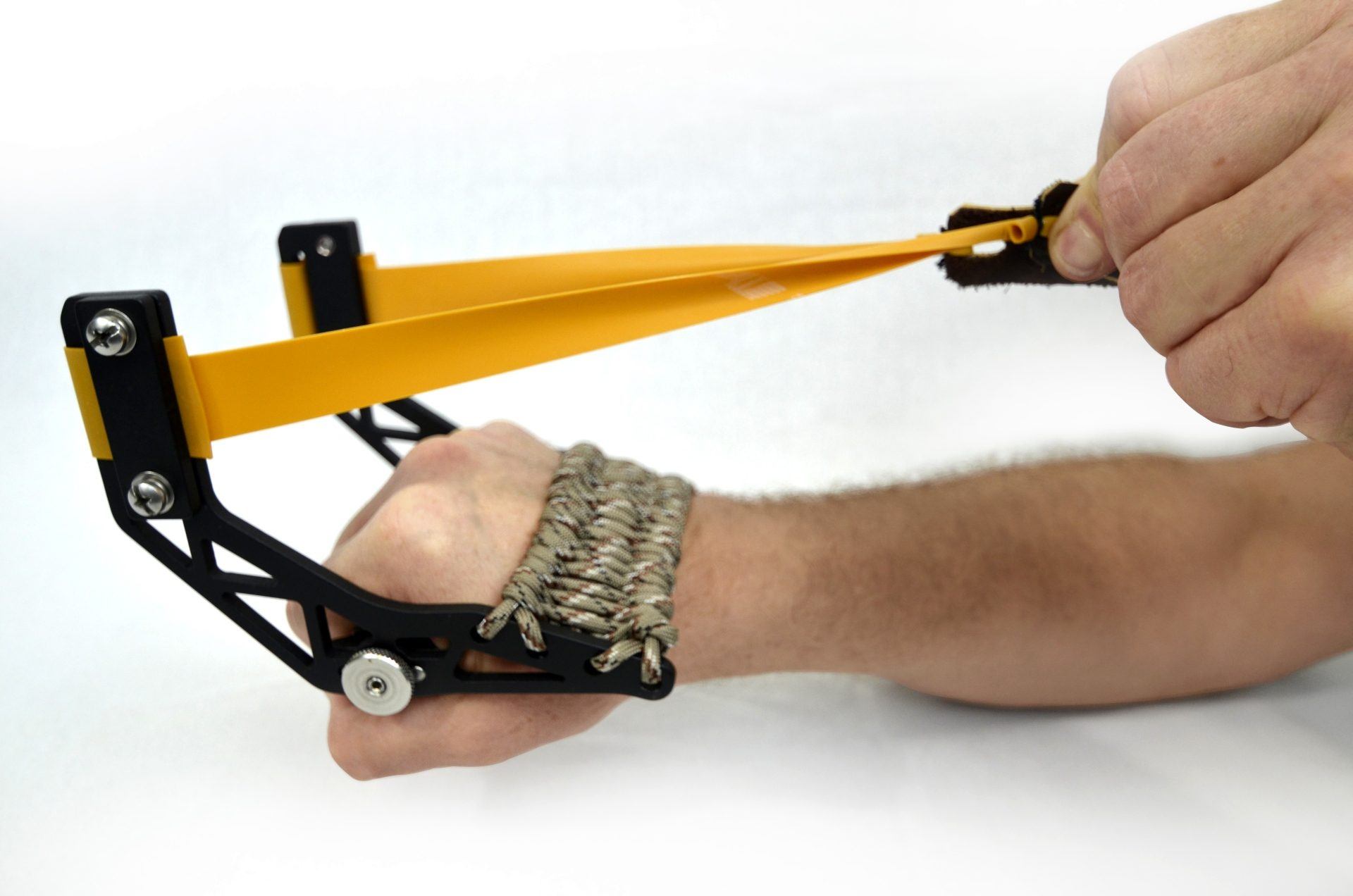
What type of energy is in this picture?
a)
Kinetic
b)
Potential
c)
Chemical
d)
Sound
62.
When plants convert the sun's energy into food, which type of energy is it?
a)
kinetic
b)
chemical
c)
thermal
d)
radiant
63.

What kind of energy is represented in this picture?
a)
Thermal
b)
Potential
c)
Nuclear
d)
Mechanical
64.

What kind of energy does this device use?
a)
Chemical
b)
Electrical
c)
Thermal
d)
Chemical
65.
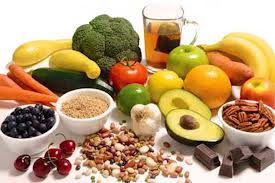
What kind of energy is represented in the picture?
a)
Thermal
b)
Chemical
c)
Sound
d)
Nuclear
66.
Wind turbines and windmills convert what energy to another?
a)
Kinetic to electric
b)
Gravitational potential to electric
c)
Mechanical to potential
d)
Thermal to sound
67.
On a roller coaster, where is maximum potential energy?
a)
At the bottom of a big hill
b)
When going around a corner
c)
When going upside down
d)
At the top of a big hill
68.
On a roller coaster, where is maximum kinetic energy?
a)
At the bottom of a big hill
b)
When going around a corner
c)
When going upside down
d)
At the top of a big hill
69.
According to which law of energy, energy can't be created or destroyed?
a)
First law of motion
b)
The law of tacos
c)
Laws of Energy
d)
law of conservation of energy
70.
How does heat always transfer?
a)
from cold to hot
b)
from hot to cold
c)
from liquid to solid
d)
from gas to liquid
71.

What type of heat transfer does this picture represent? (pot touching burner)
a)
radiation
b)
conduction
c)
convection
d)
sunshine
72.

What type of heat transfer does this picture represent?
a)
radiation
b)
conduction
c)
convection
d)
sunburns
73.
Conduction is heat transfer by -
a)
Touch
b)
Circles
c)
Waves
74.
Convection is heat transfer by-
a)
Touch an object
b)
The heating and cooling of a fluid
c)
Electromagnetic Waves
75.

Warm air rises and the cool air sinks demonstrates this type of heat transfer.
a)
conduction
b)
convection
c)
radiation
d)
Insolation
76.

When the 2nd story of a house is warmer than the 1st floor of a house is heat transfer through
a)
conduction
b)
convection
c)
radiation
d)
thermal equilibrium
77.

The heat from a hot burner to a pot is transferred by ______.
a)
convection
b)
insulation
c)
radiation
d)
conduction
78.

The sun warming your skin is an example of heat transfer through
a)
conduction
b)
convection
c)
radiation
d)
thermal electricity
79.

Heat transfer through electromagnetic waves is called
a)
conduction
b)
convection
c)
radiaton
d)
thermal
80.
This variable in an experiment is the one being changed by the scientist.
a)
dependent variable
b)
independent variable
c)
data
d)
control group
81.
Dependent variable means
a)
the scientist controls what to test
b)
educated guess
c)
ask a question
d)
what is being measured
82.
If you increase the amount of spinach you eat, then you will increase the iron in your blood.
What's the dependent variable?
What's the dependent variable?
a)
increase the amount of iron in your blood
b)
spinach you eat
83.
If I ride my bike to school instead of walking, then I will get to school faster. What is the dependent variable?
a)
True
b)
How fast you get to school
c)
Riding a bike or walking
d)
False
84.
Will a construction paper air plane fly faster than an airplane made from notebook paper? Choose the best hypothesis.
a)
If I make a paper airplane from notebook paper, then it will fly faster than construction paper.
b)
Yes.
c)
No.
d)
I think the construction paper air plane will fly faster.
85.
If I listen to Mr. Castro's instructions, then I will have less accidents in the lab. What is the independent variable?
a)
Yes
b)
Maybe
c)
Listening or not listening to instructions
d)
Likelihood of having an accident in lab
86.
An experiment for a new asthma medication was set up into two groups. Group one was given the new drug for asthma, while group 2 was given a sugar pill. The sugar pill serves as a
a)
control
b)
dependent variable
c)
experimental variable
d)
constant
87.
Brooke is trying to investigate whether UV Light, Black Light, or Green Light can grow a plant taller. What would be the control group in her investigation?
a)
UV Light
b)
Black Light
c)
Different type of lights
d)
Sunlight
88.
Gerald wants to find out how quickly he can melt a stick of butter. He plans to use a hair dryer with 4 different heat settings. What would be the control group in his experiment?
a)
Hottest Setting
b)
Lowest Setting
c)
No Heat
d)
Middle Setting
100 %

