wayground logo

Free Printable Worksheets

Font size

S
M
L
XL
Worksheets

Genetics Final Exam Review (Comprehensive)

Total questions: 118

Worksheet time: 4hrs 56mins

Name
Class
Date
1.

Which of the following terms describes the study of genomes?

a)

Genomics

b)

Bioinformatics

c)

Phylogenetics

d)

Pharmacogenetics

2.
How many TOTAL chromosomes do humans have?
a)
2
b)
44
c)
46
d)
23
3.
What is a genome?
a)
The complete set of genetic material present in a cell or organism
b)
A garden ornament 
c)
The sum of all human material.
d)
A totally unique set of genetic material not shared with anything else
4.

A map that shows the positions of genes on a chromosome based on the frequency of crossing-over between the genes is called _______.

a)

Linkage Map

b)

Chromosomal map

c)

Non-Linkage map

d)

None of the above

5.

What are the protein coding regions of DNA called?

a)

Introns

b)

Exons

c)

Both A and B

d)

None of the above

6.

If a cell has 12 chromosomes at the beginning of mitosis, how many will it have at the end of mitosis?

a)

3

b)

6

c)

12

d)

24

7.
What is DNA sequencing?
a)
The total of genes carried by an individual or cell
b)
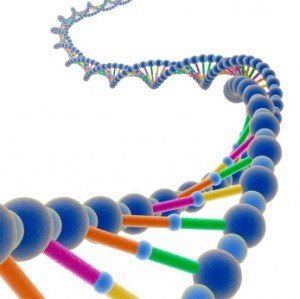
Coding genes in order to identify single nucleotide polymorphisms
c)
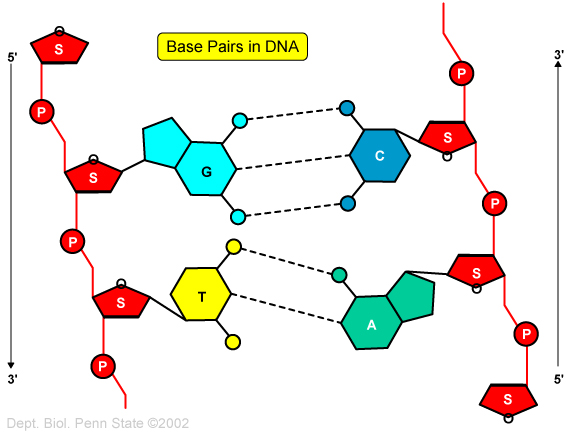
Deciphering the functions of various parts of the human genome
d)
The process of identifying the order of the bases in DNA
8.
The genomes of two unrelated humans are ___% the same.
a)
90.0
b)
0.1%
c)
78%
d)
99.9%
9.

What is a picture of chromosomes arranged in pairs known as?

a)

karyotype

b)

pedigree

c)

Human Genome Project

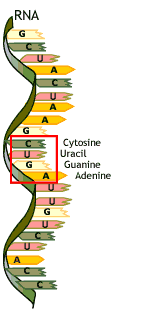
d)

autosomes

10.

Having a widow's peak is dominant over a straight hairline. If a person has a straight hairline, which of the following could be their genotype? (Select ALL that apply)

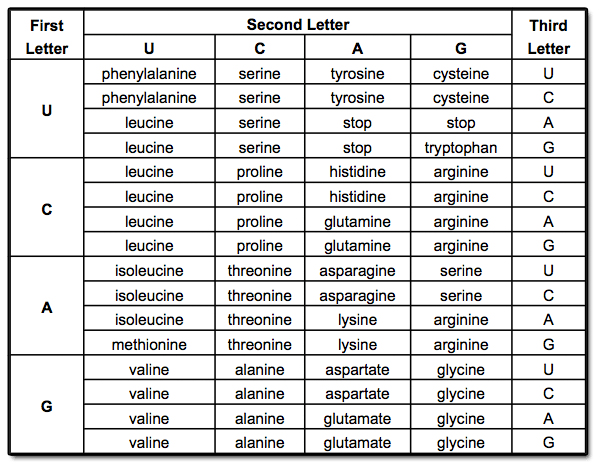
a)

WW

b)

Ww

c)

ww

11.
Which of the following is a phenotype?
a)
BB
b)
Bb
c)
bb
d)
Blue eyes
12.
the passing of genetic traits from parent to offspring.
a)
heredity
b)
trait
c)
gene
d)
allele
13.

having two of the same genes for the trait (sometimes called purebred).

a)

homozygous

b)

heterozygous

c)

protein

d)

chromosome

14.
having two different genes for a trait (sometimes called hybrid).
a)
protein
b)
homozygous
c)
heterozygous
d)
genotype
15.
G = green, g = yellow
The genotype for a yellow plant is...
a)
GG
b)
Gg
c)
gg
d)
all of the choices result in yellow
16.
What is the definition of genotype?
a)
The physical expression of a trait
b)
The genetic combination of alleles 
c)
the genes on a DNA strand
17.
A male beetle has the genotype Ttbb. If this beetle mates with a female with genotype TTBb, what is the chance their offspring will have the genotype TtBb?
a)
12.5%
b)
25%
c)
50%
d)
75%
18.
A dihybrid cross shows the possible outcomes of _______ 
a)
two alleles
b)
two parents
c)
two traits/characters
d)
a self pollination
19.
T4 - Black fur in mice (B) is dominant to brown fur (b). Short tails (T) are dominant to long tails (t). What percentage of the offspring of the cross BbTt x BBtt will have black fur and long tails?
a)
0%
b)
25%
c)
50%
d)
100%
20.
T4 - What fraction of offspring from the cross AaBB x Aabb will be heterozygous for both traits (ex. AaBb) ?
a)
1/16
b)
1/4
c)
1/2
d)
3/16
21.
_____________________ are cells that join to make offspring
a)
speed cells
b)
sex cells
c)
pea cells
d)
pedigree cells
22.
Heredity is the passing of traits from _____________________ to _____________________
a)
predators to prey
b)
water to rain
c)
parents to offspring
d)
fungi to protists
23.
___________________________ is the study of how traits are passed on, or inherited.
a)
dominant traits
b)
ratio
c)
phenotype
d)
genetics
24.
True or False:  Recessive traits are ALWAYS present 
a)
True
b)
False
25.
Crossing over is important because....
a)
It prevents mutations from entering the gametes. 
b)
It allows for even distribution of chromosomes in the gametes.
c)
It allows for more genetic diversity of gametes.
d)
It allows for genetic uniformity of gametes. 
26.
Crossing over occurs in...
a)
Prophase 1
b)
Prophase 2
c)
Metaphase 1
d)
Metaphase 2
27.
When an area of a chromatid is exchanged with the matching area on a chromatid of its homologous chromosome, _________________ occurs
a)
crossing over
b)
mutagenesis
c)
hybridization
d)
fertilization
28.
During which stage does crossing over take place?
a)
A
b)
B
c)
C
d)
D
29.
Which processes DOES NOT increase genetic variation as part of sexual reproduction?
a)
Crossing over
b)
Independent assortment (due to random orientation
c)
Gene mutation
d)
Random fertilization
30.

The image is showing two possible ways non-homologous chromosomes may line up during metaphase 1 of meiosis 1. Which of Mendel's laws is this image depicting?

a)

Mendel's Law of dominance

b)

Mendel's Law of recessive

c)

Mendel's Law of random assortment

d)

Mendel's Law of Independent Assortment

31.

Which of Mendel's laws states that alleles are separated during meiosis?

a)

Law of Dominance

b)

Law of Segregation

c)

Law of Independent Assortment

32.

Which of Mendel's laws states that alleles are distributed to gametes independent of one another?

a)

Law of Dominance

b)

Law of Segregation

c)

Law of Independent Assortment

33.

If a dominant allele is present, the trait will always appear in the organism.

a)

Law of Segregation

b)

Law of Dominance

c)

Law of Independent Assortment

34.
Which of the following statements best explains why dominant alleles that cause lethal disorders are less common than recessive alleles that cause lethal disorders?
a)
The presence of a lethal dominant allele causes the inability to reproduce
b)
Lethal disorders caused by dominant alleles are usually more severe than lethal disorders caused by recessive alleles
c)
Unlike lethal disorders caused by recessive alleles, lethal disorders cause by dominant alleles usually cause the death of the embryo
d)
Most individuals carrying a lethal dominant allele have the disorder and die before they reproduce, whereas individuals carrying a lethal recessive allele are more likely to be healthy and reproduce
35.
What is NOT a possible genotype for someone with type B blood?
a)
BB
b)
AB
c)
BO
36.
What is the genotype of a person with type A blood, who had a father with type O blood?
a)
AB
b)
AO
c)
AA
d)
OO
37.
What are the blood types of the possible children that a woman (type O) and man (type AB) can have?
a)
O and AB
b)
O and A
c)
O and B
d)
A and B
38.
A woman has type B blood and her husband has type O blood.  What must be the woman's genotype, if they have a child with type O blood?
a)
BO
b)
BB
c)
OO
d)
type B
39.
A man has blood type A (heterozygous) and a woman has blood type B (heterozygous). What are the possible blood types of their kids?
a)
A or B only
b)
AB only
c)
A, B, AB only
d)
A, B, AB, or O
40.
condition in which both alleles for a gene are expressed when present - both traits are visible
a)
Codominance
b)
Dominance
c)
Complete dominance
d)
Incomplete dominance
41.
this image is an example of
a)
codominance
b)
dominance
c)
incomplete dominance
42.
In some carnations, flower color exhibits codominance. When crosses, Red (R) and white (W) flowers make speckled flowers (RW) that show both colors.
Complete a cross between 2 speckled flowers and find the genotype ratio.
a)
0 RR: 4 RW: 0 WW
b)
2 RR: 2 RW: 0 WW
c)
1 RR: 2 RW: 1 WW
d)
0 RR: 2 RW: 2 WW
43.
In some carnations, flower color exhibits codominance. When crosses, Red (R) and white (W) flowers make speckled flowers (RW) that show both colors.
Complete a cross between 2 speckled flowers and find the genotype ratio.
a)
0 RR: 4 RW: 0 WW
b)
2 RR: 2 RW: 0 WW
c)
1 RR: 2 RW: 1 WW
d)
0 RR: 2 RW: 2 WW
44.
In some carnations, flower color exhibits codominance. When crosses, Red (R) and white (W) flowers make speckled flowers (RW) that show both colors.
Complete a cross between A speckled flower and a red flower. Find the phenotype ratio.
a)
2 red: 2 speckled: 0 white
b)
4 red: 0 speckled: 0 white
c)
0 red: 4 speckled: 0 white
d)
0 red: 2 speckled: 2 white
45.
A red flowered plant (RR) breeds with a White flowered plant (WW). The gene for petal color in these plants expresses incomplete dominance.  What percentage of the offspring will have pink (RW) flowers?
a)
0%
b)
25%
c)
50%
d)
100%
46.
What type of inheritance do two alleles have if their traits blend together? 
a)
Incomplete Dominance
b)
Co-Dominance
c)
Mendelian Inheritance
d)
Homozygous Inheritance
47.
What type of inheritance is determined by multiple genes located at different loci on different chromosomes and there can be a range of traits?
a)
Codominance
b)
Incomplete dominance
c)
Polygenic traits
48.
An example of polygenic inheritance is...
a)
Skin Color
b)
hitch hikers thumb
c)
blood types
49.
The different forms of a gene are called
a)
traits
b)
pollinators
c)
alleles
d)
hybrids
50.
An interaction where one gene masks another gene is called:
a)
Polygenic Traits
b)
Epistasis
c)
X-Chromosome Inactivation
d)
X-linked traits (same as sex-linked)
51.

B = Black, b = Chocolate. Some labs inherit black or brown fur alleles but have light fur. This graphic shows an example of...

a)

Codominance

b)

Epistasis

c)

Mendelian Dominance

d)

Polygenic inheritance

52.

B = Black, b = Chocolate. ee = no pigment

What is the phenotype of a dog that is Bbee?

a)

Black

b)

Chocolate

c)

Yellow Lab (brown skin)

d)

White lab (black skin)

53.

B = Black, b = Chocolate. ee = no pigment

What is the phenotype of a dog that is bbEe?

a)

Black

b)

Chocolate

c)

Yellow Lab (brown skin)

d)

White lab (black skin)

54.
What is an example of pleiotropy?
a)
Pickle cell disease
b)
Sickle cell disease
c)
Darwin's syndrome
d)
Marvin's syndrome
55.
An example of sex-linkage is Hemophelia, it is...
a)
recessive
b)
dominant
56.

In a sex linked trait, its the contribution of _ that determines if son will display the trait

a)

mom

b)

paternal gradnfather

c)

father

d)

paternal grandmother

57.

If a mom is heterozygous for recessive sex linked trait and dad has the dominant, which is true

a)

Half of sons will have recessive trait

b)

None of sons will have recessive trait

c)

All daughters will be heterozygous

d)

All sons will have the recessive trait

58.

If 2 genes are linked

a)

they assort independently

b)

they code for the same protein

c)

they are on the same chromosome

d)

they are on sex chromosomes

59.

A-B: 19%, B-C: 14%, A-C: 5%, B-D: 2%, A-D: 21%, C-D: 16%. Which sequence of genes is correct?

a)

ACBD

b)

ACDB

c)

ADBC

d)

ABCD

60.

Down syndrome is a kind of _ and results from _

a)

aneuploidy.. nondisjunction of chromosome 21 during meiosisI

b)

replication error.. an extra cycle of DNA synthesis during S

c)

polyploidy.. occurence of meiosis without cytokinesis

d)

genomic imprint.. excessive methylation of chromosome

61.

Lethal allele is

a)

a blend of two alleles that only affect the phenotype

b)

inheriting two alleles that can cause death

c)

a phenotype variation in individuals that have the same genotype

d)

the probability of a population having a specific phenotype appearing

62.

penetrance is

a)

percentage of genotype in a population but the phenotype may not appear in the population or not consistently

b)

inheriting two alleles that can cause death

c)

a phenotype variation in individuals that have the same genotype

d)

the probability of a population having a specific phenotype appearing

63.

expressivity is

a)

percentage of genotype in a population but the phenotype may not appear in the population or not consistently

b)

inheriting two alleles that can cause death

c)

a phenotype variation in individuals that have the same genotype

d)

the probability of a population having a specific phenotype appearing

64.

incomplete penetrance is

a)

percentage of genotype in a population but the phenotype may not appear in the population or not consistently

b)

1 gene affects many traits

c)

a phenotype variation in individuals that have the same genotype

d)

the probability of a population having a specific phenotype appearing

65.

pleiotropy is

a)

percentage of genotype in a population but the phenotype may not appear in the population or not consistently

b)

caused by the environment but resembling a genetic trait

c)

one gene affects another gene

d)

one gene affects many traits

66.

epistasis is

a)

percentage of genotype in a population but the phenotype may not appear in the population or not consistently

b)

caused by the environment but resembling a genetic trait

c)

one gene affects another gene

d)

one gene affects another gene

67.

phenocopy is

a)

percentage of genotype in a population but the phenotype may not appear in the population or not consistently

b)

caused by the environment but resembling a genetic trait

c)

one gene affects another gene

d)

one gene affects another gene

68.

who does dads X chromosomes have a greater affect on

a)

sons

b)

daughters

c)

sons and daughters; they are equal

69.

the five agents of evolutionary change

a)

mutation, natural selection, genetic drift, migration, non-random mating

b)

mutation, natural selection, genetic drift, migration, random mating

c)

mutation, natural selection, genetic drift, immigration, non-random mating

d)

mutation, natural selection, genetic hierarchy, migration, non-random mating

70.

what does the "p" stand for

a)

dominant allele

b)

recessive allele

c)

heterozygous

d)

homozygous

71.

what does the "q" stand for

a)

dominant allele

b)

recessive allele

c)

heterozygous

d)

homozygous

72.

what does the "2pq" stand for

a)

dominant allele

b)

recessive allele

c)

heterozygous

d)

homozygous

73.

what does the "p2" stand for

a)

homozygous dominant

b)

homozygous recessive

c)

heterozygous

d)

homozygous

74.

what does the "q2" stand for

a)

homozygous dominant

b)

homozygous recessive

c)

heterozygous

d)

homozygous

75.
Which of the following phrases is true of X chromosomes inactivation?
a)
affects fewer genes than Y chromosome inactivation
b)
occurs in cells of female mammals
c)
disables some chromosomes in cells of male mammals 
d)
determines phenotype in male mammals 
76.
Genes that are located on sex chromosomes are called 
a)
alleles 
b)
recessive
c)
XY
d)
sex-linked
77.
Which statement is true of a sex-linked recessive gene?
a)
in an XY male, this recessive gene is always expressed
b)
in an XY male, one copy is always inactivated
c)
in and XX female, only one copy is needed for expression
d)
in an XX female, it is always passed to offspring
78.
Which sequence of DNA bases would pair with this partial strand
ATG TGA CAG
a)
ATG TGA CAG
b)
TAC ACT GTC
c)
GTA AGT GAC
d)
CAT TCA CTG
79.
Which of the following best describes a DNA molecule?
a)
double helix
b)
contains ribose
c)
made of amino acids
d)
contains Uracil
80.
Which of the following units are repeatedly joined together to form a strand of DNA?
a)
amino acids
b)
nucleotides
c)
fatty acids
d)
polysaccharides
81.
In a molecule of double-stranded DNA, the amount of Adenine present is always equal to the amount of
a)
cytosine
b)
guanine
c)
thymine
d)
uracil
82.
Adenine bonds with ______________.
a)
Guanine
b)
Thymine
c)
Cytosine
d)
Adenine
83.
Guanine bonds with ______________.
a)
Adenine
b)
Guanine
c)
Cytosine
d)
Thymine
84.
Which 2 molecules form the sides (backbone) of the DNA ladder?
a)
deoxyribose sugar and adenine
b)
deoxyribose sugar and a hydrogen bond
c)
deoxyribose sugar and the nucleus
d)
deoxyribose sugar and phosphate
85.
Which organelle is DNA usually found in?
a)
cell membrane
b)
vacuole
c)
chloroplast
d)
nucleus
86.
Nitrogenous bases are joined by which type of bond?
a)
polar bonds
b)
ionic bonds
c)
covalent bonds
d)
hydrogen bonds
87.
The enzyme that unzips the DNA to prepare for replication
a)
helicase
b)
replicase
c)
polymerase
d)
synthase
88.
order of replication
a)
3, 2, 1, 4
b)
2, 1, 4, 3
c)
2, 3, 1, 4
d)
3, 4, 1, 2
89.
In what phase of the cell cycle does DNA replication take place?
a)
G1
b)
S
c)
G2
d)
M
90.
What are the three components of a nucleotide?
a)
sugar, hydrogen, nitrogen base
b)
sugar, oxygen, nitrogen base
c)
sugar, phosphate, nitrogen base
d)
sugar, phosphate, protein
91.
What does DNA stand for?
a)
Deoxyribonucleic acid
b)
Denitrogenous acid
c)
Deribonucleic acid
d)
Diribonucleic acid
92.
Which enzyme is responsible for adding nucleotides?
a)
Topoisomerase
b)
DNA Polymerase
c)
Ligase
d)
Primase
93.

SSBPs (opening the helix)

a)

single-strand DNA-binding proteins that stabilizes single-stranded DNA to prevent helicase from opening again in order to maintain the strand separation

b)

single-strand DNA-binding proteins that destabilizes single-stranded DNA

c)

catalyses the synthesis of the RNA primer

d)

extends an Okazaki fragment

94.

DNA ligase (lagging-strand synthesis)

a)

catalyzes the breaking of hydrogen bonds between base pairs to open the double helix

b)

none of the above

c)

catalyzes the joining of Okazaki fragments into a continuous strand, re-anneals semi-conservative strands

d)

removes the RNA primer and replaces it with DNA

95.
Small segments of DNA made on the lagging strand are called:
a)
Okazaki Fragments
b)
ERVs
c)
Transposable Elements
d)
Telomeres
96.
DNA is built in the 
a)
3'-3' direction
b)
5'-5' direction
c)
3'-5' direction
d)
5'-3' direction
97.
The ___________________ strand builds continuously.
a)
Lagging
b)
Ligase
c)
Leading
d)
Telomeres
98.
The _________ contains __________.
a)
Leading Strand / Okazaki Fragments
b)
Lagging Strand / Okazaki Fragments
c)
Leading Strand / Topoisomerase
d)
Lagging Strand / dispersive replication
99.
What is the enzyme DNA Primase used for?
a)
Creates a primer on the DNA nucleotide sequence
b)
Connecting Okazaki fragments, sealing repairs and sealing fragments.
c)
Assembling nucleotides and creating base pairs (creating identical DNA strands).
d)
Unpackages/unwinds the DNA
100.

Protects the ends of the DNA strand so that nothing is lost

a)

primase

b)

DNA polymerase

c)

ligase

d)

helicase

e)

telomerase

101.

On the lagging strand, DNA is:

a)

not copied

b)

copied continuously

c)

copied backwards in pieces

d)

discarded

102.
In RNA, Uracil pairs with ______. 
a)
cytosine
b)
adenine
c)
guanine
d)
thymine
103.
The process to go from DNA to mRNA is _______
a)
translation
b)
transcription
c)
replication
104.
Choose the nucleotide sequence of the RNA strand that would be complementary to the following strand: 
GTAGTCA
a)
UATUAGA
b)
ACGACTG
c)
CAUCAGU
d)
CATCAGT
105.
The main function of tRNA is to...
a)
carry a message that, when translated, forms proteins
b)
form a portion of ribosomes
c)
string together complementary RNA and DNA strands
d)
bring amino acids from the cytoplasm to the ribosomes
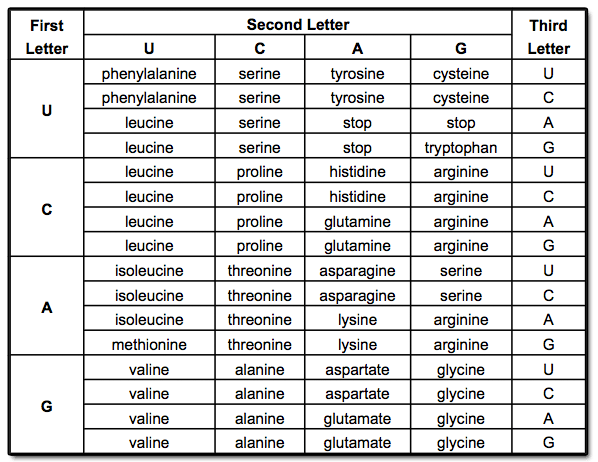
106.
What amino acid is represented by the codon UUA?
a)
Phenylalanine
b)
Tyrosine
c)
Leucine
d)
Stop codon
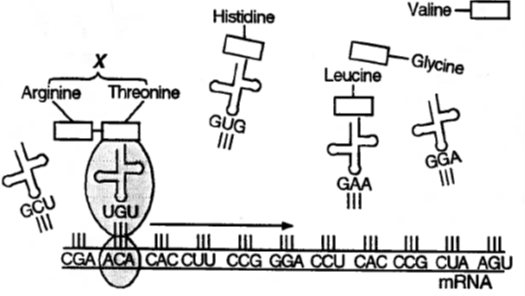
107.
What process is going on in this photo? 
a)
Transcription 
b)
Translation 
c)
Replication 
d)
All the above 
108.
Translation is the process where
a)
mRNA is created in the Nucleus
b)
mRNA is decoded to form a protein 
c)
glucose molecules are made
d)
is where lipids are synthesised
109.
What is the correct amino acid sequence for the mRNA code AUGCCAGUAUGA
a)
Met-Pro-Ala-Val
b)
Met-Pro-Val
c)
Tyr-Gly-His
d)
Tyr-Gly-Arg-His
110.
X linked recessive traits affect mostly
a)
males
b)
females
c)
both equally
d)
none of the above
111.

In which of the following genotypes and phenotypes may be the correct result of aneuploidy in sex chromosome

a)

22+Y-females

b)

22+XX-female

c)

22+XXY-male

d)

22+XXXY females

112.

What causes Turner Syndrome? (Multiple Answers)

a)

Part of the second X chromosome is missing

b)

An extra X is present

c)

There is only one X present

d)

Both X chromosomes are partially missing

113.
What type of karyotype is shown here?
a)
Male with Turner Syndrome
b)
Male with Klinefelter Syndrome
c)
Female with Down Syndrome
d)
Female with Klinefelter Syndrome
114.
What genetic disorder causes the body to produce unusually thick mucus in the lungs and intestines? 
a)
Cystic Fibrosis
b)
Sickle Cell
c)
Down Syndrome
d)
Hemophilia
115.

If one of your parents has Huntington's, what is your chance of inheriting it? (Huntington's is caused by a dominant allele)

a)

0%

b)

25%

c)

50%

d)

75%

e)

100%

116.
Mutated DNA sequences that can be passed from parent to offspring --
a)
occur in somatic cells (body cells)
b)
occur in gametic cells (sex cells)
c)
are rejected by meiosis
d)
only occur if the parent is exposed to harmful substances
117.
A condition in which a person's skin, hair, and eyes lack normal coloring is called
a)
pigment disease
b)
albinism
c)
pink eye syndrome
d)
cystic fibrosis
118.
Marfan's syndrome can affect
a)
heart function
b)
pigment protein
c)
vesicle formation
d)
hair loss