
 Worksheets
Unit 1: Biochem & Cells Review
Total questions: 120
Worksheet time: 10hrs 0mins
What is the main use of a carbohydrate?
build muscles
insulation
quick energy
store genetic information
What is one of the main functions of Proteins?
heredity
speed up reactions
insulate
energy
What is the monomer of carbohydrates?
monosaccharide
fatty acids
amino acids
polysaccharide
What is the monomer of a protein
glycerol and fatty acids
amino acid
monosaccharide
nucleic acid
What is one of the main functions of a lipid?
insulation
building structures
quickest form of energy
transmit genetic information

What is the molecule responsible for doing?
enzymes
quick energy
heredity
insulation

What is the main function of this molecule?
build muscle
quick form of energy
stores genetic information
speeds up reactions
Methionine is one amino acid. When added to other amino acids they all create a chain using polypeptide bonds. What is one amino acid called?
polymer
monomer
single A
monoacid
Methionine is one amino acid. When added to other amino acids they all create a chain using polypeptide bonds. What are many amino acids called?
polymer
glycerol
monomer
polyacid
Sucrose is a disaccharide. Sucrose is made when 1 glucose molecule bonds with 1 fructose molecule. Select all the statements that are true.
Glucose is a monosaccharide therefore it is the monomer for carbohydrates
Sucrose is the monomer for carbohydrates because monomer means many molecules together
Glucose is an example of a monosaccharide
Sucrose is a polymer because it is made up of many monomers.
Which model represents the breaking down of a sugar using an enzyme?


Which model represents the building up a molecule using an enzyme?
Which image shows an increase in substrate, no increase in enzyme. The active sites are occupied.


We need to produce an enzyme to speed up a particular reaction in our bodies, which 2 cell structures would be involved in the synthesis of these enzymes?
centrioles and cytoplasm
nucleus and ribosomes
golgi apparatus and lysosome
rough ER and nucleus
The plant needs energy. Which to organelles would be responsible for making and storing energy?
cytoplasm and cell membrane
nucleus and ribosomes
lysosomes and cell wall
chloroplast and mitochondria
Which of the following statements best describes the word homeostasis?
Maintaining a stable internal environment that is favorable for the organism.
Inability to adapt and become stable in your environment.
Making an environment extreme.
Diseased organisms unable to survive in an environment.
What is the main function of a Golgi in a cell?
Allows molecules to enter or exit the cell.
Makes important proteins necessary for life.
Packages proteins made by ribosomes to export out of the cell.
Creates and stores the genetic information inside the cell.
What is the main function of a cell membrane in a cell?
Allows molecules to enter or exit the cell.
Makes important proteins necessary for life.
Packages proteins made by ribosomes to export out of the cell.
Creates and stores the genetic information inside the cell.
What is the main function of a nucleus in a cell?
Allows molecules to enter or exit the cell.
Makes important proteins necessary for life.
Packages proteins made by ribosomes to export out of the cell.
Creates and stores the genetic information inside the cell.
What is the main function of a ribosome in a cell?
Allows molecules to enter or exit the cell.
Makes important proteins necessary for life.
Packages proteins made by ribosomes to export out of the cell.
Creates and stores the genetic information inside the cell.
What is the main function of a nucleus in a cell?
Allows molecules to enter or exit the cell.
Makes important proteins necessary for life.
Packages proteins made by ribosomes to export out of the cell.
Creates and stores the genetic information inside the cell.
Organelles work together to maintain homeostasis in our bodies. Select the answer that describes this relationship.
Vacuoles create amino acids so that the centrioles can create proteins.
Chloroplasts create sugars so that the mitochondria can use the sugar for energy.
Nucleus creates proteins so that the Golgi can export to other cells
The rough ER makes lipids so that the smooth ER could convert it to sugar.
Which statements are true about cell walls?
Cell walls only exist in Animal cells.
Cells walls provide support.
Cell walls are responsible for photosynthesis
Cells are found in plant cells.
What are the 4 things that every cell has?
Cell wall
Cell membrane
Ribosomes
Cytoplasm
Genetic Material
What is a lysosome responsible for doing?
storing the genetic material
making proteins
breaking down waste
moves the organelles in the cell around
How are the functions of a carbohydrate and a lipid similar?
Both lower the activation energy of reactions
Both are a source of energy
Both dissolve nutrients
Both have instructions for making proteins
Which of the following explains the role enzymes play in the process of digestion?
They assure that digestion occurs within hours instead of days
They improve the peristaltic movement of the intestines
They increase the amount of acid released from the stomach
They prevent lipids from being absorbed into the blood stream
molecules?
to a phosphate group and a nitrogenous base?
the functions of fats and enzymes differ?

how a macromolecule is constructed?
function?
again.
sites.

reaction?
molecules in the pancreas. Which best describes amylase?
function?
molecule.
skyscraper.
smaller useful molecules?
Diffusion is a form of...
Active Transport
Passive Transport
Which of the following is NOT a type of passive transport?
Osmosis
Diffusion
Endocytosis
Facilitated Diffusion

The movement of water through a semi-permeable membrane is called ___________.
active transport
respiration
osmosis
diffusion
Which type of movement requires cellular energy?
osmosis
active transport
diffusion
facilitated diffusion
What are the three types of passive transport?
osmosis, diffusion, active transport
active transport, facilitated diffusion, osmosis
diffusion, osmosis, facilitated diffusion
facilitated diffusion, active transport, diffusion


Which type of transport can get rid of cellular wastes?
Protein Pumps
Endocytosis
Exocytosis
Facilitated Diffusion
Which type of transport uses protein channels to help the particles move across the cell membrane?
endocytosis
osmosis
facilitated diffusion
exocytosis
Particles get in and out of a cell by passing through the _.
Cell membrane
Cytoplasm
Vacuole
Nucleus
In active transport, cells need _ to move particles cross the cell membrane.
Sleep
Movement
Energy
Sun
True or false. Passive transport does not need energy to happen.
True
False
Does active transport require ATP?
Yes
No
What are examples of passive transport (3 correct answers)
Simple diffusion
Exocytosis
Osmosis
Facilitated diffusion
Endocytosis

What is diffusion
A net process of a molecule moving from a high concentration to low concentration
A net process of a molecule moving from a low concentration to high concentration
A movement of water across a semipermeable membrane from high to low water concentration
What is active transport
A process of a movement of molecules from a high to low concentration that doesn’t use energy
A process of movement of molecules from a low to high concentration that uses energy
What is endocytosis
A process when the secretory vesicles eject the items they absorbed
A process when cells absorb external item by engulfing them
A movement process when water molecules go from high to low concentration
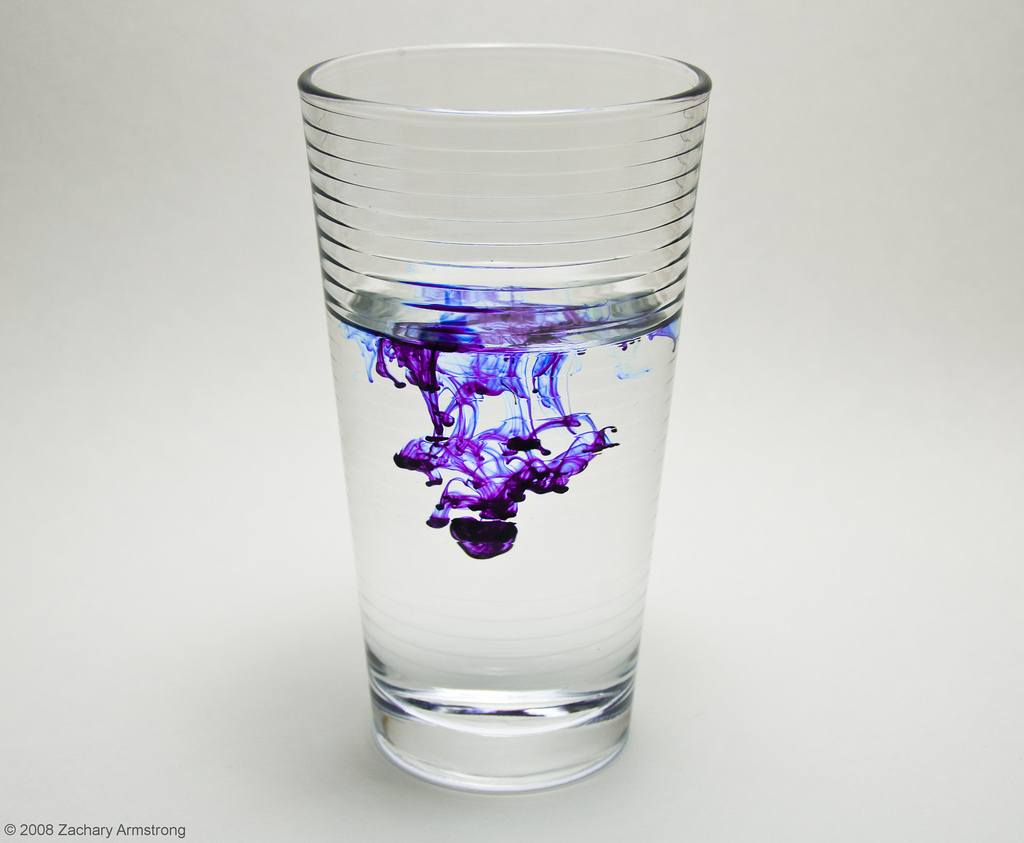
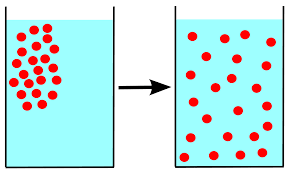
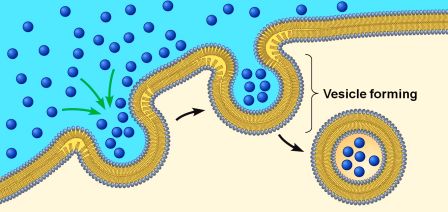
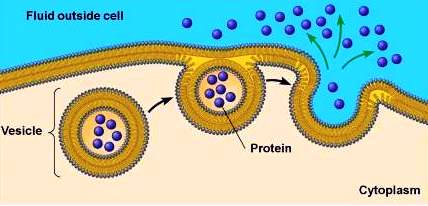

Cells accomplish the majority of their growth.
G1
S
G2
M
Chromosomes are replicated and proteins synthesized.
G1
S
G2
M
The shortest of all the phases; chromosome replication is complete.
G1
S
G2
M
Encompasses G1, S, and the G2 Phase.
Cytokinesis
Mitosis
Interphase
Meiosis
The result is two daughter cells, each with 46 chromosomes.
G1
S
G2
M

Chromosomes condense
Centrioles and spindle fibers appear
Prophase
Metaphase
Anaphase
Telophase
Cytokinesis

Chromosomes are lined up.
Prophase
Metaphase
Anaphase
Telophase
Cytokinesis

Chromosomes are pulled away.
Prophase
Metaphase
Anaphase
Telophase
Cytokinesis

Chromosomes gather at opposite ends of the cell; the nucleus begins to form back.
Note: The cells have not separated from each other.
Prophase
Metaphase
Anaphase
Telophase
Cytokinesis

Chromosomes gather at opposite ends of the cell; the nucleus begins to form back.
Note: The cells have physically separated.
Prophase
Metaphase
Anaphase
Telophase
Cytokinesis

The part of the chromosome labeled "a" (component comprised of two parts).
Tetrad
Chromotid
Centromere
Chromosome
One half of a duplicated chromosome - labeled "d".
Tetrad
Chromotid
Centromere
Chromosome
The point of attachment of the kinetochore, a structure to which the microtubules of the mitotic spindle become anchored - labeled "c".
Tetrad
Chromotid
Centromere
Chromosome
Some species of starfish can reproduce by breaking off an arm or splitting in half. Each arm or half then becomes a whole new organism genetically identical to the parent. Which type of cell division occurs in this process?
meoisis
mitosis
budding
conjugation

How does cytokinesis in plant cells differ from that of animal cells?
The endoplasmic reticulum forms a cell plate.
Microtubules are constructed into a cell plate pattern.
The Golgi apparatus produces vesicles that migrate along
microtubules and fuse to make a cell plate.
The plasma membrane divides by cytokinesis as in animal cells, and then secretes a cellulose cell wall (cell plate).
The correct sequence of mitosis:
metaphase, anaphase, telophase, prophase
prophase, metaphase, anaphase, telophase
prophase, anaphase, metaphase, telophase
telophase, metaphase, prophase, anaphase
During which cycle can you identify chromosomes
G1 phase
G2 phase
S phase
M phase
Chromosomes are visible and spindle fibers start to appear
prophase
metaphase
telophase
anaphase
After mitosis the number of chromosomes in the newly created cells will be:
Half the number of the original cell
The same number as the original cell
Twice as much as the original cell

