
 Worksheets
Biology Midterm
Total questions: 80
Worksheet time: 1hrs 4mins
The plasma membrane consists of:
a phospholipid bilayer
embedded proteins
cholesterol
all of the above
A nerve cell is trying to move sodium ions
(Na+) into its cytoplasm, against the concentration gradient. The best process to achieve this would be:
Simple Diffusion
Osmosis
Passive Transport
Active Transport
Plant cells have:
A Cell Wall
Plasma Membrane
Centrioles
Both A and B
Matter is anything that has mass and takes up space.
True
False
Hydrogen bonds are an example of adhesion
True
False
Which is a substance that produces OH- ions when it is dissolved in water?
a base
an acid
a buffer
salt
Water is composed of what two elements?
protons and neutrons
oxygen and nitrogen
hydrogen and electrons
oxygen and hydrogen
The elements of a water molecule are held together by which type of bond?
covalent bond
double bond
hydrogen bond
ionic bond
What property of water allows sweat to cool the body & coastal cities to have more moderate temperatures than inland cities?
High heat capacity
Neutral pH of 7
Surface tension and capillary action
Universal solvent
In humans and other organisms, which substance below acts as the main energy source?
Proteins
lipids
Carbohydrates
Water
The letter "p" as it normally appears in print is placed on the stage of a light microscope. Which best represents the image observed when a student looks through the microscope?
p
q
b
d
Which of the following is a substance that lowers the activation energy?
a catalyst
an ion
a reactant
a substrate
Single sugar molecules are also known as _______.
polysaccharides
monosaccharides
Most of the oxygen that enters out atmosphere results from the process of
respiration
fermenation
transpiration
photosynthesis
Which process is an outcome of photosynthsis?
complex molecules are broken down to form simple molecules
water is absorbed into the root hairs
light energy is converted to chemical energy
water is transported through vascular tissue
What's the term for a solution whose concentration has more solute than solvent?
hypertonic
hypotonic
What happens to a cell that is placed in s hypertonic solution?
water rushes out of the cell, causing it to shrink and plant cell vacuoles to collapse
do not gain or lose water
water will move quickly into a cell causing it to swell and the cell may burst
What's the term for a solution whose concentration is the same on both sides of the membrane?
isotonic
equilibrium
hypertonic
hypotonic
Once equilibrium is reached, do particles stop moving?
yes
no
Which type of transport needs energy?
passive transport
active transport
This type of passive transport deals with just small molecules not water.
diffusion
osmosis

The movement of molecules from side A to side B is an example of
active transport
chromatography
cellular respiration
diffusion
Which diagram represents equilibrium?


Diffusion of water across a selectively permeable membrane is called
active transport
osmosis
exocytosis
passive transport
facilitated diffusion
Which means of particle transport requires input of energy from the cell?
diffusion
osmosis
facilitated diffusion
active transport
Which of the following is not a true statement about diffusion? Diffusion
occurs from a high to a low concentration
occurs from a low to a high concentration
What is the immediate source of energy for active transport?
carbohydrates
lipids
ATP
carbohydrates and lipids
The active transport of large molecules into the cell membrane using energy is called
osmosis
exocytosis
endocytosis
passive transport
When Streptococcus pneumoniae are exposed to an antibiotic, the bacteria try to pump the antibiotic out of their cells. Which of the following mechanisms is most likely used by the Streptococcus pneumoniae to pump the antibiotic out of their cells?
active transport
diffusion
facilitated diffusion
osmosis
Which of the following correctly describes the process of osmosis?
The passive movement of water molecules from areas of low solute
concentration to high solute concentration, through a selectively permeable membrane.
The passive movement of water molecules from areas of high solute concentration to low solute concentration, through a selectively permeable membrane.
The active movement of water molecules from areas of high solute concentration to low solute concentration, using a membrane pump protein.
The passive movement of water molecules from areas of low solute concentration to high solute concentration, through a channel
protein.
The energy responsible for active transport is associated with which of the following?
ATP
ADP
AMP
kinetic energy of the diffusing particles
Active transport moves materials from _____to
_____concentration and requires an input of ______:
low to high, water
low to high, energy
high to low, water
high to low, energy
All forms of passive transport depend on
energy from the cell in the form of ATP
the kinetic energy of molecules
ion channels
carrier proteins
Molecules naturally move from an area of _____concentration to an area of _____ concentration.
high...high
high...low
low...low
low...high
Water will exit the cell when placed in a/n _______
environment
polar
hypotonic
hypertonic
isotonic

This diagram shows the same type of molecules in area A and are B with the passage of time, some molecules move form area A to area B.
The movement is the result of
phagocytosis
pinocytosis
diffusion
cyclosis
Produces energy to fuel the cell’s activities.
cell wall
mitochondria
Golgi Bodies / Golgi Apparatus
cytoplasm
Holds the genetic information (DNA) for the cell. It controls all cell activities.
lysosome
nucleus
ribosome
mitochondria
Creates proteins. It can float within the cytoplasm or be attached to an organelle.
cytoplasm
ribosome
nucleus
mitochondria

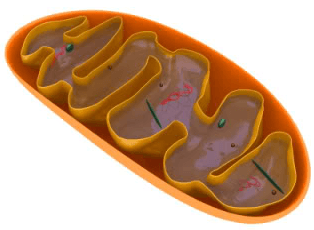
Chromosomes contain the _______ _______ that is passed from one generation of cells to the next.
chemical information
genetic information
cell instructions
chemical energy
The nucleus is surrounded by a nuclear envelope composed of ________ membranes.
one
two
three
four

This picture represents a cell that produces digestive enzymes. Which cellular structure would be the most likely location for the synthesis of these enzymes?
1
2
3
4
Biology is the study of.......
Life
Frogs
Motion
Triangles
Scientists "do" science by a process called....
Experimention
Scientific Inquiry
Research
Testing
What is a hypothesis?
a posed question
evidence
an educated guess
scientific inquiry
What is the goal of science?
To investigate
To explain
To understand
All of these
What is the first step in the scientific inquiry process?
pose a question
state a hypothesis
draw a conclusion
design an experiment
When measuring the mass of a baby hamster, what metric unit should be used?
milliliter
kilogram
centimeter
gram
For scientific data to be considered accurate and reliable, most scientific experiments should be __________.
conducted 3 times
conducted only 1 time
conducted as many times as possible
repeated no more than 2 times

The dependent variable in this experiment is _________
age
height
"Russel's height at 3-year interval"
there is no dependent variable

According to this graph_______
more people like hamburgers than fish & chips
the number of people who like hamburgers increased over time, while the number of people who like fish & chips decreased
the number of people who like pizza decreased over time, while the number who like fish & chips and hamburger increased
both the number of people who like hamburgers and pizza increased over time
Which factor does the scientist change?
dependent variable
control
independent variable
hypothesis
Which factor's response is based on the independent variable?
control
constant
hypothesis
dependent variable
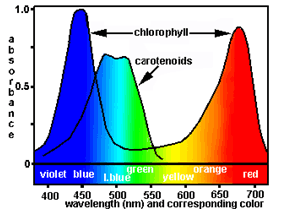
Chlorophyll appears to be green because...
it absorbs green light
it reflects green light
the goal of the light dependent stage of photosynthesis is to convert light energy into...
ATP & NADPH
glucose
G3P
oxygen gas
The light dependent reactions occur in the
stroma
thylakoid
The Calvin Cycle occurs in the
stroma
thylakoid

Which organelle is involved in passive transport?
nucleus
mitochondria
cell membrane
rough endoplasmic reticulum
Does passive transport require energy?
yes
no

