wayground logo

Free Printable Worksheets

Font size

S
M
L
XL
Worksheets

7th Grade Review

Total questions: 141

Worksheet time: 33hrs 55mins

Name
Class
Date
1.

The Law of Inertia

a)

Newton's 1st Law of Motion

b)

Newton's 2nd Law of Motion

c)

Newton's 3rd Law of Motion

2.

F=ma

a)

Newton's

1st

Law of Motion

b)

Newton's

2nd

Law of Motion

c)

Newton's

3rd

Law of Motion

3.

A box is placed on a surface that has no friction. A 15 N force pushes the box to the right and a 10 N force pushes the box to the left. What is the net force on the box?

a)

5 N to the right

b)

5 N to the left

c)

25 N to the right

d)

25 N to the left

4.

If a soccer ball is kicked first by a second grader and then again by a eighth grader, what will be the difference in the ball’s acceleration?

a)

There is no way to determine.

b)

The acceleration will be the same.

c)

The acceleration will be more when kicked by the eighth grader.

d)

The acceleration will be less when kicked by the eighth grader.

5.

The Law of Action/Reaction

a)

Newton's

1st

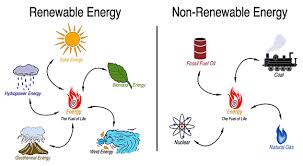
Law of Motion

b)

Newton's

2nd

Law of Motion

c)

Newton's

3rd

Law of Motion

6.

Action-reaction forces _______________.

a)

sometimes act on the same object.

b)

might be at right angles.

c)

always act on the same object.

d)

always act on different objects.

7.

For every _____________ there is an equal and _______________ reaction.

a)

Motion, unequal

b)

Motion, direction

c)

Action, opposite

d)

Action, unequal

8.

During a football game, a linebacker and a running back are about to collide. Suppose that when the running back collides with the linebacker, he applies 390 N of force. How much force must the linebacker apply to stop the running back from continuing down the field?

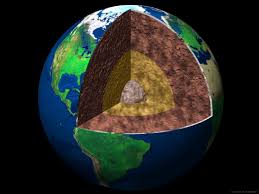
a)

390 N

b)

280 N

c)

195 N

d)

30 N

9.
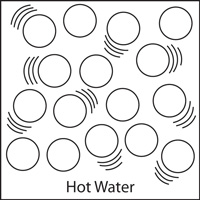
At higher temperatures
a)
particles in an object have less energy
b)
particles in an object move faster
c)
a gas contracts
10.
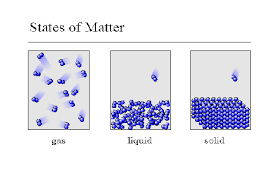
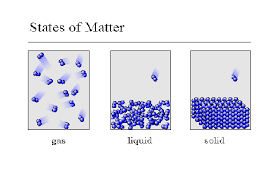
A gas
a)
has a definite shape but no definite volume
b)
has a definite volume but no definite shape
c)
has fast-moving particles
11.
Freezing
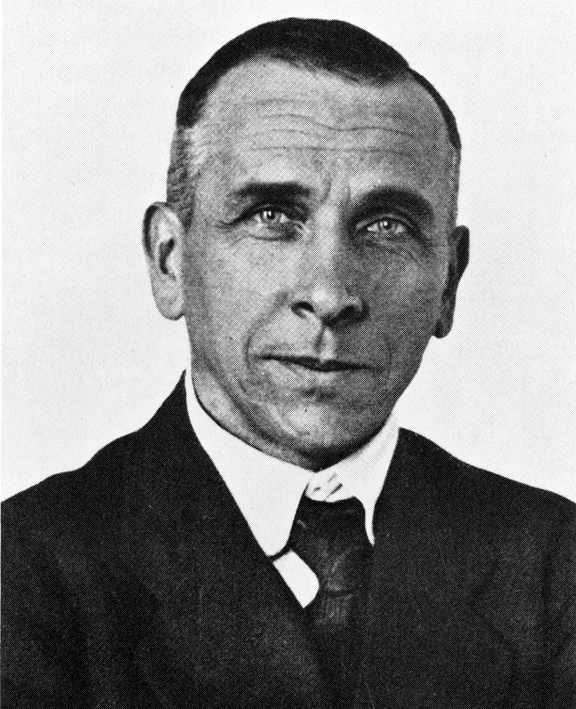
a)
Solid to gas
b)
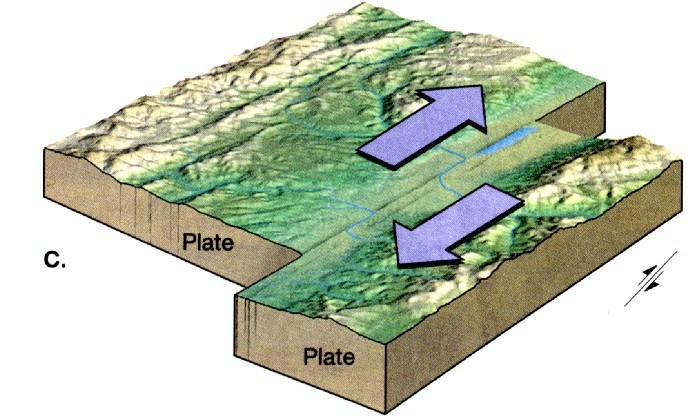
Liquid to solid
c)
Gas to solid
d)
Liquid to gas
12.
Boiling
a)
liquid to gas
b)
gas to solid
c)
gas to liquid
d)
solid to liquid
13.
Which state of matter has tightly packed molecules?
a)
solid
b)
liquid
c)
gas
14.
What is happening when my ice cream changes from a solid to a liquid?
a)
freezing
b)
melting
c)
burning
d)
evaporation
15.
Define a liquid.
a)
Indefinite shape, indefinite volume
b)
Definite shape, definite volume
c)
Found in stars
d)
Definite volume, indefinite shape
16.
The state of matter that has no definite size or shape is
a)
Solid
b)
Liquid
c)
Gas
17.
Particles (molecules) in a ______________________ have more energy than the other states of matter.
a)
gas
b)
solid
c)
liquid
18.
What term describes a solid changing to a gas?
a)
Deposition
b)
Sublimation
c)
Evaporation
d)
Freezing
19.
Particles (molecules) in a ______________________ have more energy than the other states of matter.
a)
gas
b)
solid
c)
liquid
20.
What is condensation?
a)
gas to solid
b)
gas to liquid
c)
liquid to solid 
d)
solid to liquid 
21.
The speed of the molecules determines the _____.
a)
volume
b)
density
c)
pressure
d)
temperature
22.
Which has a greater distance between particles?
a)
Solid
b)
Liquid
23.
The slower the particles in a substance move,
a)
the colder it is.
b)
the warmer it is.
c)
the more energy it has.
d)
the less energy it has.
24.
Thermal energy is...
a)
heat energy.
b)
the energy of motion
c)
energy of nuclear processes.
d)
an indication of physical change.
25.
What is the tiniest particle in the entire universe?
a)
cells
b)
gases
c)
atoms
d)
liquids
26.
What is the name of a single type of atom?
a)
cell
b)
proton
c)
element
d)
atom
27.
What is the term for combining 2 or more atoms together?
a)
atoms
b)
elements
c)
molecules
d)
compounds
28.
What is the term for combining 2 or more DIFFERENT atoms together?
a)
atoms
b)
elements
c)
molecules
d)
compounds
29.
TRUE OR FALSE:
Every compound is a molecule but not every molecule is a compound.
a)
TRUE
b)
FALSE
30.
What is the picture displayed?
a)
Atom
b)
Element
c)
Molecule
d)
Compound
31.
What is the picture displayed?
a)
atom
b)
element
c)
molecule
d)
compound
32.
What is the picture displayed?
a)
atom
b)
element
c)
molecule
d)
compound
33.
Are these molecules also compounds?
a)
YES
b)
NO
34.
Are these molecules also compounds?
a)
YES
b)
NO
35.

What type of energy do plants use to make sugar in the photosynthetic process?

a)

thermal energy

b)

chemical energy

c)

light energy

d)

kinetic energy

36.
Food, batteries, and fuel such as gasoline are similar because they are sources of _________ energy.
a)
chemical energy
b)
kinetic energy
c)
mechanical energy
d)
heat energy
37.
What type of energy is stored in the particles of matter?
a)
chemical energy
b)
heat energy
c)
kinetic energy
d)
mechanical energy
38.
What type of energy flows through the wires in an electrical circuit?
a)
electrical energy
b)
chemical energy
c)
solar energy
d)
light energy
39.
What type of mechanical energy is due to the position of an object?
a)
chemical energy
b)
heat energy
c)
potential energy
d)
kinetic energy
40.
What type of mechanical energy is due to the motion of an object?
a)
chemical energy
b)
potential energy
c)
heat energy
d)
kinetic energy
41.
What machine changes electrical energy into light and sound energy
a)
battery
b)
lightbulb
c)
alarm clock
d)
apple
42.

The energy caused by an object's vibrations

a)

chemical

b)

light

c)

sound

d)

radiant

43.
What kind of energy?
a)
Thermal
b)
Chemical
c)
Electrical
d)
Sound
44.
What kind of energy?
a)
Thermal
b)
Chemical
c)
Nuclear
d)
Mechanical
45.
What kind of energy?
a)
Thermal
b)
Electrical
c)
Mechanical
d)
Radiant
46.
What kind of energy?
a)
Radiant
b)
Electrical
c)
Thermal
d)
Chemical
47.
What kind of energy?
a)
Thermal
b)
Chemical
c)
Radiant
d)
Kinetic
48.
What kind of energy?
a)
Thermal
b)
Chemical
c)
Sound
d)
Nuclear
49.
The transfer of thermal energy is called _____?
a)
heat
b)
energy
c)
work
d)
friction
50.
What happens to the temperature of a object as it moves faster?
a)
temperature increases
b)
temperature decreases
c)
temperature stays the same
d)
temperature increases then decreases
51.
What is the definition of CONDUCTION?
a)
When heat is transferred from objects like rays of light or electromagnetically.
b)
a  hot liquid or air that  expands, becomes less dense, and rises or becomes more dense, and sinks.
c)
When heat transfers from objects that are touching.
d)
When heat transfers through the heater or AC in your house.
52.
What kind of heat transfer happens when the sun is heating your body?
a)
Conduction
b)
Radiation
c)
Convection
d)
Density
53.
What kind of heat transfer happens when the sun is heating your body?
a)
Conduction
b)
Radiation
c)
Convection
d)
Density
54.
What heat transfer happens when you burn your hand by touching a fire?
a)
Radiation
b)
Conduction
c)
Convectio
d)
I don't know!!!!!!!!!!!
55.
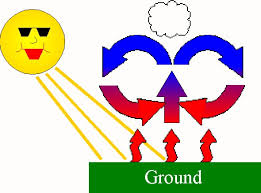
Warm air rises and the cool air sinks demonstrates this type of heat transfer. 
a)
conduction
b)
convection
c)
radiation
d)
Insolation 
56.
Ironing a shirt is an example of...
a)
condensation
b)
conduction
c)
convection
d)
radiation
57.
Johnny accidentally grabbed the handle of the hot pot.
a)
conduction
b)
convection
c)
radiation
58.
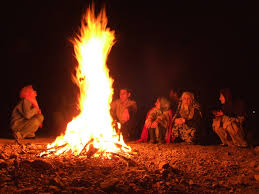
A group of friends gather around a fire to stay warm.
a)
conduction
b)
convection
c)
radiation
59.
Transfer of thermal energy through "space"
a)
conduction
b)
convection
c)
radiation
60.
What happens when ice cubes melt in a glass?
a)
Heat travels from the ice to the warmer water.
b)
No energy is transferred.
c)
Heat is transferred from the warmer water to the ice cubes.
d)
The water warms up due to the humidity
61.
Energy can be classified into..
a)
Renewable and non renewable
b)
Natural and non renewable
c)
Renewable and Natural
d)
All of them
62.
Why is solar energy considered renewable energy?
a)
It's cheaper than fossil fuels
b)
The sun's energy would not run out for billions of years
c)
Solar energy recharges batteries
d)
All of them
63.
Wind is always constant (the same)
a)
Yes
b)
No
64.
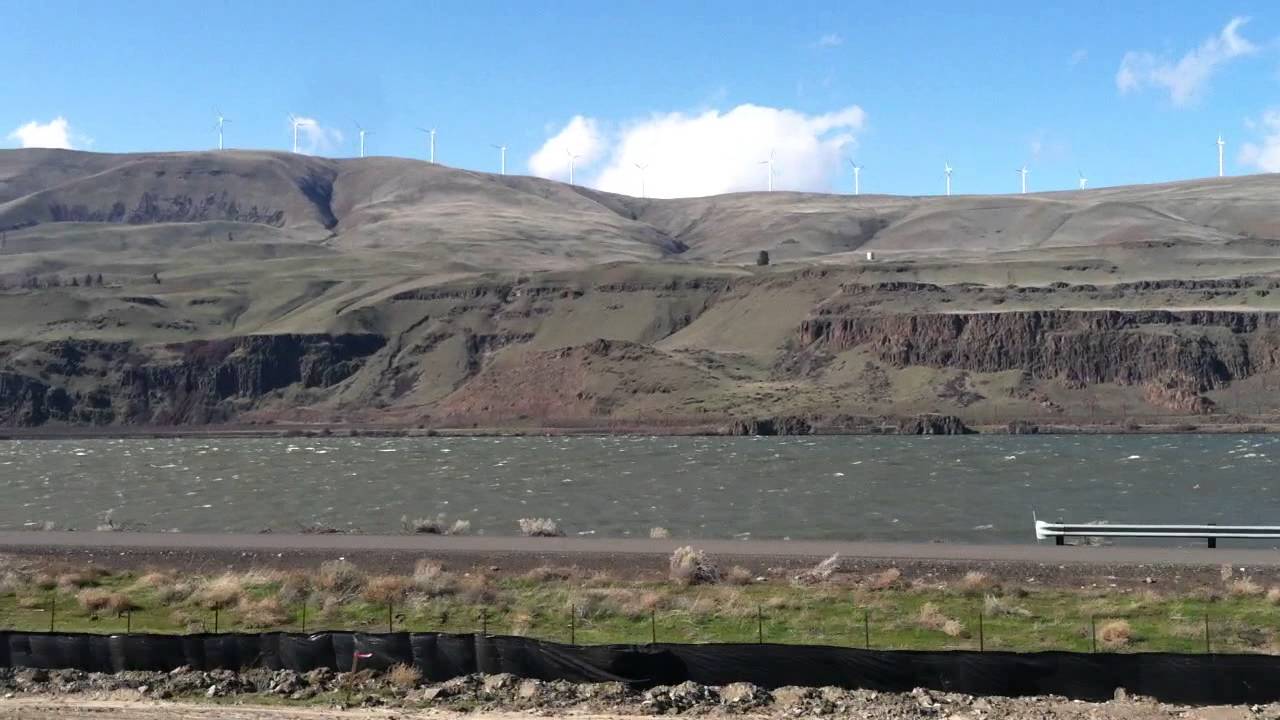
Where will it be better to place a wind turbine? Where will it receive more wind?
a)
On top of a hill/mountain
b)
On the bottom of a hill/mountain
c)
Is the same
d)
I don't know
65.
_____________ power is electricity produced by flowing water.
a)
Solar 
b)
Wind 
c)
Hydroelectric 
d)
water
66.
Energy produced by burning organic matter such as wood, food scraps, and alcohol is called______________ energy.
a)
Biomass
b)
Thermal energy
c)
Solar
d)
Wind
67.
Renewable energy resources produce less_____________ than fossil fuels.
a)
pollution
b)
waste
c)
ethanol
68.
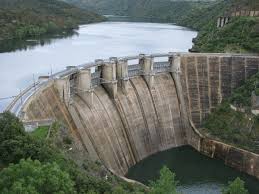
To produce hydroelectric power, humans build a _________ across a powerful river.
a)
dam
b)
road
c)
bridge
69.
Solar energy is 
a)
Energy from the uneven heating of the earth.
b)
Energy from burning fossil fuels.
c)
Energy from the sun.
d)
Energy from turbines.
70.
Which energy uses water held behind a dam?
a)
Geothermal
b)
Hydroelectric
c)
Nuclear
d)
Solar
71.
What is a renewable resource?
a)
A resource you can reuse
b)
An object you cannot replace
c)
Fossil fuels
d)
polluted resources
72.
What is a non-renewable resource?
a)
Solar energy
b)
A resource that cannot be reused/ recycled
c)
Wind energy
d)
Biomass
73.
What are the two types of resources?
a)
Renewable and Non-renewable
b)
Wearable and Non-wearable
c)
Usable and Non-usable
d)
Useful and Non-useful
74.
Generally, which of the following energy resources are better for the environment?
a)
renewable
b)
nonrenewable
75.

Which is an advantage of biomass energy?

a)

It'’s a ‘clean’ energy

b)

Farmers opt to grow biofuel crops instead of other types of foods

c)

It creates greenhouse gases when burned

d)

There will always be waste produced that can be used for energy

76.

What is an advantage of hydropower energy?

a)

Dams can have a massive negative impact on the ecosystem

b)

It’s good for salmon who swim upstream

c)

Hydropower is a clean energy

d)

There is plenty of water unless the river or lakes dry up

77.

Which renewable energy has the disadvantage of polluting the atmosphere when burned?

a)

Solar

b)

Geothermal

c)

Biomass

d)

Wind

78.
What is a non renewable resource?
a)
water
b)
wind
c)
coal
d)
biomass
79.
What is a non renewable resource?
a)
water
b)
wind
c)
coal
d)
biomass
80.
What is the most plentiful fossil fuel? 
a)
Oil
b)
Natural Gas
c)
Petroleum 
d)
Coal
81.

Which of these is a fossil fuel?

a)

crude oil

b)

coal

c)

natural gas

d)

all of the above

82.

What is a reason that nonrenewable energy sources are used?

a)

they are more expensive

b)

they are less expensive

c)

they pollute

d)

we will never use them all

83.

When fossil fuels are burned they produce _________________________ which is a cause of global warming.

a)

oxygen

b)

hydrogen

c)

nitrogen

d)

carbon dioxide

84.

Fossil fuels are considered nonrenewable because they

a)

produce pollution

b)

are no longer used by humans

c)

often contain microscopic animals

d)

take millions of years to form

85.
What are the 3 main fossil fuels?
a)
Coal, Oil, and Gasoline
b)
Coal, Oil, and Natural Gas
c)
Electricity, Gasoline, Petroleum
d)
Coal, Oil, Non-renewable Resources
86.
how is nuclear energy made
a)
splitting atoms
b)
(nuclear) bombs
c)
cancer cells
d)
water cells
87.
Which of these energy sources is mostly used for transportation?
a)
Coal
b)
Oil
c)
Natural Gas
d)
Hydroelectric
88.
The process by which a heavy nucleus breaks into two lighter nuclei is called....
a)
fission.
b)
decomposition.
c)
fusion.
d)
a chain reaction.
89.
A disadvantage of ___ is that it creates radioactive wastes
a)
fossil fuels
b)
hydroelectric
c)
nuclear
d)
biomass
90.
Energy cannot be destroyed or created, only transferred. What is this known as?
a)
Energy Law
b)
Law of Conservation of Energy
c)
Kinetic Energy
d)
Destroying Energy Law
91.

Which of the following energy sources is considered nonrenewable?

I. wind

II. nuclear fuels

III. fossil fuels

a)

I only

b)

II only

c)

I and II only

d)

II and III only

e)

I, II, and III

92.
Which layer of the earth is rock made mostly of iron?

a)
Lithosphere
b)
Core
c)
Asthenosphere
d)
Mantle
93.

What part of the earth is a layer of rock that comprises 67% of Earth’s mass? (pro-tip: it is the largest layer)

a)

mesosphere

b)

mantle

c)

asthenosphere

d)

lithosphere

94.
What is the rigid layer of the Earth's surface made up of the  crust and upper mantle called?
a)
asthenosphere
b)
lithosphere
c)
mesosphere
d)
continental crust
95.
How many layers of the Earth's CORE are there?
a)
one
b)
two
c)
three
d)
four
96.
Is the outer core a liquid or solid?
a)
liquid
b)
solid
97.
Which layer of Earth is located above the outer core?
a)
crust
b)
inner core
c)
mantle
d)
lithosphere
98.
Which of these two layers is a solid?
a)
innercore
b)
Outercore
99.
What is the top layer of the Earth's surface called? 
a)
Mantle
b)
Innercore
c)
Outercore
d)
Crust
100.
Temperature _____________________ as you go deeper into the earth.
a)
increases
b)
decreases
c)
goes up and down depending on the layer
d)
stays the same
101.
Pressure ______________________ as you go deeper into the Earth
a)
increases
b)
decreases 
c)
goes up or down depending on the layer
d)
stays the same
102.
Which layer of Earth is characterized by rock that is plastic, or soft enough to flow?
a)
asthenosphere
b)
crust
c)
lithosphere
d)
inner core
103.
A dense ball of solid iron and nickel.
a)
crust
b)
inner core
c)
mantle 
d)
outer core
104.
Which best describes the asthenosphere?
a)
molten metal
b)
dense, solid metal ball
c)
solid that flows
d)
dry land and ocean floor
105.

Earth’s magnetic field results from movement in the …

a)

Mantle

b)

Crust

c)

Inner Core

d)

Outer Core

106.

About how many Lithospheric plates make up the crust?

a)

1000-2000

b)

12-16

c)

10,000-11,000

d)

500-600

107.

In which layer of Earth is the asthenosphere located?

a)

Inner Core

b)

Mantle

c)

Outer Core

d)

Crust

108.

Which of these best describes the Earth’s mantle?

a)

The mantle is inside Earth's core

b)

The mantle is the cool, flexible, innermost layer of the Earth

c)

The mantle is the hot, flexible, outer layer of Earth

d)

The mantle is the hot, flexible layer underneath the Earth's crust
109.
Which term describes how a mineral looks when it breaks apart in an irregular way?
a)
Fracture
b)
Cleavage
c)
Luster
d)
Crystallization
110.
A series of processes on Earth’s surface and in the crust and mantle that slowly changes rocks from one kind to another is called
a)
The rock cycle
b)
Erosion
c)
Crystallization
d)
Evaporation
111.
Heat and pressure deep beneath the Earth's surface can change any rock into _____________________. 
a)
Chemical rock
b)
Gemstones
c)
Metamorphic rock
d)
Sedimentary rock 
112.
A mineral is inorganic which means that it contains ________________________.
a)
Compounds
b)
Materials made by humans
c)
Parts of living things
d)
No materials that were once part of living things. 
113.
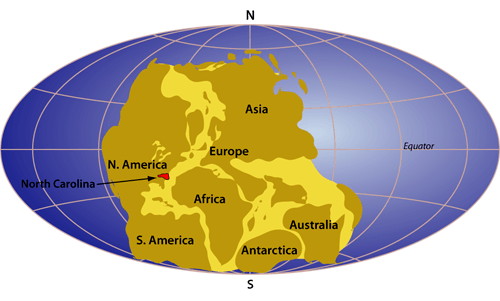
What is this a picture of?
a)
plate tectonics
b)
continental drift
c)
pangea
d)
glacier scaring
114.
What does the theory of continental drift state?
a)
The continents were once joined in a super-continent and have moved over time
b)
Continents are stationary and do not move
c)
The Earth is broken into lithospheric plates that move due to convection currents
d)
none of the above
115.
What evidence did Wegener use in his theory?
a)
Continents and fossils fitting together/matching-up like puzzle pieces 
b)
glacier scars and evidence from temperature
c)
mountain ranges and coal deposits line up across continents
d)
all of the above
116.
What two specific continents fit together most noticeably?
a)
Africa and North America
b)
South America and Europe
c)
South America and Africa
d)
Antartica and Africa
117.
How long ago is Pangea believed to have existed?
a)
200-300 million years ago
b)
1000-2000 years ago
c)
10,000-20,000 years ago
d)
20-30 billion years ago
118.
Who is the person credited with developing the theory of continental drift?
a)
Harry Hess
b)
Galileo
c)
Alfred Wegener
d)
Newton
119.
Why did no one believe Wegener's thoery?
a)
He could not explain HOW the continents moved
b)
He didn't have evidence
c)
His data was wrong
d)
He didn't use the right technology to gather data
120.
What drives tectonic plate movement? 
a)
gravity
b)
coriolis effect
c)
convection currents
d)
the earth's magnetic core
121.
What type of plate boundary is this?
a)
Plate
b)
Divergent
c)
Convergent
d)
Transform
122.
What type of event will occur at this boundary?
a)
Earthquake
b)
Volcano Eruption
c)
Tornado
d)
Mountain Building
123.
A divergent boundary occurs when plates ....
a)
Pull apart
b)
Come together
c)
Slide past each other
d)
subducting
124.
What type of plate boundary is this?
a)
Transform
b)
Convergent
c)
Divergent
d)
Plate
125.
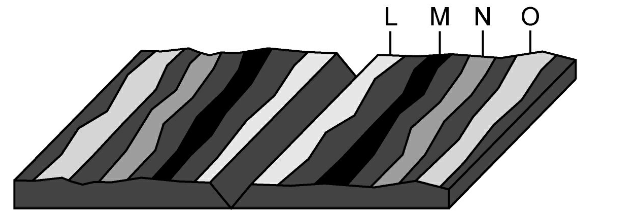
Where would the oldest rock be found?
a)
L
b)
M
c)
N
d)
O
126.
Mountains are created when....
a)
Two continental plates collide
b)
Two oceanic plates pull apart
c)
An Oceanic plate subducts under a Continental Plate
d)
Two continental plates pull apart
127.
How are Sedimentary Rocks formed?
a)
Cooling and Hardening
b)
Heat and Pressure
c)
Compacting and Cementing
d)
Melting
128.
Where can the oldest layer be found?
a)
The top layer
b)
The middle layer
c)
They are all the same age
d)
The bottom layer
129.
In what kind of rock can fossils be found?
a)
Sedimentary Rocks
b)
Igneous Rocks
c)
Metamorphic Rocks
d)
Granite
130.
How are fossils created?
a)
Traces of organisms get turned into stone.
b)
Dead organisms are quickly buried for millions of years.
c)
Animals get trapped.
d)
All of the above
131.
Which layer formed first?
a)
Rock Layer W
b)
Rock Layer X
c)
Rock Layer Y
d)
Rock Layer Z
132.
Fossils give us evidence about which of the following?
a)
plants and animals that lived long ago
b)
how weathering and erosion break down rocks
c)
the other planets in our solar system
d)
the transfer of energy from one form  to another
133.
Finding fossils in an area can help us learn what about that location?
a)
Which places in the region receive the most sunlight
b)
The effect of the climate on the formation of the soil
c)
How modern plants and animals interact there
d)
The kinds of organisms that lived there long ago
134.
Preserved remains or traces of living things?
a)
fossils
b)
organisms
c)
extinct
d)
rocks
135.
Scientists who study fossils?
a)
scientist
b)
paleontologist
c)
astronaut
d)
mrs. simao
136.
When an organism dies, its soft parts _________ quickly or are eaten by animals.
a)
fade away
b)
disappear
c)
get washed away
d)
decay
137.
Generally, only hard parts become fossils.
These hard parts include........................
a)
fingernails
b)
bones, shells, teeth, seeds & woody stems
c)
soft tissue
d)
skin
138.
Trace fossils are?
a)
foot prints
b)
evidence of activities of ancient organisms
c)
traces of animals
d)
traces of rocks
139.
By studying fossil records scientists can make inferences about 
a)
the diversity of plants and animals, past climates and geological events, and how organisms have evolved
b)
the diversity of plants and animals, how different rocks form, and past volcanic eruptions
c)
the simularities of plants and animals, how different rocks form and past volcanic eruptions
d)
the similarities of plants and animals, past climates and geological events, how different rocks form
140.
4. What is the name of this kind of fossil?
a)
Amber Fossil 
b)
Exoskeleton fossil
c)
Trace Fossil
d)
Petrification Fossil
141.
Which layer of rock is the oldest?
a)
A
b)
B
c)
C
d)
D