wayground logo

Free Printable Worksheets

Font size

S
M
L
XL
Worksheets

Physics Midterm Review

Total questions: 116

Worksheet time: 2hrs 23mins

Name
Class
Date
1.
When should you tie back long hair or baggy clothing?
a)
When working with chemicals
b)
When working with a Bunsen burner
c)
When doing dissections.
d)
Any time you are working in the lab.
2.
When is it OK to eat or drink in the lab?
a)
Always
b)
Never
3.
If you break glassware in the lab, you should...
a)
Tell the teacher
b)
Clean it up quickly before the teacher notices
c)
Scream at the top of your lungs
4.
When in the lab...
a)
long sleeves and loose clothing should be rolled up
b)
closed toe shoes should be worn
c)
long hair should be pulled back
d)
all of the above
5.
Before leaving the lab you should always wash your hands.
a)
True 
b)
False
6.
It's fine to smell chemicals directly from their containers.
a)
True
b)
False
7.
If you get something in your eyes, how long do you need to use the eyewash station?
a)
15 - 20 seconds
b)
5 minutes
c)
15 - 20 minutes
d)
Don't use the eyewash.
8.
 If you do not understand a direction or part of a lab procedure, you should 
a)
skip it and go on to the next part.
b)
ask the instructor before proceeding
c)
try several methods until something works
d)
figure it out as you do the lab
9.
 After completing an experiment, all chemical wastes should be
a)
taken home
b)
dumped in the sink
c)
disposed of according to your instructor’s directions
d)
left at your lab station for the next class
10.
You have been injured in the laboratory (cut, burn, etc.). First you should
a)
apply first aid yourself
b)
tell the science instructor at once
c)
see a doctor after school
d)
visit the school nurse after class
11.
 The following footwear is best in the laboratory. 
a)
shoes appropriate for the weather
b)
open-toed shoes
c)
closed-toed shoes
d)
sandals
12.
Hot glass looks the same as cold glass.
a)
True
b)
False
13.
Never remove chemicals or other equipment from the laboratory.
a)
True
b)
False
14.
Chipped or cracked glassware is okay to use.
a)
True
b)
False
15.
Read all procedures thoroughly before entering the laboratory
a)
True
b)
False
16.
It’s okay to pick up broken glass with your bare hands as long as the glass is placed in the trash.
a)
True
b)
False
17.
You are allowed to enter the chemical preparation/storage area any time you need to get an item
a)
True
b)
False
18.
All chemicals in the lab are to be considered dangerous
a)
True
b)
False
19.
Velocity is both ____ and _____. 
a)
speed , direction 
b)
direction, mass
c)
volume, density 
d)
direction, magnitude 
20.
How do you calculate average speed?
a)
divide total time by total distance
b)
multiply total time by total distance
c)
divide total distance by total time
d)
subtract total time from total distance
21.
Which of the following is a unit for acceleration?
a)
km/s
b)
m/s2
c)
mi/hr
d)
ft
22.
Acceleration is a change in ________. 
a)
direction 
b)
speed 
c)
velocity 
d)
distance 
23.
Scott travels north 5 miles and then goes west 3 miles before coming straight back south 2 miles. What is his distance?
a)
10
b)
7
c)
8
d)
6
24.

1. Amy runs 2 miles south, then turns around and runs 3 miles north. What is her displacement?

a)

5 miles

b)

1 mile

c)

2 miles

d)

3 miles

25.

Superman starts with an initial position of 7 m to the right of the reference point. He then moves to a final position that is -5 m to the left of the reference point. What is his displacement?

a)

2 m

b)

7 m

c)

-5 m

d)

-12 m

26.

Use scratch paper if you need to. Damiane walks at a constant speed and travels a total distance of 15 meters in 3 seconds. What will be the total distance he travels after 4 seconds?

a)

20 m

b)

5 m

c)

45 m

d)

15 m

27.

Use scratch paper if you need to. Bob starts at the reference point and runs 40 meters to the right in 5 seconds at a constant speed. Where was he after 2 seconds?

a)

5 m

b)

10 m

c)

20 m

d)

16 m

28.
Michael left his house and drove toward the mall at an average speed of 40 km/h.  Rob left some time later driving in the same direction at an average speed of 48 km/h.  After driving for 5 hours Rob caught up with Michael.  How long did Michael drive before Rob caught up?
a)
6 hours
b)
4 hours
c)
1 hour
d)
5 hours
29.

A bicyclist covers 60 miles between 2 pm and 6 pm. What was his average speed?

a)

15 mph

b)

30 mph

c)

40 mph

d)

60 mph

e)

None of the above

30.

Which of the Following are Vectors?

a)

Distance

b)

Displacement

c)

Speed

d)

Velocity

e)

Acceleration

31.

Which of the Following are Vectors?

a)

Force

b)

Weight

c)

Mass

d)

Momentum

e)

Energy

32.

Which of the Following are Scalars?

a)

Distance

b)

Displacement

c)

Speed

d)

Velocity

e)

Acceleration

33.
What is speed?
a)
how far you go
b)
how much distance is covered over a period of time
c)
how fast you accelerate
d)
the change in the location of a object
34.
What is the formula to calculate speed?
a)
Speed = time/distance
b)
Speed = distance/time
c)
Speed = distance x time
d)
Speed = time x distance
35.
A runner races in the 100 meter dash.  It takes her 10 seconds to finish.  What is her average speed?
a)
10 m/s
b)
1000 m/s
c)
100 seconds
d)
10 seconds
36.
According to the graph how far does the person travel in the first 5 seconds?
a)
2 m
b)
10 m
c)
0 m
d)
5 m
37.
What is the person doing from 5 seconds to 10 seconds?
a)
Walking 
b)
Running
c)
Standing Still 
d)
Walking Fast
38.
What is the average speed of the person during the first 5 seconds?
a)
0 m/s
b)
1 m/s 
c)
3 m/s
d)
6 m/s 
39.
What is velocity?
a)
the quickness of an object
b)
the location of an object
c)
acceleration
d)
speed in a specific direction
40.
At 60 seconds, how far had this object traveled? 
a)
0 m
b)
10 m
c)
20 m
d)
40 m
41.
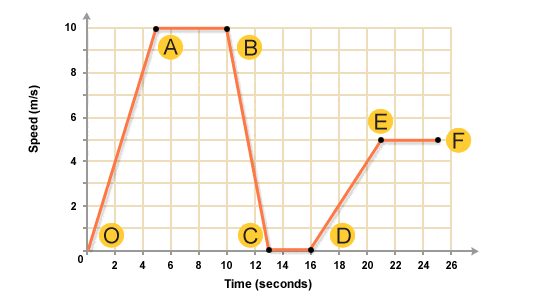
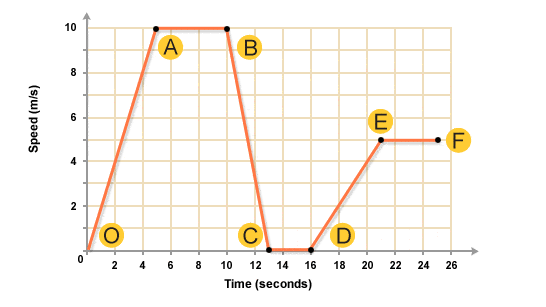
What is happening in this graph from point B to C?
a)
The object is going down a hill.
b)
The object is returning to its starting location.
c)
The object is slowing down.
d)
The object is staying still.
42.
What is happening in this graph from point A to B?
a)
The object is accelerating.
b)
The object is not moving.
c)
The object is decelerating.
d)
The object is moving at a constant speed.
43.
What does this graph represent?
a)
Constant speed
b)
Acceleration
c)
Not moving
44.
What does this graph represent?
a)
Constant Speed
b)
Acceleration
c)
Not moving
45.
What is happening at E?
a)
Stationary
b)
Accelerating
c)
Fast steady speed; moving away from the starting position
d)
Steady speed; returning to start position
46.
What is happening at D?
a)
Stationary
b)
Accelerating
c)
Fast steady speed; moving away from the starting position
d)
Slower steady speed; moving away from the starting position
47.
An object is launched horizontally from a cliff.  The time it takes to hit the ground is
a)
more than if it was just dropped
b)
less than if it was just dropped
c)
the same amount of time than if it was just dropped
d)
impossible to determine
48.
If a bullet is horizontally shot at the same moment another bullet is dropped from the same height, which will hit the ground first?
a)
Shot Bullet
b)
Dropped Bullet
c)
Hit at Same Time
49.
What force acts in the y direction that causes an object to travel in a parabolic arc?
a)
Friction
b)
Gravity
c)
Tension
d)
No force acting.
50.
A ball is thrown horizontally at a height of 2.2 meters at a velocity of 65 m/s. Assume no air resistance. How far did the ball travel horizontally when it hit the ground? 
a)
14 m
b)
30 m
c)
65 m
d)
43 m
51.
A bullet is fired horizontally at a height of 1.3 meters at a velocity of 950 m/s. Assume no air resistance. How long until the bullet reaches the ground?
a)
0.52 s
b)
0.27 s
c)
0.13 s
d)
0.36 s
52.
What is the height of a horizontal projectile if it takes 3 seconds to hit the ground?
a)
3.00 m
b)
29.4 m
c)
44.1 m
d)
88.3 m
53.
If you throw a baseball straight up, what is its  vertical acceleration at the highest point?
a)
-9.8 m/s2
b)
-9.8 m/s
c)
0 m/s2
d)
0 m/s
54.
The horizontal component of a projectile's velocity is independent of...
a)
it's range
b)
time
c)
the vertical component
d)
none of these
55.
A stone is thrown horizontally with an initial speed of 10 m/s from a bridge. If air resistance could be ignored, how long would it take the stone to strike the water 80 m below the bridge?
a)
1 s
b)
2 s
c)
4 s
d)
8 s
56.
Horizontal velocity is constant.
a)
True
b)
False
57.
The vertical component of a projectile's velocity is indpendent of....
a)
its maximum height
b)
the horizontal component of its velocity
c)
time
d)
none of these
58.
A vector has both ____ and _____
a)
speed and length
b)
magnitude and direction
c)
degrees and radians
d)
style and grace
59.
Velocity is different from speed in that velocity is speed in a given direction.
a)
True
b)
False
60.
When a car rounds a corner at a constant speed, its acceleration is zero.
a)
true
b)
false
61.
Acceleration is defined as the CHANGE in 
a)
time it takes to move from one place to another place.
b)
velocity of an object
c)
distance divided by the time interval
d)
velocity divided by the time interval
62.
The horizontal component of a projectile's velocity is:
a)
constant 
b)
a constant acceleration
c)
always -9.8 m/s2 down
63.
When a projectile is at the highest point of its path, the vertical velocity is:
a)
Constant
b)
Always -9.8 m/s2
c)
Zero
64.
The path that a projectile follows.
a)
Delta
b)
Trajectory
c)
Tension
d)
Drag
65.
A _____ is a pull or a push.
a)
force
b)
friction
c)
gravity
d)
speed
66.
One way that a force can cause the change in an object's motion is to...
a)
do nothing.
b)
eat ice cream.
c)
start the object moving.
d)
shine on the object.
67.
_____ is the force that slows and stops motion between touching objects.
a)
Friction
b)
Gravity
c)
Pull
d)
Push
68.
Which has the least friction?
a)
snowboard on a snowy hill
b)
running on the playground
c)
sandpaper on wood
d)
a racer on a track
69.
How does friction help us move from place to place?
a)
Friction does not help us.
b)
Friction keeps us from slipping and sliding.
c)
Friction only helps cats.
d)
Friction makes us slip and fall.
70.
In which of the following activity is friction useful?
a)
sliding down a snowy hill on a sled
b)
ice skating
c)
running around a track
d)
roller blading
71.
Why do air planes and race cars have sleek shapes?
a)
to reduce friction from air resistance
b)
to increase air resistance
c)
to look more appealing than cats
d)
so people will buy them
72.
Is gravity a push or a pull?
a)
push
b)
pull
c)
neither
d)
both
73.
What keeps the Moon in orbit around Earth?
a)
Earth's rotation.
b)
Earth's atmosphere.
c)
Earth's gravity.
d)
Earth's shape.
74.
Which would require the most force to move?
a)
a toy car
b)
a sleeping cat
c)
a science book
d)
a chair with a friend sitting in it
75.
What force holds the planets in motion around the sun?
a)
Magnetic
b)
Electrical
c)
Gravitational
d)
Air Resistance
76.
All objects in the universe have a gravitational attraction to each other. 
a)
True
b)
False
77.
What force brings the pencil down?
a)
Applied
b)
Magnetic
c)
Normal
d)
Gravitational
78.
What force ultimately slows the roller coaster to a stop?
a)
Applied
b)
Normal
c)
Friction
d)
Magnetic
79.
An _______ force must act on an object for it to CHANGE it's motion
a)
balanced
b)
unbalanced
c)
gravitational
d)
electrical
80.
How will this object move? 
a)
It won't move. 
b)
It will move to the right. 
c)
It will move to the left. 
d)
It will move up. 
81.
How will this object move? 
a)
It won't move. 
b)
It will move to the right. 
c)
It will move to the left. 
d)
It will move in both directions. 
82.
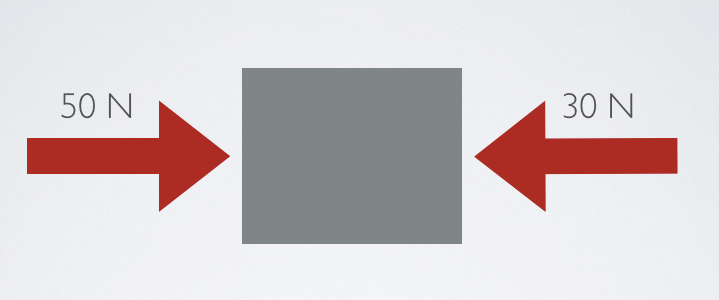
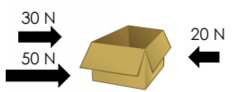
What is the net force?
a)
30 N left
b)
25 N right
c)
5 N left
d)
55 N right
83.
What is the net force?
a)
40 N left
b)
0 N Balalnced
c)
400 N right
d)
40 N right
84.

Calculate the Net Force.

a)

60N, Left

b)

40N, Right

c)

0N

d)

60N, Right

85.
Calculate the Net Force. 
a)
40N, Left
b)
40N, Right
c)
0N, Balanced
d)
75N, Right
86.
You and your dad are moving the couch from one side to another. Your dad pushes with a force of 35 N to the right and you push with a force of 25 N right. What is the net force on the couch?
a)
60 N right
b)
10 N left
c)
60 n right
d)
50 N left
87.
What is the net force?
a)
10 N
b)
0 N
c)
25 N
d)
1 N
88.
The tendency of an object at rest to stay at rest unless it is acted upon by a force is called ___________________
a)
inertia
b)
motion
c)
gravity
d)
lubricant
89.
What law is best described by inertia?
a)
1st
b)
2nd
c)
3rd
90.
a)
1st
b)
2nd
c)
3rd
91.
Object at rest stays at rest.
a)
1st
b)
2nd
c)
3rd
92.
F = MxA
a)
1st
b)
2nd
c)
3rd
93.
Acceleration is due to a force put on an objects mass. 
a)
1st
b)
2nd
c)
3rd
94.
Action/Reaction
a)
1st
b)
2nd
c)
3rd
95.

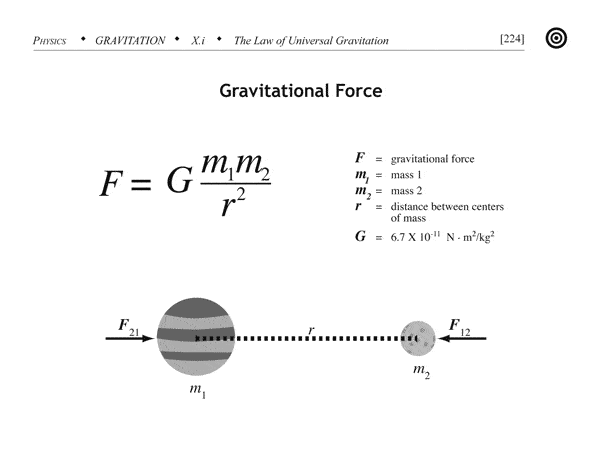
Which is needed to determine the amount of gravitational force between two objects?

a)

distance and mass

b)

weight and time

c)

area and weight

96.
What is gravitational force?
a)
It makes objects at rest start moving.
b)
It makes objects that are moving stop.
c)
The force of attraction between two objects.
d)
It pulls you into space.
97.
If you double the mass of m2, by what factor will the gravitational force change?
a)
F/2
b)
2F
c)
4F
d)
F/4
98.
If you double the mass of m1 and triple the mass of m2, by what factor will the gravitational force change?
a)
F/5
b)
5F
c)
6F
d)
F/6
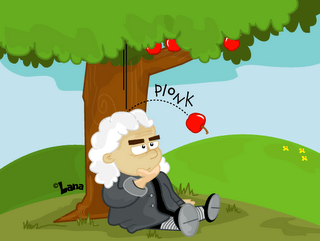
99.

A student drops a bowling ball and an apple from a third-story window. Both objects hit the ground at the same time. From the experiment, the student should conclude that

a)

the apple weighs more than the bowling ball

b)

more air friction is acting on the apple than on the bowling ball

c)

gravity pulls on both objects, causing them to fall at the same time.

100.

The force of gravity is related to the masses of objects attracting each other. Which planet has the greatest mass?

a)

Mercury 3.7

b)

Jupiter 23.1

c)

Neptune 11.0

101.

Amanda weighs about 600 N on Earth, but would only weigh about 100 N on the Moon. Which BEST explains why Amanda would weigh less on the Moon than on Earth?

a)

The circumference of the Moon is smaller than Earth, therefore it has less gravity.

b)

The lack of air pressure on the Moon weakens the gravitational force of the Moon.

c)

The mass of the Moon is less than that of Earth, therefore it has a weaker gravitational force.
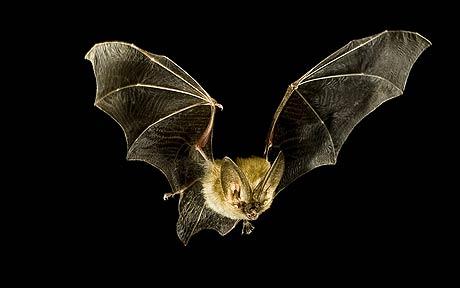
102.
Which statement is true about an object that is traveling in uniform circular motion?
a)
The speed of the object varies.
b)
The net force on the object is directed toward the center of the circular path.
c)
The direction of the object's velocity is constant.
d)
The net force on the object is directed away from the center of the circular path.
103.
The velocity is always _____ to the line of a circle. 
a)
outwards
b)
towards the center
c)
tangent
d)
faster
104.
Bruno the bat flies at a speed of 0.5 m/s in circle of radius 1 m. What is his acceleration?
a)
0.25 ms-2
b)
0.5 ms-2
c)
1 ms-2
d)
2 ms-2
105.
Period (T) is measured in cycles per second
a)
True
b)
False
106.
If the radius of the string is .3 meters long and the stopper makes 5 revolutions per second, what is the speed of the stopper? (Hint: C=2πr)
a)
9.4 m/s
b)
6.8 m/s
c)
11.7 m/s
d)
3.5 m/s
107.
What object experiences uniform circular motion?
a)
A car speeding up as it turns left
b)
A car traveling around a roundabout at a constant speed
c)
A car slowing down as it crests a tall hill
d)
A car traveling down the road at a constant speed
108.
What happens to an object's speed as the radius decreases?
a)
It increases.
b)
It decreases.
c)
It remains unchanged.
109.

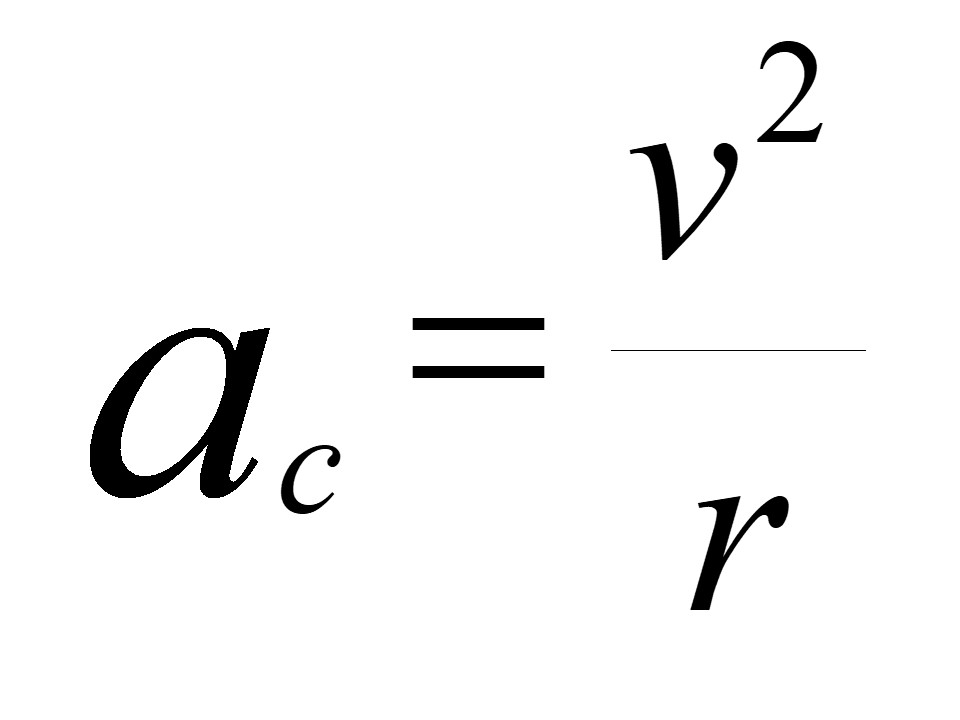
What's the centripetal acceleration of an object traveling 2.3 m/s around a circle of diameter 0.6 m?

a)

5 m/s2

b)

17.63 m/s2

c)

10 m/s2

d)

8.81 m/s2

111.
A 1000-kg car is moving at 30 m/s around a horizontal unbanked curve whose diameter is 0.20 km. What is the magnitude of the friction force required to keep the car from sliding?
a)
9000 N
b)
9800 N
c)
300 N
d)
3000 N
111.
A 1000-kg car is moving at 30 m/s around a horizontal unbanked curve whose diameter is 0.20 km. What is the magnitude of the friction force required to keep the car from sliding?
a)
9000 N
b)
9800 N
c)
300 N
d)
3000 N
112.

The drum of a washing machine rotates 600 times in 1 minute. What is the frequency of the drum?

a)

600 Hz

b)

10 Hz

c)

0.1 Hz

d)

0.002 Hz

113.
Bruno the bat flies at a speed of 0.5 m/s in circle of radius 1 m. What is his acceleration?
a)
0.25 ms-2
b)
0.5 ms-2
c)
1 ms-2
d)
2 ms-2
114.
A 250-kg motorcycle goes around an unbanked turn of radius 13.7 m at a steady 96.5 km/h.  What is the magnitude of the net force on the motorcycle?
a)
719 N
b)
2.95 × 10^3 N
c)
1.31 × 10^4 N
d)
4.31 × 10^4 N
115.
A skier is travelling 31.3m/s around a bend that has a radius of 1500m. What is the acceleration?
a)
0.02m/s
b)
0.7m/s
c)
20.65m/s
d)
21.5m/s
116.
Calculate the velocity of an object moved around a circle with a radius of 1.65 m and an acceleration of 3.5 m/s2.
a)
2.4 m/s
b)
3.6 m/s
c)
3.9 m/s
d)
4.2 m/s