
 Worksheets
SBI4U Exam Review
Total questions: 121
Worksheet time: 1hrs 23mins
Urine formation depends on the following functions.
Filtration
Reabsorbtion
Secretion
Excretion
All of these are required
T/F - The glomerulus can be considered a high-pressure filter.
True
False
Solutes and water move from the nephron back into the blood
Filtration
Reabsorbtion
Secretion
Excretion
Reabsorbtion of water and solutes in the kidney is regulated by ___________________
hormonal signals
the nervous system
urine feedback signals
T/F - The rate of diffusion depends on the concentration difference, or concentration gradient, that exists between two areas or across a membrane. The larger the gradient,
the faster the rate of diffusion is.
True
False
________________________________ means that some molecules can diffuse very rapidly across a membrane while other molecules are unable to transit the membrane without assistance.
Selectively permeable
Selectively permanent
Selectively permethrin
Selectively permeonable
Two major factors, _________ and __________, determine the
ease with which a molecule or ion can move across a membrane.
size and shape
size and charge
shape and charge
Channel proteins form _______________________ pathways in the membrane through which water and certain ions can pass
hydrophilic
hydrophobic
The property of a solution that has a lower solute concentration than another solution
hypotonic
hypertonic
isotonic
_______________ moves aggregate molecules into the cell.
Endocytosis
Exocytosis

A in the image
simple diffusion
facilitated diffusion via channel protein
facilitated diffusion via transport protein
primary active transport
secondary active transport
B in the image
simple diffusion
facilitated diffusion via channel protein
facilitated diffusion via transport protein
primary active transport
secondary active transport

Fatty acids are long hydrocarbon chains containing a single __________________ at one end.
carboxyl group
hydroxyl
carbonyl
amino

T/F - The genetic information in DNA codes specifically for the production of proteins and nothing else.
True
False
T/F - For any given polypeptide chain it will always have an amino group at one end, called the amino terminus (A-terminus), and a carboxyl group at the other, called the carboxyl terminus (C-terminus).
True
False
All copies of a particular polypeptide have the same sequence of amino acids, this sequence being coded for by a particular ______________.
gene
RNA
amino sequence
coding sequence
describes the interactions that occur between polypeptide strands in proteins composed of two or more polypeptides
primary
secondary
tertiary
quaternary
describes the unique sequence of amino acids in
a polypeptide chain
primary
secondary
tertiary
quaternary
type of polypeptide secondary structure characterized
by a tight coil that is stabilized by hydrogen bonds
alpha helix
beta pleated sheet
disulfide bridge
hydrophobic and van der Waals interactions
proline kink
T/F - Chemical and physical environmental factors also help
to determine the final shape of the molecule.
True
False
The entire polypeptide forms a three-dimensional structure
Primary
Secondary
Tertiary
Quaternary
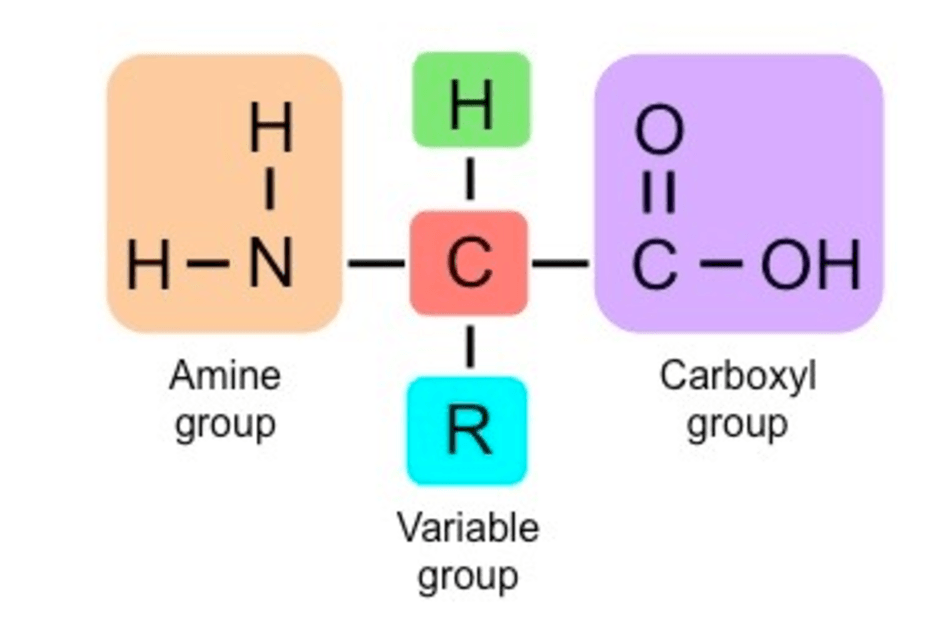
The relationship between kidneys and blood pressure is
an increase in fluid loss = a decrease in blood pressure
an decrease in fluid loss = a decrease in blood pressure
an increase in fluid loss = a increase in blood pressure
Renin, a protein that is important in blood pressure regulation is released by the
kidney
heart
liver
bowl
Mutation: ATC GCAT
What mutation occurred?
Induced mutations are caused by
chemical agents
UV radiation
X rays
All of the other choices
A _________________________ mutation that does not result in a change in the amino acid coded for and, therefore, does not cause any phenotypic change
silent mutation
missense mutation
nonsense mutation
A ________________ mutation arises when a change in the base
sequence of DNA alters a codon, leading to a different amino acid being placed in the protein sequence.
nonsense
missense
silent
One or two nucleotide insertions or deletions will results in a frameshift mutation however, a deletion or insertion of three nucleotides does not have this effect.
True
False
The separation of the two single strands of DNA creates a ‘Y’ shape?
enzyme
unzip
A replication fork
A short piece of RNA ?
unzip
enzyme?
a replication ‘fork’
a primer

1 on the diagram above
single stranded binding proteins
helicase
primase
ligase
polymerase
3 on the diagram above
single stranded binding proteins
helicase
primase
ligase
polymerase
5 on the diagram above
polymerase
helicase
primase
ligase
gyrase
7 on the diagram above
okazaki fragment
single stranded fragment
primase
ligase
gyrase
T/F - All homeostatic control systems have three functional components: a monitor, a coordinating centre, and a regulator.
True
False
________________ feedback mechanisms trigger a response that reverses the changed condition.
Negative
Postive
Neutral
Analytical
During lactation (milk production), the suckling by the baby stimulates the production of oxytocin, which in turn causes contraction of smooth muscle surrounding the milk duct, causing milk to flow. The flow of milk increases the suckling by the baby and more oxytocin is produced.
This is an example of a negative feedback system
This is an example of a postive feedback system
This is an example of a neither a negative or a positive feedback system
Which of the following statements about "ectotherms" is INCORRECT.
Include invertebrates, and most fish, amphibians, and reptiles.
Depend on air temperature to regulate metabolic rates; therefore, activity is partially regulated by the environment.
May have large fluctuations in body temp.
Relative even temperature throughout the body.
None of the other 4 statements are INCORRECT.
Which of the following are pros to being an ecotherm?
increased habitat diversity
less vulnerable to temp changes
increased bacterial protection
less food required
can afford long period of time with out food
The cortical regions at the back of the brain, housing the visual cortex
Temporal Lobe
Occipital Lobe
Frontal Lobe
Parietal Lobe
How do the parts of the brain communicate?
snapchat
molecular transference
cells
neurons
What makes up the central nervous system?
brain and spinal chord
lungs and heart
arms and legs
eyes and ears
Lying towards the back and top of the brain; involved in touch sensation and in perceiving spatial relationships
Parietal Lobe
Frontal Lobe
Occipital Lobe
Temporal Lobe
Front of the brain; especially involved in movement and thinking
Occipital Lobe
Frontal Lobe
Parietal Lobe
Temporal Lobe
The brain stem structure that controls breathing and heart rate
Amygdala
Thalamus
Pons
Medulla
If this is damaged one may experience memory, understanding and language problems
Occipital Lobe
Frontal Lobe
Parietal Lobe
Temporal Lobe
The band of nerve cells that connects the two cerebral hemispheres
motor cortex
somatosensory cortex
corpus collosum
medulla
The protective layer around the brain
blood brain barrier
meniges
cerebral spinal fluid
reticular formation
Functions of the Cerebellum?
posture, balance
coordination, speech
smooth and balanced muscular activity
All of the above

This system control the voluntary movement of skeletal muscle, bones and skin.
somatic
autonomic
motor
peripheral
Sensory nerves are located in this subsystem of the PNS
somatic
autonomic
motor
cortical
Controls involuntary actions under normal conditions.
parasympathetic
sympathetic
Controls involuntary actions under stressed conditions.
parasympathetic
sympathetic

The nerve cells in your body are called neurons. From the picture which part of the neuron is most likely responsible for carrying signals between the dendrite and axon terminal?
soma
axon
Node of Ranvier
Schwann cell


These neurons are considered to be efferent in location.
motor
sensory
interneuron
A type of Metabolism that builds up molecules into bigger things is
catabolism
macrolism
biolism
anabolism
Anything added to a system that speeds up or starts a reaction
chemical
reactant
option
Catalyst
In the body, catalysts are called
reactants
macronutrients
enzymes
ribosomes
Glucose
C6H12O6
CHO
C6H6O6
C12H12O12
The process by which glucose broken down to into smaller molecules
Photosynthesis
Metabolism
Cellular Respiration
Glycolisis
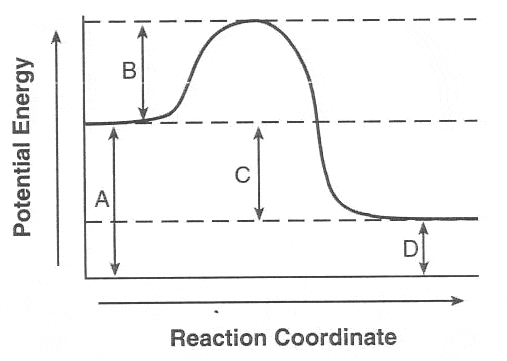

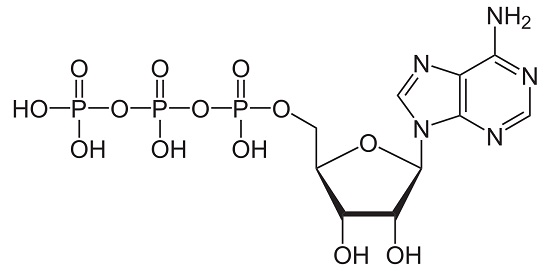
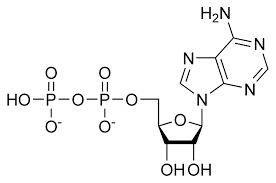
Which of the following is the correct structure of ATP?
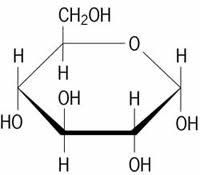
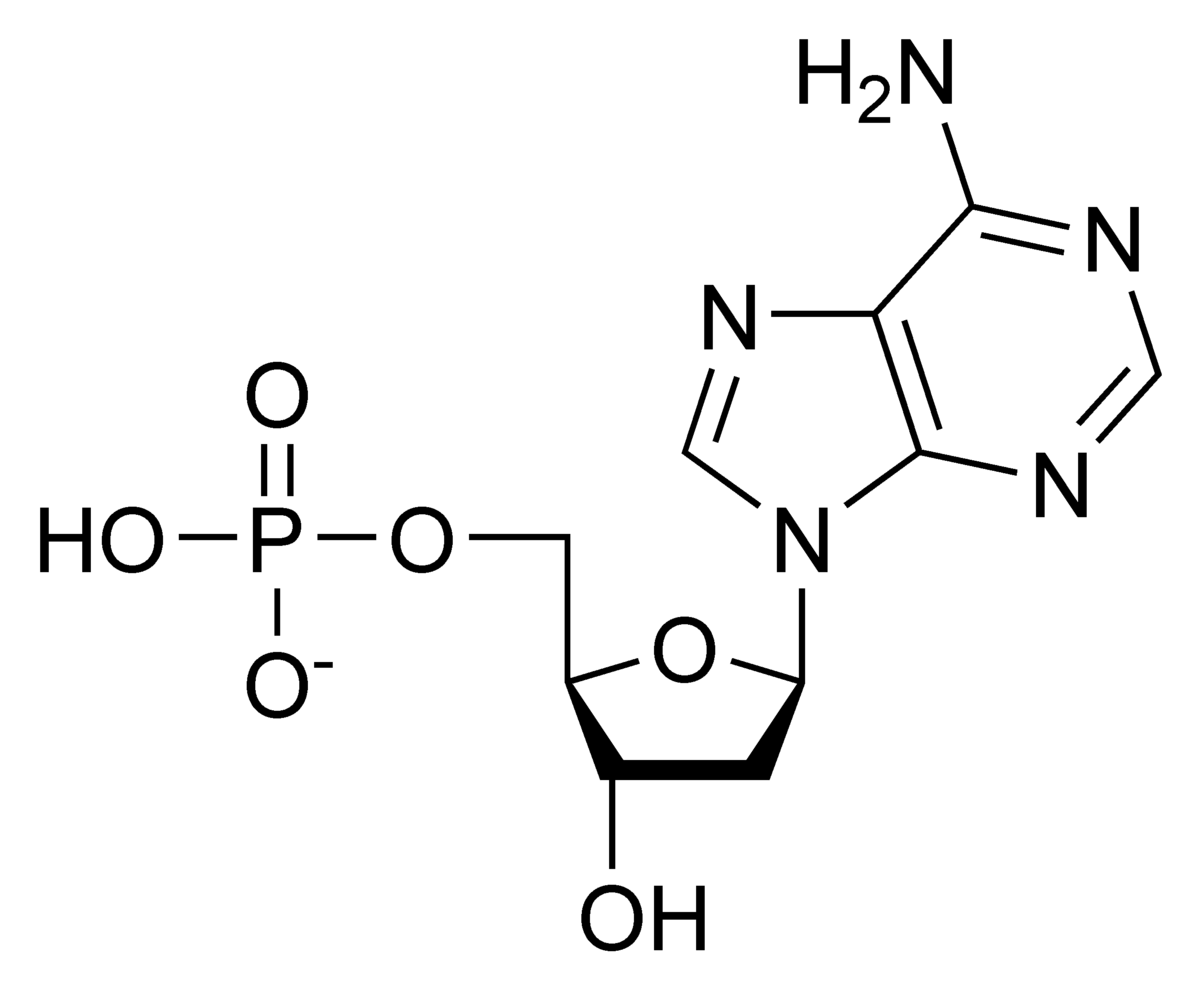


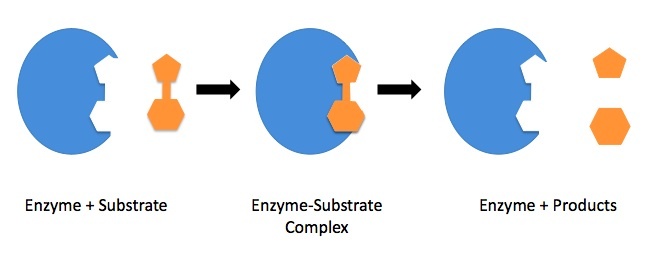


A in the picture can be labelled as the
presynaptic neuron
post synaptic neuron

This is full of acetycholine
1
2
3
4
5
Number 8 on the diagram
neurotransmitter uptake pump
calcium channel uptake pump
synaptic vesicle uptake pump
autoreceptor
The correct order for the synaptic transmission process
(NT = neurotransmitter)
A) ion channel opens
B) ion channel closes
C) NT binds to the receptor
D) action potential arrives
E) vesicle fuses with plasma membrane
F) NT is released into the synaptic cleft
D,E,F,C,A,B
A,D,E,B,C,F
D,E,F,A,C,B
A,D,E,B,F,C
C,A,B,F,D,E
The two types of nuerotransmitters are classified according to
how they enter or leave the nerve cell
how fast they are taken into the postsynapthic neuron
how the change the electrical nature of the membrane
These neurotransmitters make the membrane more permeable to K ions and make the membrane potential more negative.
excitatory
inhibitory
excitonitory
inhibovatory

Which of the following statements about the "information displayed in this image" is INCORRECT
A and B would be considered excitatory neurotransmitters.
C would be considered an inhibitory neurotransmitters.
The dashed line indicates the threshold of membrane potential that needs to be reached in order for the nerve impulse to propogate
The yellow circle is showing that A and B sent their impulse at the same time meeting the threshold
None of the other 4 statements are INCORRECT.
The resting potential of a human neuron is usually
+70 mV
0 mV
-70 mV
-55 mV

What is represented by E?
Neurotransmitter
Receptor
Plasma membrane
Vesicle
Synapse

This image is attempting to illustrate
temporal summation
spatial summation
temperature summation
sporadic summation
Which ion is found in a higher concentration inside a neuron than outside?
Sodium
Potassium
Chloride
Which ion is found in a higher concentration outside a neuron than inside?
Sodium
Potassium
Chloride



