Wayground logo

Free Printable Worksheets

Font size

S
M
L
XL
Worksheets

SCI 8 Benchmark Review

Total questions: 130

Worksheet time: 2hrs 22mins

Name
Class
Date
1.
Jack has a rock. The rock has a mass of 14g and a volume of 2cm3. What is the density of the rock?
a)
7 mL
b)
7 g/cm3
c)
28 g/cm3
d)
1/7 g/cm3
2.
Which lab tool might you use to measure the volume of a liquid?
a)
electric scale
b)
bunsen burner
c)
test tube
d)
graduated cylinder
3.
What is the volume of Object X?
a)
10.0 cm3
b)
15.0 cm3
c)
20.0 cm3
d)
25.0 cm3
4.
What is the formula for density?
a)
density = mass x volume
b)
density = mass / volume
c)
density = mass + volume
d)
density = mass - volume
5.
An object with which of the following densities will float on water?
a)
0.7 g/cm3
b)
1.2 g/cm3
c)
3.5 g/cm3
d)
11.4 g/cm3
6.
Why do ice cubes float in a  glass of water?
a)
the ice cubes are more dense than the water
b)
the water is more dense than the ice cubes
c)
the water is more dense than the glass
d)
the ice is more dense than the glass
7.
The following liquids are poured together in a beaker: alcohol (density=0.79), corn syrup (density=1.38), water (density=1.0), and cooking oil (density=0.93).  Which of these liquids will sink to the bottom of the beaker?
a)
alcohol
b)
corn syrup
c)
water
d)
cooking oil
8.
Will an object with a density of 1.01 g/cm3 float or sink?
a)
float
b)
sink
9.
A brick sinks in water while a wooden block of the same size floats.  This is because the brick has a
a)
lower volume than the wooden block
b)
lower density than the wooden block
c)
higher volume than the wooden block
d)
higher density than the wooden block
10.
A scientist has four different liquids and pours them all into a bottle.  The silver liquid sinks to the bottom, the red liquid settles on top of the silver one, and the pink liquid stays at the surface. Which liquid has the smallest density?
a)
the pink liquid
b)
the silver liquid
c)
the red liquid
d)
the water
11.
What is the density of water?
a)
0 g/ml
b)
1 g/ml
c)
10 g/ml
d)
100 g/ml
12.
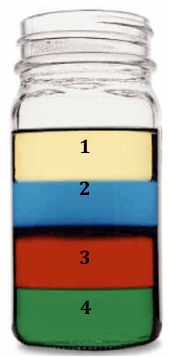
Put the liquids in order from most dense to least dense?
a)
4, 3, 2, 1
b)
1, 2, 3, 4
c)
3, 4, 2, 1, 
d)
4, 3, 1, 2
13.
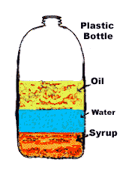
Which liquid is the least dense?
a)
oil
b)
water
c)
syrup 
d)
plastic bottle
14.
Which box has a higher density?  
a)
Box A
b)
Box B
c)
cannot be determined
d)
they are the same
15.

What is the mass of this object?

a)

1100

b)

164.2

c)

202

16.
a)
232.5
b)
237.0
c)
750.
17.

What is the mass of this object?

a)

1642.0

b)

164.2

c)

166.0

18.
a)
206.0
b)
260.0
c)
200.6
19.

What is the mass of this object?

a)

439.0

b)

437.2

c)

437.0

20.
Which is the formula for volume?
a)
Base x Height
b)
Length x Width
c)
Length x Width x Height
d)
Surface Area x Height
21.

What is the volume of this object?

a)

24 cm3

b)

240 cm3

c)

60 cm3

22.
What are the three states of matter?
a)
solid, volume, mass
b)
density, volume, mass
c)
solid, liquid, gas
d)
density, gas, volume
23.
Something that takes up space and has mass.
a)
volume
b)
matter
c)
mass
d)
density
24.
A state of matter that has a definite volume and shape.
a)
solid
b)
liquid
c)
gas
d)
matter
25.
Iron + oxygen = rust is an example of a ___________.
a)
physical property/change
b)
chemical property/change
c)
mass
d)
volume
26.
Which change can occur when  you add heat energy to water?
a)
The water can change from a liquid to a solid
b)
The water can change from a gas to a liquid
c)
The water can change from a liquid to a gas
d)
The water can change from a solid to a liquid
27.
Changing the way matter looks without changing it into NEW matter is a:
a)
Chemical change
b)
Physical change
c)
Energy change
d)
BOTH a chemical and a physical change
28.
Chopping wood is an example of a:
a)
Physical change
b)
Chemical change
29.
Water freezing to ice is an example of a:
a)
Physical change
b)
Chemical change
30.
Burning wood to ash is an example of a:
a)
Physical change
b)
Chemical change
31.
Smashing a piece of candy into smaller pieces is an example of a:
a)
Physical change
b)
Chemical change
32.
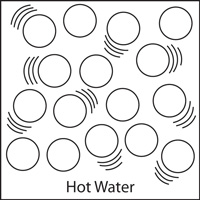
Adding HEAT to matter causes its particles to:
a)
move faster and farther apart
b)
Move slower and farther apart
c)
Move faster and closer together
d)
Move slower and closer together
33.
Freezing
a)
Solid to gas
b)
Liquid to solid
c)
Gas to solid
d)
Liquid to gas
34.
Boiling
a)
liquid to gas
b)
gas to solid
c)
gas to liquid
d)
solid to liquid
35.
What is happening when my ice cream changes from a solid to a liquid?
a)
freezing
b)
melting
c)
burning
d)
evaporation
36.

Define a liquid.

a)

Indefinite shape, indefinite volume

b)

Definite shape, definite volume

c)

Found in stars

d)

Definite volume, indefinite shape (takes the shape of its container)
37.
What term describes a solid changing to a gas?
a)
Deposition
b)
Sublimation
c)
Evaporation
d)
Freezing
38.
What is condensation?
a)
gas to solid
b)
gas to liquid
c)
liquid to solid 
d)
solid to liquid 
39.
The speed of the molecules determines the _____.
a)
volume
b)
density
c)
pressure
d)
temperature
40.
A chemical change
a)
doesn't really change much.
b)
creates a new substance
c)
is a change in the state of matter
41.
No definite shape, but has a definite volume
a)
Gas
b)
Liquid
c)
Solid
42.
Phase change from a solid to a liquid.
a)
melting
b)
sublimation
c)
boiling
d)
condensation
43.
Phase change from a gas to a liquid.
a)
condensation
b)
evaporation
c)
melting
d)
deposition
44.
The phase change from water vapor to liquid water is known as...
a)
evaporation
b)
precipitation
c)
condensation
d)
sublimation
45.

Which section of the phase change diagram is indicated?

a)

liquid

b)

solid

c)

melting

d)

freezing

46.

Which section of the phase change diagram is indicated?

a)

Gas

b)

Liquid

c)

Vaporization

d)

Condensation

47.

Which section of the phase change diagram is indicated?

a)

Solid

b)

Liquid

c)

Melting

d)

Freezing

48.

Which section of the phase change diagram is indicated?

a)

Freezing

b)

Melting

c)

Solid

d)

Liquid

49.

Which section of the phase change diagram is indicated?

a)

Condensation

b)

Vaporization

c)

Liquid

d)

Gas

50.

Which section of the phase change diagram is indicated?

a)

Vaporization

b)

Condensation

c)

Melting

d)

Freezing

51.

Which section of the phase change diagram is indicated?

a)

Melting

b)

Freezing

c)

Vaporization

d)

Condensation

52.
Ice melting
a)
Chemical Change
b)
Physical Change
53.
Water freezing
a)
Chemical Change
b)
Physical Change
54.
Wood burned in a fireplace
a)
Chemical Change
b)
Physical Change
55.
Burning coal
a)
Chemical Change
b)
Physical Change
56.
TRUE OR FALSE. If an object has a density of 3 g/mL and it is cut in half, the density of each piece will still be 3 g/mL. 
a)
True
b)
False
57.
Why do the liquids form different layers?
a)
They have different densities.  
b)
They have different masses.  
c)
They have different volumes.  
d)
They are different temperatures.  
58.

What is the volume of the fish?

a)

18.0 mL

b)

6.0 mL

c)

38.0 mL

59.

Why does hot air RISE?

a)

The molecules are spread farther apart and are LESS dense

b)

The molecules are spread farther apart and are MORE dense

c)

The molecules are close together and are LESS dense

d)

The molecules are close together and are MORE dense

60.

Why does cold air sink?

a)

The molecules are spread farther apart and are LESS dense

b)

The molecules are spread farther apart and are MORE dense

c)

The molecules are close together and are LESS dense

d)

The molecules are close together and are MORE dense

61.

What type of relationship is shown by this graph?

a)

Direct

b)

Indirect

c)

Static

d)

Cyclic

62.

What type of relationship is shown by this graph?

a)

Direct - As temperature increases, density increases

b)

Indirect - As temperature increases, density decreases

c)

Static - As temperature increases, density stays the same

d)

Cyclic - As temperature increases, density repeats in a pattern

63.

As volume increases, density remains the same. What is the name of this type of relationship as shown in the graph?

a)

Direct

b)

Indirect

c)

Static

d)

Cyclic

64.

What type of relationship is shown by this graph?

a)

Direct

b)

Indirect

c)

Static

d)

Cyclic

65.

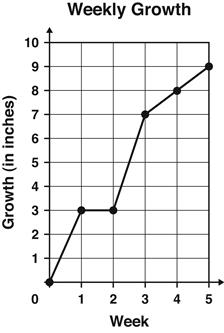
The graph shows the number of inches a plant grew each week.

Between which 2 weeks did the plant grow the MOST?

a)

Week 1 and Week 2

b)

Week 2 and Week 3

c)

Week 3 and Week 4

d)

Week 4 and Week 5

66.
These take MILLIONS of Years to Form
a)
Renewable Resources
b)
Alternative Resources
c)
Non-Renewable Resources
d)
Cats
67.
What are examples of renewable energy?
a)
Magic, Toilet Paper, and Pens
b)
Magic, Electricity, and Paper
c)
Paper, Shoes, and Cardboard
d)
Solar, Wind, Geothermal, Biomass, Hydropower, Sunlight, and Water
68.
What is a form of non-renewable energy?
a)
Magic
b)
Oil
c)
Computer
d)
Paper
69.
At what position does the rock have the greatest kinetic energy?
a)
A
b)
B
c)
D
d)
E
70.

energy transformation in a flashlight

a)

electrical to chemical to light

b)

chemical to electrical to light

71.

type of energy in gasoline

a)

electrical

b)

chemical

c)

magnetic

d)

nuclear

72.

Energy transformation - Solar panel to playing a radio and fan

a)

light, electrical, mechanical and sound

b)

chemical, mechanical, light, sound

73.

Fossil fuel

a)

nuclear, biomass and coal

b)

coal, petroleum, oil and natural gas

74.
A battery converts what type of energy to another?
a)
sound to kinetic
b)
light to heat
c)
mechanical to electrical
d)
chemical to electrical
75.

What type of energy is in a lightening bolt?

a)

chemical

b)

nuclear

c)

mechanical

d)

electrical

76.
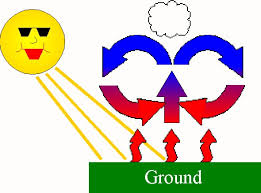
Warm air rises and the cool air sinks demonstrates this type of heat transfer. 
a)
conduction
b)
convection
c)
radiation
d)
Insolation 
77.
Warm air is __________ dense than cold air and rises creating convection currents.
a)
more
b)
less
78.
Conduction occurs in...
a)
solids
b)
liquids
c)
gases
79.
What happens when ice cubes melt in a glass?
a)
Heat travels from the ice to the warmer water.
b)
No energy is transferred.
c)
Heat is transferred from the warmer water to the ice cubes.
d)
The water warms up due to the humidity
80.
Water boiling in a pan is an example of ________________ currents
a)
raditation
b)
convection
c)
conduction
81.
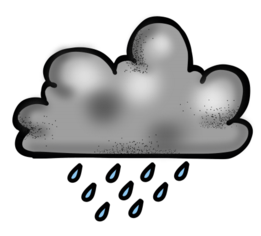
What part of the water cycle does this picture show?
a)
condensation
b)
precipitation
c)
evaporation
82.
What is it called when plants give off water vapor as a waste product?
a)
condensation
b)
evaporation
c)
sublimation
d)
transpiration
83.
What part of the water cycle does this picture show?
a)
condensation
b)
precipitation
c)
evaporation
84.
what does the #4 show in the diagram?
a)
condensation
b)
evaporation
c)
precipitation
d)
run off
85.
Where weather occurs.
a)
stratosphere
b)
thermosphere
c)
troposphere
d)
mesosphere
86.
What gas is important for weather to occur in the troposphere?
a)
Argon
b)
water vapor (H2O)
c)
nitrogen (N)
d)
trace gases
87.
Found in the stratosphere.
a)
ozone
b)
carbon dioxide
c)
clouds
d)
water vapor
88.
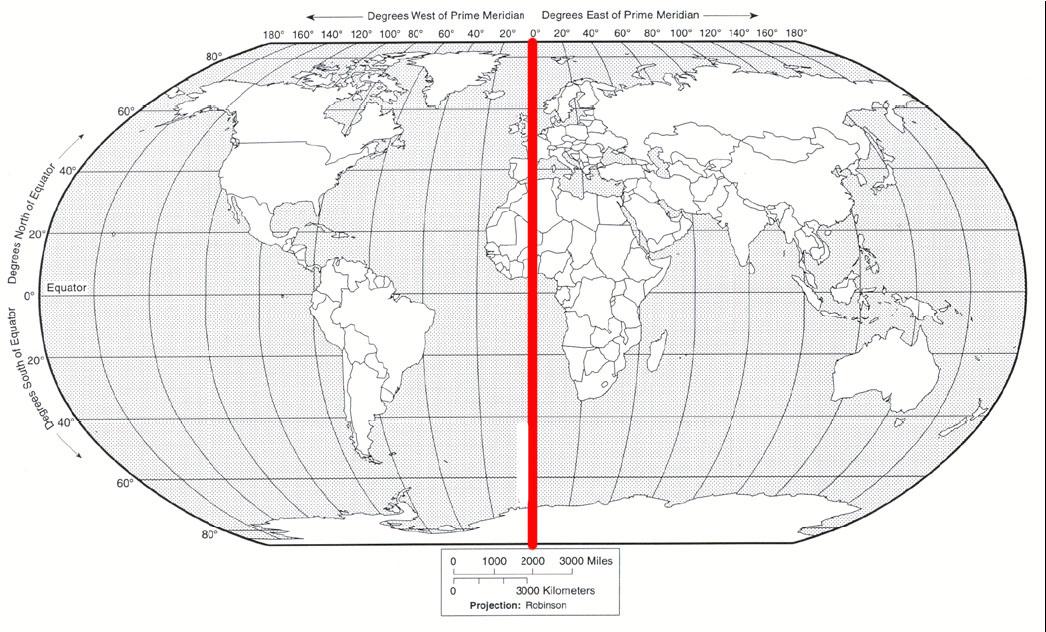
What is the name of the line at zero degrees longitude?
a)
Equator
b)
Prime Meridian
c)
North Pole
d)
South Pole
89.
Which of the following letter is at approximately 60 degrees S, 40 degrees W? 
a)
A
b)
D
c)
E
d)
H
90.
Which letter would you find at 15oS, 60oW?
a)
A
b)
C
c)
L
d)
H
91.
Which direction is the river flowing?
a)
north
b)
south
c)
east 
d)
west
92.

What is the elevation of point c?

a)

800 ft

b)

850 ft

c)

1500 ft

d)

1000 ft

93.

Which side is steeper?

a)

The left side of the hill

b)

The right side of the hill

94.
If contour lines are close together, then the slope is
a)
gentle
b)
steep
c)
flat
d)
going up and down
95.

Contour lines point up the hill. Mill River flows

a)

SW

b)

SE

c)

NE

d)

NW

96.

Contour lines point upstream.

Water flows downstream.

What direction does the river flow?

a)

NE

b)

NW

c)

SE

d)

SW

97.
What is the elevation of Y?
a)
Between 120-140 meters
b)
Between 100-120 meters
c)
Between 140-160 meters
d)
Between 80-100 meters
98.
What is the elevation of point B?
a)
800 ft
b)
850 ft
c)
900 ft
d)
1000 ft
99.

How many grams are soluble in 100 g of water at 100 ºC?

a)

300 grams

b)

250 grams

c)

100 grams

d)

50 grams

100.

As temperature increases, the solubility of most substances

a)

increases

b)

decreases

c)

remains the same

101.

How does temperature affect the solubility of this substance?

a)

as temperature increases, solubility increases

b)

as temperature increases, solubility decreases

c)

as temperature increases, solubility remains the same

102.

In the continental United States, all weather (pressure systems) move from the southwest to the __________________.

a)

northeast

b)

northwest

c)

southeast

d)

southwest

103.

An air mass that developed over the Gulf of Mexico or equatorial Atlantic Ocean would be __________ __________.

a)

maritime tropical

b)

continental polar

c)

maritime polar

d)

continental tropical

104.

Precipitation occurs at _____________.

a)

the center of air masses

b)

fronts

105.

The “L” on weather maps refers to ______________________. “H” refers to ___________________________.

a)

low temperature, high temperature

b)

low pressure, high pressure

106.

mT air mass source region = (Gulf of Mexico, Canada)

a)

Gulf of Mexico

b)

Canada

107.

cP air mass source region = (Gulf of Mexico, Canada)

a)

Gulf of Mexico

b)

Canada

108.
This is the symbol for a... 
a)
Occluded Front
b)
Stationary Front
c)
Warm Front
d)
Cold Front 
109.
Identify the type of front that is shown in the image.
a)
Occluded Front
b)
Cold Front
c)
Stationary Front
d)
Warm Front
110.
Identify the type of front that is shown in the image.
a)
Occluded Front
b)
Cold Front
c)
Stationary Front
d)
Warm Front
111.
This is the symbol for a... 
a)
Cold Front
b)
Warm Front
c)
Stationary Front
d)
Occluded Front 
112.
What type of storm front is this? 
a)
warm front
b)
cold front
c)
stationary front
d)
occluded front
113.
Warm air moving upwards from the Gulf of Mexico is:
a)
continental tropical
b)
continental polar
c)
maritime tropical
d)
maritime polar
114.
1. What determines the order of placement of the elements on the modern Periodic Table?
a)
A) atomic number
b)
B) atomic mass
c)
C) the number of neutrons, only
d)
D) the number of neutrons and protons
115.
2.  Which element is a noble gas? Use periodic table. 
a)
A) antimony  
b)
B) francium
c)
C) gold 
d)
D) krypton
116.
5. Based on the Periodic Table, which two elements have similar chemical properties?Use periodic table.
a)
A) sodium and potassium
b)
B) silver and phosphorus
c)
C) sodium and oxygen
d)
D) nitrogen and neon
117.
6. Which substance represents a compound?
a)
A) C  
b)
B) Co 
c)
C) CO
d)
D) O2
118.
Something that is made up of only one kind of atom is known as _________________.
a)
a molecule
b)
a compound
c)
an element
d)
a proton
119.
The ability to dissolve into, or become part of, another substance
a)
solubility
b)
solvent
c)
solute
d)
solution
120.
What line segment represents only the solid state?
a)
A-B
b)
B-C
c)
C-D
d)
D-E
121.

Which elements have the most similar chemical properties?

a)

K and Na

b)

K and Ca

c)

K and Cl

d)

K and S

122.

A good absorber of energy is

a)

black, rough, shiny

b)

black, rough, dull

c)

light, smooth, shiny

d)

light, smooth, dull

123.
This rock was formed when molten rock cooled into a solid. What type of rock is it?
a)
Igneous Rock
b)
Metamorphic Rock
c)
Sedimentary Rock
124.
Which type of rock is formed from INTENSE heat and pressure?
a)
igneous
b)
sedimentary
c)
metamorphic
125.
Fossils are only found in
a)
Sedimentary rocks
b)
Foliated Metamorphic rocks
c)
Igneous Rocks
d)
Nonfoliated Metamorphic rocks
126.
The three groups of rocks are classified by
a)
How they form
b)
Color
c)
Grain size
d)
Chemical Composition
127.

Moh’s hardness scale 1 (soft, hard) to 10 (soft, hard);

a)

soft, hard

b)

hard, soft

128.
Which mineral property is being shown here?
a)
luster
b)
hardness
c)
cleavage
d)
streak
129.
Can a glass plate scratch apatite?
a)
Yes 
b)
No 
c)
Depends on where it is found
d)
Only if wet
130.

What is the softest mineral on the Mohs Hardness Scale?

a)

Talc

b)

Gypsum

c)

Calcite

d)

Diamond