wayground logo

Free Printable Worksheets

NEW

Font size

S
M
L
XL
Worksheets

Diversity Of Life

Total questions: 70

Worksheet time: 41mins

Name
Class
Date
1.

Which of the following terms best describes green plants?

a)

multicellular heterotrophs

b)

multicellular autotrophs

c)

unicellular autotrophs

d)

unicellular heterotrophs

2.

Bacteria, the most numerous organisms on Earth, are ___________ organisms.

a)

complex

b)

unicellular

c)

multicellular

d)

simple

3.

Which of the following is true about animals?

a)

Animals are eukaryotes.

b)

Animals are autotrophic.

c)

Animals are unicellular.

d)

Animal cells do not contain nucleic acids.

4.

Organisms belonging to which kingdom are all autotrophs?

a)

Fungi

b)

Plants

c)

Protists

d)

Animals

5.

In the modern system of classification, there are three domains. Which one is NOT a domain.

a)

Bacteria

b)

Archaea

c)

Eukarya

d)

Protista

6.

An organism whose cells lack a nucleus is called a(n)

a)

prokaryote

b)

heterotroph

c)

eukaryote

d)

autotroph

7.

Most members of the _________ kingdom feed by absorbing nutrients from dead or decaying organisms.

a)

Animals

b)

Fungi

c)

Plant

d)

Protist

8.
The wide variety of living organisms that inhabit the planet
a)
Biodiversity 
b)
Extinct
c)
Classification 
d)
Species 
9.

An organism that cannot make its own food is called a what?

a)

Heterotroph

b)

Autotroph

c)

Prokaryotic

d)

Eukaryotic

10.

The start of growth and development of a seed is called what?

a)

Germination

b)

Puberty

c)

Cells

d)

Growth spurt

11.
This domain is characterized by ancient bacteria that can live in extreme environments, such as volcanoes.
a)
Archaea
b)
Bacteria
c)
Eukarya
d)
Prokarya
12.
The domain Eukarya has 4 kingdoms, protista, fungi, plantae and ________.
a)
Animalia
b)
Mammalia
c)
Crustacea
d)
Amphibia
13.
Members of this kingdom never have a cell wall
a)
Animalia
b)
Plantae
c)
Archaebacteria
d)
Protista
14.
What do protists, plants, fungi, and animals ALWAYS have in common? They are all...
a)
Multicellular
b)
Eukaryotic
c)
Prokaryotic
d)
Consumers
15.

Bacteria reproduce through what process?

a)

Binary Fusion

b)

Binary Fission

c)

Cellular Respiration

d)

Meosis

16.

What kind of organism has cells like those shown below?

a)

Plant Cell

b)

Animal Cell

c)

Bacteria Cell

d)

Archaea Cell

17.

What kind of organism has cells like those shown below?

a)

Archean Cell

b)

Plant Cell

c)

Bacteria Cell

d)

Protist Cell

18.

What domain... includes unicellular prokaryotes that can survive in harsh conditions?

a)

Bacteria

b)

Archaea

c)

Eukarya

19.

What Kingdom... Reproduces Asexually, are all Multicellular Eukaryotes, and are all Heterotrophs?

a)

Protista

b)

Fungi

c)

Plantae

d)

Animalia

20.

What Kingdom... Includes Yeast as an example and are found almost everywhere on land?

a)

Protista

b)

Fungi

c)

Plantae

d)

Animalia

21.

What Kingdom... are Multicellular Eukaryotes, Heterotrophs, and live in diverse environments all over earth?

a)

Protista

b)

Fungi

c)

Plantae

d)

Animalia

22.

Which Kingdom... consists of organisms that are Multicellular Eukaryotes and Autotrophs?

a)

Protista

b)

Fungi

c)

Plantae

d)

Animalia

23.

Which Kingdom... consists of organisms that are both Autotrophs and Heterotrophs, and consists of both Multicellular and Unicellular organisms?

a)

Protista

b)

Fungi

c)

Plantae

d)

Animalia

24.

Which Kingdom... Includes all organisms that do not fit into another Kingdom?

a)

Protista

b)

Fungi

c)

Plantae

d)

Animalia

25.

Which Kingdom... Would a human being be in?

a)

Protista

b)

Fungi

c)

Plantae

d)

Animalia

26.
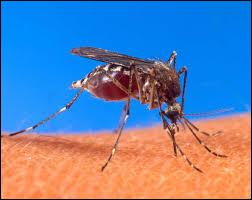
Mosquito  belongs to what kingdom?
a)
Animal Kingdom
b)
Plant Kingdom
c)
Fungi Kingdom
d)
Protista Kingdom
27.
Organisms in this smallest taxonomic group share many characteristics.
a)
domain
b)
kingdom
c)
species
d)
class
28.
Which organisms are most closely related?
a)
Equus caballas (Horse) & Equus burchellii (Zebra)
b)
Cyanea artica (Jellyfish) &
Ctenodiscus crispatus (Mud Starfish)
c)
Naja naja (cobra) & Glycine max (soya bean)
d)
Ophiocomina nigra (black brittle star) & Brassica nigra (black mustard)
29.
The scientific name for an organism is made from the:
a)
class and family name
b)
genus and species name
c)
domain and kingdom name
d)
kingdom and phylum name
30.
Which of the following organisms are LEAST closely related?
a)
organisms that share a domain
b)
organisms that share a family 
c)
organisms that share a genus 
d)
organisms that share a species 
31.
What do fungi use to reproduce?
a)
Hyphae
b)
Branches
c)
Spores
d)
They split apart
32.
Cilia are 
a)
similar to fake feet
b)
tiny hairs
c)
similar to tails
33.
What type of cells are protists?
a)
Prokaryotic 
b)
Eukaryoitc 
34.
This organism would be from the kingdom _______
a)
Bacteria
b)
Protista
c)
Archaebacteria
d)
Fungi
35.
The _______ organelle allows Euglena to be autotrophic.
a)
chloroplast
b)
mitochondria
c)
cell membrane
d)
trichocyst
36.
A _____ is a temporary projection of cytoplasm that is used for locomotion.
a)
pseudopod
b)
flagella
c)
cilia
d)
trichocyst
37.
The long whip-like tail that extends from the cell membrane is called
a)
cell membrane
b)
flagellum
c)
cytoplasm
d)
genetic material
38.
Which is an example of a disease caused by fungi
a)
Diphtheria
b)
The Common Cold
c)
Strep Throat
d)
Athlete's Foot
39.

What hair-like structure do paramecium have to help them move through their watery environment?

a)

Cilia

b)

Flagella

c)

Pseudopod

d)

False foot

40.
The part of the plant that is where most PHOTOSYNTHESIS happens:
a)
roots
b)
stems
c)
leaves
d)
flowers
41.
The part of the plant that gets water from the soil is the:
a)
roots
b)
stems
c)
leaves
d)
flowers
42.
The part of the plant that is for reproduction is:
a)
roots
b)
stems
c)
leaves
d)
flowers
43.
The part of the plant that takes water up and food down (in vascular tubes) is:
a)
roots
b)
stems
c)
leaves
d)
flowers
44.
Which one is a NONVASCULAR plant?
a)
moss
b)
fern
c)
gymnosperm
d)
angiosperm
45.
What gas goes IN for photosynthesis?
a)
Oxygen
b)
Carbon dioxide (CO2)
46.
What gas goes OUT from photosynthesis?
a)
Oxygen
b)
Carbon dioxide (CO2)
47.
This protist moves using
a)
cilia
b)
flagella
c)
pseudopods
d)
feet
48.
This protist moves using
a)
cilia 
b)
flagella
c)
pseudopods
d)
feet
49.
Which of the following is the best model for cilia?
a)
A
b)
B
c)
C
d)
D
50.
Plants that have true roots, stems and leaves are called ____.
a)
nonvascular plants
b)
vascular plants
c)
seed plants
d)
spore plants
51.

Vascular plants transport nutrients through tube-like structures known as ____________________ and non-vascular plants transport nutrients from _________________.

a)

cell to cell via diffusion, xylem and phloem

b)

seeds, cell to cell via diffusion

c)

xylem and phloem, cell to cell via diffusion

d)

xylem and phloem, seeds

52.
Which of the following is an example of a non-vascular plant?
a)
grass
b)
corn
c)
trees
d)
moss
53.
This is a ____ plant.
a)
gymnosperm
b)
angiosperm
c)
vascular
d)
nonvascular
54.
These types of plants are able to grow taller because of the added support and faster nutrient transport of xylem and phloem.
a)
Seedless plants
b)
Vascular plants
c)
Seeded plants
d)
Nonvascular plants
55.
What controls the loss of water through their leaves?
a)
stomata
b)
conifers
c)
spores
d)
dicots
56.
A trainer using fish to reward a dolphin that jumps through a hoop is an example of
a)
imprinting
b)
conditioning
c)
trial and error
d)
insight
57.
A soccer player kicking a field goal in his first football game is an example of
a)
imprinting
b)
conditioning
c)
trial and error
d)
insight
58.
A chick following a lawnmower because it was the first moving object it ever saw is an example of
a)
imprinting
b)
conditioning
c)
trial and error
d)
insight
59.
Why is a spider spinning a web an innate behavior?
a)
It learns how to spin the web from its mother.
b)
It learns how to spin a web through insight learning.  
c)
It is born knowing how to spin a web.
d)
It learns how to spin a web through observational learning.
60.
The behavior of some animals to attract other animals (think dating)
a)
courtship
b)
dating
c)
showing off
d)
hibernation
61.
What is a seasonal movement of an animal to another location to find food called? 
a)
camouflage
b)
migration
c)
grouping
d)
mimicry
62.
In the old story, about the boy who cried wolf so many times that nobody was alarmed anymore, the story illustrates which type of learning? 
a)
habituation
b)
imprinting
c)
classic conditioning
d)
cognition
63.
Vertebrates don't have a backbone
a)
True
b)
False
64.
Animals that have hair or fur are...
a)
Mammals
b)
Birds
c)
Fishes
d)
Reptiles 
65.

Name the structure through which gases enter and leave the body of an insect.

a)

tracheoles

b)

alveoli

c)

spiracle

d)

lungs

66.
Why is it necessary to have the flu shot every year?
a)
A person's antibodies level never declines after receiving the vaccine
b)
People only have passive immunity to the flu for one year
c)
The flu virus evolves quickly
d)
The flu virus remains unchanged from year to year
67.
Which is an example of passive immunity?
a)
people being vaccinated against disease
b)
people taking vitamins to boost their immune response
c)
people receiving antibodies from their mothers before birth
d)
people producing antibodies against organisms that cause diseases they have had previosuly
68.
The resistance to a disease acquired as a result of exposure to the disease or agent:
a)
Active Immunity
b)
Cell-Mediated Immunity
c)
Passive Immunity
d)
Natural Immunity
69.

Type of immunity the body produces its own antibodies. The antibodies are made by the body itself – lasts forever.

a)

Active Immunity

b)

Passive Immunity

70.

Type of immunity when antibodies obtained from the blood of either another person or an animal. The antibodies are obtained from the blood of another person or animal (only temporary)

a)

Active Immunity

b)

Passive Immunity