
Font size
 Worksheets
Nervous System
Total questions: 88
Worksheet time: 56mins

Which nerves carry messages from the sensory receptor to the CNS?
motor (efferent)
sensory (afferent)
interneurons
neurons don't do this
Which nerves carry messages from the CNS to the site of the response?
motor (efferent)
sensory (afferent)
interneurons
neurons don't do this
Which part of the neuron receives messages?
dendrites
soma
axon
axon terminals
Which of the following are the parts of a neuron?
brain, spinal cord, and vertebral column
cortex, medulla and sheath
dendrite, axon, and cell body
The central nervous system is made up of what parts?
Brain and spinal cord
Brain only
Nerves only
Nerves and spinal cord
The peripheral nervous system is made up of what parts?
Brain and spinal cord
Brain only
Nerves only
Nerves and spinal cord

What is letter E pointing to?
Cell Body
Dendrite
Myelin Sheath
Nucleus
What is letter F pointing to?
Cell Body
Dendrite
Myelin Sheath
Nucleus
What is letter D pointing to?
Cell Body
Dendrite
Axon Terminal
Nucleus
Which region of the brain contain your four lobes?
Cerebrum
Cerebellum
Brainstem

What is letter C pointing to?
Spinal cord
Frontal Lobe
Brain stem
Cerebellum
What is letter B pointing to?
Spinal cord
Frontal Lobe
Brain stem
Cerebellum
What is letter A pointing to?
Spinal cord
Frontal Lobe
Brain stem
Cerebellum


The nerves in your fingertips are part of the ___ nervous system
central
peripheral

Two major branches of the nervous system
central and peripheral
peripheral and motor
motor and sensory

The nervous system is composed of the ___, ___, and ___.
heart, brain, kidneys
lungs, liver, stomach
brain, spinal cord, nerves
Which disease is an overproduction of cerebral spinal fluid?
spina bifida
hydrocephalus
multiple sclerosis
Parkinson's
This is usually a temporary problem that is caused by trauma to the head
cerebral palsy
hydrocephalus
concussion
Parkinson's disease
This disorder is caused by damage during gestation or birth and includes lack of motor coordination and possibly neurological problems
Parkinson's disease
epilepsy
cerebral palsy
meningitis
This disorder is a degeneration of brain’s nerves leading to tremors and muscle weakness
Parkinson's disease
Tourette's syndrome
epilepsy
meningitis
–inflammation of protective membrane covering the brain and spinal cord
–can be caused by a bacteria,
virus, or fungus.
encephalitis
meningitis
Tourette's syndrome
paraplegia
–inflammation of the brain causing headaches, seizures, comas, and death
meningitis
cerebral palsy
encephalitis
quadraplegia
Two parts of the autonomic nervous system
cat and mouse
somatic and autonomic
parasympathetic and sympathetic
central and peripheral


Label the Neuron-What does the letter "D" represent?
Dendrite
Axon
Myelin Sheath
Soma
Gap between two adjacent communicating neurons
myelin sheath
axon
threshold
synaptic cleft
What is the insulating membrane that surrounds parts of the axon that helps the impulses travel faster called?
Axon
Dendrites
Soma
Myelin Sheath
Which nervous system contains sensory and motor neurons that carry information between the central nervous system and the rest of the body?
Autonomic Nervous System
Somatic Nervous System
Peripheral Nervous System
Central Nervous System
Which of the following is NOT a functional classification of neurons?
Unipolar neuron
Sensory (afferent) neuron
Motor (efferent) neuron
Interneuron (association neuron)
What do the nodes of Ranvier do?
help speed up impulse
help slow down impulse
protecting the axon
nothing
What produces myelin in the PNS?
Schwann cell
Axon
Nucleus
Dendrite
What produces myelin in the CNS?
Microglial cells
Astrocytes
Oligodendrocytes
Schwann Cells


What is the name of the support cells in the CNS?
Neurons
Axons
Dendrites
Neuroglia
Schwann cells form the myelin sheath around the
cell body.
axon.
dendrite.
nodes of Ranvier.
Impulse conduction is fastest around neurons that are
unmyelinated.
cerebral
motor
myleinated.
Which of the following statements about axons is true?
There are often numerous axons for each neuron
The axon is the site of neurotransmitter production
The axon carries impulses away from the cell body of a neuron
The axon contains the cell nucleus
Myelinated fibers (tracts) form ________ matter while unmyelinated fibers form ________ matter.
white; gray
gray; white
motor; gray
sensory; white
________ connect sensory and motor neurons in neural pathways and their cell bodies are typically located in the central nervous system.
Afferent neurons
Efferent neurons
Interneurons (association neurons)
Proprioceptors
The thalamus, hypothalamus, and epithalamus collectively constitute the ________.
diencephalon.
brainstem
cerebrum
cerebellum
The brain and spinal cord are protected and cushioned by three connective tissue membranes that are collectively called ________.
meninges
ventricles
arachnoid villi
sinuses
The delicate innermost membrane, or meningeal layer, that clings to the surface of the brain and spinal cord is known as the ________.
dura mater
pia mater
arachnoid mater
periosteal mater
Which one of the following represents the correct sequence from outermost to innermost layers of the meninges?
dura mater, pia mater, arachnoid mater
arachnoid mater, pia mater, dura mater
dura mater, arachnoid mater, pia mater
pia mater, dura mater, arachnoid mater
Functions such as sensing of touch, pain, and temperature, hearing and spatial and visual perception are processed in the ________ lobe of the cerebrum.
frontal
occipital
temporal
parietal
A stroke in the frontal lobe has caused Don to lose motor speech. He can understand others speaking but when he tries to respond, the words coming out make no sense. What part of his brain was damaged?
Wernicke's area
Broca's area
medulla oblongata
pyramidial tract
The midbrain, pons, and medulla oblongata are housed in the ________.
cerebrum
hypothalamus
brainstem
diencephalon
One of the major functions of the pons is to control ________.
breathing
hunger
heart rate
consciousness
The portion of the diencephalon that acts as a relay station for sensory impulses traveling to the sensory cortex is the ________.
hypothalamus
pons
thalamus
pituitary gland
Control of temperature, endocrine activity, metabolism, and thirst are functions associated with the _____.
hypothalamus
cerebellum
medulla oblongata
cerebrum
The ________ division of the autonomic nervous system is often called the "rest-and-digest" division.
sympathetic
somatic
parasympathetic
afferent
The fissure in the brain that separates the two cerebral hemispheres is called the ________.
sagittal fissure
transverse fissure
longitudinal fissure
tentorium cerebelli
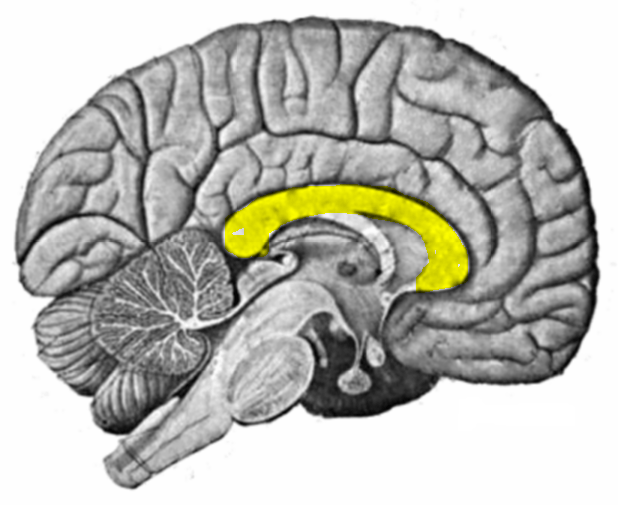
The large fiber tract that allows communication between the two cerebral hemispheres is called the ______.
pons
corpus collasum
thalamus
fornix
The vital centers for the control of visceral activities such as heart rate, breathing, blood pressure, swallowing, and vomiting are located in the ________.
hypothalamus
pons
medulla oblongata
midbrain
Loss of muscle coordination results from damage to the ________.
thalamus
midbrain
cerebrum
cerebellum
Fibers that carry information from the skin, joints, and skeletal muscles to the central nervous system are__.
visceral sensory
parasympathetic
somatic sensory
motor
Which of the following is the correct sequence in a typical reflex arc?
receptor, sensory neuron, integration center, motor neuron, effector
receptor, motor neuron, integration center, sensory neuron, effector
effector, sensory neuron, integration center, motor neuron, receptor
effector, motor neuron, integration center, sensory neuron, receptor
The parasympathetic and sympathetic nervous systems are subdivisions of the autonomic nervous system.
True
False
Difficulty in breathing may reflect damage to respiratory centers located in the cerebellum.
True
False
A sensory neuron carries stimuli from the central nervous system to the effector.
True
False
Disease caused by ACh deficit.
Huntington's Disease
Alzheimer's Disease
Meningitis
Spina Bifida
Disease caused by an inflammation of the meninges caused by bacteria or virus and spreads into the nerve tissue of the Central Nervous System.
Spina Bifida
Hydrocephalus
Huntington's Disease
Meningitis
Disease caused by an incomplete formation of the vertebral column.
Meningitis
Encephalitis
Spina Bifida
Huntington's Disease
With which part of the nervous system is meningitis associated?
The tissues covering the brain
Neurons
The axon
The spinal cord
Which nervous system disease is characterized by memory loss, confustion, and the gradual loss of control over mental and physical abilities?
Multiple Sclerosis
Alzheimer's Disease
Huntington's Disease
Parkinson's Disease
A stroke may cause
brain cells to die
paralysis
loss of normal functions
all of the above can be caused by a stroke
Which nervous system disease is associated with uncontrolled shaking, slowed movements, and problems with speaking?
Multiple Sclerosis
Parkinson's Disease
Alzheimer's Disease
Huntington's Disease
Meningitis may cause
brain cancer.
the brain to swell and lead to brain damage and death.
a slow, gradual loss of memories.
All of the above can be caused by Meningitis.
Which disease is caused by injury to the developing brain?
Cerebral Palsy
Epilepsy
Encephalitis
Meningitis
In which of the following nervous system disorders do nervous tissues degenerate?
Alzheimer's Disease
Amyotrophic Lateral Sclerosis
Both of the above
None of the above
Alzheimer's disease is a progressive form of _ that results in a major decline in mental abilities.
(a)
A condition called Reye's syndrome can occur in young people that take (a) when they have a viral infection.
A _ is a more severe type of headache.
(a)
The _ of neurons allow for the rapid progression of action potential, allowing electrical signals to be transmitted quickly.
(a)
Which nervous system disease may result in movement, cognitive and behavioral disorders?
Huntington Disease
Neurofibromatosis
ALS
Multiple Sclerosis
Which neurological disorder is characterized by abnormal brain activity causing seizures?
Cerebral Palsy
Epilepsy
Encephalitis
Parkinson's Disease
A brain tumor is a mass or growth of abnormal cells that can only originate in your brain.
True
False
Nervous tissue may degenerate or break down.
True
False
Alzheimer's disease is a non-progressive form of dementia that causes plaque buildup in the brain and a decline in mental abilities.
True
False
Amyotrophic lateral sclerosis (ALS) leads to a gradual loss of higher brain functions.
True
False
Which nervous system disease is genetic and can cause tumors to form on nerve tissue?
Meniingitis
Neurofibromatosis
Crebral Palsy
Huntington's Disease
When the immune system tries to fight of an infection in the brain, and may cause the brain to swell are symptoms of what type of infection?
Meningitis
Reye's Syndrome
Encephalitis
None of the above
Which nervous system disease results from the immune system attacking and damaging the central nervous system?
Alzheimer's Disease
Parkinson's Disease
Huntington's Disease
Multiple Sclerosis

