wayground logo

Free Printable Worksheets

Font size

S
M
L
XL
Worksheets

6th Grade Science Year-Long Review

Total questions: 143

Worksheet time: 2hrs 17mins
Name
Class
Date
1.
Energy of motion is which type of energy?
a)
Potential
b)
Kinetic
c)
Sound
d)
Gravitational
2.
What type of energy is in this picture?
a)
Kinetic
b)
Potential
c)
Chemical
d)
Sound
3.
What kind of energy is represented in this picture?
a)
Thermal
b)
Potential
c)
Nuclear
d)
Mechanical
4.
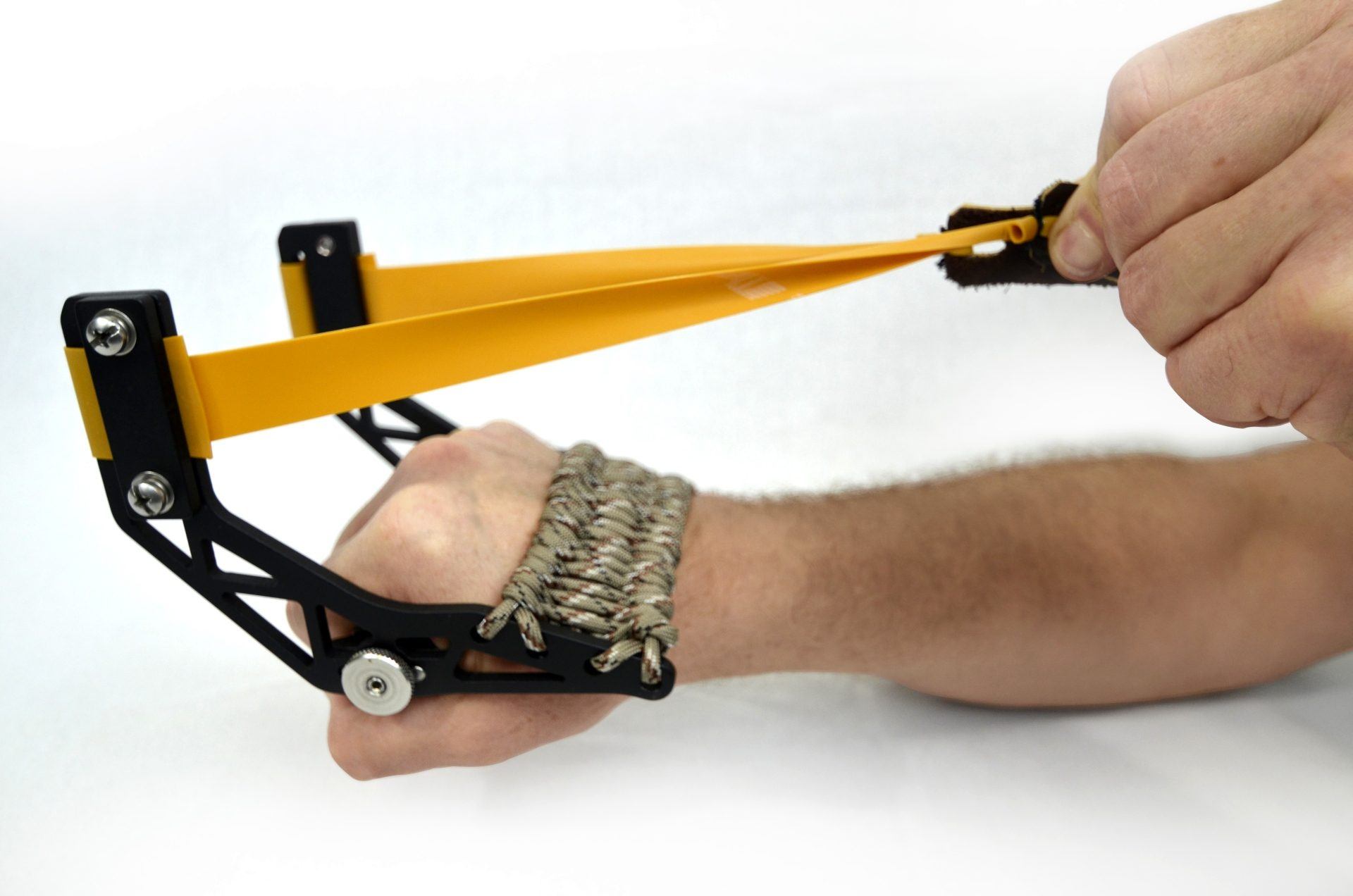
What kind of energy does this device use?
a)
Chemical
b)
Electrical
c)
Thermal
d)
Chemical
5.
A battery converts what type of energy to another?
a)
sound to kinetic
b)
light to heat
c)
mechanical to electrical
d)
chemical to electrical
6.
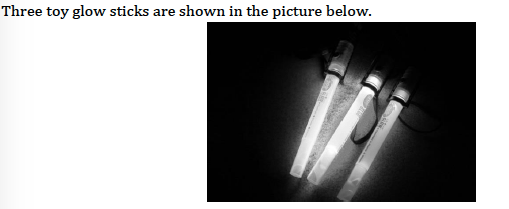
The glow sticks produce light for a short amount of time. The light from the glow stick is a conversion from what to what?
a)
thermal to light
b)
gravitational to potential
c)
radiant to electrical
d)
chemical to light
7.
On a roller coaster, where is maximum potential energy?
a)
At the bottom of a big hill
b)
When going around a corner
c)
When going upside down
d)
At the top of a big hill
8.
On a roller coaster, where is maximum kinetic energy?
a)
At the bottom of a big hill
b)
When going around a corner
c)
When going upside down
d)
At the top of a big hill
9.
Energy that is stored in bonds between atoms is:
a)
Mechanical energy
b)
Chemical energy
c)
Kinetic energy
d)
Nuclear energy
10.
Energy caused by the movement in the particles of matter. It is a form of kinetic energy.
a)
Nuclear energy
b)
Sound energy
c)
Light energy
d)
Thermal energy
11.
According to which law of energy, energy can't be created or destroyed?
a)
First law of motion
b)
The law of tacos
c)
Laws of Energy
d)
law of conservation of energy
12.
How does heat always transfer?
a)
from cold to hot
b)
from hot to cold
c)
from liquid to solid
d)
from gas to liquid
13.
Which of the following shows an energy transformation from chemical energy to electrical to light energy?
a)
A bolt of lightning lights the night sky.
b)
A candle glows brightly in the dark.
c)
A fire in a fireplace lights up a room.
d)
A battery causes a flashlight to shine.
14.
__________ is stored energy. 
a)
Potential
b)
Kinetic
c)
None of the above 
d)
All of the above 
15.
The faster an object moves, the ________ kinetic energy it has. 
a)
more
b)
less
c)
none of the above
d)
same
16.
What kind of energy is in a moving skateboard?
a)
Potential
b)
Kinetic
c)
Both potential and kinetic energy
d)
none of the above
17.
What kind of energy is in a rock at the edge of a cliff?
a)
Potential
b)
Kinetic
c)
Both potential and kinetic energy
d)
none of the above
18.
Gravitational potential energy depends on the ________ and ________ of the object. 
a)
Height and mass
b)
Friction and movement
c)
Mass and Movement
d)
Height and Friction 
19.
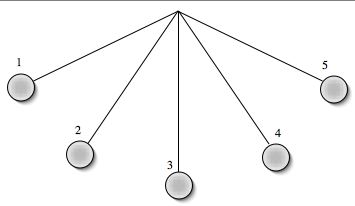
When a pendulum swings, at which point is kinetic energy highest?
a)
1
b)
2
c)
3
d)
4
20.
What are the two factors that affect kinetic energy?
a)
time and energy
b)
power and mass
c)
mass and speed
d)
time and work
21.
What would have the greatest kinetic energy?
a)
A car driving down a hill.
b)
A person running down a hill. 
c)
A ball rolling down a hill. 
d)
leaves rolling down a hill 
22.
What happens to particles as they heat up?
a)
They slow down
b)
Nothing
c)
They don't move
d)
They speed up
23.
What happens to particles as they cool down?
a)
They slow down
b)
Nothing
c)
They don't move
d)
They speed up
24.
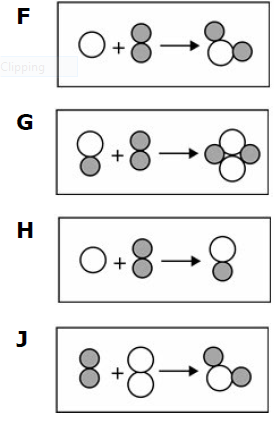
Which of the following models best demonstrates a balanced chemical equation?
a)
F
b)
G
c)
H
d)
J
25.
Ice melting
a)
Chemical Change
b)
Physical Change
26.
Water freezing
a)
Chemical Change
b)
Physical Change
27.
Wood burned in a fireplace
a)
Chemical Change
b)
Physical Change
28.
Cake batter baked in an oven
a)
Chemical Change
b)
Physical Change
29.
Blue liquid and yellow liquid mixed to make a green liquid
a)
Chemical Change
b)
Physical Change
30.
Baking soda and vinegar combine to make carbon dioxide
a)
Chemical Change
b)
Physical Change
31.
Glass bottle that is shattered
a)
Chemical Change
b)
Physical Change
32.
Copper roof changing color
a)
Chemical Change
b)
Physical Change
33.
Shredding a piece of paper
a)
Chemical Change
b)
Physical Change
34.
Rust on an iron fence
a)
Chemical Change
b)
Physical Change
35.
Boiling water
a)
Chemical Change
b)
Physical Change
36.
Burning coal
a)
Chemical Change
b)
Physical Change
37.

salt dissolving in water

a)

physical change

b)

chemical change

38.

lighting a match

a)

physcial change

b)

chemical change

39.
Blue Color: Chemical or Physical Property
a)
Chemical Property
b)
Physical Property
40.
This is testing ___________
a)
relative density
b)
solubility
c)
mass
d)
conductivity 
41.
Molecules spread out and move FAST!
a)
solid
b)
gas
c)
liquid
42.
Molecules are tightly packed together
a)
solid
b)
liquid
c)
gas
43.
The 3 State of Matter are?
a)
Idaho, Texas, and Florida
b)
Matter, Mass, and Weight
c)
Solids, Liquids, and Gas
d)
Steel, Copper, and Brass
44.
Anything that has mass and takes up space is called
a)
volume
volume
b)
matter
c)
magnetism
d)
electricity
45.

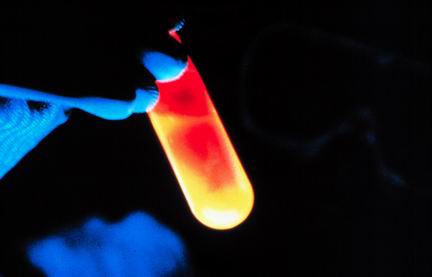
What explains that the products are a different color than the reactants?

a)

Change in color

b)

Color is the same

c)

Color masking

46.
Which of the following examples shows that a chemical reaction has occurred? 
a)
A rock breaks into smaller pieces when it is struck with a hammer.
b)
Rust forms on a hammer that has been left outside to long. 
c)
A cup of water turns pink when a few drops of red food coloring are added. 
d)
A solid is formed when heat is removed from a sample of water. 
47.
A student places a piece of a potato into a container of hydrogen peroxide. One observation the student makes is that bubbles form around the potato. The presence of bubbles might indicate the formation of a new substance because bubbles - 
a)
could show that a gas is forming
b)
always rise to the top of a liquid. 
c)
are almost always perfectly spherical.
d)
usually burst after a few minutes.
48.
Hydrogen peroxide breaks down to form water and oxygen gas. Which observation is evidence that a chemical reaction has occurred?
a)
The mass of the solution remains the same.
b)
 Phase changes are observed.
c)
 The color of the solution remains clear.
d)
The temperature of the solution increases. 
49.
Evidence of a chemical reactions is anything that shows - 
a)
a new substance has formed
b)
a solid dissolved in a liquid
c)
interaction between 2 gases
d)
a change in the state of matter
50.
Which of the following is NOT evidence that that a chemical reaction has occurred?
a)
produces light/heat
b)
production of a gas
c)
formation of a precipitate
d)
melting
51.
For an investigation a student poured a blue solution of CuSO4 into a beaker. The student placed a shiny, silver-colored strip of zinc metal in the solution and observed the changes.
The student inferred that a chemical reaction occurred. What evidence supports this inference?
a)
A dark solid formed on the zinc metal.
b)

The zinc metal remained silver-colored and shiny
c)
The CuSO4 solution turned blue when the zinc metal was added.
d)
None of these
52.
True or false.  Law of conservation of mass means that the number of atoms of the products is more than the number of atoms in the reactants. 
a)
True
b)
False
53.
In a reaction A + B ----> C,  reactant A has 5g and product  C has 9g. How many grams does reactant B should have? 
a)
4g
b)
5g
c)
9g
d)
14g
54.
Students react baking soda & vinegar.
Which of the following would provide the evidence that the number of atoms present before a chemical reaction is equal to the number of atoms present after the chemical reaction?
a)
The mass of the plastic bag, baking soda, and vinegar before the reaction was equal to the mass after the reaction.
b)
Bubbles were produced during the reaction, which meant that a gas was being produced.
c)
The plastic bag did not change in any way, indicating that it was not involved in the reaction.
d)
The mass of the baking soda was exactly equal to the mass of the vinegar used to create the chemical reaction.
55.
How much does a 5 gram Hershey's kiss weigh after it is melted in the microwave?
a)
5 grams
b)
3 grams
c)
7 grams
56.
If reaction starts with 20g of reactants it should produce... 
a)
a total of 40g of product
b)
a total of 10g of product
c)
a total of 80 g of product
d)
a total of 20g of product
57.
If there are 4 H atoms on the reactant side, how many H atoms will be on the product side? 
a)
2
b)
4
c)
6
d)
You need more information to answer this question
58.
Which of the following models best demonstrates a balanced chemical equation?
a)
F
b)
G
c)
H
d)
J
59.
The Law of Conservation of Energy states:
a)
Energy can created or destroyed but not transformed 
b)
Energy cannot be created or destroyed, it can only transformed
c)
Energy can't be created, destroyed or transformed
60.
According to the Law of Conservation of energy, the amount of energy before and after a reaction must be the same. Which statement below is true?
a)
The total amount of energy is conserved
b)
The total amount of energy is less after a reaction
c)
The total amount of energy is more after a reaction
61.
Energy of motion is which type of energy?
a)
Potential
b)
Kinetic
c)
Sound
d)
Gravitational
62.
Which of the following energy transformations occur when a lamp that is plugged into a wall socket is functioning correctly?
a)
Chemical to light
b)
Electrical to chemical
c)
Electrical to light
d)
Chemical to electrical
63.
Which of the following shows an energy transformation from chemical energy to electrical to light energy?
a)
A bolt of lightning lights the night sky.
b)
A candle glows brightly in the dark.
c)
A fire in a fireplace lights up a room.
d)
A battery causes a flashlight to shine.
64.
What form of energy?
a)
Mechanical (kinetic) energy
b)
Chemical (kinetic) energy
c)
Sound (potential) energy
d)
Sound (kinetic) energy
65.
What form of energy is stored in the bonds between molecules of matter?
a)
chemical energy
b)
heat energy
c)
kinetic energy
d)
mechanical energy
66.
Stored energy that results from the position or shape of an object is called...
a)
Thermal
b)
Potential
c)
Kinetic
d)
Gravitational
67.
Which of the followings are examples of thermal energy?
a)
a violin string plucked, talking, ringing telephone
b)
boiling water, steam, heat from a flashlight
c)
candle flame, light bulb light
d)
energy from the sun (fusion, energy from a nuclear power plant (fission)
68.
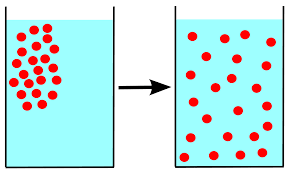
What is diffusion?
a)
when molecules move 
b)
when molecules move from a high concentration to a low.
c)
no movement 
d)
molecules move everywhere
69.
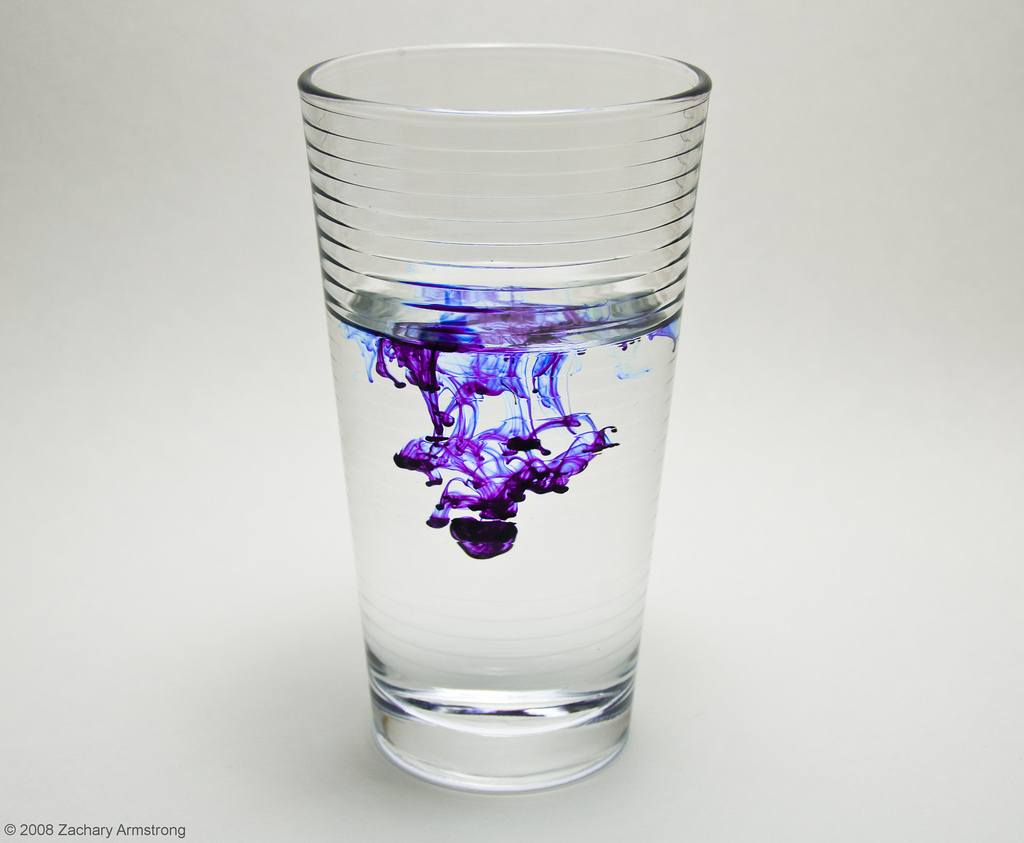
Where is there a low concentration of dye?
a)
at the bottom of cup
b)
in the color
c)
at the top of cup 
d)
no concenteraion gradient
70.
The picture below is an example of _________________.
a)
osmosis
b)
isotonic
c)
diffusion
d)
active transport
71.
Osmosis is the movement of _____ across a membrane.
a)
food
b)
energy
c)
oxygen
d)
water
72.
The diffusion of water through a semi-permeable membrane is called?
a)
Osmosis
b)
Cell wall
c)
Diffusion
d)
Respiration
73.
When both inside and outside of a cell have the same amount of water it is said that the cell has reached a state of
a)
Osmosis
b)
Diffusion
c)
Equilibrium
74.

Which two systems work together to maintain homeostasis while transporting oxygen throughout the body and removing carbon dioxide?

a)

circulatory and respiratory

b)

respiratory and excretory

c)

circulatory and digestive

d)

respiratory and digestive

75.
If the environment gets cold, we will often shiver in order to:
a)
keep body temperature the same as the external temperature
b)
decrease body temperature
c)
increase body temperature
d)
regulate blood pressure
76.
What transports substances around the body?
a)
Blood
b)
Sweat
c)
Tears
d)
Urine
77.

During cellular respiration organisms obtain energy by breaking down food in the form of sugars. What are the products of cellular respiration?

a)

oxygen and water

b)

glucose and oxygen

c)

oxygen and carbon dioxide

d)

carbon dioxide and water

78.
Which of the following is the smallest unit of life that can carry out all life functions?
a)
the mitochondria
b)
the vacuoles
c)
the nucleus
d)
the cell
79.
The chewing and grinding of food into smaller pieces is an example of...
a)
Mechanical Digestion
b)
Chemical Digestion
80.
Nutrients from digested food are absorbed in which digestive organ?
a)
Small Intestine
b)
Stomach
c)
Large Intestine
d)
Gallbladder
81.
Which organ pushes food down to the stomach?
a)
Mouth
b)
Esophagus
c)
Rectum
d)
Large intestine
82.
Which is NOT a function of the Digestive System?
a)
To rid the body of solid waste
b)
Absorb nutrients for energy & growth
c)
Break down nutrients from food
d)
Pump blood around the body
83.
Enzymes (chemicals) in your saliva help break down food while chewing.  This is...
a)
Mechanical digestion
b)
Chemical digestion
84.

The mechanical and chemical breakdown of the food:

a)

DIGESTION

b)

ABSORPTION

c)

INGESTION

d)

PERISTALYSIS

85.

The passage of nutrients from the digestive tract into the blood stream:

a)

INGESTION

b)

DIGESTION

c)

ABSORPTION

d)

DEFECATION

86.

Which part of the digestive system is responsible for diffusion?

a)

small intestine

b)

rectum

c)

villi

d)

epiglotis

87.
Inhale!!!!
Your lungs are ___________  air
a)
taking in
b)
letting out
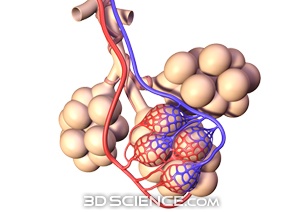
88.
EXHALE!!!
My lungs are __________________ air. 
a)
taking in
b)
letting out
89.
What is the main function of the respiratory system?
a)
to provide oxygen and remove carbon dioxide from the body
b)
to bring oxygen to the body
c)
to break down food and absorb nutrients
d)
to remove oxygen from the body and deliver carbon dioxide
90.
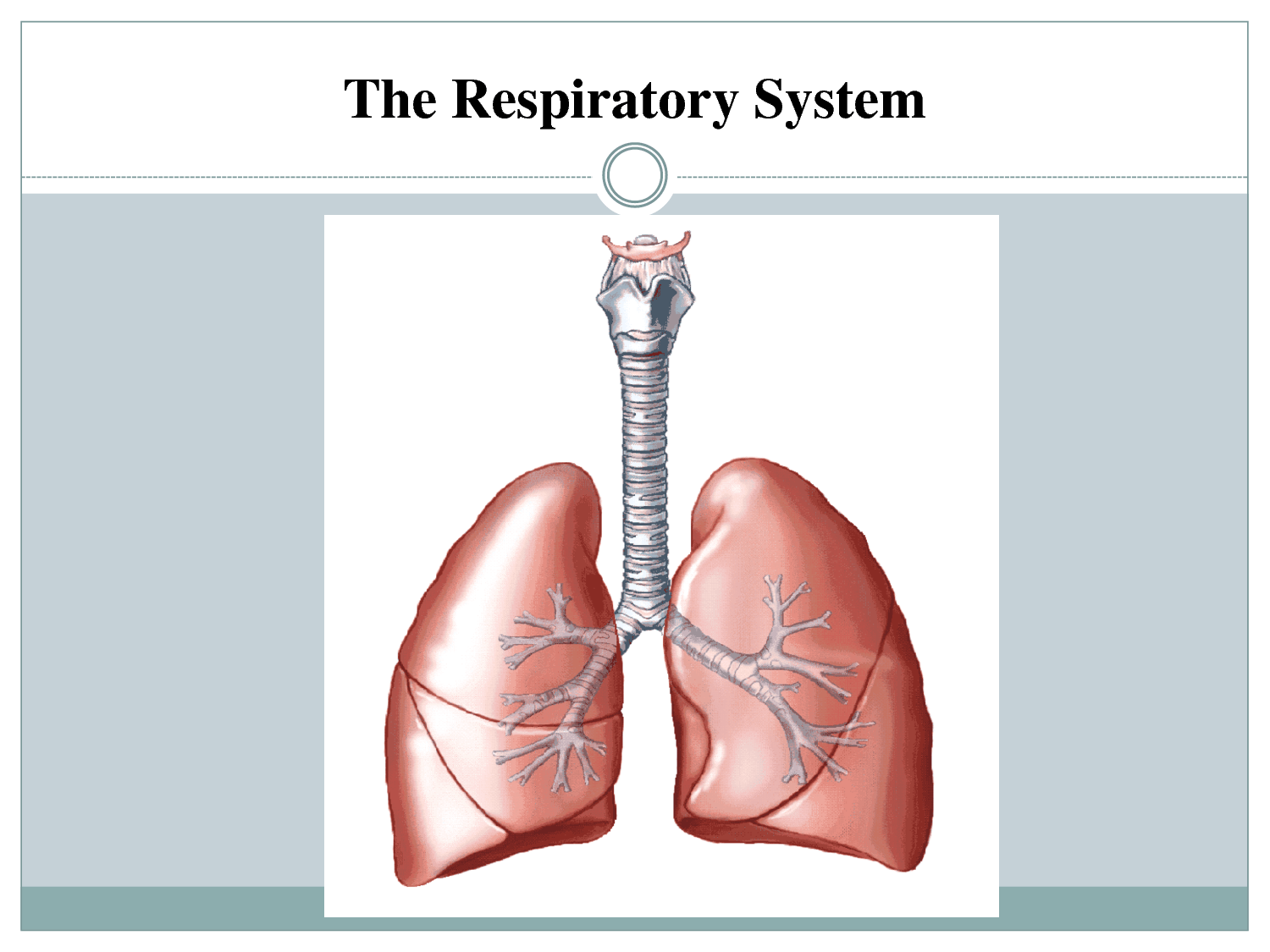
What are the main organs of gas exchange in the respiratory system?
a)
diapragm
b)
lungs
c)
trachea
d)
bronchi
91.
When you breathe, your lungs take in ___ and remove ___. 
a)
air/oxygen
b)
oxygen/carbon dioxide 
c)
carbon dioxide/waste 
d)
waste/air 
92.
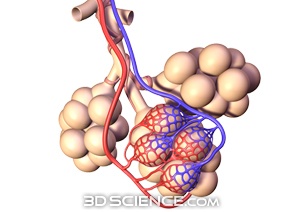
The air sacs that are covered with capillaries where gas exchange takes place
a)
bronchi
b)
lungs
c)
oxygen
d)
alveoli
93.
The circulatory system works with the ___________ system to provide our body with oxygen.
a)
respiratory
b)
digestive
c)
muscular
d)
skeletal
94.
The circulatory system works with the __________ system to obtain energy from nutrients that we eat. 
a)
respiratory 
b)
digestive
c)
skeletal
d)
nervous
95.
Which of the following is NOT a function of the skeleton?
a)
Production of blood cells
b)
Gives the body form
c)
Protects internal organs
d)
Generates heat
96.
In heat transfer, heat always flows from the _______________ substance to the _______________ substance.
a)
Hotter to colder
b)
Colder to hotter
c)
Hotter to hotter
d)
Colder to colder
97.
The type of heat transfer that happens through direct contact of molecules or particles with each other is ___________________.
a)
Convection
b)
Conduction
c)
Radiation
d)
insulation.
98.
Two objects at different temperatures are in contact. Which of the following happens to their thermal energy?
a)
Their thermal energies remain the same.
b)
Thermal energy passes from the cooler object to the warmer object
c)
Thermal energy passes from the warmer object to the cooler object.
d)
Thermal energy passes back and forth equally between the two objects.
99.
The handle of a metal spoon warms up when it is placed in a hot bowl of soup because of
a)
Convection
b)
Conduction
c)
Radiation
d)
insulation.
100.
Which of the following is the best example of conduction?
a)
A light bulb warming a lampshade
b)
An egg cooking in a frying pan
c)
Water boiling in a pot
d)
Gases circulating in the atmosphere
101.
Which situation best represents conduction?
a)
Heat from a campfire
b)
A hot air balloon taking off
c)
Touching a hot piece of metal
d)
Getting sunburned
102.

What is the definition of CONDUCTION?

a)

When heat is transferred from objects like rays of light or electromagnetically.

b)

When heat transfers from objects that are touching.

c)

a hot liquid or air that expands, becomes less dense, and rises or becomes more dense, and sinks.

d)

When heat transfers through the heater or AC in your house.

103.
A metal spoon heating up in a bowl of hot soup
a)
Conduction
b)
Convection
c)
Radiation
104.
The movement of liquid in a lava lamp
a)
Conduction
b)
Convection
c)
Radiation
105.
The sand burning your feet while walking on the beach on a hot day
a)
Conduction
b)
Convection
c)
Radiation
106.
In heat transfer, heat always flows from the _______________ substance to the _______________ substance.
a)
Hotter to colder
b)
Colder to hotter
c)
Hotter to hotter
d)
Colder to colder
107.
___________________ is the type of heat transfer that occurs in fluids, such as warm air rising and cold air sinking; creating wind.
a)
Convection
b)
Conduction
c)
Radiation
d)
insulation.
108.
Which statement is true?
a)
The quicker a molecule moves, the colder it is.
b)
The slower a molecule moves, the warmer it is.
c)
The quicker a molecule moves, the warmer it is
d)
The movement on molecule don�t affect its temperature
109.
Marcie played with her friends out in the cold, cloudy weather, wearing her wool hat. After the group had finished building snowmen and having snowball fights, Marcie went back inside to warm up and drink some hot chocolate. When she took her hat off, she realized that it was very warm. What happened?
a)
The radiant energy from the sun warmed up her hat and the hat kept that heat from the sun.
b)
�� Her hat was warm because wool fabric is warmer than other fabrics.
c)
The humidity outside made her hat warm.
d)
Conduction between Marcie�s warm body and the hat occurred and the hat remained warm because it is an insulator.
110.
Students in a science class performed an experiment with hot and cold water. They dyed the hot water red and the cold water blue. When the students layered the water, they noticed that the hot water rose to the top and the cold water sank. What was this demonstrating?
a)
Radiation
b)
Air Pressure
c)
Evaporation
d)
Density
111.
A large house being heated by heater warms a house when the air is circulating.
a)
Convection
b)
Conduction
c)
Radiation
d)
insulation.
112.
Which situation best represents convection?
a)
Heat from a campfire
b)
A hot air balloon taking off
c)
Touching a hot piece of metal
d)
Getting sunburned
113.
Someone who studies the weather.
a)
rain gauge
b)
taxonomists
c)
meterologist
d)
satellites
114.
What type of map is shown?
a)
satelite
b)
radar
c)
isobar
d)
isotherm
115.
Which weather tool measures air pressure?
a)
thermometer
b)
barometer
c)
anemometer
d)
psychrometer
116.
Humidity is the...
a)
Amount of Water Vapor in the Air
b)
Amount of Wind in the Air
c)
Amount of Precipitation in the Air
d)
Amount of Pressure in the Air
117.
Warm air near the Earth’s surface rises and then cools and drops, this creates a _________________ in the atmosphere.
a)
run-off
b)
Greenhouse Effect
c)
convection current
d)
water cylce
118.
What kind of weather is usually associated with a low pressure system?
a)
Sunny weather
b)
Precipitation (rain, snow, etc.)
119.
What kind of weather is usually associated with a high pressure system?
a)
Sunny weather
b)
Precipitation (rain, snow, etc.)
120.
What is weather?
a)
the state of the atmosphere at a particular time and place
b)
sunshine and rain
c)
how hot or cold it is
d)
severe weather
121.
Object spinning on its axis. 
a)
revolution
b)
rotation
122.
Object orbiting another object. 
a)
revolution 
b)
rotation
123.
If its ____ in the Northern hemisphere, then its fall in the Southern hemisphere. 
a)
spring
b)
summer
c)
fall
d)
winter
124.
If its ____ in the Northern hemisphere, then its summer in the Southern hemisphere. 
a)
spring
b)
summer
c)
fall
d)
winter
125.
The hemisphere where you live
a)
northern
b)
southern
126.
In winter, the axis of the earth is pointed away or toward the sun?
a)
towards
b)
up
c)
down
d)
away
127.
In summer, the axis of the earth is pointed away or toward the sun?
a)
towards
b)
up
c)
down
d)
away
128.
Why is the Equator warmest?
a)
Because it is closest to the sun.
b)
Because it receives the most direct sunlight
c)
Because no clouds form here.
d)
Because it is far from the sun
129.
Which season is taking place in the Northern Hemisphere in Position 1?
a)
Winter
b)
Spring
c)
Summer
d)
Fall
130.
Which season is taking place in the Northern Hemisphere in Position 3?
a)
Winter
b)
Spring
c)
Summer
d)
Fall
131.
What are the reasons for the season?
a)
Earth's tilt & rotation
b)
Earth's tilt & revolution
c)
Earth's rotation & size
d)
Earth's tilt & resolution
132.
What happens when the area in which you live tilts away from the sun?
a)
It is summer.
b)
It is spring.
c)
It is winter.
d)
It is fall.
133.
Why does the area around the equator stay the same temperature all year?
a)
The equator rotates slower than the poles.
b)
The equator remains the same distance from the sun.
c)
The equator always receives direct sunlight.
d)
The equator has 18 hour days.
134.
One rotation of Earth is equal to
a)
a day.
b)
a year.
135.
Why do globes lean sideways?
a)
To allow them to spin easier.
b)
To demonstrate the tilt of Earth's axis.
c)
To demonstrate the effects of gravity.
d)
To demonstrate day and night.
136.
What does the rotation of the earth cause us to experience?
a)
seasons
b)
year
c)
day & night
d)
eclipse
137.
How long does it take the earth to revolve once around the sun?
a)
12 hours
b)
24 hours
c)
30 days
d)
365.25 days
138.
When the Northern Hemisphere learns toward the sun, daylight is - 
a)
shorter
b)
longer
c)
equal
139.
What happens when the area in which you live tilts away from the sun?
a)
It is summer.
b)
It is spring.
c)
It is winter.
d)
It is fall.
140.
Which season has the least amount of daylight in the Northern Hemisphere?
a)
Winter
b)
Spring
c)
Summer 
d)
Fall
141.
What season is letter A in the northern hemisphere?
a)
Winter
b)
Summer
c)
Spring
d)
Fall
142.
What is the volume of the liquid in this graduated cylinder?
a)
44 mL 
b)
30.6 mL 
c)
37 mL 
d)
36 mL
143.
What is the correct value?
a)
5 ml
b)
15 ml
c)
20 ml
d)
25 ml