wayground logo

Free Printable Worksheets

NEW

Font size

S
M
L
XL
Worksheets

Life and Health Sciences - Organic Chemistry

Total questions: 60

Worksheet time: 1hrs 17mins

Name
Class
Date
1.
Name the following molecule?
a)
2,3-dichlorobutene
b)
cis-2,3-dichlorobutene
c)
trans-2,3-dichlorobutene
2.
Is this hydrocarbon saturated or unsaturated? 
a)
saturated
b)
unsaturated
3.
Carbon can form double bonds with carbon
a)
True
b)
False
4.
What functional group does this molecule contain?
a)
alkane
b)
alkene
c)
alkyne
d)
cycloalkane
5.
How many bonds does Carbon needs to become stable?
a)
1
b)
2
c)
3
d)
4
6.
What is the prefix for four carbons?
a)
meth-
b)
but-
c)
prop-
d)
eth-
7.
What is the suffix for single bonded hydrocarbons?
a)
-yne
b)
-ene
c)
-ane
d)
-one
8.
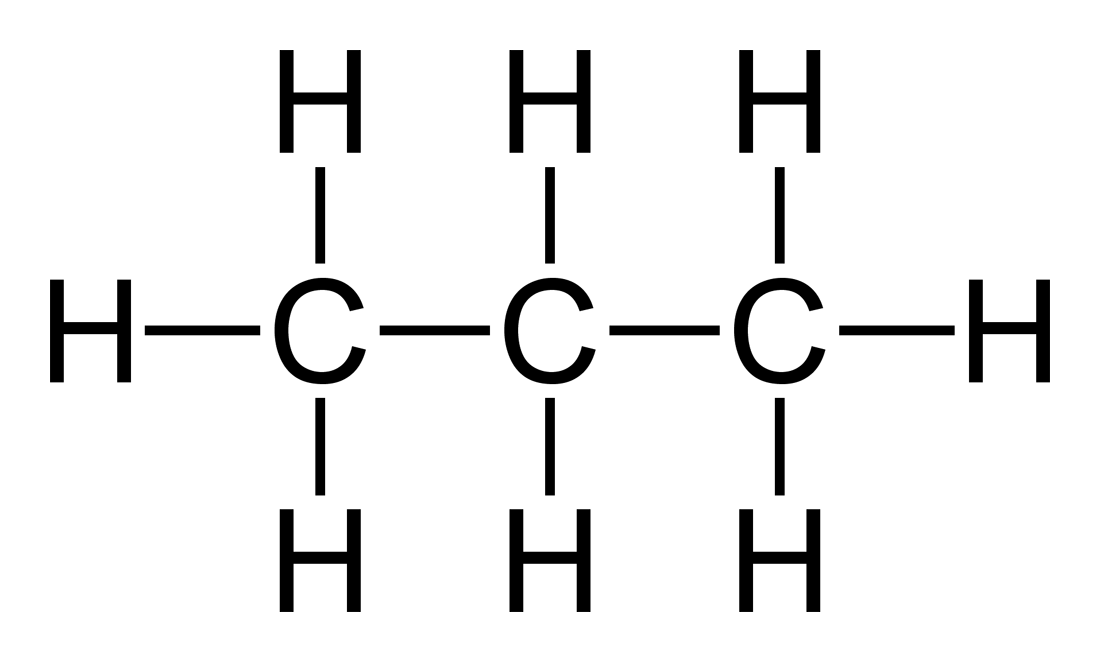
Name this alkane
a)
Methane
b)
Ethane
c)
Propane
d)
Butane
9.
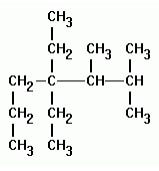
Name the following
a)
2,3-dimethyl-4,4-diethyl heptane
b)
2,3-methyl-4,4-ethyl heptane
c)
4,4-ethyl-2,3-methyl heptane
d)
4,4-diethyl-2,3-dimethyl heptane
10.
Name the compound.
a)
3-methyl-2-pentene
b)
2-ethyl-2-butene
c)
3-ethyl-2-butene
d)
1,1-dimethyl-propene
11.
A(n) ___ is formed when -OH groups replace one or more hydrogen atoms in a hydrocarbon.
a)
organic acid
b)
benzene ring
c)
aromatic compound
d)
alcohol
12.
Reaction mechanism shown below is
a)
Substitution reaction
b)
Nucleophilic substitution
c)
Addition reaction
d)
Bromination reaction
13.
Addition reaction happens for alkene because
a)
stable C=C double bonds
b)
unstable weak π bonds
c)
stable C-C bonds
d)
unstable sigma bond
14.

Which of the following will undergo an addition reaction with chlorine?

a)

CH3CH2CH2CH3

b)

CH3CH2CH=CHCH3

c)

CH3CH2COOH

d)

CH3CH2OH

15.

Relative formula C3H6 is of molecule

a)

propene

b)

ethene

c)

propane

d)

ethane

16.

Compounds which have different arrangements of atoms in space while having same atoms bonded to each other are said to have

a)

position isomerism

b)

functional group isomerism

c)

chain isomerism

d)

stereoisomerism

17.

Compounds which only contain carbon and hydrogen are termed as

a)

hydrocarbons

b)

organic compounds

c)

inorganic compounds

d)

carbohydrogens

18.

Oxidation of a secondary alcohol forms

a)

aldehyde

b)

ketone

c)

carboxylic acid

d)

diol

19.

This functional group is the product from oxidation of a

a)

primary alcohol

b)

secondary alcohol

c)

tertiary alcohol

d)

no more alcohol please miss!

20.

What is the product from the oxidation of propan-2-ol?

a)

propandiol

b)

propanal

c)

propanoic acid

d)

propanone

21.

What is the first product from the oxidation of propan-1-ol?

a)

propandiol

b)

propanal

c)

propanoic acid

d)

propanone

22.

What is the final product from the oxidation of propan-1-ol?

a)

propandiol

b)

propanal

c)

propanoic acid

d)

propanone

23.

What is the difference between aldehyde and ketones?

a)

position of C=O group

b)

position of C atoms

c)

the number of bonds carbon can form

d)

the number of oxygen atoms

24.
What are the steps of operation in the mass spectrometer?
a)
Accelerate, Deflect,Ionize, Detect
b)
Deflect,Ionize, Accelerate, Detect
c)
Ionize, Accelerate, Deflect, Detect
d)
Detect, Accelerate, Deflect, Ionize
25.
What do the peaks on the mass spectrum represent?
a)
anions
b)
different isotopes
c)
atoms with differing numbers of electrons
d)
numbers of electrons
26.
What do the heights of the peaks represent in the mass spectrum?
a)
number of isotopes
b)
relative abundance of each isotope
c)
average atomic mass
d)
charge:mass ratio
27.
Carbon has three known isotopes. Which is the most abundant?
a)
carbon-12.011
b)
carbon-12
c)
carbon-13
d)
carbon-14
28.
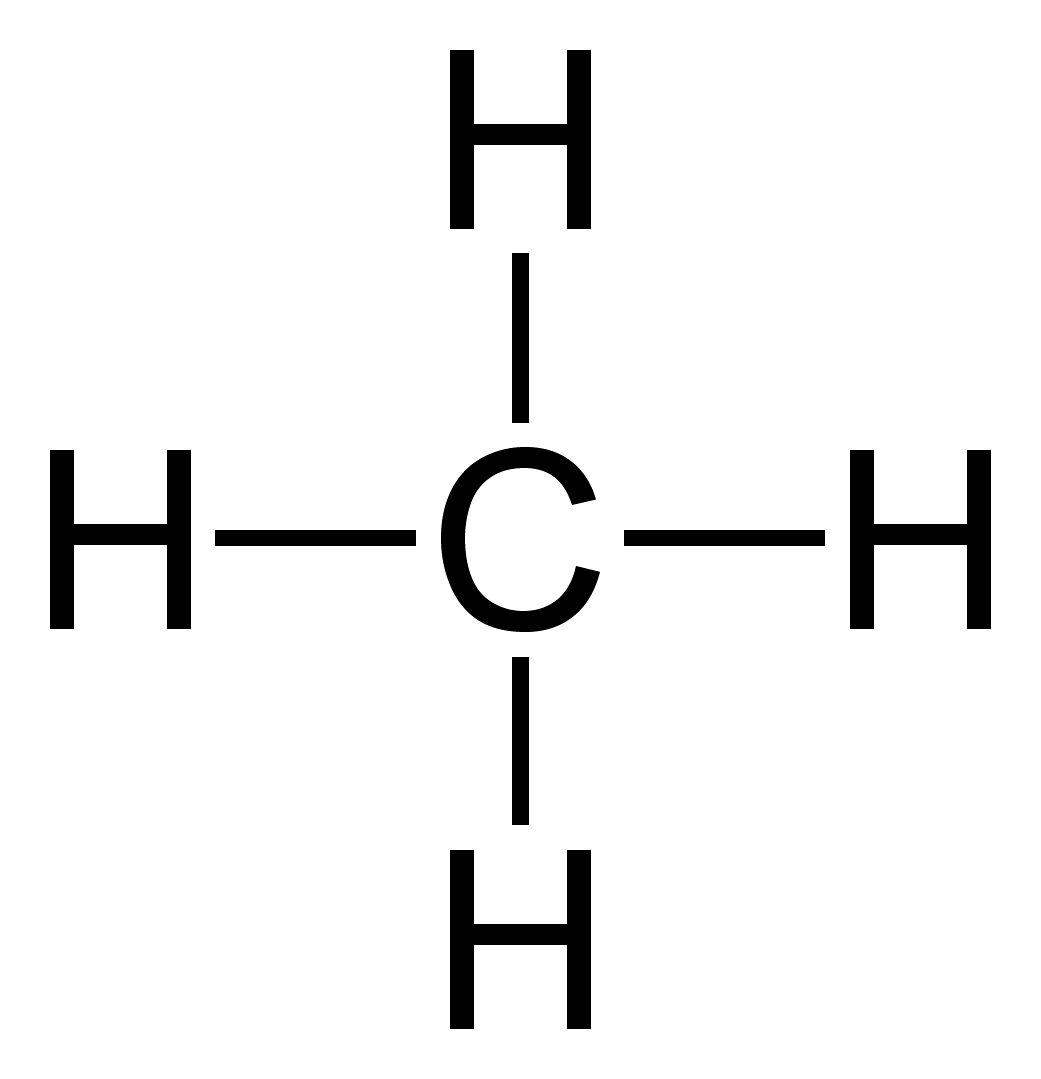
Name this alkane
a)
Methane
b)
Ethane
c)
Propane
d)
Butane
29.
If decane underwent cracking, it would produce pentane, propene and which other monomer?
a)
Ethene
b)
Propene
c)
Butene
d)
Pentene
30.
If an alkane has 20 carbon atoms, how many hydrogen atoms will it have?
a)
20
b)
22
c)
40
d)
42
31.
What is the general formula of an alkane
a)
2n+2
b)
CnH2n+2
c)
CnH2n
d)
CnHn
32.
Cracking.....
a)
Breaks larger hydrocarbons into smaller hydrocarbons
b)
Separates hydrocarbons based on their length
c)
Detects alkenes
33.
What liquid detects the presence of an alkene?
a)
Alkene water
b)
Bromine water
c)
Water
d)
Limewater
34.
What colour does bromine water turn in the presence of an alkene
a)
Orange
b)
Blue
c)
Colourless
d)
Green
35.

Cracking large hydrocarbons releases...

a)

alkanes and alkenes

b)

alkanes only

c)

alkenes only

d)

polymers only

36.

Complete the equation C16H34 ---> __________ + C2H4

a)

C16H34

b)

C2H30

c)

C10H20

d)

C14H30

37.
What physical property allows Distillation to separate different molecules?
a)
a) Melting point
b)
b) Boiling point
c)
c) Diffusion rate
d)
d) Condensation rate
38.
Study the diagram of the fractionating column. 
What fractions come out at X and Y?
a)
X = kerosene and Y = refinery gas
b)
X = refinery gas and Y = light gasoline
c)
X = residue and Y = gas oil
d)
X = refinery gas and Y = gas oil
39.
The longer the hydrocarbon, the ________ the flammability?
a)
Lower
b)
Higher
40.
Which letter in the diagram of Industrial Crude Oil Fractions identifies 'Petroleum Gas'?
a)
A
b)
B
c)
C
d)
D
41.
Combustion is the reaction with which element?
a)
carbon
b)
oxygen
c)
hydrogen
d)
carbon dioxide
42.
What are the two products of complete combustion?
a)
Water and carbon monoxide
b)
Water and carbon dioxide
c)
Hydrogen and water
d)
Carbon dioxide
43.
In fractional distillation, longer length hydrocarbons are found where in the distillation column?
a)
Top
b)
Bottom
44.
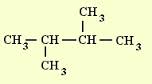
Name the compound.
a)
hexane
b)
2,3-dimethylbutane
c)
ethylbutane
d)
2,2-dimethylbutane
45.
Name the compound.
a)
3-methyl-2-pentene
b)
2-ethyl-2-butene
c)
3-ethyl-2-butene
d)
1,1-dimethyl-propene
46.
What is the name of this compound?
a)
6 - methylhexane
b)
1- methylhexane
c)
hexane
d)
heptane
47.
Which of these equations is not correctly balanced?
a)
2C2H6  + 7O2 →  4CO2  +  6H2O
b)
 C5H12 + 6O2 →  5CO2  +  6H2O
c)
2C6H14 + 19O2 →  12CO2  +  14H2O
d)
C8H20 + 25O2 →  8CO2  +  10H2O
48.
Small molecules that make up larger molecules.
a)
monomer
b)
polymer
c)
synthetic
d)
plastic
49.
Large molecules made of Hydrogen and Carbon
a)
plastic
b)
vulcanization
c)
hydrocarbon
d)
organic
50.
What polymer does this shorthand formula represent?
a)
PVC
b)
Polypropene
c)
DNA
d)
Polyethene
51.
What monomer is used to make this polymer?
a)
Propane
b)
Ethene
c)
Propene
d)
Methane
52.
This image is an example of: 
a)
Nylon
b)
Polyester
c)
Polystyrene
d)
Polyvinyl chloride
53.

Which of the following is a polyamide?

a)

Teflon

b)

Nylon-6,6

c)

Terylene

d)

Bakelite

54.
What type of reaction is this? 
a)
Halogenation
b)
Hydrogenation
c)
Halohydration
d)
Hydration
55.
What type of reaction is this?
a)
Hydrogenation of an alkene
b)
Hydrogenation of a primary alcohol
c)
Hydrogenation of a secondary alcohol
d)
Hydration
56.
What type of reaction is this?
a)
Dehydration to produce an alkene
b)
Dehydration to produce an Ether
c)
Hydrogenation
d)
Hydration
57.
What type of reaction is this?
a)
Oxidation of a primary alcohol
b)
Oxidation of a secondary alcohol
c)
Oxidation of a tertiary alcohol
d)
Hydration
58.
What type of reaction is this?
a)
Oxidation of a tertiary alcohol
b)
Oxidation of a primary alcohol
c)
Oxidation of a secondary alcohol
d)
Hydration
59.

What type of reaction is: Alkane --> Haloalkane

a)

Substitution (nucleophilic)

b)

Elimination

c)

Reduction / Oxidation

d)

Hydrolysis

e)

Addition

60.

What type of reaction is: Alkene to Alcohol

a)

Substitution (nucleophilic)

b)

Elimination

c)

Reduction / Oxidation

d)

Hydrolysis

e)

Addition