
 Worksheets
Review
Total questions: 150
Worksheet time: 2hrs 22mins
Name
Class
Date
1.

What is the elevation of point B?
a)
800 ft
b)
850 ft
c)
900 ft
d)
1000 ft
2.

In which direction is Mill River flowing?
a)
Southeast
b)
Southwest
c)
Northeast
d)
Northwest
3.

What is the elevation of Y?
a)
Between 120-140 meters
b)
Between 100-120 meters
c)
Between 140-160 meters
d)
Between 80-100 meters
4.

What is the elevation of the peak of the small island on the left side?
a)
About 20 meters
b)
About 40 meters
c)
About 60 meters
d)
About 200 meters
5.

What feature is formed at B?
a)
river
b)
rift valley
c)
sink hole
d)
mountain
6.
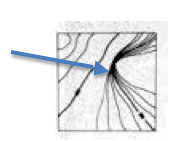
What feature is at the arrow?
a)
volcano
b)
mountain
c)
cliff
d)
river
7.

How many mountain tops does this map have?
a)
one
b)
two
c)
three
d)
four
8.
When you move from one contour line to another, the elevation
a)
stays the same
b)
goes up or down
c)
disappears
d)
is below sea level
9.
On a topographic map of a mountain, you walk a longer distance to get to the top when the contour lines are
a)
spread out
b)
close together
c)
going down
d)
going up
10.
On a topographic map of a mountain, you walk a longer distance to get to the top when the contour lines are
a)
spread out
b)
close together
c)
going down
d)
going up
11.
On a topographic map of a mountain, you walk a longer distance to get to the top when the contour lines are
a)
spread out
b)
close together
c)
going down
d)
going up
12.
On a topographic map of a mountain, you walk a longer distance to get to the top when the contour lines are
a)
spread out
b)
close together
c)
going down
d)
going up
13.
The height above sea level is called
a)
topographic
b)
contour
c)
elevation
d)
depth
14.
In which direction is Mill River flowing?
a)
Southeast
b)
Southwest
c)
Northeast
d)
Northwest
15.
In which direction is Mill River flowing?
a)
Southeast
b)
Southwest
c)
Northeast
d)
Northwest
16.

The distance from D to E is...
a)
A little over 2 km
b)
A little over 3 km
c)
A little over 4 km
d)
A little over 5 km
17.

Which side of Holland Hill is the steepest?
a)
North
b)
South
c)
East
d)
West
18.
What feature is at the arrow?
a)
volcano
b)
mountain
c)
cliff
d)
river
19.
All of the following are examples of speed except:
a)
A car traveling at 55 km/hr
b)
A snail hightailing it 45 mm/sec
c)
Jube timing himself at 23 seconds
d)
Lonnie running down the hall at 45 mph
20.
All of the following are examples of speed except:
a)
Rambo dropkicking cheese at 98 miles/hr
b)
A piece of chocolate melting in your mouth
c)
Jube skydiving at 72 Km/Min
d)
Allison driving at 34 Meters/Second
21.
All of the following are examples of speed except:
a)
A student doing their homework
b)
A jaguar running through OMS at 45 miles per hour
c)
Aidan cleaning his bedroom at 20 meters/min
d)
Michelle jumping rope at 40 Km/hr
22.
What is the speed of a car that travels 400 m in 20 minutes?
a)
20 miles/hr
b)
20 m/min
c)
800 m/min
d)
200 miles/hr
23.
A train travels 25 km in .5 hrs. How fast is the train going?
a)
25 miles/hr
b)
5 miles/hr
c)
125 km/hr
d)
50 km/hr
24.
What is the speed of a man who runs 10 miles in 1 hr?
a)
20 miles
b)
10 m/min
c)
10 miles/hr
d)
20 hrs
25.
What is the equation to calculate speed?
a)
speed = distance/time
b)
speed = time/distance
c)
speed = time x distance
d)
speed = speed/time
26.
Which of the following is a unit of speed ?
a)
sec
b)
mi
c)
m/s
d)
min
27.
What is the speed of an object that travels 60 meters in 4 seconds?
a)
240 m/s
b)
15 m/s
c)
0.067 m/s
d)
15 mph
28.
Mr. Rudman speed walked 2 miles in 10 minutes, what is his speed?
a)
0.2 miles/min
b)
2 miles/min
c)
20 miles/min
d)
40 miles/min
29.
A runner races in the 100 meter dash. It takes her 10 seconds to finish. What is her average speed?
a)
10 m/s
b)
1000 m/s
c)
100 seconds
d)
10 seconds
30.
Marlon decided to visit Dallas, which is 210 miles away from Houston. His trip took him 3 hours to complete. Calculate his average speed.
a)
60 mph
b)
64 mph
c)
70 mph
d)
3 mph
31.
Marlon decided to visit Dallas, which is 210 miles away from Houston. His trip took him 3 hours to complete. Calculate his average speed.
a)
60 mph
b)
64 mph
c)
70 mph
d)
3 mph
32.
Marlon decided to visit Dallas, which is 210 miles away from Houston. His trip took him 3 hours to complete. Calculate his average speed.
a)
60 mph
b)
64 mph
c)
70 mph
d)
3 mph
33.
Marlon decided to visit Dallas, which is 210 miles away from Houston. His trip took him 3 hours to complete. Calculate his average speed.
a)
60 mph
b)
64 mph
c)
70 mph
d)
3 mph
34.
a)
Periods
b)
Groups
35.
a)
Periods
b)
Groups
36.

a)
energy levels
b)
valence electrons
c)
protons
d)
neutrons
37.
a)
Group 1
b)
Group 17
c)
Group 2
d)
Group 18
38.
a)
Group 1
b)
Group 17
c)
Group 2
d)
Group 18
39.
a)
Group 1
b)
Group 17
c)
Group 2
d)
Group 18
40.
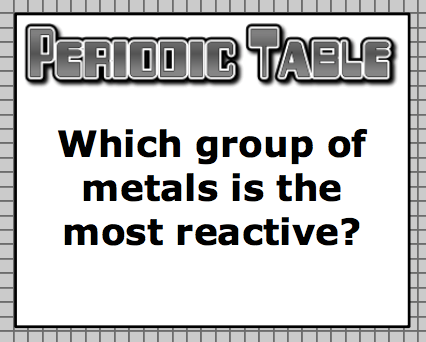
a)
Group 1
b)
Group 17
c)
Group 18
d)
Group 2
42.
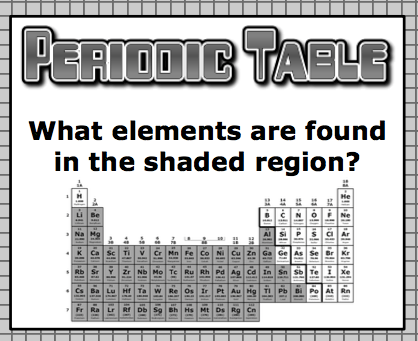
a)
Metals
b)
Nonmetals
c)
Metalloids
42.
a)
Metals
b)
Nonmetals
c)
Metalloids
43.
A ___________ is an arrangement of elements in columns
a)
columns
b)
rows
c)
periodic table
d)
electron shell
44.
Which group of the periodic table is composed of inert (not reactive) gases?
a)
alkali metals
b)
alkaline earth metals
c)
halogens
d)
noble gases
45.
Which element is not a metal?
a)
H
b)
Re
c)
Al
d)
B
46.
Elements in a ..................have similar chemical properties.
a)
period
b)
group
c)
row
47.
The simplest substance is..?
a)
Carbon
b)
An element
c)
Water
d)
A simple compound
48.
The substances listed on the right side of a chemical equation are the
a)
Yields
b)
Reactants
c)
Products
d)
Precipitates
49.
CaCO3 represents a chemical
a)
Symbol
b)
Formula
c)
Subscript
d)
Reaction
51.
What is the chemical formula for Glucose?
a)
GLc
b)
C6H1206
c)
G12H2C6
d)
Glucose
51.
What is the chemical formula for Glucose?
a)
GLc
b)
C6H1206
c)
G12H2C6
d)
Glucose
52.
How many molecules of Carbon are in the following formula? 3C2H6
a)
3
b)
6
c)
12
d)
18
53.
How many elements are in C6H12O6?
a)
1
b)
2
c)
3
d)
4
54.
How many Oxygen (O) atoms are in 2C2HO8Cl2
a)
2
b)
16
c)
8
d)
5
55.
How many Hydrogen (H) atoms are in NH3O5
a)
3
b)
4
c)
5
d)
1
56.
Which is the Law of Conservation of Matter?
a)
matter cannot be created or destroyed, it only changes form
b)
matter can be created but it cannot be destroyed, it never changes form
c)
matter can be destroyed but it cannot be created, it usually just changes form
d)
matter is an unproven theory created by Hans Geiger
57.
How many atoms of carbon (C) are in C6H12O6?
a)
3
b)
6
c)
12
d)
24
58.
How many atoms of carbon (C) are in C6H12O6?
a)
3
b)
6
c)
12
d)
24
59.
How many O's are in Al₂(SO₄)₃
a)
4
b)
12
c)
7
d)
24
60.
Which of the following reactions is balanced?
a)
2CH4 + O2 -> CO2 + H2O
b)
CH4 + 2O2 -> CO2 + H2O
c)
CH4 + 2O2 -> CO2 + 2H2O
d)
None of the chemical equations are balanced.
61.
Balance this equation...
HgO --> Hg + O2
HgO --> Hg + O2
a)
It is balanced
b)
2HgO --> Hg + O2
c)
2HgO --> 2Hg + O2
d)
I don't know...Oh well!
62.
When the Earth is between the Moon and the Sun, it is most likeky a:
a)
Full Moon
b)
Half Moon
c)
3rd Quarter Moon
63.
The Moon gets its light from the
a)
Earth
b)
Stars
c)
Sun
65.
About how long does it take the Moon to complete it's cycle?
a)
1 week
b)
1 month
c)
1 year
65.
About how long does it take the Moon to complete it's cycle?
a)
1 week
b)
1 month
c)
1 year
67.
When the Moon is between the Earth and the Sun, it is most likely in what phase?
a)
New
b)
3rd Quarter
c)
Full
67.
When the Moon is between the Earth and the Sun, it is most likely in what phase?
a)
New
b)
3rd Quarter
c)
Full
68.
How many phases of the moon are there?
a)
eight
b)
four
c)
ten
69.
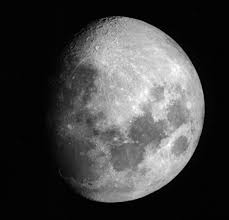
Name the moon phase
a)
waning crescent
b)
waxing crescent
c)
waning gibbous
d)
waxing gibbous
70.
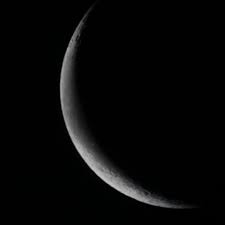
Name the moon phase
a)
waning crescent
b)
waxing crescent
c)
waning gibbous
d)
waxing gibbous
71.
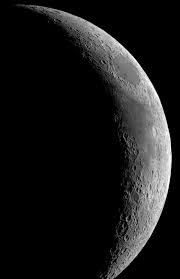
Name the moon phase
a)
waning crescent
b)
waxing crescent
c)
waning gibbous
d)
waxing gibbous
72.
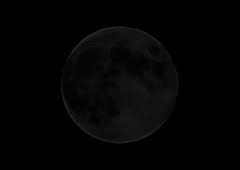
Name the moon phase
a)
First Quarter
b)
Last Quarter
c)
New Moon
d)
Full Moon
73.
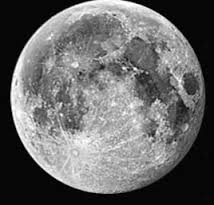
Name the moon phase
a)
First Quarter
b)
Last Quarter
c)
New Moon
d)
Full Moon
74.
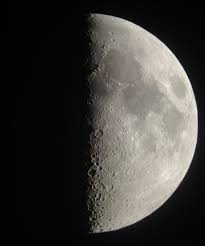
Name the moon phase
a)
First Quarter
b)
Last Quarter
c)
New Moon
d)
Full Moon
76.
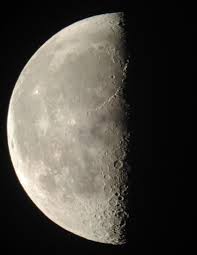
Name the moon phase
a)
First Quarter
b)
Last Quarter
c)
New Moon
d)
Full Moon
76.
Name the moon phase
a)
First Quarter
b)
Last Quarter
c)
New Moon
d)
Full Moon
77.

Name the phase of the moon for letter a
a)
First Quarter
b)
Last Quarter
c)
Waxing Gibbous
d)
Waning Gibbous
78.

Name the phase of the moon for letter f
a)
Waning Gibbous
b)
Waxing Gibbous
c)
Waning Crescent
d)
Waxing Crescent
79.

What phase comes AFTER this one?
a)
Waxing Crescent
b)
Waning Gibbous
c)
Waxing Gibbous
d)
Third Quarter
80.

Name this moon phase.
a)
1st quarter
b)
3rd/last quarter
c)
new moon
d)
waxing crescent
81.

Does this picture represent a waxing or waning moon?
a)
waxing
b)
waning
82.
New Moon
a)
The Moon is not visible from Earth
b)
The last half of the Moon phase before the new Moon
c)
- occurs as the full moon changes to last quarter. Waning describes seeing less and less of the Moon.
d)
· The Sun illuminates the whole side of the Moon facing Earth
86.
Waxing Crescen
a)
The Moon is not visible from Earth
b)
Sun illuminates exactly the right half of the side of the Moon. Sometimes call half Moon
c)
natural satellite that revolves around the Earth
d)
The Moon phase where less than ½ of the Moon is illuminated by the direct sunlight, creating a crescent Moon. Waxing describes seeing more and more of Moon
86.
Waxing Crescen
a)
The Moon is not visible from Earth
b)
Sun illuminates exactly the right half of the side of the Moon. Sometimes call half Moon
c)
natural satellite that revolves around the Earth
d)
The Moon phase where less than ½ of the Moon is illuminated by the direct sunlight, creating a crescent Moon. Waxing describes seeing more and more of Moon
86.
Waxing Crescen
a)
The Moon is not visible from Earth
b)
Sun illuminates exactly the right half of the side of the Moon. Sometimes call half Moon
c)
natural satellite that revolves around the Earth
d)
The Moon phase where less than ½ of the Moon is illuminated by the direct sunlight, creating a crescent Moon. Waxing describes seeing more and more of Moon
86.
Waxing Crescen
a)
The Moon is not visible from Earth
b)
Sun illuminates exactly the right half of the side of the Moon. Sometimes call half Moon
c)
natural satellite that revolves around the Earth
d)
The Moon phase where less than ½ of the Moon is illuminated by the direct sunlight, creating a crescent Moon. Waxing describes seeing more and more of Moon
87.
Waning crescent
a)
The Moon phase where less than ½ of the Moon is illuminated by direct sunlight, creating a crescent Moon
b)
One of the different shapes the moon seems to have as it orbits around Earth
c)
· occurss as the full moon changes to last quarter. Waning describes seeing less and less of the Moon.
d)
Sun illuminates exactly the right half of the side of the Moon. Sometimes call half Moon
88.
What does the rotation of the earth cause us to experience?
a)
seasons
b)
year
c)
day & night
d)
eclipse
89.
How long does it take the earth to revolve once around the sun?
a)
12 hours
b)
24 hours
c)
30 days
d)
365.25 days
90.
Equinox means -
a)
Equal night and day
b)
Longest day
c)
Shortest day
d)
Tilt
91.
Earth's axis is tilted at -
a)
23.5 degrees
b)
33.5 degrees
c)
28 degrees
d)
90 degrees
92.
When the Northern Hemisphere is tilted toward the sun, daylight is -
a)
shorter
b)
longer
c)
equal
93.

What happens when the area in which you live tilts away from the sun?
a)
It is summer.
b)
It is spring.
c)
It is winter.
d)
It is fall.
95.

What season is letter A in the northern hemisphere?
a)
Winter
b)
Summer
c)
Spring
d)
Fall
95.
What season is letter A in the northern hemisphere?
a)
Winter
b)
Summer
c)
Spring
d)
Fall
96.
Why do we experience the changing of the seasons on the earth?
a)
distance from the sun
b)
rotation of the earth
c)
change in solar output
d)
tilt of the earth's axis
97.
What season is it in the southern hemisphere when the north pole is tilted away from the sun?
a)
summer
b)
winter
c)
fall
d)
spring
98.

At position D in the Northern hemisphere it would be _____?
a)
Summer
b)
Winter
c)
Spring
d)
Fall
99.

In spring, is the axis of the earth pointed away or toward the sun?
a)
towards
b)
Neither away or toward
c)
away
100.

Which season is taking place in the Northern Hemisphere in Position 1?
a)
Winter
b)
Spring
c)
Summer
d)
Fall
101.

As a whole, Giants are considered hotter than White Dwarfs.
a)
True
b)
False
102.
As a whole, Giants are considered hotter than White Dwarfs.
a)
True
b)
False
103.
As a whole, Giants are considered hotter than White Dwarfs.
a)
True
b)
False
104.

In the diagram given, what happens as we move to the left?
a)
Stars Get Larger
b)
Stars get Colder
c)
Stars get hotter
106.

Which star is the coldest?
a)
Yellow Star
b)
Red Star
c)
Orange Star
d)
Blue Star
106.
Which star is the coldest?
a)
Yellow Star
b)
Red Star
c)
Orange Star
d)
Blue Star
107.
Which star is the coldest?
a)
Yellow Star
b)
Red Star
c)
Orange Star
d)
Blue Star
108.
Which star is the coldest?
a)
Yellow Star
b)
Red Star
c)
Orange Star
d)
Blue Star
109.

Red stars are the _____________.
a)
hottest
b)
coolest
c)
biggest
d)
brightest
110.

Blue stars are the _____________.
a)
hottest
b)
coolest
c)
smallest
111.

Look at the H-R diagram. Which star is
sort of cool, dim (not too much light), and red?
sort of cool, dim (not too much light), and red?
a)
Betelguse
b)
Sirius B
c)
Procyon B
d)
Barnard's star
112.

Which star has the lowest temperature?
a)
A
b)
B
c)
C
d)
D
113.

Which spectral class does our star, the sun, belong to?
a)
M
b)
K
c)
G
d)
F
114.

EM waves are always____________
a)
Transverse
b)
Compression
c)
Longitudinal
d)
Seismic
115.
The EM spectrum increases from left to right in________________.
a)
Wavelength
b)
Frequency
c)
Amplitude
d)
Height
116.

In the EM spectrum, ________ is shorter on the right than on the left.
a)
Frequency
b)
Hertz
c)
Amplitude
d)
Wavelength
118.

Cell phones use_____________waves.
a)
Microwaves
b)
Gamma
c)
XRays
d)
Radio
118.
Cell phones use_____________waves.
a)
Microwaves
b)
Gamma
c)
XRays
d)
Radio
119.

Infrared waves are used in__________________.
a)
Bath tubs
b)
Microwaves
c)
Remote Controls
d)
Tanning
120.

EM waves________________travel through space.
a)
Never
b)
Cannot
c)
Can
d)
Wish they could
121.

The blue section of the wave is measuring _________________.
a)
wavelength
b)
crest
c)
trough
d)
amplitude
122.

_____________________light is the only type of EM wave detected by the human eye.
a)
Red
b)
Gamma
c)
Microwave
d)
Visible
123.

The orange line is measuring the _________________________.
a)
wavelength
b)
amplitude
c)
crest
d)
trough
124.

Airport security is an example of _________.
a)
infrared rays
b)
radio waves
c)
x-rays
d)
gamma rays
125.
Airport security is an example of _________.
a)
infrared rays
b)
radio waves
c)
x-rays
d)
gamma rays
126.

Nuclear weapons are examples of __________.
a)
x-rays
b)
ultraviolet rays
c)
gamma rays
d)
infrared rays
127.

This type of EM wave shows a break in bones.
a)
gamma ray
b)
x-ray
c)
brokenometer
d)
radio wave
128.

EM waves with wavelengths between those of infrared and ultraviolet waves are _______.
a)
microwaves
b)
visible light
c)
x-rays
d)
gamma rays
129.

________ is an EM wave used to cook Ms. Carles' hot pocket.
a)
radio
b)
microwave
c)
visible light
d)
ultraviolet
130.

Which type of EM wave has the highest frequency?
a)
gamma ray
b)
radio waves
c)
microwaves
d)
infrared rays
131.

What type of plate boundary is this?
a)
Plate
b)
Divergent
c)
Convergent
d)
Transform
132.

What type of event will occur at this boundary?
a)
Earthquake
b)
Volcano Eruption
c)
Tornado
d)
Mountain Building
133.
The type of plate boundary where two plates come together is a .....
a)
Convergent Boundary
b)
Divergent Boundary
c)
Transform Boundary
d)
Plate Boundary
134.
Which of the following causes Earth's tectonic plates to move?
a)
Energy from the Sun
b)
Magnetic Pole Reversal
c)
Convection currents in the mantle
d)
Faults in Mountain Ranges
135.
Which of the following is NOT evidence to support the theory of plate tectonics?
a)
Fossils
b)
Mountains
c)
Glaciers
d)
Sand Erosion
136.
The theory that says Earth's continents once made up an ancient supercontinent, and have been drifting apart ever since, is called the theory of...
a)
Pangea
b)
Plate Tectonics
c)
Natural Selection
d)
Gravity
137.
Oceanic Trenches are formed by _______ plate boundaries
a)
Convergent
b)
Transform
c)
Plate
d)
Divergent
138.
A fault is formed by the movement of a __________ plate boundary
a)
Transform
b)
Convergent
c)
Divergent
139.
Mountains are created when....
a)
Two continental plates collide
b)
Two oceanic plates pull apart
c)
An Oceanic plate subducts under a Continental Plate
d)
Two continental plates pull apart
140.

The Indo-Australian Plate is colliding with the
a)
Eurasian plate
b)
North American plate
c)
Antarctic Plate
141.

What is the identity of Plate X?
a)
Eurasian Plate
b)
North American Plate
c)
African plate
142.

What type of boundary is occurring between the South American Plate and the Nazca Plate?
a)
convergent
b)
divergent
c)
transform
143.

What type of plate creates a rift valley?
a)
convergent
b)
divergent
c)
transform
144.

What type of plate makes a mid-ocean ridge?
a)
convergent
b)
divergent
c)
transform
145.

When two oceanic plates collide, what is created?
a)
trench
b)
mid-ocean ridge
c)
rift balley
146.

A lack of evidence for continental drift prevented many scientists from believing a single supercontinent called _________ existed.
a)
Glossopteris
b)
Pangaea
c)
Gondwanaland
d)
Mesosaurus
147.
A lack of evidence for continental drift prevented many scientists from believing a single supercontinent called _________ existed.
a)
Glossopteris
b)
Pangaea
c)
Gondwanaland
d)
Mesosaurus
148.

The youngest material of the ocean floor is found at mid-ocean _________.
a)
ridges
b)
trenches
c)
basins
d)
rifts
149.

Matching ________ on different continents are evidence for continental drift.
a)
weather systems
b)
river systems
c)
rock structures
d)
wind systems
150.

Many scientists think hot plastic-like rock in the mantle is forced upward toward the surface, cools, and sinks. This process is called a(n) _________.
a)
earthquake
b)
convergent boundary
c)
volcano
d)
convection current
100 %

