wayground logo

Free Printable Worksheets

Font size

S
M
L
XL
Worksheets

Earth Systems, 5.7AB, 5,8ABCD

Total questions: 91

Worksheet time: 3hrs 33mins

Name
Class
Date
1.
What is it called when WATER is FORMED from an LIQUID to a WATER VAPOR Oor an [GAS]?
a)
EVAPORATION
b)
PRECIPITATION
c)
TRANSPIRATION
2.
Does evaporation happen before or after condensation?
a)
before
b)
after
c)
during
3.
What is the energy source for the water cycle?
a)
the sun
b)
the earth
c)
water
d)
the moon
4.
What comes after evaporation during the water cycle?
How does this occur?
a)
Water evaporates into water vapor
b)
Water vapor condenses and forms a  cloud
c)
Water precipitates to the ground
d)
Water runs down into the hydrosphere
5.

In which kind of rock do we usually find fuel fossils?

a)

sedimentary rock

b)

Sandstone

c)

hard rock

d)

Volcano Rock

6.

A fossil fuel is ____.

a)

a dead rotten animal

b)

Remains of a living organism

c)

a plant that dried up

d)

weird rock

7.
Small, solid pieces of materials from rocks or living things
a)
sediment
b)
clastic rock
c)
organic rock
d)
deposition
8.
The process that presses sediments together
a)
clastic rock
b)
cementation
c)
compaction
d)
deposition
9.
The process in which dissolved minerals crystallize and glue sediment together.
a)
compaction
b)
deposition
c)
organic rock
d)
cementation
10.
The process that breaks up rock on Earth's surface?
a)
deposition
b)
erosion
c)
compaction
d)
weathering
11.
Sedimentary rocks are formed by sediment that is deposited over time, usually as layers at the bottom of lakes and oceans
a)
true
b)
false
12.
Fossil Fuels are formed...
a)
From the remains of organisms
b)
By high winds and temperatures
c)
In shallow areas over short period of time.
d)
In shallow areas over short periods of time.
13.
The layers of sedimentary rock were found in this order beneath the ground.  Which layer formed first?
a)
Layer A
b)
Layer B
c)
Layer C
d)
Layer A, B, and C were formed at the same time.
14.
A student wants to model the formation of sedimentary rock.  What will the student need?
a)
Sediments and pressure
b)
Sediments floating in water
c)
Sediments heated in water
d)
Sediments dissolved by the sun
15.
Which two processes contributed to the formation of sedimentary rocks?
a)
Compaction and Melting
b)
Cementation and Molding
c)
Compaction and Cementation
d)
Molding and Melting
16.
What is deposition?
a)
When pieces of sediment are dropped
b)
When sediment is moved by wind, water or ice
c)
When rock is broken down into smaller pieces
d)
When rock pieces are compacted
17.
What is the weathering of rock?
a)
When sediment is moved by water, wind or ice
b)
When sediment is deposited
c)
When rock is broken down
d)
When sediment is compacted
18.
The process that moves sediment from one place to another is called what?
a)
Erosion
b)
Deposition
c)
Weathering
d)
Compaction
19.
Which of the following is not an example of sediment?
a)
sand or soil
b)
remains of plants and animals
c)
tiny pieces of rock
d)
torn up paper
20.
What is sedimentary rock?
a)
Rocks formed as lava cools
b)
Rocks that are formed when volcanoes erupt
c)
rock formed from pressure deep under the Earth's surface
d)
Rock formed by the deposition of material on Earth's surface
21.
What is the type of rock that is formed from the compaction and cementation of sediment?
a)
igneous rock
b)
sedimentary rock
c)
metamorphic rock
d)
metaigneous rock
22.
2. What fossil fuel is in the image?
a)
Coal
b)
Natural Gas
c)
Petroleum
23.
a)
Where they come from
b)
How they are produced
c)
How useful they are
d)
How long they take to form
24.

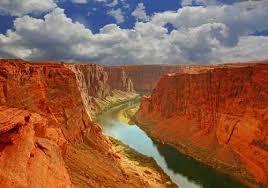
How is this land form created?

a)

glaciers

b)

river

c)

wind

d)

sleet and hail

25.

How is this land form created?

a)

storms

b)

moving water, like a river

c)

deposition

d)

sand

26.
The process by which water, ice, wind or gravity moves weathered rock and soil from one place to another.
a)
weathering
b)
erosion
c)
deposition
d)
dumptruck
27.

Waves dropping sand on the beach is an example of what?

a)

Weathering

b)

Erosion

c)

Deposition

d)

Compaction

28.

Deltas forming at the mouths of rivers are examples of what?

a)

Weathering

b)

Erosion and Deposition

c)

Flooding

d)

Compaction

29.

Select 3 ways sediment can be moved to a new location: (Select ALL that apply)

a)

Snow

b)

Ice

c)

Water

d)

Wind

30.

Formed when water acts as an agent of weathering and erosion. The water breaks the rocks into sediment and carries the sediment away.

a)

U-Shaped Valley

b)

Sand Dunes

c)

Canyon

d)

Delta

31.

A fan-shaped landform created by sediment being deposited at the mouth of a river.

a)

Delta

b)

Canyon

c)

U-Shaped Valley

d)

Sand Dunes

32.

Formed by a glacier that carved a deep valley as it slowly moved forward.

a)

Delta

b)

Canyon

c)

U-Shaped Valley

d)

Sand Dunes

33.

A hill or ridge of sand, formed when wind erodes sand and deposits sand in new locations.

a)

Canyon

b)

Sand Dunes

c)

Delta

d)

U-Shaped Valley

34.
Water getting into cracks, freezing, and breaking the rocks or pavement apart
a)
Weathering
b)
Erosion
c)
Deposition
35.
Glaciers are masses of ice that move slowly on land. Which of these features was most likely formed by a glacier?
a)
A wide valley
b)
A deep ocean
c)
A lava flow
d)
A mountain range
36.
The type of formation shown is at the southern end of the Mississippi river. What is it called?
a)
coastal erosion
b)
a delta
c)
a loess
d)
sand dunes
37.
Which of the following actions causes the deposition of sand at a delta?
a)
river water slowing as it enters the ocean
b)
salt water & fresh water mixing together
c)
ocean waves transporting sand toward land
d)
ocean water slowing as it reaches the coast
38.
A delta forms when the river meets the ocean because:
a)
the river is colder than the ocean.
b)
the river slows down and drops sediments.
c)
the Earth builds up pressure in the river.
39.
What is necessary for sand dunes to form?
a)
a loose sand and strong wind
b)
pressure in the Earth
c)
ice glaciers
40.
Rain washing away soil from a hillside
a)
Weathering
b)
Erosion
c)
Deposition
41.
The diagram shows layers of sedimentary rock and examples of the fossils each layer contains, Which layer contains the oldest fossils? 
a)
A. Layer 2
b)
B. Layer 4
c)
C. Layer 1
d)
D. Layer 3
42.
The surface of the land displays a mountain range and rivers. What might a scientist conclude about about the environment, based on the fossils in the sedimentary layers? 
a)
A. The land was once a rainforest. 
b)
The area was once covered by a desert. 
c)
C. The area was once a grassy plain. 
d)
D. The area was once near or covered by an ocean. 
43.
How are fossils created?
a)
A. Traces of organisms harden like rock. 
b)
B. Dead organisms are quickly buried for millions of years.
c)
C. Animals get trapped.
d)
D. All of the above
44.
How are Sedimentary Rocks formed?
a)
A. Cooling and Hardening
b)
B. Melting and heating
c)
C. Compacting and Cementing
d)
D. Time
45.
How are Sedimentary Rocks formed?
a)
A. Cooling and Hardening
b)
B. Melting and heating
c)
C. Compacting and Cementing
d)
D. Time
46.
Some students made a model to show one of the first steps in the formation of sedimentary rock.  The students pour 2 cm of light-colored sand into a clear plastic box.  Then they add 1 cm of gravel.  Finally, they pour 2 cm of dark-colored sand on top of the gravel.  Which characteristic of sedimentary rock does this model best show?
a)
A. Sedimentary rock is made of layers.
b)
B. Sedimentary rock is cemented bits of rock.
c)
C. Sedimentary rock is often limestone.
d)
D. Sedimentary rock is common in Texas.
47.

the force that pulls objects toward each other

a)

crater

b)

surface

c)

gravity

d)

mass

48.

amount of matter in an object or substance

a)

sunspots

b)

gravity

c)

solar system

d)

mass

49.

a large, bowl-shaped cavity in the ground or on the surface of a planet or the moon, typically one caused by an explosion or the impact of a meteorite or other celestial body

a)

gravity

b)

weight

c)

surface

d)

crater

50.

What is the source of heat and light in our solar system?

a)

The North star

b)

the moon

c)

the sun

51.

What causes a shadow?

a)

The moon refracting light

b)

An object blocking light falling on a surface.

c)

An instrument that shows direction by using a magnet.

52.

The path one object takes as it orbits around another object in space is called

a)

spin

b)

rotation.

c)

orbit.

53.

A line, real or imaginary, around which something spins is called

a)

gravity.

b)

axis.

c)

equator.

54.

What causes the Earth's seasons?

a)

Shadows

b)

Tilt on axis away or toward the sun.

c)

Rotation

55.

Does the Earth orbit or rotate around the sun?

a)

Orbit

b)

Rotate

56.

What do the Earth and moon have in common?

a)

Water

b)

Atmosphere

c)

Sphere of rock

57.

How long does it take the Earth to orbit around the sun?

a)

365 days

b)

24 hours

c)

30 days

58.

How long does it take the Earth to rotate once on it's axis?

a)

365 days

b)

24 hours

c)

30 days

59.

Why do we have day and night?

¿por qué tenemos día y noche?

a)

Earth rotates on its axis

La tierra gira sobre su eje

b)

Earth's axis is tilted.

El eje de la tierra está inclinado.

c)

The Sun rotates on its axis.

El sol gira sobre su eje.

d)

The Moon orbit is tilted.

La órbita de la luna está inclinada.

60.

The earth's rotation lasts for?

¿la rotación de la tierra dura?

a)

24 hours

24 horas

b)

24 days

24 dias

c)

365 days

365 dias

d)

365 hours

365 horas

61.

What is the period of revolution of the Earth around the Sun?

¿Cuál es el período de revolución de la tierra alrededor del sol?

a)

365 days

365 dias

b)

24 hours

24 horas

c)

23.5 days

23.5 dias

d)

366 days

366 dias

62.

The star at the center of our Solar System that supplies heat to Earth, its gravity keeps the system in orbit.

La estrella en el centro de nuestro sistema solar que suministra calor a la tierra, su gravedad mantiene el sistema en órbita.

a)

Sun

sol

b)

Earth

la Tierra

c)

moon

la luna

d)

Mars

el planeta Marte

63.

Spinning of the Earth on its axis is called?

a)

rotation

b)

Orbit

c)

going around

64.

What causes day and night?

a)

Tilt

b)

Rotation

c)

Sun

d)

Orbit

65.

How long does Earth take to complete one orbit around the Sun?

a)

1 day

b)

1 month

c)

1 year

d)

1 decade

66.

Which diagram best represents the relationship of motion among the sun, Earth, and the moon?

a)

A

b)

B

c)

C

d)

D

67.

From Earth, the Sun appears brighter than any other star because the Sun is the

a)

newest star

b)

largest star

c)

hottest star

d)

closest star

68.

Gravity is responsible for the

a)

orbits of the planets around the Sun

b)

rotation of a planet on its axis

c)

tilt of Earth's axis

d)

phases of the moon

69.

Dwight made this model using a golf ball (Earth), a baseball (Moon), and a basketball (Sun). Wow could Dwight improve his model?

a)

Make the Moon amaller than Earth

b)

Use a flat object, such as a coin, for earth

c)

Place Earth between the Moon and the Sun

d)

Place the Sun between the Moon and Earth

70.

The solar system containing Earth consists of a sun and planets.

Which statement best describes the motion of the planets in our solar system?

a)

The planets rotate around the sun.

b)

The sun rotates around the planets.

c)

The planets orbit around the sun.

d)

The sun orbits around the planets.

71.

The Sun is at the center of the Solar System. Which shape best describes the path Earth takes around the Sun.

a)
b)
c)
d)
72.

The Sun rises in the

a)

west

b)

east

c)

south

d)

north

73.

The Sun sets in the

a)

west

b)

east

c)

south

d)

north

74.

The apparent motion of the Sun moving across the sky is due to the Earth's

a)

rotation

b)

the sun moves across the sky

c)

gravity

d)

orbit

75.

The motion that best explains day and night on Earth is

a)

going around

b)

gravity

c)

rotation

d)

orbit

76.

You can estimate the time of day by looking at the shadow.

What time of day does the shadow tell you?

a)

Sunrise

b)

Noon, 12:00

c)

Sunset

d)

Late afternoon

77.

The Inner Planets can be described by.

a)

rocky

b)

having life

c)

gas

d)

outer

78.

Select 2: Rotation can be described by what TWO answers

a)

spinning on an axis

b)

causes day and night

c)

orbiting, traveling in a closed path

d)

causes the seasons and year

79.

Select 2: Orbit can be described by what TWO answers

a)

spinning on an axis

b)

causes day and night

c)

orbiting, traveling in a closed path

d)

causes the seasons and year

80.
What are the two main factors that determine the climate of an area?
a)
precipitation and humidity
b)
temperature and air pressure
c)
wind conditions and humidity
d)
temperature and precipitation
81.
What is the condition of the Earth's atmosphere at a certain time and place?
a)
climate
b)
temperature
c)
weather
d)
air pressure
82.
What is the weather conditions in an area over a long period of time?
a)
climate
b)
temperature
c)
elevation
d)
precipitation
83.

How does water change during evaporation?

a)

Water changes from a liquid to a solid

b)

Water changes from a solid to a gas

c)

Water changes from a gas to a liquid

d)

Water changes from a liquid to a gas.

84.

A student fills two cups with water and seals them with plastic wrap. The student places one in the window and the other in a dark cabinet. What most likely happened when the student checked the water cups?

a)

The cup in the window was empty and the cup in the cabinet was full.

b)

The cup in the window had more condensation than the cup in the cabinet.

c)

The bad cup in the window and the cup in the closet showed the same amount of evaporation.

d)

The cup in the cabinet had more condensation than the cup in the window.

85.

Oceans make up about 70% of our planet. If temperatures began to rise in the ocean, what would most likely happen?

a)

There will be more water in the atmosphere because of more evaporation.

b)

The water cycle will not exist because the water is too warm.

c)

There will be less water in the atmosphere due to less evaporation

d)

There will be less precipitation die to increased temperatures.

86.

Ocean levels relatively always remain the same because....

a)

Ocean water seeps underground into the ocean floor.

b)

Ocean water is always changing from a liquid state to a vapor state.

c)

Humans alter the level of the oceans for drinking.

87.

What is the big difference between climate and weather?

a)

Weather can only happen on certain occasions and climate can happen anytime anywhere

b)

Weather is how if feels outside for one day and climate is how it feels for periods of time

c)

There is no difference between them

d)

Weather is real and climate is fake

88.
What is weather?
a)
What's happening in space at a time and place.
b)
What's happening in our atmosphere at a time and place.
c)
The average weather over many years
d)
The average temperature over many years.
89.
What is climate?
a)
What's happening in space at a time and place.
b)
What's happening in our atmosphere at a time and place
c)
The average weather over many years
d)
The average temperature over many years.
90.
Which statement about Hawaii refers to its climate?
a)
A blizzard occurs on one of Hawaii’s tallest mountain peaks.
b)
A high temperature of 37.8°C was recorded earlier today in Hawaii.
c)
The mountains were shaded by cumulus clouds on a Tuesday afternoon.
d)
The coolest months are February and March.
91.
A student states the weather is the same as the climate. Which response BEST tells the student the difference between weather and climate?
a)
Weather is about the wind and the rain, but climate is about the clouds.
b)
Weather is the conditions in one day, but climate is the conditions over a long time.
c)
Weather is measured with tools like thermometers, but climate is measured with tools like forecasts.
d)
Weather is recorded on charts, but climate is recorded on world maps.