wayground logo

Free Printable Worksheets

Font size

S
M
L
XL
Worksheets

Review: Earth's Place in the Universe

Total questions: 151

Worksheet time: 5hrs 2mins

Name
Class
Date
1.
Label part 1
a)
#1 Core
b)
#1 Radiation zone
c)
#1 Convection zone
d)
#1 Photosphere
2.
Label Part 2
a)
#2 Core
b)
#2 Radiation zone
c)
#2 Convection zone
d)
#2 Corona
3.
Label Part 3
a)
#3 Chromosphere
b)
#3 Radiation zone
c)
#3 Convection zone
d)
#3 Photosphere
4.
Label part 4
a)
#4 Chromosphere
b)
#4 Radiation zone
c)
#4 Convection zone
d)
#3 Photosphere
5.
Label part 5
a)
#5 Chromosphere
b)
#5 Radiation zone
c)
#5 Convection zone
d)
#5 Photosphere
6.
Label part 6
a)
#6 Prominences
b)
#6 Corona
c)
#6 Sunspots
d)
#6 Photosphere
7.
Label part 7
a)
#7 Prominences
b)
#7 Corona
c)
#7 Sunspots
d)
#7 Photosphere
8.
In what form does the Sun's energy travel to Earth?
a)
Heat
b)
Electrical energy
c)
Electromagnetic radiation
d)
Mechanical energy
9.
What is the coolest layer of the sun?
a)
The core
b)
The corona
c)
The convective zone
d)
The photosphere
10.
What is the hottest layer of the sun's atmosphere?
a)
The core
b)
The corona
c)
The convective zone
d)
The photosphere
11.
What layer of the sun's atmosphere gives the sun its "white halo" during a solar eclipse?
a)
chromosphere
b)
photosphere
c)
corona
d)
atmosphere
12.
In which area of the sun does gas rise as it heats up, then fall back down as it cools?
a)
the core
b)
the radiation zone
c)
the convection zone
d)
the corona
13.
When we look at the sun, what layer are we viewing?
a)
photosphere
b)
chromosphere
c)
corona
d)
convection zone
14.
What layer can be seen here?
a)
chromosphere
b)
corona
c)
photosphere
d)
core
15.

Which statement describes sunspots?

a)

Sunspots have a bright white appearance.

b)

Sunspots occur in the radiation zone of the Sun.

c)

Sunspots occur in areas of extremely low magnetic fields.

d)

Sunspots have lower temperatures than their surroundings.

16.
Which type of eclipse occurs when the Moon comes directly between Earth and the Sun?
a)
Lunar eclipse
b)
Solar eclipse
17.
When prominences erupt into space releasing gas and energy we call this: 
a)
solar winds
b)
coronal outburst
c)
solar flares
d)
auroras
18.
The energy from the sun is created by a process called:
a)
nuclear fission
b)
nuclear fusion
c)
nuclear reaction
d)
nuclear core
19.
Huge loops of reddish gas that connect sunspots are called:
a)
prominences
b)
solar flares
c)
coronal loops
d)
solar wind
20.
The Sun is an average, middle sized star. 
a)
TRUE
b)
FALSE
c)
Maybe
d)
Scientists do not know.
21.
Which statement is true about the sun?
a)
It is a star.    
b)
It is the largest star in our galaxy. 
c)
It is a planet close to Earth.
d)
It is a moon. 
22.
What is one thing that makes the sun different from the other stars?
a)
 It is the largest star   
b)
 It is the star that gives off the most heat energy 
c)
It is the brightest star  
d)
It is the closest star to Earth 
23.
Is the Sun a solid, liquid, or gas?
a)
Solid
b)
Liquid
c)
Gas
d)
Moon
24.
Which answer has the layers of the sun in the correct order?
a)
Core, Corona, Photosphere, Radiative zone, Convection zone, Chromosphere.
b)
Core, Convection zone, Radiative zone, Chromosphere, Photosphere Corona, 
c)
Core, Radiative zone, Convection zone, Photosphere, Chromosphere, Corona.
d)
Corona, Core, Photosphere, Chromosphere, Convection zone, Radiative zone.
25.
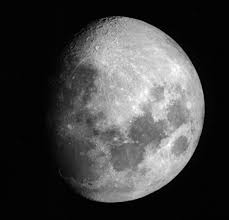
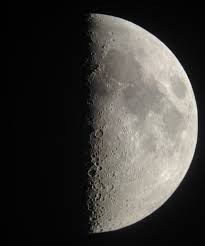
Name the moon phase
a)
waning crescent
b)
waxing crescent
c)
waning gibbous
d)
waxing gibbous
26.
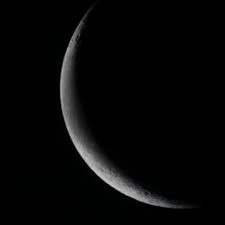
Name the moon phase
a)
waning crescent
b)
waxing crescent
c)
waning gibbous
d)
waxing gibbous
27.
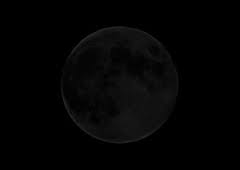
Name the moon phase
a)
waning crescent
b)
waxing crescent
c)
waning gibbous
d)
waxing gibbous
28.
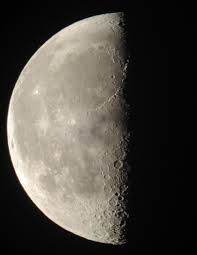
Name the moon phase
a)
waning crescent
b)
waxing crescent
c)
waning gibbous
d)
waxing gibbous
29.
Name the moon phase
a)
waning crescent
b)
waxing crescent
c)
waning gibbous
d)
waxing gibbous
30.
Name the moon phase
a)
First Quarter
b)
Last Quarter
c)
New Moon
d)
Full Moon
31.
Name the moon phase
a)
First Quarter
b)
Last Quarter
c)
New Moon
d)
Full Moon
32.
Name the moon phase
a)
First Quarter
b)
Last Quarter or (third quarter)
c)
New Moon
d)
Full Moon
33.
Name the moon phase
a)
First Quarter
b)
Last Quarter
c)
New Moon
d)
Full Moon
34.
How much of the moon is always lit?
a)
can't tell
b)
always changes
c)
half
d)
3/4
35.
Name the moon phase that would come AFTER this moon.
a)
waning crescent
b)
waxing crescent
c)
waning gibbous
d)
waxing gibbous
36.
What moon phase came right BEFORE this one?
a)
First Quarter
b)
Last Quarter
c)
New Moon
d)
Full Moon
37.
What is the difference between a gibbous moon and a crescent moon?
a)
The gibbous shows more than half of the bright side of the moon.
b)
The crescent shows more than half of the bright side of the moon.
c)
The gibbous shows less than half of the bright side of the moon. 
38.
How many phases does the moon go through?
a)
4
b)
8
c)
10
d)
16
39.
As the moon's shape appears to get smaller, we say that the moon is _.
a)
swelling
b)
waxing
c)
waning
d)
disappearing
40.
Phases of the moon in which the moon appears to be getting larger are referred to as _.
a)
waxing
b)
waning
c)
new
d)
eclipse
41.
The cycle of the moon lasts about a _.
a)
day
b)
year
c)
week
d)
month
42.
Name the moon phase that would come AFTER this moon.
a)
waning crescent
b)
waxing crescent
c)
waning gibbous
d)
waxing gibbous
43.
The moon ____________ around the Earth.
a)
revoloves
b)
rotates
c)
up
d)
down
44.
The moon ____________ around the Earth.
a)
revoloves
b)
rotates
c)
up
d)
down
45.
CHALLENGE
When the moon is lined up exactly between the sun and Earth, it is called a ______ ______. 
a)
Solar Eclipse
b)
Lunar Eclipse
46.
TRUE or FALSE
We can see the moon during the day. 
a)
True
b)
False
47.
ROTATE vs REVOLVE
What causes the seasons? 
a)
The Earth spinning or rotating
b)
The Earth revolving around the Sun on its tilted axis.
48.
Which moon phase is when you can't see the moon at all?
a)
Waning crescent
b)
Full moon
c)
Waxing gibbous
d)
New moon
49.
About how long does it take the moon to make one complete cycle around the earth?
a)
65 days
b)
8 days
c)
365 days
d)
28 days
50.
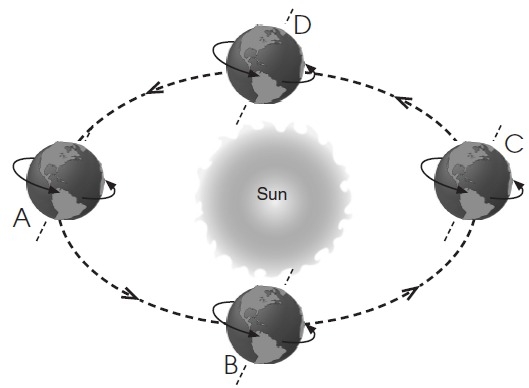
What season is letter A?
a)
Winter
b)
Summer
c)
Spring
d)
Fall
51.
When the Northern Hemisphere is pointing towards the sun, what season is the Southern Hemisphere?
a)
Winter
b)
Spring
c)
Fall
d)
Summer
52.
What are the reasons for the seasons?
a)
Earth's tilt and rotation.
b)
Earth's rotation and revolution.
c)
Earth's tilt and revolution.
d)
Earth's tilt and resolution
53.
Tides are caused by ___________
a)
wind
b)
gravitational pull of moon
c)
waves gravitation toward land
d)
rain
54.
Which way does the moon revolve?
a)
clockwise
b)
counter clockwise
c)
some times it changes direction
d)
it doesn't revolve
55.
When the moon is in between the earth and the sun it is a
a)
New Moon
b)
Full Moon
c)
First Quarter
d)
Third Quarter
56.
Waxing means...
a)
Growing
b)
Dying
c)
Losing light
d)
Moving
57.
Which of the following statements is most accurate about the Movement of Earth and the Sun?
a)
The Sun revolves around the Earth
b)
The Earth rotates around the Sun
c)
The Earth revolves around the Sun
d)
The Earth rotates and revolves around the Sun 
58.
What would be the result if the Earth's axis was not tilted but straight up and down?
a)
Nothing would change
b)
There would be no seasons
c)
Days would get longer
d)
The Equator would burn up and the poles would freeze
59.
Name the phase of the moon for letter a
a)
First Quarter
b)
Last Quarter
c)
Waxing Gibbous
d)
Waning Gibbous
60.
Name the phase of the moon for letter f
a)
Waning Gibbous
b)
Waxing Gibbous
c)
Waning Crescent
d)
Waxing Crescent
61.
What is illuminating the Moon?
a)
Nuclear Fusion
b)
Sunlight
c)
Mirrors
d)
Flood Lights
62.
At position A, which hemisphere would have summer?
a)
Northern hemisphere
b)
Southern hemisphere
63.
The Earth's axis is tilted _____ degrees.
a)
23.5
b)
25.3
c)
30.2
d)
24
64.
What happens when the area in which you live tilts away from the sun?
a)
It is summer.
b)
It is spring.
c)
It is winter.
d)
It is fall.
65.
The term equinox means....
a)
equal amount of day light and equal amount of night
b)
Equal amount of winter and summer
c)
Equal amounts of hot dogs for everyone
d)
The longest day of the year
66.
What do June 21 and December 21 have in common?
a)
equinox dates
b)
the moon is full
c)
solstice dates
d)
the cold fronts blow in
67.
What is the longest day of the year?
a)
winter solstice
b)
summer solstice
c)
fall equinox
d)
spring equinox
68.
Why is the Equator warmest?
a)
Because it is closest to the sun.
b)
Because it receives the most direct sunlight
c)
Because no clouds form here.
d)
Because it is far from the sun
69.
Which season is taking place in the Southern Hemisphere in Position 1?
a)
Winter
b)
Spring
c)
Summer
d)
Fall
70.
Which season is taking place in the Northern Hemisphere in Position 1?
a)
Winter
b)
Spring
c)
Summer
d)
Fall
71.
Which season is taking place in the Northern Hemisphere in Position 2?
a)
Winter
b)
Spring
c)
Summer
d)
Fall
72.
Which season is taking place in the Northern Hemisphere in Position 3?
a)
Winter
b)
Spring
c)
Summer
d)
Fall
73.
Which season is taking place in the Northern Hemisphere in Position 3?
a)
Winter
b)
Spring
c)
Summer
d)
Fall
74.
Which season is taking place in the Northern Hemisphere in Position 4?
a)
Winter
b)
Spring
c)
Summer
d)
Fall
75.
The hemisphere where you live 
a)
equator
b)
southern
c)
northern
d)
eastern
76.
Which season(s) have the same amount of daylight hours as nighttime hours?
a)
More hour of light during spring, less in fall
b)
More hours of light during summer, less in winter
c)
None of the seasons have equal daylight hours
d)
All are equal
77.
The spinning of an object on its axis is called______
a)
orbit
b)
rotation
c)
revolution
d)
tide
78.
Day and night is caused by the _____________ of earth on its axis.
a)
revolution
b)
orbit
c)
rotation
79.
The earth orbits around...
a)
the sun.
b)
the moon
c)
other planets
d)
the Milky Way
80.
What are the reasons for the seasons?
a)
Earth's tilt and rotation.
b)
Earth's rotation and revolution.
c)
Earth's tilt and revolution.
d)
Earth's tilt and resolution
81.

How long does it take the Earth to make one REVOLUTION around the Sun?

a)

12 hours

b)

24 hours

c)

365 1/4 days

d)

29.5 days

82.
What season is March 21st?
a)
Spring
b)
Fall
c)
Summer
d)
Winter
83.
In the summer many people enjoy going to the beach. There is a beautiful beach in Argentina, which is located in the Southern Hemisphere. Which diagram shows the position of Earth when it is summer in Argentina?
a)
A
b)
B
c)
C
d)
D
84.
A[n] ______________ tide occurs when the sun is at right angles to the line between Earth and the moon. 
a)
high
b)
neap
c)
low
d)
spring
85.
Differences in the moon's and sun's pull on different sides of the Earth cause _________.
a)
gravity
b)
lunar phases
c)
tides
d)
dabbing
86.
A[n] ___________ tide occurs when the sun, Earth, and the moon are nearly in a line. 
a)
spring
b)
high
c)
low
d)
neap
87.
The bulge of water on the side of the Earth closest to the moon produces ___________.
a)
high tide
b)
low tide
c)
neap tide
d)
spring tide
88.
Water flows toward the high tides, halfway between them causing ____________.
a)
neap tide
b)
high tide
c)
spring tide
d)
low tides
89.
Neap tides occur once a month. 
a)
True
b)
False
90.
Tides are caused mainly by the differences in how much gravity from the moon and the sun pulls on different parts of the Earth. 
a)
True
b)
False
91.

Wha type of tide would this arrangement of earth-moon-sun create?

a)

full moon tide

b)

new moon tide

c)

neap tide

d)

spring tide

92.
What type of tides would this arrangement of earth-moon-sun create?
a)
neap tide
b)
spring tide
c)
new moon tide
d)
full moon tide
93.
Tides are caused by
a)
strong winds that blow over ocean waters.
b)
the interaction of Earth, the moon and the sun.
c)
the shifting of the plates on the ocean floor.
d)
variations in the salinity of ocean water
94.
What causes tides?
a)
gravity
b)
wind
c)
spring
d)
neap
95.
A solar eclipse only happens during a ________ moon.
a)
New
b)
Cresent
c)
Gibbous
d)
Full
96.
a)
solar eclipse
b)
lunar eclipse
97.
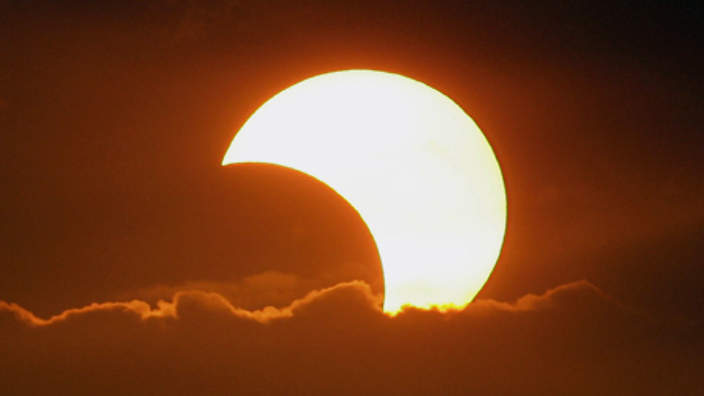
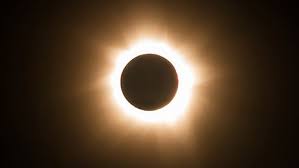
This image is an example of
a)
Lunar Eclipse
b)
Full Moon
c)
New Moon
d)
Solar Eclipse
98.
Which type of eclipse occurs when the Moon comes directly between Earth and the Sun?
a)
Lunar eclipse
b)
Solar eclipse
99.
During a solar eclipse...
a)
The sun is blocked by the moon
b)
The Earth is blocked moon
c)
The moon is blocked by the sun
d)
You are blocked
100.
True or False: You must wear your eclipse goggles at all times except during totality due to safety reasons.
a)
True
b)
False
101.
What is the order during a lunar eclipse
a)
sun, moon, earth
b)
sun, earth, moon
102.
To view totality, where do you have to be located?
a)
Within the Moon's full shadow
b)
Within the Sun's full shadow
c)
Within the Moon's partial shadow
d)
Within the Earth's partial shadow
103.
Gravity is responsible for the . . . 
a)
sun rotating around the planets
b)
sun revolving around the planets
c)
planets revolving around the sun
d)
planets rotating of a planet around the sun
104.
Which planets are gas giants?
a)
Mercury, Venus, Earth, Mars
b)
Mars, Jupiter, Saturn, Uranus
c)
Saturn, Uranus, Neptune, Pluto
d)
Jupiter, Saturn, Uranus, Neptune
105.
List the terrestrial planets in our solar system.
a)
Mercury, Venus, Earth, Mars
b)
Mars, Jupiter, Saturn, Uranus
c)
Saturn, Uranus, Neptune, Pluto
d)
Jupiter, Saturn, Uranus, Neptune
106.
What are terrestrial planets?
a)
A large planet composed mainly of gas.
b)
A small planet composed mainly of rocky material.
c)
All the stars in the universe.
d)
A group of planets that are farthest from the sun. 
107.
Which planets are gas giants?
a)
Mercury, Venus, Earth, Mars
b)
Mars, Jupiter, Saturn, Uranus
c)
Saturn, Uranus, Neptune, Pluto
d)
Jupiter, Saturn, Uranus, Neptune
108.
What is rotation?
a)
the tilt of earth on its axis
b)
to go around another object. 
c)
to spin on an axis and causes day and night
d)
potato chips
109.
The ___________ the planet is from the sun, the ____________ it takes to go around the sun. 
a)
closer, shorter
b)
farther, shorter
c)
farther, longer
d)
closer, longer
110.
List the order of the planets, starting form the sun. 
a)
Mercury, Venus, Earth, Mars, Jupiter, Saturn, Uranus, Neptune
b)
Mercury, Venus, Earth, Mars, Saturn, Jupiter, Neptune, Uranus
c)
Neptune, Uranus, Saturn, Jupiter, Mars, Earth, Venus, Mercury
d)
Mars, Earth, Venus, Mercury, Jupiter, Saturn, Uranus, Neptune
111.
Why do the planets continue to orbit the sun and not travel in a straight line?
a)
The gravitational force of the planets is greater than the sun's. 
b)
A magnetic field that surrounds the sun.
c)
The sun's gravitational attraction on the planet.
d)
cheesy potato casserole
112.
Which planet has the longest orbit around the sun? How do you know?
a)
Neptune - because it is the farthest from the sun. 
b)
Saturn - because it takes longer to travel with rings
c)
Jupiter - because it has the most mass of all the planets
d)
Mars - it just moves really slow
113.
a)
The above picture is an example of rotation.
b)
The above picture is an example of revolution.
114.
a)
The above picture is an example of rotation.
b)
The above picture is an example of revolution.
115.

What is the largest body in our solar system?

a)

Jupiter

b)

Earth

c)

Saturn

d)

Sun

116.

Why does our sun appear so bright compared to other larger stars in the sky?

a)

It is a larger in size than most stars

b)

It burns hotter than most stars

c)

It is closer to Earth than other stars

117.
The first planet of the solar system?
a)
Sun
b)
Venus
c)
Earth
d)
Mercury
118.
The hottest planet is 
a)
Venus
b)
Earth
c)
Mercury
d)
Mars
119.
The largest planet is
a)
Jupiter
b)
Saturn
c)
Neptune
d)
Pluto
120.
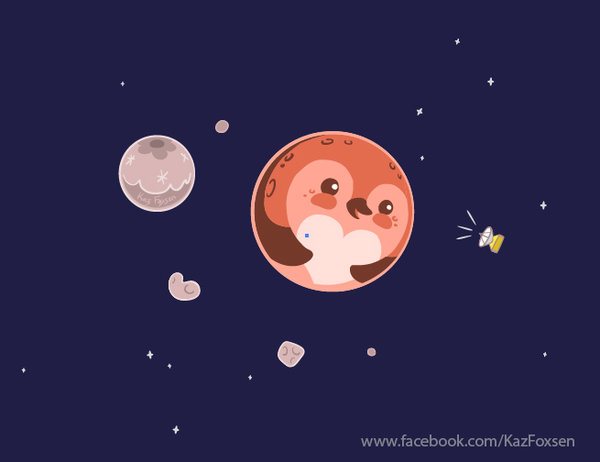
This is no longer a planet
a)
Neptune
b)
Io
c)
Pluto
d)
moon
121.
There is one star in our solar system.
a)
True
b)
False
122.
What is the difference between the inner planets and the outer planets?
a)
The outer planets are smaller than the inner planets 
b)
The inner planets are smaller than the outer planets
c)
The outer planets have more rocks than the inner planets
d)
the inner planets are heavier than  the outer planets
123.
Venus is called Earth's twin because they are about the same size
a)
True 
b)
False
124.
The inner planets are called terrestrial planets because they are composed of
a)
water
b)
gas
c)
frozen surfaces
d)
rocks
125.
Which planet is tipped on its side nearly 90 degrees?
a)
Jupiter
b)
Saturn
c)
Uranus
d)
Neptune
126.
Which planet has a giant red spot?
a)
Jupiter
b)
Saturn
c)
Uranus
d)
Neptune
127.
Which planet has very prominent rings?
a)
Jupiter
b)
Saturn
c)
Uranus
d)
Neptune
128.
What celestial body is made of ice and cosmic dust?
a)
Meteor
b)
Meteoroid
c)
Asteroid
d)
Comet
129.
Where is our solar system located in the Milky Way
a)
At the center
b)
Near the center
c)
On a spiral arm
d)
Outside the galaxy
130.
An _______ is between the orbits of Mars and Jupiter. 
a)
Oort Cloud
b)
Asteroid belt
c)
Kuiper belt
d)
Photosphere
131.
Venus, Mercury, Earth, and Mars are what type of planet?
a)
Gas Giants
b)
Ice Giants
c)
Terrestrial Planets
d)
Exterior Planets
132.
Jupiter, Saturn, Uranus, and Neptune are what type of planets?
a)
Gas Giants
b)
Ice Giants
c)
Terrestrial Planets
d)
Exterior Planets
133.
What is the composition of most comets?
a)
rock, ice, salt carbon
b)
rock, ice magma, frozen gases
c)
ice, dust, rock, frozen gases
d)
ice, dust, rock, soil
134.
How does a meteor compare to a meteorite? 
a)
A meteor is moving through Earth's atmosphere and the meteorite actually lands on Earth
b)
A meteorite is moving through the Earth's atmosphere and the meteor actually lands on Earth
c)
Meteors are made up of Carbon and meteorites are made of ice
d)
They are the same thing
135.
Which of the following describes a Meteor?
a)
Found between Mars and Jupiter
b)
Orbit the sun like a planet
c)
Have an elliptical orbit of the sun
d)
Burn up as they enter the atmosphere
136.
Before it becomes a "shooting star", the actual bit of solid stuff coming from space is called ___
a)
a meteoroid
b)
a meteor
c)
a meteorite
d)
an asteroid
137.
If a meteor hits the ground, we call it ___
a)
a meteoroid
b)
a fallen star
c)
a meteorite
d)
an asteroid
138.
Where are Asteroids found in the Solar System?
a)
Between Earth and Mars
b)
In the Oort Cloud beyond Neptune
c)
In the Asteroid Belt between Mars and Jupiter
d)
Close to the Sun
139.
The orbit of comets is which shape?
a)
Circular
b)
Elliptical/Oval
c)
Comets do not orbit the Sun
140.
A light streaking across the night sky is classified as a/an....
a)
Meteorite
b)
Asteroid
c)
Comet
d)
Meteor
141.
In the diagram, a comet's tail always points where?
a)
Towards the Sun
b)
Away from the Sun
c)
Towards Earth
d)
Away from Earth
142.
Meteorites...
a)
 hit the ground
b)
burn up completely in the atmosphere
c)
debris from asteroids/comets that float around in space
143.

I am located between Mars and Jupiter.

a)

Comet belt

b)

Asteroid belt

c)

Meteor belt

d)

Stars

144.

Which of the following correctly places these in order from LARGEST to SMALLEST?

a)

galaxy -- local group/cluster -- planet -- solar system -- universe

b)

universe -- local group/cluster -- galaxy -- solar system -- planet

c)

planet -- solar system -- galaxy -- local group/cluster -- universe

d)

universe -- galaxy -- solar system -- local group/cluster -- planet

145.

A galaxy which has a nucleus of bright stars and two or more arms in circular formation is called a ___ galaxy.

a)

elliptical

b)

humanoid

c)

irregular

d)

spiral

146.

A galaxy that does not have a regular shape?

a)

Spiral

b)

Elliptical

c)

Irregular

d)

Quasar

147.

What Galaxy is Earth located?

a)

Andromeda

b)

Milky Way

c)

Sagittarius

d)

Snickers

148.

What unit is used to measure distances in space?

a)

Light year

b)

Kilometer

c)

Miles

d)

Solar unit

149.
What kind of galaxy is this?
a)
Ring
b)
Irregular
c)
Spiral
d)
Elliptical 
150.
What kind of galaxy is this?
a)
Peculiar
b)
Active Galaxy: Quasar
c)
Spiral
d)
Elliptical 
151.
What kind of galaxy is this?
a)
Barred Spiral
b)
Irregular
c)
Spiral
d)
Elliptical