
NEW
Font size
 Worksheets
Review for Assessment 5
Total questions: 55
Worksheet time: 2hrs 50mins
What causes day and night?
Axis
Rotation
Orbit
Tilt
Which of the these is correct?
Earth revolves around the Sun
Sun revolves around Earth
Moon revolves around the Sun
Sun revolves around the moon
How long does it take for Earth to make one complete revolution around the sun?
1 day
180 days
24 hours
365 1/4 days
How long does it take for Earth to rotate on its axis?
365 1/4 days
12 hours
24 hours
1 month
The Earth rotates in a clockwise direction.
True
False
Earth's rotation causes...
the seasons
high tide
day and night
Earth's revolution causes...
months
weekends
seasons
days
Days are longest during...
Summer
Winter
Spring
Fall
Days on Earth are shortest during which season?
Summer
Winter
Spring
Fall
Which choice is a nearly circular orbit?
rotation
revolution
If the Northern hemisphere is experiencing winter, what season would it be in the Southern hemisphere?
Spring
Summer
Fall
Winter

What season is the northern hemisphere experiencing in the photo?
Fall
Spring
Winter
Summer

In the US, what time of day is it, according to the photo?
Day
Night

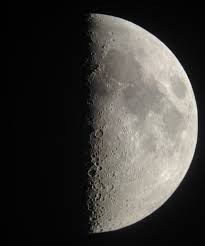
What phase of the moon is shown above?
New moon
Waxing crescent
Full moon
First quarter
Seasons are caused by
Rotation + Tilt
Axis + Rotation
Tilt + Orbit
Revolution + Orbit

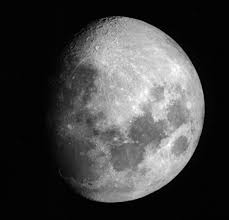
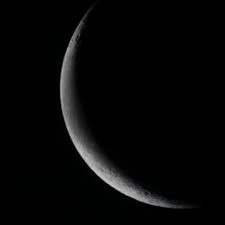


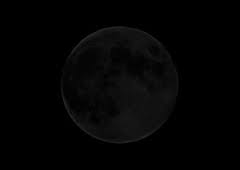

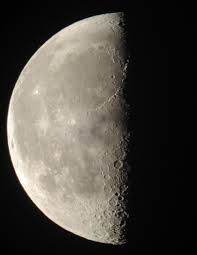
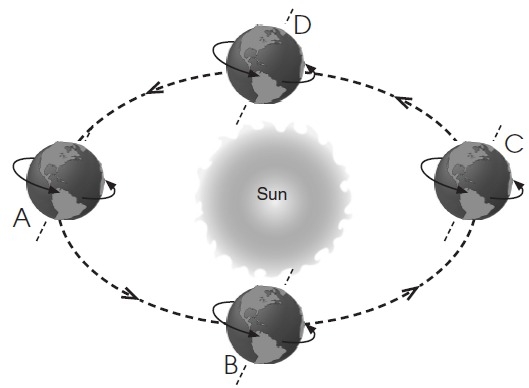
What season is the northern hemisphere experiencing in letter A?
Winter
Summer
Spring
Fall


Compared to Earth, Mercury rotates on its axis very slowly. Based on this information, what can you conclude about Mercury?
Mercury applies weaker gravitational forces on objects.
The length of a day on Mercury is much longer than Earth.
Mercury has no atmosphere.
The surface of Mercury is rocky.
Earth, Jupiter, Mars, the Moon, and the Sun are objects found within our Solar System. Suppose a 1 kilogram (kg) mass was placed on the surface of each object. Which of the following arranges the objects based on increasing weight of the 1 kg mass?
Earth, Jupiter, Mars, Moon, Sun
Jupiter, Sun, Moon, Earth, Mars
Moon, Mars, Earth, Jupiter, Sun
Sun, Jupiter, Mars, Moon, Earth
A “year” on Earth is 365.26 days long. A “year” on Saturn lasts over 29 times longer than Earth. Which of the following best explains this difference between the two planets?
Saturn is farther from the Sun than Earth.
Saturn rotates on its axis faster than Earth.
Saturn has greater gravitational force than Earth.
Saturn revolves around the Sun faster than Earth.
A new planet is discovered in a different solar system. The new planet is much like Earth. One difference is that the planet does not have seasons. What can you conclude is one feature of Earth that is lacking from the new planet?
Earth has a tilted axis.
Earth has a geosphere.
Earth has a moon.
Earth has a longer rotational period.

The diagrams below show the alignment of the Sun, the Moon, and Earth. Which diagram shows an alignment in which spring tide takes place?
A
B
C
D
In ancient times, people believed Earth was the center of the Solar System. Which of the following makes the geocentric model impossible?
The moon revolves around Earth.
Earth’s gravitational force is much less than the Sun’s.
Orbits are elliptical, not circular.
There are other planets that are closer to the Sun.
Which of the following factors keeps Earth in motion around the sun?
Speed
Mass
Gravity
Friction

Why is the force of gravity between the balls in Pair 2 greater than the force of gravity between the balls in Pair 1?
The balls in Pair 2 are closer together than the balls in Pair 1.
The balls in Pair 2 have a greater mass than the balls in Pair 1.
The balls in Pair 1 have more rolling friction than the balls in Pair 2.
The balls in Pair 1 have more magnetic force than the balls in Pair 2.

Which image best represents a portion of the heliocentric model of the solar system? (S=Sun, E=Earth, and M=Moon)
A
B
C
D
Jason is working on a model that shows the positions of Earth, the Moon, and the Sun during the phases of the Moon. How should he position them to show a New Moon?
With Earth between the Moon and the Sun.
With the Moon between Earth and the Sun.
With the Sun between Earth and the Moon.
With the Moon perpendicular to Earth and the Sun.
Why do temperatures on the Moon’s surface vary much more than the temperatures on Earth?
The Moon has a lower density than Earth.
The Moon’s surface has more craters than Earth.
The Moon has no atmosphere.
The Moon is farther from the Sun compared to the Earth.

How would the Moon appear to people on Earth on this day?
It would be half dark.
It would be a quarter dark.
It would be completely light.
It would be completely dark

