wayground logo

Free Printable Worksheets

Font size

S
M
L
XL
Worksheets

9 Weeks Review

Total questions: 130

Worksheet time: 4hrs 41mins

Name
Class
Date
1.

Which of the following is NOT a characteristic that all living things share?

a)

Obtain and use resources for energy

b)

Respond to stimuli

c)

Move from one place to another

d)

Reproduce

2.

A plant grows toward the light. The plant's action is an example of ________________

a)

A part of reproduction

b)

A response

c)

A stimulus

d)

A stage of development

3.
Which one of these is NOT one of the characteristics of living things?
a)
All living things are made of cells
b)
All living things reproduce
c)
All living things eat
d)
All living things evolve
4.
An example of a multicellular organism is a...
a)
amoeba
b)
bacteria
c)
crab
5.
All living organisms are made up of ____.
a)
Cells
b)
Bacteria
c)
Organs
d)
Tissue
6.
Rocks, water, air, sun, and soil are...
a)
living
b)
nonliving
7.
Sunflowers following the sun across the sky is an example of organisms
a)
responding to a stimuli
b)
reproducing
c)
evolving
d)
growing
8.
Which of the following characteristics of living things best explains why your legs and arms get longer and stronger as you get older? 
a)
living things respond to their environment
b)
living things maintain internal balance
c)
living things are made of cells
d)
living things grow and develop
9.
Used for short term (quick) energy.
a)
carbohydrates
b)
lipids
c)
proteins
d)
nucleic acids
10.
Provides long term energy and insulation,
a)
lipids
b)
carbohydrates
c)
nucleic acids
d)
proteins
11.
Contains DNA and RNA
a)
lipids
b)
carbohydrates
c)
proteins
d)
nucleic acids
12.
Contains a phosphate, sugar and nitrogen base
a)
nucleic acid
b)
lipid
c)
carbohydrate
d)
protein
13.
Building blocks of the body, hair , muscles etc.
a)
protein
b)
nucleic acid
c)
lipids
d)
carbohydrates
14.
Is found in the cell membrane as a bilayer. 
a)
lipids
b)
protein
c)
nucleic acid
d)
carbohydrate
15.
Identify the macromolecule in the picture
*GLUCOSE
a)
lipid
b)
protein
c)
nucleic acid
d)
carbohydrate
16.
Identify the macromolecule in the picture.
* look at the R.....
a)
carbohydrates
b)
lipids
c)
proteins 
d)
nucleic acids
17.
Identify the macromolecule in the picture
* cholesterol and triglycerides
a)
carbohydrate
b)
protein
c)
lipid
d)
nucleic acid
18.
Identify the macromolecule in the picture
a)
carbohydrate
b)
lipid
c)
protein
d)
nucleic acid
19.
Proteins are made of monomers called ___________
a)
Nucleotides
b)
Monosaccharides
c)
Amino Acids
d)
Glycerol and fatty acids
20.
The element _______is found in all of the organic compounds.
a)
Iron
b)
Nitrogen
c)
Carbon
d)
Oxygen
21.
_________ are composed out of carbon (C), hydrogen (H), oxygen (O), nitrogen (N), and phosphorus (P)
a)
Carbohydrates
b)
Lipids
c)
Proteins
d)
Nucleic Acids
22.
Monosaccharides are monomers of
a)
Carbohydrates
b)
Lipids
c)
Proteins
d)
Nucleic Acids
23.
Waxes, oils and fats are examples of
a)
Carbohydrates
b)
Lipids
c)
Proteins
d)
Nucleic Acids
24.
What is the function of nucleic acids?
a)
store genetic information
b)
store energy (long-term)
c)
store energy (short-term)
d)
build skin, hair, nails, muscles
25.
What type of macromolecule are enzymes?
a)
Protein
b)
Carbohydrate
c)
Lipid
d)
Nucleic Acid
26.
Proteins are made of... 
a)
C H O
b)
C H O N
c)
C H O N P
d)
C H O N S
27.
This is one job proteins do NOT have in the body
a)
insulation
b)
structure for tissues and organs
c)
speed up chemical reactions
d)
transport things through cell membrane
28.
What suffix (word ending) is used in the names of most carbohydrates?
a)
-ase
b)
-nic
c)
-ose
d)
-yme
29.
Most enzymes:
a)
speed up the chemical reaction
b)
have no effect on the rate of the chemical reaction
c)
slow the rate of the chemical reaction
d)
keep the rate of the chemical reaction the same
30.

Enzymes -__________ the activation energy -speeding up the chemical reaction.

a)

lower

b)

increase

c)

raise

31.
A monomer is ...
a)
a single atom
b)
a building block for polymers
c)
a single element
d)
is an inorganic molecule
32.
Hydrophobic = 
a)
Water loving
b)
Water hating
c)
Made of hydrogen
d)
Made of water
33.
Which of the following is the correct order of organization in living things from most basic (simple) to most complex?
a)
a.  Organism, cell, tissue, organ, organ system
b)
a.  Organ system, organ, tissue, cell, organism
c)
a.  Cell, tissue, organ, organ system, organism
d)
a.  Cell, organ, tissue, organ, organism, organ system
34.
A group of similar cells that come together to perform a specific function is a/an
a)
organ
b)
organism
c)
organ system
d)
tissue
35.
When a group of organs work together to perform a particular function they create a/an
a)
organ system
b)
organism
c)
tissue
d)
organ
36.
Tissue that works together to perform a function
a)
organ
b)
cell
c)
organ system
d)
organism
37.
The heart contains different types of tissue. What level is the heart?
a)
cell
b)
organ system
c)
organ
d)
tissue
38.

Which has ribosomes?

a)

Prokaryote

b)

Eukaryote

c)

both

39.
Has cytoplasm
a)
Prokaryote
b)
Eukaryote
c)
both
40.
Has nucleus
a)
Prokaryote
b)
Eukaryote
c)
both
41.
Bacteria
a)
Prokaryote
b)
Eukaryote
c)
both
42.
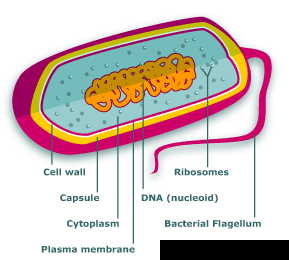
Which type of cell?
a)
Prokaryote
b)
Eukaryote
43.
What do viruses need to reproduce?
a)
they need genetic material
b)
They need a host cell
c)
They need  bacteria
d)
They need insulin
44.
What part of a virus is the protein capsule that houses the genetic material (DNA/RNA)?
a)
tail
b)
nucleus
c)
capsid
d)
glycoprotein
45.
Which viral life cycle kills its host cell by lysing?
a)
lytic
b)
mitosis
c)
lysogenic
d)
S phase
46.
Which of the following aides in bacterial locomotion (movement)?
a)
Cell wall
b)
 Flagellum
c)
Plasmid
d)
Capsid
47.
This structure supports and protects plant cells.
a)
Nucleus
b)
Cell Wall
c)
Cell membrane
d)
Cytoplasm
48.
This structure controls what can enter and leave a cell.
a)
Nucleus
b)
Cytoplasm
c)
Cell Membrane
d)
Golgi Body
49.
This is the cell's "control center."
a)
Endoplasmic Reticulum
b)
Golgi Body
c)
Nucleus
d)
Cell Wall
50.
This is the "powerhouse" of the cell that converts food to energy.
a)
Mitocondria
b)
Endoplasmic Reticulum
c)
Nucleus
d)
Lysosome
51.
In plant cells, this structure captures energy from the sun to produce food.
a)
Ribosomes
b)
Cell Wall
c)
Vacuoles
d)
Chloroplasts
52.
This structure is a storage area for the cell.
a)
Lysosome
b)
Vacuole
c)
Ribosome
d)
Golgi Body
53.
This small structures break down materials in the cell.
a)
Cholorplasts
b)
Ribosomes
c)
Lysosomes
d)
Golgi Body
54.
This structure produces protein in the cell.
a)
Ribosomes
b)
Cytoplasm
c)
Nucleus
d)
Lysosomes
55.
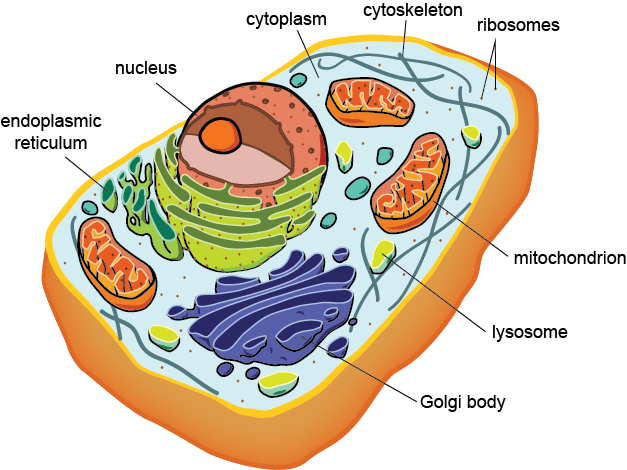
What is this?
a)
mitochondria
b)
lysosomes
c)
chloroplast
d)
endoplasmic reticulum
56.
Where is the DNA found in a prokaryotic cell? 
a)
floating around in the cytoplasm 
b)
in the nucleus 
57.
What am I?
a)
vacuole
b)
ribosome
c)
endoplasmic reticulum
d)
golgi apparatus
58.
What am I?
a)
Nucleus
b)
Golgi Body
c)
Mitochondrion
d)
Plasma Membrane
59.
A phospholipid has 2 parts. What are they called? 
a)
Hydrophilic Head, Hydrophobic Tail 
b)
Hydrophobic Head, Hydrophilic Tail 
60.
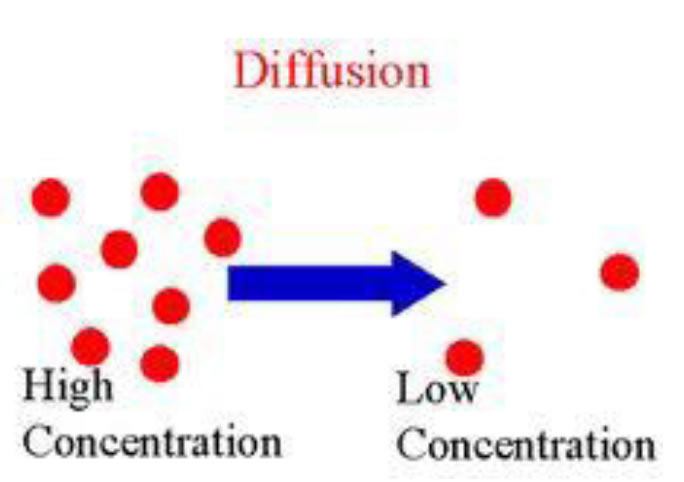
Something is ___________ ____________
when some molecules can cross the membrane while others cannot. 
a)
Selectively (or Semi) Permeable 
b)
Totally Transparent
c)
Liquid Licorice 
d)
Heavily Patrolled 
61.
Movement of particles from high to low concentration. 
a)
Passive Transport
b)
Active Transport
62.

What is it called when molecules move across the cell membrane from an area of high concentration to an area of low concentration through a transport protein?

a)

Diffusion

b)

Osmosis

c)

Active Transport

d)

Facilitated Diffusion

63.
The concentration of water is higher in the soil than in plant root cells. Water moves into root cells of a plant by...
a)
Facilitated Diffusion
b)
Simple Diffusion
c)
Active Transport
d)
Osmosis
64.
What is the difference between active and passive transport?
a)
Active does not need energy and passive uses ATP (energy)
b)
Active uses ATP (energy) and passive does not need energy
c)
Active stores transport proteins and passive releases 
d)
Active uses hormones and passive does not 
65.
What are 3 types of active transport?
a)
Riding a bike, Running through the mountains, walking on the beach
b)
Osmosis, Diffusion, Facilitated Diffusion
c)
Sodium/potassium Pump, Endocytosis, Exocytosis
d)
Throwing a ball, Playing tennis, driving a car
66.
When cells form a vesicle to take in materials, which form of transport is occurring? 
a)
Endocytosis
b)
Exocytosis
c)
Facilitated Diffusion
d)
Osmosis
67.
Active transport moves molecules from a low concentration to a high concentration
a)
True
b)
False
68.
What is photosynthesis?
a)
The process in which humans eat their food
b)
When a photographer takes a photo.
c)
To get your pictures from the photo lab.
d)
The process in which plants make their food.
69.
Osmosis is the movement of _____ across a membrane.
a)
food
b)
energy
c)
oxygen
d)
water
70.
During osmosis
a)
water moves from high to low concentration
b)
large or oddly shaped molecules move across a cell membrane
c)
water moves when energy is used
d)
proteins are built
71.
When both inside and outside of a cell have the same amount of water it is said that the cell has reached a state of
a)
Osmosis
b)
Diffusion
c)
Equilibrium
72.
The movement of molecules against a concentration gradient
a)
simple diffusion
b)
facilitated diffusion
c)
active transport
d)
osmosis
73.
In the given scenario what will happen to the organism: salt is poured onto eggplant.
a)
Water will move out of the eggplant cells and the cells will shrink.
b)
Water will move out of the eggplant cells and the cells will swell.
c)
Water will move into the eggplant cells and the cells will swell.
74.
In the given scenario what will happen?  An egg is placed in pure water for 48 hours.
a)
The egg will gain water and swell.
b)
Water will move in and out of the cell equally, and the cell with neither shrink nor swell.
c)
The egg will lose water and shrink.
75.
An animal cell placed in a hypertonic (salty) solution will
a)
Shrink
b)
Swell
c)
Stay the same
76.
a)
Anaphase
b)
Cytokinesis
c)
Telophase
d)
Metaphase
77.
a)
Cytokinesis
b)
Interphase
c)
Anaphase
d)
Metaphase
78.
a)
Anaphase
b)
Cytonkinesis
c)
Interphase
d)
Prophase
79.
a)
Cytokinesis
b)
Anaphase
c)
Telophase
d)
Prophase
80.
The phase in mitosis where chromosomes move away and are pulled apart by spindles to opposite sides of the cell.
a)
prophase
b)
anaphase
c)
metaphase
d)
telephase
81.
Why would it be important to replicate DNA before a cell divides in mitosis or meiosis?
a)
In order for genetic information to be transferred into daughter cells.
b)
In order for the cell to be able to increase in size.
c)
In order for the DNA to be contained in the nucleus.
d)
In order for the cell to re-order the DNA sequencing in the new cells.
82.
In mitosis, the two resulting cells are
a)
different from the starting cell and identical to each other.
b)
different from the starting cell and different from each other.
c)
identical to the starting cell and different from each other.
d)
identical to the starting cell and identical to each other.
83.
Fruit fly body cells have 8 chromosomes. After mitosis, you would expect a resulting fruit fly daughter cell to have -
a)
16 chromosomes.
b)
46 chromosomes.
c)
8 chromosomes.
d)
4 chromosomes.
84.
The cells produced via meiosis are called:
a)
sex cells
b)
somatic cells
c)
body cells
d)
skin cells
85.
If the Diploid number of Carrots is 18, the haploid number is
a)
18
b)
9
c)
27
d)
36
86.
If a body cell in a butterfly contains 24 chromosomes, a butterfly egg would contain
a)
3
b)
6
c)
12
d)
24
87.
The chromosomes that pair up during meiosis, are called __________ chromosomes.  
a)
homozygous 
b)
asexual
c)
homologous
d)
genes
88.
Identify the phase.
a)
Metaphase I
b)
Metaphase II
c)
Prophase I
d)
Anaphase II
89.
How many daughter cells are produced from meiosis ?
a)
10
b)
6
c)
4
d)
2
90.
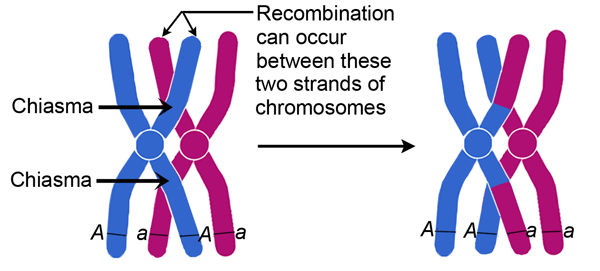
This image shows chromosomes during Prophase 1. Which of the following correctly describes the process shown?
a)
segregation of sister chromatids
b)
condensation and segregation of alleles
c)
mutationin which the DNA content of the gene is altered
d)
crossing - over in which alleles are exchanged
91.
products of meiosis are genetically
a)
different
b)
identical
92.
This picture shows which process?
a)
mitosis
b)
meiosis
c)
the cell cycle
93.
How are your chromosomes inherited?
a)
most of your chromosomes from your mother
b)
most of your chromosomes from your father
c)
a random number of chromosomes from each parent
d)
half your chromosomes from your mother and half from your father.
94.
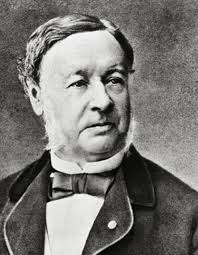
Which of the following scientists contributed to the cell theory?
a)
Rudolf Virchow, Robert Hooke, Anton van Leuwenhoek
b)
Matthais Schleiden, Theodor Schwann, Rudolf Virchow
c)
Robert Hooke, Theodor Schwann, Anton von Leuwenhoek
d)
Theodor Schwann, Matthais Schleiden, Robert HookeOption 4 (optional)
95.
Which of the following scientists concluded that all animals are made of cells?
a)
Rudolf Virchow
b)
Matthais Schleiden
c)
Robert Hooke
d)
Theodor Schwann
96.
Which of the following statements is not part of the cell theory?
a)
Cells are the basic unit of structure and function in all living things.
b)
All cells are produced from other cells.
c)
Only animal cells are composed of cells.
d)
All living things are composed of cells.
97.
Enzymes are capable of increasing the rate of a chemical reaction within a living cell.  Enzymes accomplish this through which of the following means?
a)
reducing the number of products   
b)
reducing the activation energy
c)
increasing the temperature of the cell
d)
increasing the concentration of reactants 
98.
Each enzyme only has 1 substrate that will fit its active site.  What is this called?
a)
reusable
b)
catalyst
c)
specific
d)
fragile
99.
Once a new product leaves an enzyme, the enzyme is unchanged and ready for the next substrate.  What is this called?
a)
reusable
b)
catalyst
c)
specific
d)
fragile
100.
Which of the following conclusions can be drawn from this graph?
a)
The optimum pH of the enzyme is 6.6.
b)
The optimum pH of the enzyme is 5.8
c)
The enzyme’s activity increases as pH increases 5.0 to 9.0
d)
The enzyme’s activity is greater around pH of 8.0 .
101.
Which do DNA and RNA have in common?
a)
Both are double stranded.
b)
Both contain ribose molecules.
c)
Both contain phosphate groups.
d)
Both contain uracil.
102.
What is the complimentary mRNA sequence to the DNA sequence A-T-T-G-C-A.
a)
T-A-A-C-G-T
b)
U-A-A-C-G-T
c)
U-A-A-C-G-U
d)
T-A-A-G-C-U
103.
Which defines a codon in DNA or mRNA?
a)
pair of nucleic acid and sugar
b)
pair of phosphate and sugar
c)
three-base code
d)
two-base code
104.
What mutation has occurred here? 
T-G-A-C-C-A
T-G-A-G-C-A
a)
Substitution
b)
Deletion
c)
Insertion
d)
Frameshift 
105.
DNA has a ______ strand; RNA has a ______ strand.
a)
double/double
b)
double/triple
c)
double/single
d)
single/single
106.
In RNA, the nitrogen base____ replaces ____ that was present in DNA. 
a)
A, U (adenine, uracil)
b)
C, G (cytosine, guanine)
c)
U, T (uracil, thymine)
d)
U, A (uracil, adenine)
107.
The "central dogma" states that genetic information flows from 
a)
Protein-->mRNA-->DNA
b)
Protein-->DNA-->mRNA
c)
mRNA-->DNA-->Protein
d)
DNA-->mRNA-->Protein
108.
Transcription takes place in the 
a)
cytoplasm
b)
ribosome
c)
mitochondrion
d)
nucleus
109.
Translation occurs in the
a)
nucleus
b)
mitochondria
c)
cytoplasm
d)
golgi apparatus
110.

This is the process by which double stranded DNA produces single stranded RNA:

a)

Photosynthesis

b)

Translation

c)

Pollination

d)

Transcription

111.

What is the result of translation?

a)

The synthesis of RNA from protein

b)

The synthesis of protein from RNA

c)

The synthesis of protein from DNA

d)

The synthesis of RNA from DNA

112.

What does rRNA represent?

a)

Ribosomal RNA

b)

Reconstructed RNA

c)

Reactive RNA

d)

Reusable RNA

113.

What is the role of tRNA?

a)

To treat the DNA strand

b)

To transfer codons

c)

To transfer amino acids

d)

To tackle mutations

114.
What holds the nitrogen bases together?
a)
sugar-phosphate bonds
b)
nitrogen bonds
c)
hydrogen bonds
d)
carbon bonds
115.

What is the correct amino acid sequence for the mRNA code AUGCCAGUAUGA

a)

Met-Pro-Ala-Val

b)

Met-Pro-Val

c)

Tyr-Gly-His

d)

Tyr-Gly-Arg-His

116.
In asexual reproduction, all of the offspring are:
a)
Physically Identical
b)
Genetically Identical
c)
Physically and Genetically Identical
d)
Not Identical
117.
A hydra reproduces when an outgrowth, or bud, forms and continues to develop until if falls off of the parent. This is an example of:
a)
Binary Fission
b)
Sporulation
c)
Budding
d)
Vegetative Propagation
118.
a)
budding
b)
binary fission
c)
sporulation
d)
regeneration
119.
What type of asexual reproduction is taking place?
Fishermen work hard to catch and remove all the starfish that get into their favorite shell fishing beds and the “underwater farms” where they raise clams and oysters. In the past, they put the starfish into their boats, cut them up with knives, and then throw the pieces of starfish overboard. They thought this would kill the starfish. What they did not know was that each piece of starfish will grow into a whole new animal.
a)
Regeneration
b)
Vegetative propagation
c)
Budding
d)
Fission
120.
What are some of the facts about asexual reproduction?
a)
Takes only one mate to reproduce and takes a longer time to reproduce
b)
Takes a shorter amount of time to reproduce and it takes two mates to reproduce
c)
Reproduces diverse offspring and takes a longer time to reproduce
d)
Takes only one mate to reproduce and takes a shorter time to reproduce
121.
What parts of the chromosomes code for traits?
a)
Genes
b)
Deoxyribonucleic Acid
c)
Chromosomes
d)
Nucleus
122.
What does heredity mean?
a)
DNA being passed down from one generation to the next.
b)
Passing down acquired characteristics to your offspring.
c)
Leaving money in a will to your children
d)
all DNA is kept in the nucleus
123.
Determine the sex of the individual whose karyotype is displayed in the image.
a)
female
b)
male
124.
Which structure is labeled as A in the diagram?
a)
Centromere
b)
Chromosome
c)
Sister chromatids
125.
Which structure is labeled as C in the diagram?
a)
Centromere
b)
Chromosome
c)
Sister chromatids
126.
Down's syndrome occurs because of a(n)
a)
missing sex chromosome
b)
extra sex chromosome
c)
additional 21st chromosome
d)
additional 18th chromosome
127.
Klinefelter's Syndrome has the karyotype notation of 
a)
47XX+21
b)
47XXY
c)
45XO
d)
44XX
128.
Chromosome pairs 1-22 are referred to as
a)
sex chromosomes
b)
sister chromatids
c)
a karyotype
d)
autsomes
129.
A normal human has ___ pairs of autosomes and ___ pair(s) of sex chromosomes.
a)
23,1
b)
22,1
c)
1, 22
d)
1, 23
130.

A karyotype is:

a)

A tool scientists use to analyze chromosomes

b)

A tool scientists use to predict the potential genotypes / phenotypes of offspring

c)

A tool scientist use to identify genes in the human genome

d)

A tool scientists use to identify criminals & find relatives