wayground logo

Free Printable Worksheets

Font size

S
M
L
XL
Worksheets

Qtr 3 Post Test

Total questions: 79

Worksheet time: 2hrs 32mins

Name
Class
Date
1.
T - tall and t = short
In the punnett square below, what belongs in the missing square
a)
tt
b)
Tt
c)
Bb
d)
TT
2.
In a heterozygous genotype, the ___________ allele takes over in the phenotype.
a)
recessive
b)
dominant
c)
lower case letter
d)
both 
3.
G = green, g = yellow
The genotype for a yellow plant is...
a)
GG
b)
Gg
c)
gg
d)
all of the choices result in yellow
4.
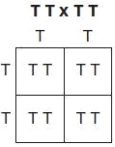
B = brown fur  b = white fur
In the punnett square, what is the probability for white fur? 
a)
0%
b)
25%
c)
50%
d)
75%
5.
In plants, tall (T) is dominant to short (t). Perform the following cross: Tt x Tt. What is the probability of producing a short plant?
a)
0%
b)
25%
c)
50%
d)
75%
6.
Which of the following is NOT a genotype?
a)
heterozygous
b)
a trait
c)
Bb
d)
homozygous recessive
7.
Which of the following alleles is homozygous (purebred) recessive?
a)
Tt
b)
tt
c)
TT
d)
t
8.
What ratio of the offspring from the cross shown will be homozygous recessive for the  trait of tallness? 
a)
0 in 4
b)
1 in 4
c)
2 in 4
d)
4 in 4
9.
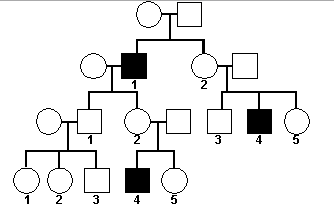
What type of heredity is shown in the pedigree?
(hint: check your notes - "modes of inheritance")
a)
Sex-Linked Dominant
b)
Sex-Linked Recessive
c)
Autosomal Dominant
d)
Autosomal Recessive 
10.
W=white hair
w= non-white hair
If you cross a horse with WW and a horse with ww what fraction of the offspring would be expected to have white hair?
a)
none
b)
3/4
c)
1/2
d)
all
11.
How many chromosomes do humans have?
a)
46
b)
21
c)
10
12.
Structure A refers to the _____.
a)
chromatid
b)
chromosome
c)
centromere
13.
Fruit fly body cells have 8 chromosomes. After mitosis, you would expect a resulting fruit fly daughter cell to have -
a)
16 chromosomes.
b)
46 chromosomes.
c)
8 chromosomes.
d)
4 chromosomes.
14.
Structure (b) is a ____.
a)
chromosome
b)
chromatid
c)
centromere
15.

The process by which the nuclear material is divided equally between two new cells

a)

mitosis

b)

cancer

c)

spindle

d)

centromere

16.
In mitosis, the two resulting cells are
a)
different from the starting cell and identical to each other.
b)
different from the starting cell and different from each other.
c)
identical to the starting cell and different from each other.
d)
identical to the starting cell and identical to each other.
17.
Meiosis produces different types of cells than mitosis. If there was a "meiosis club," all of these cells could be included EXCEPT
(Which cell type is not produced in meiosis?)
a)
gametes
b)
body cells
c)
sperm cells
d)
egg cells
18.
In meiosis, crossing over occurs in prophase 1. What is the significance of this event?
a)
This process ensures that chromosomes are evenly divided into daughter cells.
b)
This process can lead to genetic variation in daughter cells.
c)
This process can create gaps in the chromosome DNA for RNA to bind.
d)
This process allows for spindles to connect to the chromosomes in order to pull chromosomes apart.
19.
Mitosis is useful for the creation of new cells which is important for all of the following EXCEPT
a)
organism growth.
b)
repair of damage.
c)
replacement of worn out cells.
d)
generation of gametes.
20.
Meiosis makes sperm and egg cells. In humans, sperm and egg cells each have _____ chromosomes. Therefore a fertilized human egg cell (sperm and egg cell combined) would create a cell with _____ chromosomes.
a)
23, 46
b)
46, 23
c)
2, 4
d)
50, 100
21.
In meiosis, the four resulting cells are 
a)
identical to the starting cell and different from each other.
b)
different from the starting cell and different from each other. 
c)
identical to the starting cell and identical to each other.
d)
different from the starting cell and identical to each other.
22.
Sexual reproduction requires _____ parents and asexual reproduction requires ___ parents
a)
1,1
b)
2,2
c)
2,1
d)
1,2 
23.
What is an advantage of sexual reproduction?
a)
Allows genetic variation
b)
Only needs one parent
c)
Happens very quickly
d)
Offspring are exact copies of parent
24.
What is one disadvantage of sexual reproduction?
a)
Only one parent needed
b)
Off spring are exact copies of parents
c)
Happens very quickly
d)
Needs two parents
25.
Which is a type of Asexual Reproduction
a)
Sexual 
b)
Binary fission
c)
Cells 
d)
organism 
26.
When comparing the offspring of sexually and asexually reproducing organisms, we would expect the genetic material (DNA) of the sexually reproducing organism to -
a)
contain fewer mutations
b)
be lesser in quantity
c)
be simpler overall
d)
show more variation
27.
What are some of the facts about asexual reproduction?
a)
Takes only one mate to reproduce and takes a longer time to reproduce
b)
Takes a shorter amount of time to reproduce and it takes two mates to reproduce
c)
Reproduces diverse offspring and takes a longer time to reproduce
d)
Takes only one mate to reproduce and takes a shorter time to reproduce
28.
What are some of the facts about sexual reproduction?
a)
Takes two mates to reproduce and takes a longer time to reproduce
b)
Takes one mate to reproduce and takes a shorter amount of time to reproduce
c)
Takes two mates to reproduce and takes a shorter amount of time to reproduce
d)
Takes one mate to reproduce and takes a shorter amount of time to reproduce
29.
Why is DNA important?
a)
it is very small and very complicated
b)
it's in everything
c)
it serves as the blueprint for traits of all living things
d)
because we eat it every day for energy
30.
What is a gene?
a)
A bundle (like a hot dog bun) that the DNA is packed into
b)
something inside the nucleus
c)
a piece of DNA
d)
all of your DNA
31.
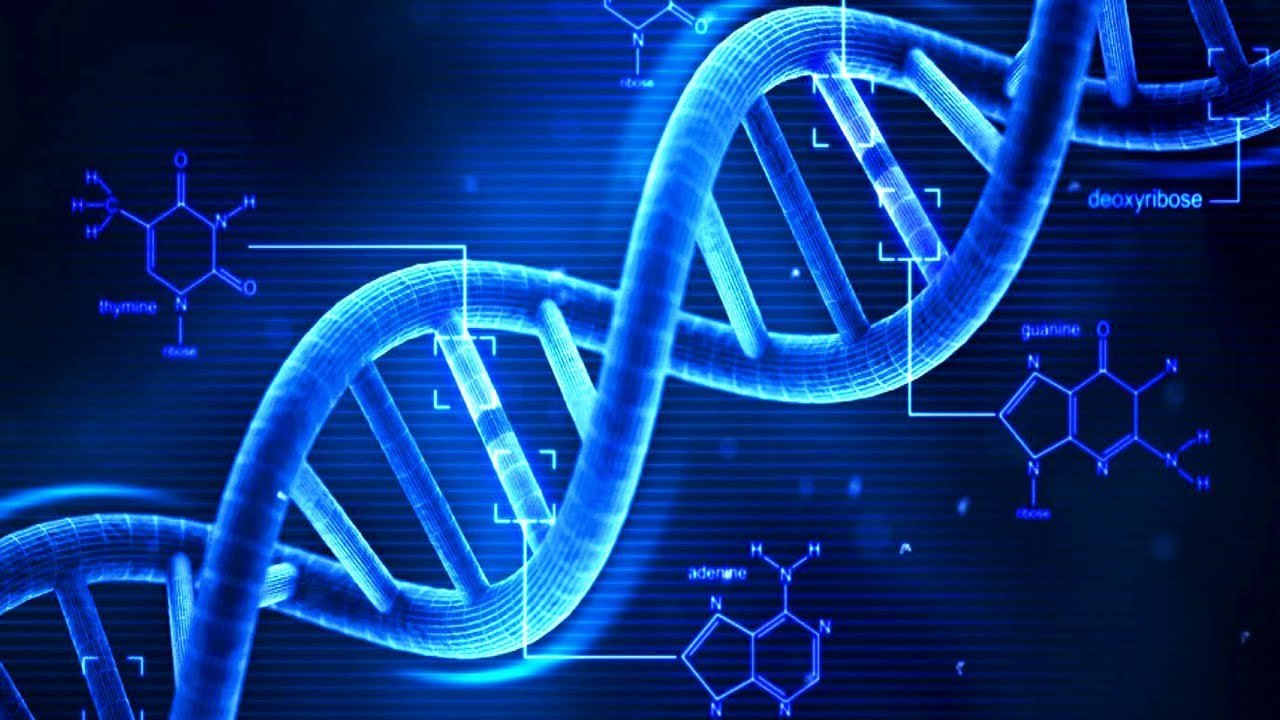
What is this image showing?
a)
DNA
b)
Chromosome
c)
Alleles
d)
Phenotype
32.
The part of a chromosome that carries information for a certain trait is called a 
a)
protein
b)
gene 
c)
nucleus
d)
gametes
33.
Heredity is the passing of traits from _____________________ to _____________________
a)
predators to prey
b)
water to rain
c)
parents to offspring
d)
fungi to protists
34.
___________________________ is the study of how traits are passed on, or inherited.
a)
dominant traits
b)
ratio
c)
phenotype
d)
genetics
35.
If a child has red hair, they inherited a certain _______________ from their parents.
a)
ratio
b)
trait
c)
probability
d)
sex chromosome
36.
_____________________ is the appearance of an organism, or how it looks
a)
phenotype
b)
ratio
c)
recessive trait
d)
heredity
37.
A ________________________ is used to predict the possible genotype from certain parents
a)
Mendel Grid
b)
Genetic Tic Tac Toe
c)
Punnett Square
d)
Pedigree Plot
38.

True or False: Homologous chromosomes contain the same genes.

a)

True

b)

False

39.

During which phase of meiosis does crossing over occur?

a)

Prophase 1

b)

Prophase 2

c)

Metaphase 1

d)

Metaphase 2

40.

There are usually 46 chromosomes in a human ______ cell.

a)

sperm

b)

egg

c)

haploid

d)

diploid

41.

What is the end result of meiosis?

a)

2 identical daughter cells

b)

4 identical daughter cells

c)

4 haploid gamete cells

d)

4 diploid gamete cells

42.

When are genes exchanged between homologous chromosomes during meiosis?

a)

crossing over

b)

fertilization

c)

anaphase 1

d)

cytokinesis

43.

If a diploid cell of a dog contains 78 chromosomes, how many would a haploid cell contain?

a)

78

b)

39

c)

15

d)

26

44.
In what stage of meiosis do sister chromatids separate?
a)
Anaphase II
b)
Telophase II
c)
Metaphase II
d)
Anaphase I
45.
When an area of a chromatid is exchanged with the matching area on a chromatid of its homologous chromosome, _________________ occurs
a)
crossing over
b)
mutagenesis
c)
hybridization
d)
fertilization
46.
This is why I am different than my sister.
a)
mitosis
b)
meiosis
47.
Genes located on the homologous chromosomes may have alternate forms that control different forms of a trait.  These alternate forms of a gene are called____________
a)
alleles
b)
centromeres
c)
phenotypes
d)
gametes
48.

An outcome of independent assortment?

a)

Chromosome Map

b)

Genetic Recombination

c)

Linked Genes

d)

Fruit Fly

49.

Genes that are located in the same chromosome?

a)

Chromosome Map

b)

Genetic Recombination

c)

Linked Genes

d)

Fruit Fly

50.
What is the definition of Homozygous?
a)
When one allele is dominant and one is recessive
b)
When an individual has two sets of the same allele.
c)
when it is neither dominant or recessive
51.
the new combination of genes produced by crossing over and independent assortment.
a)
genetic recombination
b)
polygenic trait
c)
epistasis
d)
gene linkage
52.
According to _______, genes that are closer together on a chromosome, have a higher chance of being inherited together.  
a)
Gene Linkage
b)
Polygenic
c)
Pleiotropy
d)
Epistasis
53.
Crossing over is important because....
a)
It prevents mutations from entering the gametes. 
b)
It allows for even distribution of chromosomes in the gametes.
c)
It allows for more genetic diversity of gametes.
d)
It allows for genetic uniformity of gametes. 
54.

The removal of which of the following groups would cause an immediate decrease in the amount of energy flowing through the system.

a)

producers

b)

consumers

c)

decomposers

d)

inorganic nutrients

55.

Complete burning of plant material returns carbon primarily to the

a)

herbivores

b)

water

c)

vegetation

d)

atmosphere

56.

Which of these organisms would most likely be found at the top of an energy pyramid

a)

clams-primary consumer

b)

sardines-primary consumers

c)

sharks-secondary consumers

d)

kelp primary producer

57.

What type of symbiosis? Hummingbirds feed on nectar from flowers. The flowers are pollinated by hummingbirds as they move from flower to flower.

a)

commensalism

b)

parasitism

c)

mutualism

d)

predation

58.

What type of symbiosis? Aphids are tiny insects that live on and eat the leaves of plants, removing vital nutrients from the plant

a)

Predation

b)

commensalism

c)

parasitism

d)

mutualism

59.

What type of symbiosis? Cattle egrets forage(feed) in fields among cattle. The egret gets easy access to flying insects stirred up by the cattle, and the cattle don't care if they are there or not.

a)

predation

b)

commensalism

c)

mutualism

d)

parasitism

60.
The rabbit in this food web would be considered a:
a)
Decomposer
b)
Producer
c)
Secondary Consumer
d)
Primary Consumer
61.
relationship in which two species live closely together
a)
resource
b)
mutualism
c)
succession
d)
symbiosis
62.
In this Food Web Pyramid Which type of consumer gets only 10% of the energy stored in plants?
a)
Herbivore
b)
Carnivore
c)
Omnivore
d)
Secondary Consumer
63.
What is the term for each step in the transfer of energy and matter within a biological community?
a)
energy path
b)
food web
c)
trophic level
d)
food pyramid
64.
The amount of energy that usually transfers from one trophic level to the next...
a)
10%
b)
20%
c)
80%
d)
50%
65.
An illustration that uses arrows to show the MANY possible directions in which matter and energy can pass through the organisms in an ecosystem.
a)
Food chain
b)
Food web
c)
Energy Pyramid
d)
Succession Map
66.
The nonliving aspects of an ecosystem.
a)
Abiotic factors
b)
Biotic factors
67.
The living portions of the ecosystem.
a)
Biotic factors
b)
Abiotic factors
68.
As you move upward, from level to level, in an energy pyramid, energy _____.
a)
increases
b)
decreases
c)
stays the same
d)
increases exponentially
69.
 plants that convert energy from the sun
a)
decomposer
b)
primary consumer
c)
secondary consumer
d)
producer
70.
What are the Abiotic factors in this image? 
a)
water, sunlight, dirt, air
b)
birds and plants
c)
birds, water, dirt
d)
plants, water
71.
Environmental factors that keep a population from increasing. 
a)
Carrying Capacity
b)
Limiting Factors
72.
Which one is NOT an example of a decomposer?
a)
mushroom
b)
leaves
c)
mold
d)
worm
73.
All of the living AND non-living things in an particular area is called a(n):
a)
ecosystem
b)
house
c)
community
d)
mountain
74.
Which of the following illustrates the correct ordering of trophic levels?
a)
decomposers-carnivores-autotrophs-herbivores
b)
herbivores-autotrophs-carnivores-decomposers
c)
autotrophs-herbivores-carnivores-decomposers
d)
carnivores-producers-omnivores
75.
Environmental factors that keep a population from increasing. 
a)
Carrying Capacity
b)
Limiting Factors
76.
Food, water, sunlight, shelter, and space are resources that are  __________.
a)
limiting factors
b)
wet
c)
messy
d)
found in rocks
77.
If a disease destroying barley plants in a field swept through an ecosystem, what would happen to the barley eating bird population in the the field ?
a)
The bird population would stay the same
b)
The bird population would infinitely increase
c)
The bird population would decrease
78.
If the population of a certain predator increases, there is often _______ its prey
a)
a decrease the population of
b)
an increase of the population of 
c)
great news for its prey of
d)
no  impact found on
79.
What would happen if the population of hawks suddenly increased? How would it affect the other organisms in the ecosystem?
a)
The snakes would decrease due to more hawks eating them
b)
All of the population of organisms would increase
c)
The biotic factors in the ecosystem would increase
d)
The hawks predators would decrease