wayground logo

Free Printable Worksheets

Font size

S
M
L
XL
Worksheets

Intro to Cells

Total questions: 71

Worksheet time: 36mins

Name
Class
Date
1.

In a plant cell, a stiff wall surrounds the membrane, giving the cell a rigid, boxlike shape?

a)

cell membrane

b)

cell

c)

ribosome

d)

cell wall

2.
This thin layer protects the cell and regulates what substances enter and leave the cell.
a)
cell membrane
b)
cell
c)
cell wall
d)
golgi body
3.
The basic unit of structure and function in a living things.
a)
chloroplast
b)
nucleus
c)
cell
d)
cell membrane
4.
These organelles capture energy from sunlight and use it to produce food for the cell.
a)
cell membrane
b)
chloroplasts
c)
cell wall
d)
ribosomes
5.
A gel-like fluid in which many different organelles are found.
a)
cell membrane
b)
nucleus
c)
organelle
d)
cytoplasm
6.

The network of passageways that helps the ribosomes make protein.

a)

endoplasmic reticulum

b)

golgi bodies

c)

vacuole

d)

cell

7.
This organelle receives materials from the endoplasmic reticulum and sends them to other parts of the cell.
a)
ribosomes
b)
mitchondria
c)
cytoplasm
d)
golgi bodies
8.
Most of the cell's energy is produced within these rod-shaped organelles. This organelle is considered the "powerhouse" of the cell.
a)
ribosomes
b)
mitochondria
c)
vacuole
d)
endoplasmic reticulum
9.
Directs all the cell's activities.
a)
mitochondria
b)
chloroplasts
c)
vacuole
d)
nucleus
10.
These small structures function as factories to produce proteins.
a)
mitochondria
b)
golgi body
c)
endoplasmic reticulum
d)
ribosomes
11.
This sac with the cytoplasm stores water, food, waste, products and other materials.
a)
vacoule
b)
organelle
c)
cytoplasm
d)
cell membrane
12.
What is made up two or more elements that are chemically combined?
a)
Element
b)
Mixture
c)
Compound
d)
Solids
13.
What cannot be broken down into other substances?
a)
Compound
b)
Mixture
c)
Solids
d)
Element
14.
Enzymes are considered to be 
a)
Lipids
b)
Carbohydrate
c)
Protein
d)
Nucleic Acid
15.
What is the purpose  of an enzyme?
a)
give permission for the reaction
b)
raise activation energy
c)
speed up reactions
d)
control how many reactions occur
16.

Identify 9.

a)

Nucleus

b)

Mitochonidria

c)

Vacuole

d)

Cell Membrane

17.

Identify 6

a)

Nucleus

b)

Golgi Body

c)

Vacuole

d)

E.R.

18.

Identify 2

a)

Nucleus

b)

Mitochondria

c)

Vacuole

d)

E.R.

19.

Identify 5

a)

Nucleus

b)

Golgi Body

c)

Vacuole

d)

E.R.

20.

Identify 3 (dots on the E.R.)

a)

Nucleus

b)

Golgi Body

c)

Lysosomes

d)

Ribosomes

21.

Select all of the following organelles that are found in BOTH plant and animal cells.

a)

Nucleus

b)

Cell Wall

c)

Ribosomes

d)

Mitochondria

e)

Chloroplast

22.

Select all of the following organelles that are found in ONLY plant cells.

a)

Nucleus

b)

Cell Wall

c)

Ribosomes

d)

Mitochondria

e)

Chloroplast

23.

Identify A.

a)

Vacuole

b)

Nucleus

c)

Ribosomes

d)

Chloroplast

24.

Is this a plant or animal cell?

a)

Plant

b)

Animal

25.

Is this a plant or animal cell?

a)

Plant

b)

Animal

26.

Identify B.

a)

Nucleus

b)

Cell Wall

c)

Vacuole

d)

Chloroplast

27.

Identify C.

a)

Nucleus

b)

E.R.

c)

Vacuole

d)

Mitochondria

28.

Identify D.

a)

Nucleus

b)

E.R.

c)

Vacuole

d)

Mitochondria

29.

Identify E.

a)

Nucleus

b)

E.R.

c)

Vacuole

d)

Mitochondria

30.

Identify F.

a)

Nucleus

b)

Cell Wall

c)

Vacuole

d)

Chloroplast

31.

Identify G.

a)

Golgi Body

b)

Cell Wall

c)

E.R.

d)

Chloroplast

32.
The _____________ stores food, water, wastes, and other materials in both plant and animal cells.
a)
Vacuole
b)
Mitochondria
c)
Ribosomes
d)
Chromatin
33.
An organelle that captures energy from the sunlight in order to use it to produce food in plant cells is ______________.
a)
Chromatin
b)
Chloroplast
c)
Cytoplasm
d)
Cell Membrane
34.
________________ create proteins for plant and animal cells.
a)
Ribosomes
b)
Endoplasmic Reticulum
c)
Golgi Bodies
d)
Lysosomes
35.
This organelle is a rigid outer layer that protects plant cells.
a)
Cell Membrane
b)
Cell Wall
c)
Nucleus
d)
Chloroplast 
36.
This organelle controls what goes in and out of plant and animal cells.
a)
Cell Wall
b)
Cell Membrane
c)
Cytoplasm
d)
Cytoplasm
37.
Which biomolecule is found in fats, oils, and waxes and is a source of long-term energy
a)
Proteins
b)
Nucleic Acid
c)
Lipids
d)
Carbohydrate
38.
Which biomolecule has sugars and starches?
a)
Lipids
b)
Proteins
c)
Carbohydrates
d)
Nucleic Acid
39.
The ___ is the basic unit of sturucture and function of organisms
a)
atom
b)
cell
c)
matter
d)
all other answers are correct
40.
Who looked at cork and named the cell?
a)
Robert Hooke
b)
Van Leeuwenhoek
c)
Robert Brown
d)
Francesco Redi
41.

Select all parts of the cell theory. (HINT: it's all of them)

a)

All living things are made of cells

b)

All cells come from pre-existing cells

c)

Cells are the basic unit of structure and function of all living things

42.
Robert Hooke, Anton van Leeuwenhoek, Theodor Schwann, Rudolf Virchow, and Matthias Schliden were all responsible for what theory?
a)
The Theory of Gravity
b)
The Theory of Relativity
c)
The Cell Theory
d)
The Theory of Continental Drift
43.

This early cell theory scientist looked in a microscope and discovered "animalcules" in the gunk from his teeth and pond water.

a)

Schleiden

b)

Leeowenhoek

c)

Hooke

d)

Virchow

e)

Schwann

44.

Who discovered and named cells while looking at cork?

a)

Captain Hook

b)

Robert Hooke

c)

Matthais Schleiden

d)

Rudolf Virchow

45.

What was Schleiden convinced of?

a)

All plants are made of cells

b)

All animals are made of cells

c)

All cells are prokaryotic

d)

None of the above

46.

Who noted that all animals are made of cells and helped write the first two parts of cell theory?

a)

Rudolf Virchow

b)

Anton van Leeuwenhoek

c)

Theodor Schwann

d)

Robert Hooke

47.

Who discovered that all cells come from other living cells and had research that lead to the last major principle of cell theory?

a)

Matthias Schleiden

b)

Theodore Schwann

c)

Robert Hooke

d)

Rudolf Virchow

48.

The diffusion of water molecules through a selectively permeable membrane is:

a)

Homeostasis

b)

Osmosis

c)

Active Transport

d)

Equilibrium

49.

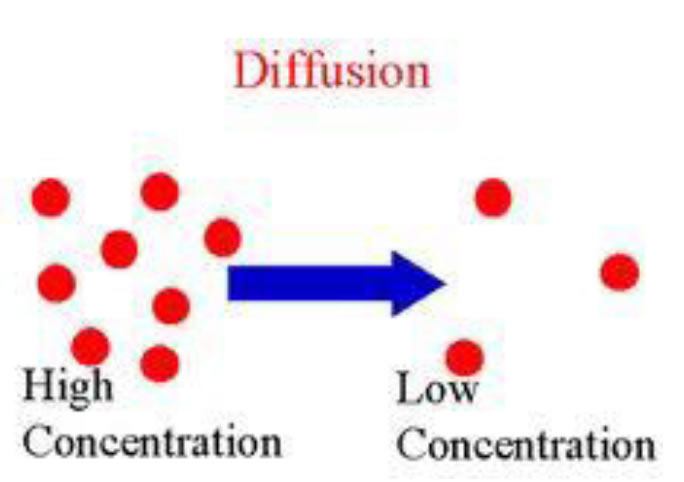
The movement of molecules from a place where there is a greater/higher concentration to an area where there is lesser/lower concentration is:

a)

Homeostasis

b)

Diffusion

c)

Endocytosis

d)

Active Transport

50.
Movement of particles from high to low concentration. 
a)
Passive Transport
b)
Active Transport
51.
Osmosis is a form of ______________. 
a)
Passive Transport
b)
Active Transport
52.
Solutes move with the concentration gradient, therefore no energy is used. 
a)
Passive Transport
b)
Active Transport
53.
Solutes move against the concentration gradient, therefore energy is needed
a)
Passive Transport
b)
Active Transport
54.
This picture represents what type of cell transport?
a)
endocytosis
b)
exocytosis
c)
osmosis
d)
passive transport
55.
This picture represents which type of cellular transport?
a)
passive transport
b)
endocytosis
c)
exocytosis
d)
osmosis
56.
Which is true about active transport?
a)
It requires energy
b)
it does not require energy
c)
It moves substances down the concentration gradient
d)
it moves material from high to low concentration
57.
What does selectively-permeable mean?
a)
The cell controls what passes in and out of the cell
b)
Nothing gets through
c)
The cell lets only large substances through
58.

Glucose enters a liver cell through a protein channel. What type of transport is this?

a)

diffusion

b)

facilitated diffusion

c)

osmosis

d)

active transport

59.

Oxygen moves into a contracting heart muscle cell. What type of transport is this?

a)

diffusion

b)

facilitated diffusion

c)

osmosis

d)

active transport

60.

The cell membrane is built of a double layer of ___________

a)

lipids

b)

carbohydrates

c)

proteins

d)

nucleic acids

61.

Which of the following structures lets particles/molecules in and out of the cell?

a)

Mitochondrion

b)

Cell Membrane

c)

Chloroplast

d)

Channel Protein

62.

Stores genetic information

a)

carbohydrates

b)

lipids

c)

proteins

d)

nucleic acids

63.

DNA and RNA

a)

carbohydrates

b)

lipids

c)

proteins

d)

nucleic acids

64.

Which inorganic compound is needed for life?

a)

acids

b)

bases

c)

carbohydrates

d)

water

65.
A group of organs that work together to perform the same function is called _____________?
a)
cells
b)
tissues 
c)
organ system
d)
organs
66.
Which of the following is the correct order of organization in living things from most basic (simple) to most complex?
a)
a.  Organism, cell, tissue, organ, organ system
b)
a.  Organ system, organ, tissue, cell, organism
c)
a.  Cell, tissue, organ, organ system, organism
d)
a.  Cell, organ, tissue, organ, organism, organ system
67.
A group of similar cells that come together to perform a specific function is a/an
a)
organ
b)
organism
c)
organ system
d)
tissue
68.
The smallest level of organization of life in an organism
a)
tissue
b)
cell
c)
organ
d)
organ system
69.
Tissue that works together to perform a function
a)
organ
b)
cell
c)
organ system
d)
organism
70.
What do you have when organ systems work together?
a)
organs
b)
organism
c)
cells
d)
tissue
71.
A group of cells that work together
a)
organ system
b)
organism
c)
organ
d)
tissue