wayground logo

Free Printable Worksheets

Font size

S
M
L
XL
Worksheets

Astronomy Benchmark - Are You Ready?

Total questions: 100

Worksheet time: 1hrs 16mins

Name
Class
Date
1.
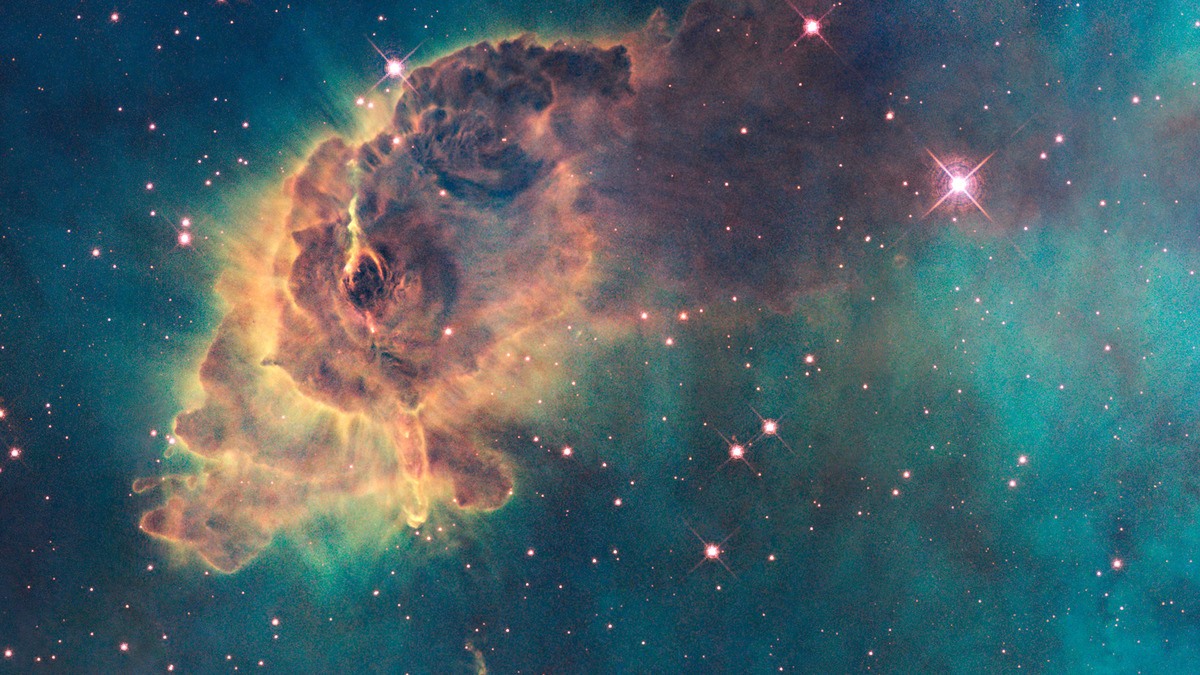
What type of galaxy is this?
a)
Spiral
b)
Elliptical
c)
Irregular 
d)
Irrational
2.
What type of galaxy is this?
a)
Spiral
b)
Elliptical
c)
Irregular
d)
Irrational
3.
What type of galaxy has no defined pattern or shape?
a)
Spiral 
b)
Elliptical
c)
Irregular
d)
Constellation
4.

Which galaxy do we live in?

a)

Andromeda

b)

ESO 146-IG 005

c)

Milky Way

d)

Seque 2

5.
The light from the sun....
a)
only reaches part of the moon because of clouds
b)
lights up the whole moon but Earth's shadow gets in the way sometimes
c)
lights up 1/2 the moon and we see different portions of the 1/2 lit moon
d)
illuminates different amounts of the moon because the distance from the sun changes
6.
The sun appears to move across the sky each day.  What causes this?
a)
the spinning of the Earth's axis
b)
The path of the sun around the Earth
c)
the production the nuclear energy around the sun
d)
the tilt of the Earth on its axis
7.

__________________ are darker,cooler areas on the sun's photosphere.

a)

corona

b)

sunspots

c)

flares

d)

solar wind

8.

What feature is shown in this image?

a)

Solar Flare

b)

Photosphere

c)

Core

d)

Sunspot

9.

What do the blue arrows moving outward from the sun's corona represent?

a)

Gravity

b)

Nuclear Fusion

c)

Solar Winds

d)

Photosphere

10.

Provides the energy for a star

a)

Nuclear fusion

b)

Law of Conservation of Mass and Energy

c)

Solar Flares

d)

Sunspots

11.

Sudden, intense explosions that result in changes in brightness and an increase in solar winds.

a)

Prominences

b)

Solar Flare

c)

Sunspot

d)

Photosphere

12.
Bright arch-like loops that may erupt from the photosphere into the corona
a)
Sunspots
b)
Solar Flares
c)
Prominences
d)
Photosphere
13.
Energy released from _________ can cause damage to the International Space Station, disrupt radio and electrical transmissions on Earth, and cause Auroras in the skies near the North and South Poles
a)
Sunspots
b)
Solar Flares
c)
Prominences
d)
Corona
14.
Emits light that we see
a)
Photosphere
b)
Sunspot
c)
Solar Flare
d)
Prominence
15.
Emits light but is only visible as a white halo during a solar eclipse
a)
Core
b)
Solar Flare
c)
Corona
d)
Sunspot
16.
The particles of the corona extends into space for millions of kilometers and spreads into streams of electrically charged particles called:
a)
coronal discharge
b)
solar flares
c)
coronal ejection
d)
solar winds
17.
What layer can be seen here?
a)
chromosphere
b)
corona
c)
photosphere
d)
core
18.
These colored bands of light in the sky are called ___.
a)
auroras
b)
solar flares
c)
solar prominences
d)
sun spots
19.
How does the sun keep all of the planets in orbit?
a)
The pull of its gravity
b)
the flames give it power
c)
the sun spots
d)
The solar flares guide them
20.
What is the largest object in our solar system?
a)
Jupiter
b)
Saturn
c)
The sun
d)
Earth
21.
What are the two types of optical telescopes? 
a)
Reflecting/Rarefaction
b)
Compressional/Longitudinal
c)
Reflecting/Longitudinal
d)
Refracting/Reflecting
22.
The telescopes that receive long wavelengths from space. 
a)
Space probes
b)
Space satellites
c)
Space landers
d)
Radio 
23.
The best thing about radio telescopes is: 
a)
They can receive data any time of day and in any weather
b)
They can receive very high frequency signals
c)
They receive gamma rays
d)
They can intercept signals between planets 
24.

A large cloud of gas and dust in space where new stars are formed.

a)

Universe

b)

Galaxy

c)

Protostar

d)

Nebula

25.

When light from an object is shifted to the red end of the spectrum which tells us that the light source is moving away

a)

Blue Shift

b)

Red Shift

c)

Purple Shift

d)

Solar Shift

26.

An instrument that collects light from distant stars and separates the light into the different colors of the visible light spectrum.

a)

Telescope

b)

Satellite

c)

Space Probe

d)

Spectroscope

27.

The most prominent (noticeable) layer and lowest layer of the Sun’s atmosphere that emits light.

a)

Photoshere

b)

Corona

c)

Chromosphere

d)

Core

28.
Space observatories are used to:
a)
Collect data
b)
Take pictures
c)
All answers
d)
Transmit information
29.
An object that orbits another object in space is a: 
a)
Space probe
b)
Space lander
c)
Space invader
d)
Satellite
30.

Which of the following cannot be determined with a spectroscope?

a)

The elements in star

b)

The mass of star

c)

The temperature of a star

d)

The age of a star.

31.

The planets Jupiter, Saturn, Uranus, Neptune, and Pluto are in the...

a)

inner solar system.

b)

orbit of Earth.

c)

outer solar system.

d)

the asteroid belt.

32.

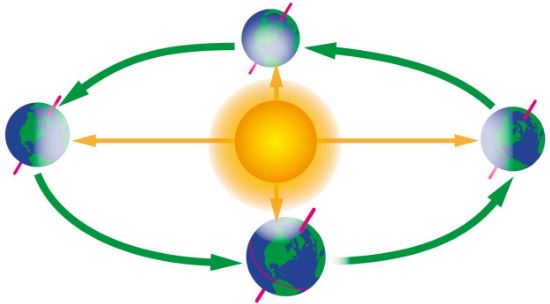
During which season is the Northern Hemisphere tilted toward the Sun?

a)

Spring

b)

Summer

c)

Winter

d)

Fall

33.

What is the approximate percentage of the Earth that is illuminated by the Sun at any given time?

a)

90%

b)

10%

c)

25%

d)

50%

34.

These can carry cameras and other equipment far out into the solar system to areas not safe for astronauts.

a)

satellite

b)

rover

c)

space shuttle

d)

space probe

35.
What type of eclipse is this?
a)
Total lunar eclipse
b)
Total solar eclipse
c)
Partial lunar eclipse
d)
Partial solar eclipse
36.
This is a diagram of the moon phases Which moon phase would a lunar eclipse occur in?
a)
New Moon
b)
1st quarter
c)
Full moon
d)
3rd quarter
37.

What is the correct order of the Earth, Moon, and Sun in order for a lunar eclipse to occur?

a)

Earth, Moon, Sun

b)

I don't know

c)

Sun, Earth, Moon

38.
What type of eclipse is down in the diagram?
a)
Total lunar eclipse
b)
Partial lunar eclipse
c)
total solar eclipse
d)
partial solar eclipse
39.
This is a diagram of the moon phases. In which phase would a solar eclipse occur?
a)
New Moon
b)
1st quarter
c)
Full Moon
d)
3rd Quarter
40.

What type of eclipse is occuring in the diagram?

a)

solar

b)

lunar

41.
What is the correct order of the Earth, Moon, and Sun in order for a solar eclipse to occur?
a)
Earth, Moon, Sun
b)
Moon, Sun Earth
Moon, Sun, Earth
c)
Sun, Earth, Moon
42.

The Earth completes one of these every 365.25 days

a)

rotation

b)

revolution

43.
Takes about 24 hours to complete one
a)
rotation
b)
revolution
44.
Which movement of Earth causes day and night?
a)
rotation
b)
revolution
45.

Why is it warmer in the summer?

a)

We are closer to the sun

b)

We receive more direct sunlight due to earth's axis tilt

c)

We have stronger light rays from the sun

d)

Earth spins slower

46.

In spring/fall, how is earth's axis tilted in reference to the sun?

a)

towards

b)

Neither away or toward

c)

away

47.
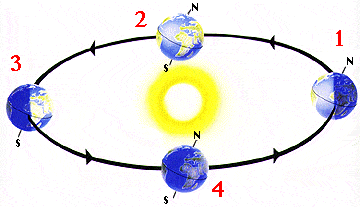
Which season is taking place in the Northern Hemisphere in Position 1?
a)
Winter
b)
Spring
c)
Summer
d)
Fall
48.
Which season is taking place in the Northern Hemisphere in Position 2?
a)
Winter
b)
Spring
c)
Summer
d)
Fall
49.
Which season is taking place in the Northern Hemisphere in Position 4?
a)
Winter
b)
Spring
c)
Summer
d)
Fall
50.
What causes us to only see the same side of the moon?
a)
The Moon's tilt.
b)
The Moon's gravity.
c)
The Moon's rotation and revolution are at the same pace.
d)
None of the above
51.
Which occurs after the full moon?
a)
waning crescent
b)
waxing crescent
c)
waning gibbous
d)
waxing gibbous
52.
From Earth we only see one side (the same side) of the moon all the time. 
a)
True
b)
False
53.
What is the "name" for the longest and shortest days of the year?
a)
equinoxes
b)
solstices
c)
months
d)
seasons
54.
Earth's axis is tilted at - 
a)
23.5 degrees
b)
33.5 degrees
c)
28 degrees
d)
90 degrees
55.
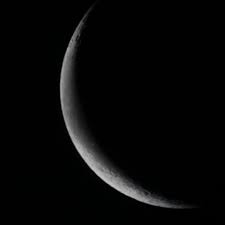
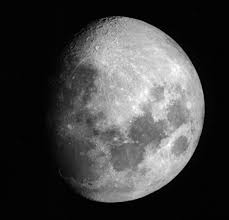
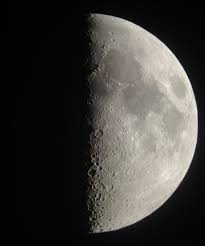
Name the moon phase
a)
waning crescent
b)
waxing crescent
c)
waning gibbous
d)
waxing gibbous
56.
Name the moon phase
a)
waning crescent
b)
waxing crescent
c)
waning gibbous
d)
waxing gibbous
57.
Name the moon phase
a)
First Quarter
b)
Last Quarter
c)
New Moon
d)
Full Moon
58.
Name the moon phase
a)
First Quarter
b)
Last Quarter
c)
New Moon
d)
Full Moon
59.
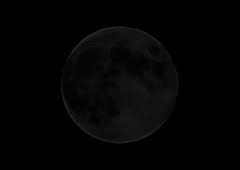
Name the phase of the moon for letter a
a)
First Quarter
b)
Last Quarter
c)
Waxing Gibbous
d)
Waning Gibbous
60.
Name the phase of the moon for letter f
a)
Waning Gibbous
b)
Waxing Gibbous
c)
Waning Crescent
d)
Waxing Crescent
61.
Changes in the moon's appearance are
a)
phases
b)
eclipses
c)
stages
d)
cycle
62.
Name the moon phase that would come AFTER this moon.
a)
waning crescent
b)
waxing crescent
c)
waning gibbous
d)
waxing gibbous
63.
What moon phase came right BEFORE this one?
a)
First Quarter
b)
Last Quarter
c)
New Moon
d)
Full Moon
64.

Most scientists believe the Big Bang Theory explains which of the following questions?

a)

How our planets and moons formed

b)

How our universe began

c)

How the sun turns hydrogen into helium

d)

How fast light travels through space

65.

Light emitted from a star or galaxy can be separated into a band of colors, called a ________.

a)

Red Shift

b)

Wave Length

c)

Spectrum

d)

Microwave

66.

Cosmic Microwave Background Radiation is a form of _________.

a)

Matter

b)

Energy

c)

Visible Light

d)

Water

67.

As galaxies move away from our galaxy

a shift on the electromagnetic spectrum

(EMS) is noticed. This phenomena is

called _____________.

a)

redshift

b)

blueshift

c)

unshift

d)

blackshift

68.

How does Cosmic Microwave Background Radiation support the Big Band Theory?

a)

Microwaves are found everywhere in the universe.

b)

Microwaves occurred at the time of the Big Bang

c)

Microwaves are useful in our everyday lives

d)

Only A & B

69.
What 2 things make up everything in the Universe?
a)
Matter and Heat
b)
Energy and Matter
c)
Energy and Dust
d)
Mass and Volume
70.

Which way is NOT a way to estimate the age of the Universe?

a)

Look for the oldest stars

b)

Calculate the rate of expansion of the Universe

c)

Count the galaxies

71.
What is the best evidence for the Big Bang theory?
a)
How fast light can travel
b)
The expansion of the Universe
c)
Creation of new planets
72.

The distance light can travel in 1 year is called...

a)

Light Year

b)

Light Distance

c)

Space year

73.
What color of star is the hottest?
a)
Blue
b)
Red
c)
Yellow
d)
Orange
74.
Why does the sun look small in the sky to us?
a)
It is 93,000,000 miles away
b)
It is smaller than Earth
c)
It is not very bright
d)
It travels around Earth
75.
What is the name of the gas/dust clouds that form stars?
a)
Nebulas
b)
Protostars 
c)
Supernova
d)
Neutron Star
76.
To get the sun to appear bigger in our sky, how would the distance between the sun and earth have to change?
a)
Earth would have to move closer to the sun
b)
Earth would have to move farther from the sun
77.
______ is a force that causes dust particles to stick together in a nebula.
a)
nuclear fusion
b)
gravity
c)
hydrogen
d)
friction
78.
Most stars are made of which elements?
a)
Hydrogen only
b)
Hydrogen and Lithium
c)
Hydrogen and Sodium
d)
Hydrogen and Helium
79.
Red stars are the _____________.
a)
hottest
b)
coolest
c)
biggest
d)
brightest
80.
What is a small body of ice, rock & cosmic dust loosely packed together?
a)
meteor
b)
meteoroid
c)
asteroid
d)
comet
81.
The shape of a comet's obit is ____.
a)
circular
b)
irregular
c)
regular
d)
elliptical
82.
Where is the asteroid belt located?
a)
past the orbit of Neptune
b)
between Mars & Jupiter
c)
surrounding our solar system
d)
between Earth & Mars
83.
What is the red arrow pointing to?
a)
meteoroid
b)
meteor
c)
meteorite
84.
Which one lasts only a few seconds in the sky?
a)
comet
b)
meteoroid
c)
meteor
d)
meteorite
85.
Meteorites...
a)
 hit the ground
b)
burn up completely in the atmosphere
c)
debris from asteroids/comets that float around in space
86.
Meteors...
a)
burn up completely in the atmosphere producing streaks of light
b)
hit the ground
c)
debris from asteroids/comets floating around in space
87.
Meteoroids are...
a)
debris from asteroids/comets floating around in space
b)
burn up completely in the atmosphere
c)
hit the ground
88.
Which one does NOT orbit/revolve around the Sun?
a)
Comet
b)
Asteroid
c)
Meteoroid
d)
Planets
89.
The inner planets are also called...
a)
terrestrial planets
b)
gas giants
90.
The inner planets are closer to the sun so
a)
they take longer to orbit the sun.
b)
they orbit the sun faster.
91.
What are the Inner Planets?
a)
Mercury, Mars, Earth, and Venus
b)
Earth, the Moon, Mars
c)
Neptune, Pluto, Earth
d)
:)
92.
Gas giants
a)
Inner planets
b)
Outer planets
c)
Both
d)
Venus
93.
The greater mass a planet has, 
a)
the greater the gravitational force it has
b)
the less gravitational force it has
c)
gravitational force does not depend on mass
94.
The order of the planets is:
a)
Mars,Venus,Earth,
Mercury,Saturn
Jupiter, Uranus, Neptune
b)
Earth,Venus,Mars
Jupiter, Neptune,
Mercury,Saturn,
Uranus
c)
Mercury,Venus,Earth
Mars,Jupiter,
Saturn,Uranus
Neptune
d)
Mercury, Earth, Venus, Mars, Saturn, Jupiter, Neptune, Uranus
95.
Which body has the greater effect on Earth's tides?
a)
Sun
b)
Saturn
c)
Moon 
d)
Venus
96.

Wha type of tide would this arrangement of earth-moon-sun create?

a)

full moon tide

b)

new moon tide

c)

neap tide

d)

spring tide

97.
What type of tides would this arrangement of earth-moon-sun create?
a)
neap tide
b)
spring tide
c)
new moon tide
d)
full moon tide
98.

What space object is this a model of?

a)

Comet

b)

Asteoroid

c)

Meteoroid

d)

Satellite

99.

If the number of days it took earth to revolve around the sun increased, what would happen?

a)

We would experience longer days.

b)

We would experience longer nights.

c)

We would experience longer years.

d)

There would be no change.

100.

An object in space is 30 light years away. How can we calculate how many miles away it is?

a)

(3 * 5.88 trillion) miles

b)

(30 * 5.88 trillion) miles

c)

(30 * 1) miles

d)

The number is not possible to calculate, which is why we use light years.