wayground logo

Free Printable Worksheets

NEW

Font size

S
M
L
XL
Worksheets

Plant Science Practice Test

Total questions: 65

Worksheet time: 45mins

Name
Class
Date
1.
What cells allow the stomata to open and close
a)
Body Cells
b)
Pressure Cells
c)
Guard Cells
d)
Rhizoids
2.
Sunlight, Water and __________ are needed to conduct photosynthesis?
a)
Oxygen
b)
Carbon Dioxide
c)
Sugar
d)
Atoms
3.
If a plants xylem were destroyed it would hinder its ability to...
a)
Absorb water from soil
b)
Absorb water from leaves
c)
Absorb sunlight
d)
Conduct water to the leaves
4.
Pollen grains are produced by...
a)
Male reproductive structures
b)
Sporophytes
c)
Ovules
d)
Female reproductive structures
5.
Special cells that open and close for gas exchange are called
a)
Vascular tissue
b)
Guard Cells
c)
Meristem
d)
Mesophyll
6.
The Apical Meristem is...
a)
Tissue that transports nutrients
b)
Protection around the roots
c)
Area of growing cells
d)
Cells that transport food
7.
Angiosperms produce seeds protected inside 
a)
Cones
b)
Flowers
8.
This is an example of 
a)
Phototropism
b)
Gravitropism
c)
Thigmotropism
d)
Iwantmoretropism
9.
This is an example of
a)
Phototropism
b)
Gravitropism
c)
Thigmotropism
d)
Allthetropisms
10.
This is an example of 
a)
Phototropism
b)
Gravitropism
c)
Thigmotropism
d)
Whysomanytropisms
11.
What purpose do roots serve?
a)
To store nutrients
b)
To conduct Water
To absorb water
c)
To conduct photosynthesis
d)
To grow 
12.
The purpose of the cuticle is to 
a)
nourish the plant
b)
reduce evaporation of fluids
c)
aid in reproduction 
d)
allow it to live under water
13.
What is the main difference between aerobic and anaerobic respiration?
a)
Aerobic uses oxygen and produces a total of 2 ATP, anaerobic does not require oxygen and produces 38 ATP molecules
b)
Aerobic respiration uses the process of glycolysis, while anaerobic does not.
c)
Aerobic uses oxygen and produces 38 ATP molecules, while anaerobic does not require oxygen and produces 2 ATP molecules
d)
Anaerobic respiration uses the process of glycolysis, while aerobic does not.
14.
What is the correct formula for photosynthesis?
a)
H2O+CO2+sunlight -> O2 + C6H12O6
b)
CO2+ sunlight + O2 -> O2 + C6H12O6
c)
 O2+ C6H12O6 -> H2O + CO2 + sunlight
d)
O2+ C6H12O6 -> H2O + CO2 + ATP
15.
What is the correct formula for cellular respiration?
a)
H2O+CO2+sunlight -> O2 + C6H12O6
b)
CO2+ sunlight + O2 -> O2 + C6H12O6
c)
 O2+ C6H12O6 -> H2O + CO2 + sunlight
d)
O2+ C6H12O6 -> H2O + CO2 + ATP
16.
function of phloem
a)
transports water
b)
stores water
c)
transports sugar
d)
stores sugar
17.
transpiration (water loss) takes place in the...
a)
roots
b)
stems
c)
leaves
d)
flowers
18.
A rigid layer that lies outside the cell's  membrane is...
a)
Cytoskeleton
b)
Cilia
c)
Cell Wall
d)
Flagella
19.
Vascular plants with seeds are split into what two groups?
a)
angiosperms & bryosperms
b)
gymnosperms & angiosperms
c)
gametophytes & sporophytes
d)
sporophytes  & gymnosperms
20.
Female reproductive part of flower
a)
pistil
b)
stamen
c)
petals
d)
sepals
21.
Which of these are both male reproductive structures?
a)
Stigma and Style
b)
Anther and Filament
c)
Style and Ovary
d)
Stigma and Anther
22.
All seeds have 
a)
Seed Coat
Seed Coat 
b)
First Seed
c)
Embryo
d)
All of the above
23.

What word is used to describe a seed that is inactive?

a)

Sleeping

b)

Dormant

c)

Metabolism

d)

Radicle

24.

What is the scientific name for the shoot that first emerges from a seed during germination?

a)

Testa

b)

Radicle

c)

Cotyledon

d)

Plumule

25.

What is the scientific name for the root that first emerges from the seed?

a)

Radicle

b)

Plumule

c)

Monocot

d)

Dicot

26.

What name is given to the food store within a seed?

a)

Monocot

b)

Dicot

c)

Cotyledon

d)

Hilum

27.

What is the suitable temperature for seeds germinate?

a)

10- 37 0 C

b)

30 -35 0 C

c)

40 - 50 0 C

d)

0 0 C

28.
What does the word GERMINATE mean?
a)
it has germs
b)
life span
c)
begins to grow 
d)
dies
29.
Which word identifies letter B?
a)
cotyledon
b)
seed coat
c)
embryo
30.
Dicots have __ cotyledon. 
a)
Zero
b)
One
c)
Two
d)
Depends
31.
Monocots have __ cotyledon. 
a)
One
b)
Two
c)
Depends on the plant
d)
Zero
32.
The seed is protected by an outer covering called:
a)
cotyledon
b)
embryo
c)
seed coat
d)
germination
33.
Forage that has been cut and dried until it contains a low level of moisture.
a)
Pasture
b)
Hay
c)
Silage
d)
Silo
34.

Green, chopped forage that has been allowed to ferment in the absence of air.

a)

hay

b)

pasture

c)

silage

d)

haylage

35.

Forage that is harvested by livestock as they graze.

a)

tillering

b)

silo

c)

pasture

d)

nurse crop

36.

Consists of plants that are planted with plants that require protection during early stages of development.

a)

Nurse Crop

b)

Silo

c)

carrying capacity

d)

tillers

37.

Silage made from grass that has been partially dried.

a)

silo

b)

haylage

c)

carrying capacity

d)

hay

38.

Which of the following would be considered an alternative to synthetic pesticides

a)

insect resistant plants

b)

all of the choices

c)

crop rotation

d)

Scents that trick pests

39.

Which federal agency is responsible for regulating the sale and use of synthetic pesticides in the U.S.?

a)

U.S. Food and Drug Administration (FDA)

b)

U.S. Department of Agriculture (USDA)

c)

U.S. Environmental Protection Agency (EPA)

d)

U.S. FIsh and Wildlife-Service (US-FWS)

40.
When plants, animals, and other organisms die, they break down and become part of the soil. What is this part of the soil called?
a)
sand
b)
silt
c)
clay
d)
humus
41.
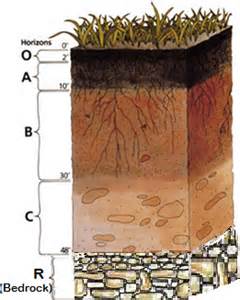
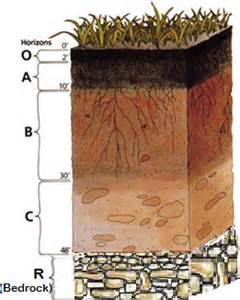
What is the name of Horizon 1?
a)
Subsoil 
b)
Topsoil
c)
Bedrock 
d)
Parent Rock
42.
Which horizon is made up of partially weathered rocks?
a)
Horizon A
b)
Horizon B
c)
Horizon C
d)
Horizon D or R
43.
In which horizon is most of the HUMUS?
a)
Horizon A
b)
Horizon B
c)
Horizon C
d)
Horizon D or R
44.
The most important grain crop in the world is
a)
Wheat
b)
Corn
c)
Rice
d)
Barley
45.
An example of genetic control of pests is
a)
Planting a crop when insects are not present
b)
Releasing sterile male insects
c)
Genetically altering a plant so that insects that eat it will be killed
d)
Planting a variety of a crop that grows more rapidly than do weeds
46.
Tobacco falls into the category of crops called
a)
Fiber
b)
Biennial
c)
Thermo
d)
Stimulant
47.
Soybeans are grown for
a)
Oil
b)
Hay
c)
Rain
d)
All of the above
48.
Germplasm is
a)
an infection caused by germs
b)
the genetic material of a species
c)
a conservation strategy
d)
an endemic plant of california
49.
What type of propagation method is this?
a)
Whip-and-Tongue
b)
T-Budding
c)
Bark Grafting
d)
Patch Budding
50.
The lower portion of a graft is known as what?
a)
Rootstock
b)
Lowerstock
c)
Understock
d)
Scion
51.
The upper portion of the graft is known as what?
a)
Understock
b)
Upperstock
c)
Rootstock
d)
Scion
52.

Grafting is

a)

a type of sexual propagation

b)

a type of hybridization

c)

a method by which two plants are propagated

d)

a method of joining two parts of two different plants

53.
part of a plant is removed to grow another plant
a)
cutting
b)
planting
c)
tuber
d)
eating
54.
asexual reproduction in plants is known as vegetative propagation
a)
true
b)
false
55.
What word means reproduction?
a)
Germination
b)
Propagation
c)
Fertilization
d)
Pollination
56.
Sowing seeds means to...
a)
Fertilize the seeds
b)
Soak the seeds in water
c)
Plant the seeds
d)
Thin the seed coat with sandpaper
57.

What is a leaf cutting?

a)

A new plant created by taking part of a root.

b)

A new plant created by taking sections of leaf.

c)

A new plant created by sowing seeds.

d)

A new plant created in a test tube.

58.

Cuttings, layering, division, grafting, and tissue culture are all methods of what?

a)

Sexual propagation

b)

Asexual propagation

c)

Trisexual propagation

d)

Vegetables

59.

Which type of asexual propagation will normally not work on woody type plants?

a)

Stem cuttings

b)

Leaf cuttings

c)

Layering

d)

Root cuttings

60.
attaching a cutting of one plant to another plant
a)
cutting
b)
grafting
c)
painting
d)
planting
61.
an underground stem is....
a)
grafting
b)
cutting
c)
tuber
d)
flower
62.
an underground stem that has fleshy, colorless leaves
a)
tuber
b)
bulb
c)
root
d)
gourd
63.
A tuber bud is known as a ...
a)
node
b)
flower
c)
eye
d)
root
64.

What process is shown in this picture?

a)

binary fission

b)

budding

c)

vegetative propogation

d)

sporulation

65.

What type of asexual reproduction does the figure represent?

a)

Binary Fission

b)

Budding

c)

Vegetative Propagation

d)

Fragmentation