
NEW
Font size
 Worksheets
Unit 5: Hydrosphere - Review
Total questions: 40
Worksheet time: 26mins
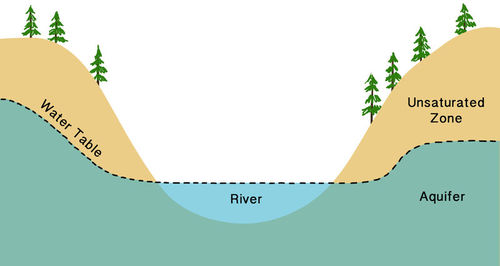
What is the best definition of a water table?
The level to which a river rises when it floods
The boundary between the land and the ocean
The top of the saturated zone in an aquifer
The bottom of the saturated zone in an aquifer
The top of the unsaturated zone in an aquifer
What is infiltration?
The process by which water sinks into the ground
The zone where there are still air spaces left between the particles.
The process by which water vapor turns into liquid water and forms fog or clouds.
The process by which water does not sink into the ground, but rather travels along the surface.

What process causes liquid water to evaporate from plant leaves and enter the atmosphere as water vapor?
evaporation
infiltration
precipitation
transpiration
condensation
Which surface would have the most runoff from it after a rainstorm?


When people remove vegetation, they ____ runoff and the erosion process.
slow down
speed up
decrease
do not affect
What does "potable" mean?
Safe to drink
Frozen
Liquid water
Dirty water
Which of the following is an unsafe material that can be found in drinking water?
Fish
Pathogens
Minerals
None of these
What is water used for in agriculture?
As a pesticide
Cleans crops
Water parks
Irrigation

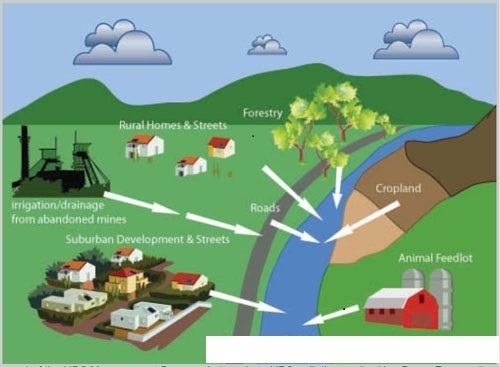
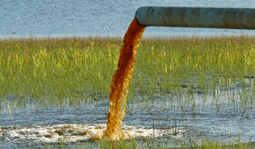

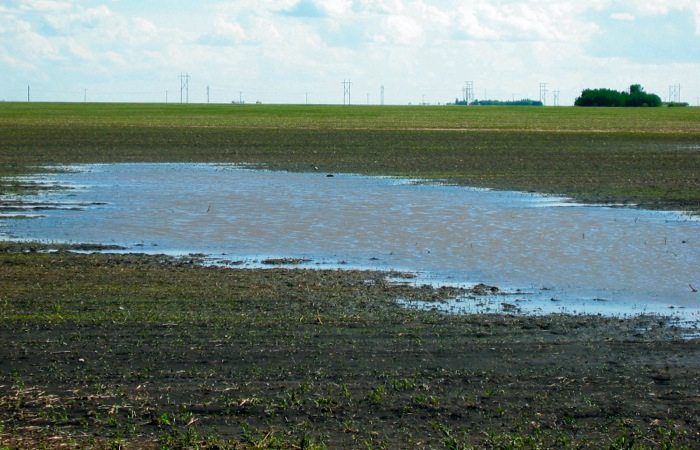
All of the land that supplies water to a particular river systems is included in a(n)
aquifer.
water table.
watershed.
recharge zone.
Which is one way poor use of fertilizers in agriculture can affect the environment?
It can increase the ability of many species to find suitable habitats.
It can cause pollution of water in lakes and rivers.
It can cause an increase in greenhouse gases.
It can reduce the amount of sediment in the local waterways.
Which are the MAIN causes of ocean currents?
winds and differences in ocean water density
sea surface temperature and ocean pH
glacial melting and precipitation over ocean waters
flooding of rivers and deep ocean thermal events
Which situation will most likely result in flooding after heavy periods of rain?
if groundwater levels are low
if groundwater levels are high
if freshwater aquifers are porous
if freshwater aquifers are used for drinking water
In the hydrologic cycle, which process contributes to a decrease in groundwater levels?
infiltration
evaporation
precipitation
condensation
To increase their supply of freshwater, a growing community decides to double the number of wells drilled into the local aquifer. Which could be a result of drilling these wells?
an increase in the amount of water flowing into the aquifer
a decrease in the number of rivers flowing in the area
an increase in arsenic pollution in the water
a subsidence of the ground above the aquifer
Which factors are most likely to cause the water table to rise?
fast-moving surface water and permeable surfaces
slow-moving surface water and permeable surfaces
fast-moving surface water and impermeable surfaces
fast-moving surface water and impermeable surfaces
Which change would have the greatest likelihood of reducing the availability of potable water?
an increase in atmospheric oxygen levels
an increase in human population
a decrease in nuclear energy usage
a decrease in saltwater intrusions
Which process most threatens the wetlands of NC?
purifying water in wetlands
regulating fishing in wetlands
removing vegetation in wetlands
tagging of nonnative species in wetlands
Which is one way the changing of tides supports marine life along the North Carolina coast?
by preventing algae blooms in areas close to land
by attracting deepwater marine life to coastal shorelines
by carrying nutrients to filter feeders, such as oysters and scallops
by transporting atmospheric water vapor between the ocean and coastal shoreline
What will MOST LIKELY happen if a warm ocean current travels north or south from the equator?
The current will become warmer, causing it to become more dense and rise.
The current will become cooler, causing it to become less dense and rise.
The current will become cooler, causing it to become more dense and sink.
The current will become warmer, causing it to become less dense and sink.
If people in an area have limited access to freshwater resources, what will MOST LIKELY result?
an increase in the number of aquifers supplying water to the area
a decrease in sanitation and increase in disease in the area
a decrease in weathering and erosion in the area
an increase in biodiversity in the area
Which is one way surface water may become groundwater?
condensation
evaporation
infiltration
runoff
Which result is MOST LIKELY to occur after excessive withdrawal of groundwater in coastal areas?
increased reliance on irrigation because of drier soil conditions
dilution of brackish water in estuarine ecosystems
reduced efficiency of local desalination facilities
intrusion of salt water into the water table
What will cause an increase in runoff and infiltration in an area?
contouring farmland
a drought
digging wells
excessive rain
What is a possible consequence of the destruction of a marsh?
decreased flooding
decreased filtering of water
increased types of plant life
increased habitat for organisms
What would MOST LIKELY result if more farms were developed along river basins in North Carolina?
an increase in water pollution
an increase in average rainfall
an increase in nonnative species
an increase in severe weather events
From greatest to least, rank the primary uses of freshwater around the world.
personal, industry, agriculture
industry, agriculture, personal
agriculture, industry, personal
industry, personal, agriculture
The best way to reduce groundwater pollution is to
increase the use of groundwater mining.
prevent it from happening.
build more desalination plants.
speed up the eutrophication process.
Which river basin do we live in?
Haw River Basin
Cape Fear River Basin
Neuse River Basin
Alamance Creek River Basin

