wayground logo

Free Printable Worksheets

NEW

Font size

S
M
L
XL
Worksheets

Cells Review

Total questions: 75

Worksheet time: 1hrs 7mins

Name
Class
Date
1.

Who was the scientist that looked at cork under a microscope?

a)

Alfred Wegner

b)

Howard Hess

c)

Robert Hooke

d)

Mattias Schleiden

2.

Robert Hooke named the small compartments that made up the cork __________after the rooms monks lived in.

a)

organelles

b)

membranes

c)

mocroscopes

d)

cells

3.

Cell theory states that...

a)

cells are the basic building block of life

b)

cells are cool

c)

cells are microscopic

d)

cells cannot be destroyed

4.

Cell theory also states that...

a)

bacteria are eukaryotic cells

b)

animals are prokaryotic cells

c)

cells come from other cells (cell division or splitting apart)

d)

cells are awesome!

5.

Lastly cell theory states....

a)

cells don't do much

b)

cells are microscopic

c)

all living things are made up of cells (either unicellular or multicellular)

d)

bacteria aren't cells

6.

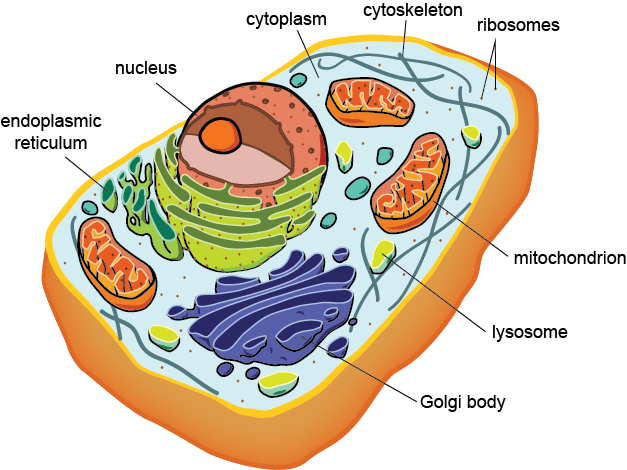
What kind of cell is this?

a)

virus

b)

animal

c)

plant

d)

bacteria

7.

A plant cell is

a)

Eukaryotic

b)

Prokaryotic

8.

Bacteria is

a)

Eukaryotic

b)

Prokaryotic

9.
Which of the following scientists was the first to observe bacteria?
a)
Anton van Leuwenhoek
b)
Matthais Schleiden
c)
Robert Hooke
d)
Theodor Schwann
10.
Which of the following statements is not part of the cell theory?
a)
Cells are the basic unit of structure and function in all living things.
b)
All cells are produced from other cells.
c)
Only animal cells are composed of cells.
d)
All living things are composed of cells.
11.
What is one way in which all living things on Earth are alike?
a)
All living things have hair.
b)
All living things are made of cells and come from other cells.
c)
The cells of all living things have chloroplast.
d)
All living things can move. 
12.
The ___ is the basic unit of sturucture and function of organisms
a)
atom
b)
cell
c)
matter
d)
all other answers are correct
13.
Which statement is a part of the cell theory?
a)
all cells come from preexisting cells
b)
bacteria are prokaryotic cells
c)
eukaryotic cells are complex
d)
humans are multicellular
14.
Robert Hooke, Anton van Leeuwenhoek, Theodor Schwann, Rudolf Virchow, and Matthias Schliden were all responsible for what theory?
a)
The Theory of Gravity
b)
The Theory of Relativity
c)
The Cell Theory
d)
The Theory of Continental Drift
15.
What tool do you use to view the cells?
a)
metric ruler
b)
centrifuge
c)
microscope
d)
pipette
16.
Which scientist did NOT contribute to the cell theory?
a)
Anton Van Leeuwenhoek
b)

Robert Hooke
c)
Albert Einstein 
d)

Matthias Schleiden
17.
Which of the following is NOT one of the basic points of Cell Theory?
a)
All living things are made of cells.
b)
The cell is the smallest living thing that can perform all the functions of life.
c)
Cells are too small to see without a microscope.  
d)
All cells must come from pre-existing cells.
18.
What structures distinguish a plant cell from an animal cell?
a)
Plant cells have cell walls and ribosomes.
b)
Plant cells have cell walls and chloroplasts.
c)
Plant cells have chloroplasts and ribosomes.
d)
Plant cells have chloroplasts and mitochondria.
19.
Which organism is made up of cells that have both a cell membrane and a cell wall?
a)
desert mouse
b)
human
c)
maple tree
d)
zebra
20.
Which statement is true about cells?
a)
Cells are the smallest unit of living material.
b)
Cells are not living structures.
c)
Cells only require sunlight in order to function.
d)
Cells only exist in organisms with body systems.
21.
Which statement would help determine if a cell is a plant or animal cell?
a)
If the cell has a cell wall, it can be an animal cell.
b)
If the cell has a nucleus, then it can only be an animal cell. 
c)
If the cell has a cell wall, it can be a plant cell.
d)
If the cell has a nucleus, then it can only be a plant cell.
22.
Which of the following is a characteristic of both Eukaryotic and Prokaryotic cells?
a)
ribosomes
b)
nucleus
c)
membrane bound organelles
d)
simple
23.
Eukaryotic cells are complex.
a)
true
b)
false
24.
Prokaryotic cells include bacteria.
a)
True
b)
False
25.
Unicellular means
a)
single-celled
b)
unicycle
c)
multi-celled
d)
united cells
26.
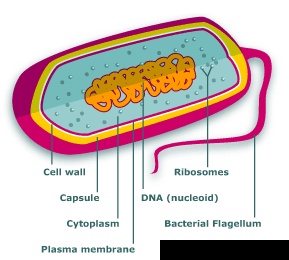
Which type of cell?
a)
Prokaryote
b)
Eukaryote
27.
Has membrane bound organelles
a)
Prokaryote
b)
Eukaryote
c)
both
28.
Which of the following is found inside a prokaryote?
a)
cytoplasm
b)
DNA
c)
ribosomes
d)
all of these
29.
Both prokaryotes and eukaryotes have a nucleus.
a)
True
b)
False
30.
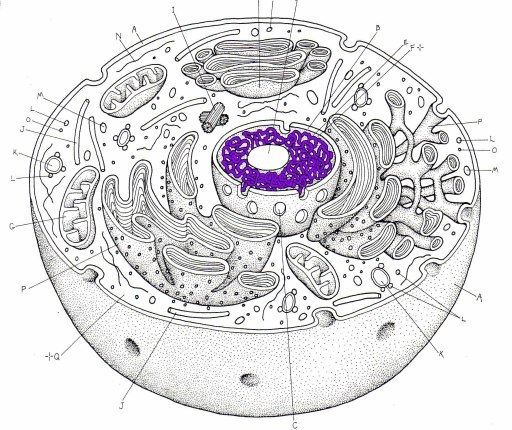
What kind of cell is this?
a)
Eukaryotic
b)
Prokaryotic
31.
Cells can only be seen with the help of a...
a)
hand lens 
b)
magnifying glass
c)
3D glasses 
d)
microscope 
32.
All living things are made of...
a)
atoms 
b)
cells 
c)
bacteria 
d)
plants 
33.
What is multicellular? 
a)
one cell 
b)
no cells 
c)
many cells 
d)
no nucleus 
34.
All cells come from other...
a)
cells 
b)
plants 
c)
nucleus 
d)
microscopes 
35.
Plants and animal cells are examples of ___ cells 
a)
prokaryotic cells 
b)
eukaryotic cells 
36.

Female rabbits generally give birth to 4-12 baby rabbits about 30 days after mating. What type of reproduction does this example represent?

a)

Sexual reproduction

b)

Asexual reproduction

37.

Hydras reproduce by producing buds on the wall of their bodies. The buds grow into mini adults and break away when mature. What type of reproduction does this example represent?

a)

Sexual reproduction

b)

Asexual reproduction

38.

Female baboons give live birth to baby baboons about 180 days (6months) after mating. what type of reproduction does this example represent?

a)

Sexual reproduction

b)

Asexual reproduction

39.

Strawberries produce runners called "stolons" which sprout nodes that grow into identical daughter plants. What type of reproduction does this example represent?

a)

Sexual reproduction

b)

Asexual reproduction

40.

Bacteria, such as E. coli, are able to reproduced every 20 minutes through binary fission. What type of reproduction does this example represent?

a)

Sexual reproduction

b)

Asexual reproduction

41.

California blackworms, also known as mudworms, are able to break apart. Each body section that broke apart is able to become an identical new worm. What type of reproduction does this example represent?

a)

Sexual reproduction

b)

Asexual reproduction

42.
Which organelle belongs in plant cells only?
a)
Cell Membrane
b)
Mitochondrion
c)
Chloroplast
d)
Nucleus
43.
Which organelle belongs in both plant and animal cells?
a)
Cytoplasm
b)
Chloroplast
c)
Large Central Vacuole
d)
Cell Wall
44.
Tiny cell structures that carry out specific functions within the cell.
a)
membranes
b)
nucleus
c)
organelles
d)
animalicules
45.
What shape are most plant cells?
a)
round / irregular
b)
rectangular
46.

Which is the best description of a cell wall's function?

a)

keeps the organelles inside of the cell

b)

holds the cell up and keeps a square shape so the cell can stack on top of each other

c)

responsible for directing the activities of a cell

d)

is responsible for turning carbon dioxide and water into sugars and oxygen

47.

What is the best description of a chloroplasts function?

a)

holds the cell up and keeps a square shape so the cell can stack on top of each other

b)

regulates what comes in and out of the cell

c)

helps to keep the cell's organelles in place

d)

contains chlorophyll, which is molecule that allows the cell to use light energy to turn water and carbon dioxide into sugars and oxygen

48.
The main purpose of the ____________ system is to break food particles into pieces that can be used.
a)
circulatory
b)
respiratory
c)
digestive
d)
skeletal
49.
What is responsible for delivering oxygen and removing carbon dioxide from the body?
a)
cell nucleus
b)
excretory system
c)
nervous tissue
d)
respiratory system
50.
What body system is for support, protection, and creates new blood cells?
a)
skeletal system
b)
muscular system
c)
circulatory system
d)
integumentary system
51.
The circulatory system uses _________ to deliver oxygen to the rest of the body.
a)
blood cells
b)
lungs and nose
c)
blood vessels
d)
brain and spinal cord
52.
What body system makes your body move? 
a)
Circulatory
b)
Respiratory
c)
Skeletal
d)
Muscular
53.
What body system removes the waste from your body? 
a)
Circulatory
b)
Excretory
c)
Digestive
d)
Respiratory
54.
This system carries oxygen, nutrients and waste around the body.
a)
Lymphatic
b)
Urinary
c)
Respiratory
d)
Circulatory
55.
What is the main function of the respiratory system?
a)
to provide oxygen and remove carbon dioxide from the body
b)
to bring oxygen to the body
c)
to break down food and absorb nutrients
d)
to remove oxygen from the body and deliver carbon dioxide
56.
What is the function of the digestive system?
a)
to break down and absorb nutrients
b)
to support and protect our bodies
c)
to produce vitamin D
d)
to help us move
57.
The main function of the excretory system is....
a)
To filter waste from the blood stream and carry it outside of the body.
b)
To transport nutrients to the body.
c)
To break down nutrients for absorption.
d)
To provide structure and support for the body.
58.
Your skin and hair are parts of your ___________
a)
endocrine system
b)
excretory system
c)
lymphatic system
d)
integumentary system
59.
The skin is the major organ in which system?
a)
Integumentary
b)
Muscular
c)
Endocrine
d)
Immune
60.
Which system uses hormones to regulate body activities?
a)
Integumentary
b)
Urinary
c)
Endocrine
d)
Immune
61.
Energy due to motion is ____________ energy. 
a)
Potential 
b)
Energy
c)
Kinetic
d)
Friction
62.
The faster an object moves, the ________ kinetic energy it has. 
a)
more
b)
less
c)
none of the above
d)
all of the above 
63.
__________ is stored energy. 
a)
Potential
b)
Kinetic
c)
None of the above 
d)
All of the above 
64.
What kind of energy is in a rock at the edge of a cliff?
a)
Potential
b)
Kinetic
65.
What kind of energy is in a moving skateboard?
a)
Potential
b)
Kinetic
66.
What kind of energy is in a stretched rubber band?
a)
Potential
b)
Kinetic
67.
Energy can not be created or destroyed, only converted from one form to another.
a)
true
b)
false
68.
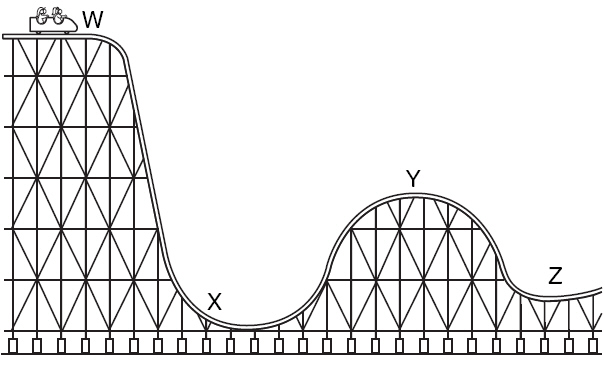
At which point is potential energy greatest?
a)
W
b)
X
c)
Y
d)
Z
69.
At which point is kinetic energy greatest? 
a)
W
b)
X
c)
Y
d)
Z
70.
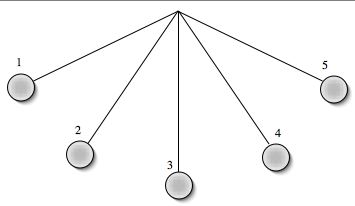
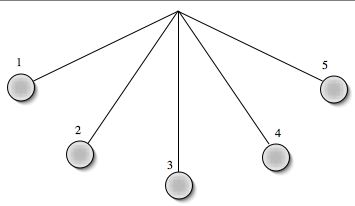
When a pendulum swings, at which point is kinetic energy highest?
a)
1
b)
2
c)
3
d)
4
71.
When a pendulum swings, at which point is potential energy at its greatest?
a)
1
b)
2
c)
3
d)
4
72.
What kind of energy is in a person climbing a ladder?
a)
Potential
b)
Kinetic
c)
Both
73.
Energy can be _____________ or changed from one type to another.
a)
destroyed
b)
transferred
c)
created
d)
ignored
74.
What would have the greatest kinetic energy?
a)
A car driving down a hill.
b)
A person running down a hill. 
c)
A ball rolling down a hill. 
d)
leaves rolling down a hill 
75.
Which is an example of potential energy?
a)
a roller coaster speeding down a hill
b)
the pulled back string on an archers's bow
c)
releasing the strings on a guitar
d)
an electric current lighting a light bulb