wayground logo

Free Printable Worksheets

NEW

Font size

S
M
L
XL
Worksheets

Earth Science MSTEP Review

Total questions: 63

Worksheet time: 1hrs 3mins

Name
Class
Date
1.

What is weathering?

a)

The movement of sediment

b)

The breaking of sediment

c)

The dropping of sediment

2.

What is erosion?

a)

The movement of sediment

b)

The breaking of sediment

c)

The dropping of sediment

3.

All the water on Earth is known as...

a)

sediment

b)

lithosphere

c)

hydrosphere

4.

Small pieces of rock that have been weathered from a larger rock are known as...

a)

sand

b)

sediment

c)

soil

5.

The scientific term for land, crust or rock is...

a)

hydrosphere

b)

dirt

c)

lithosphere

6.
What is groundwater?
a)
any form of liquid water
b)
water that is not moving
c)
water on Earth's surface
d)
water below Earth's surface
7.

Which of these is an example of erosion?

a)

Light shinning onto a mountain

b)

Rain breaking down rock

c)

Wind blowing away sediment

d)

All of the above

8.
How does freezing water cause the weathering of rocks?  The freezing water—
a)
keeps the rocks in place
b)
makes the rocks last longer
c)
expands cracks and breaks rocks
d)
causes rocks to fall in landslides
9.
Which agents  break down earth materials?
a)
wind only
b)
earthquakes and gravity
c)
ice and 007
d)
wind, water, and ice
10.
What is an enormous mass of ice moving over land?
a)
Ice wedging
b)
Glacier
c)
Iceberg
d)
Dune
11.
Wind blowing sand from one location to another
a)
Weathering
b)
Erosion
c)
Deposition
12.
Glaciers shape and carve away the land beneath them and can drastically reshape the landscape over hundreds or even thousands of years.
a)
True
b)
False
13.
Most earthquakes happen along the _________________. 
a)
coast
b)
faults
c)
desert
d)
directions
14.
Earthquakes under the water can cause _________________________________.
a)
tornadoes
b)
tsunamis
c)
lightening
d)
hailstorms
15.
Many earthquakes happen along the borders of...
a)
Countries
b)
Tetonic Plates
c)
Climate Zones
d)
None of the above.
16.
This earthquake is......?
a)
Convergent
b)
Transform
c)
Divergent
d)
Rift Zone
17.
This earthquake is......?
a)
Convergent
b)
Transform
c)
Divergent
d)
Rift Zone
18.
What is the vocabulary word for the movement on the surface of the Earth resulting from underground movement between two plates?
a)
An Earthquake
b)
Shaking Earth
c)
Volcano
19.
What are the puzzle pieces of the Earth's surface called?
a)
Tectonic plates
b)
Puzzles
c)
Earthquakes
20.
What occurs when two plates move, bump or slide past each other?
a)
An Earthquake
b)
Nothing
c)
Movement
21.
What are the two types of earthquake waves?
a)
P and S waves
b)
Surface and Underground waves
c)
Fast and Slow waves
22.
What are the three types of plate boundaries?
a)
Transform, Convergent, Divergent
b)
Apart, Together, Slide
c)
Slide, Pull away, Push together
23.
What is the definition of dormant?
a)
sleeping
b)
extinct
c)
active
d)
invisible
24.
What are scientists that study volcanoes called?
a)
doctor
b)
vet
c)
volcanologist
d)
volcano scientist
25.
A volcano that has gentle sloping sides and is formed from runny lava
a)
Shield volcano
b)
Cinder cone
c)
Composite
d)
None of these
26.
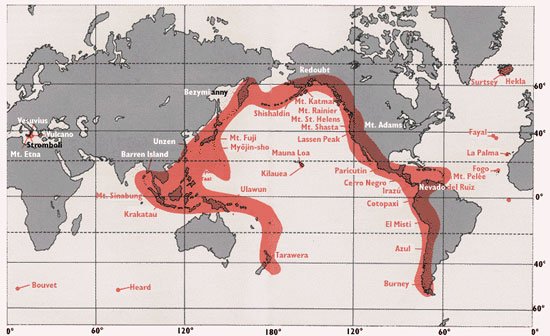
This is the name for the chain of volcanos around the edge of the Pacific Plate.
a)
Circle of Fire
b)
Ring of Lava
c)
Ring of Fire
d)
Circle of Magma
27.
A volcano that has steep sides and is formed from lava chunks is called
a)
a shield volcano
b)
a cinder cone volcano
c)
a composite volcano
28.
A volcano that is made from layers of both runny lava and lava chunks is called 
a)
a shield volcano
b)
a cinder cone volcano
c)
a composite volcano
29.
Dormant volcanoes might erupt in the future.
a)
True
b)
False
30.
Volcanoes are found...
a)
on land
b)
under water
c)
on islands
d)
all of the above
31.
Coriolis effect
a)
caused by Earth's rotation
b)
caused by Earth's revolution
c)
caused by Earth's tilt
d)
caused by Earth's winds
32.
Source of all energy in our atmosphere
a)
ions
b)
water cycle
c)
The Moon
d)
The Sun
33.
Convection
a)
transfer of heat by flow
b)
transfer of heat by touch
c)
transfer of heat by waves and rays
d)
transfer of heat by wind
34.
Conduction
a)
transfer of energy by flow
b)
transfer of energy by touch
c)
transfer of energy by waves and rays
d)
transfer of energy by wind
35.
Australia is in the ____ hemisphere. 
a)
northern
b)
southern
36.
The next season in the Northern hemisphere after spring is ____. 
a)
fall
b)
summer
c)
winter
37.
Object spinning on its axis. 
a)
revolution
b)
rotation
38.
Object orbiting another object. 
a)
revolution 
b)
rotation
39.
Longest day of the year
a)
Autumnal Equinox
b)
Summer Solstice 
c)
Winter Solstice
d)
Vernal Equinox
40.
Shortest day of the year
a)
Autumnal Equinox
b)
Summer Solstice 
c)
Winter Solstice
d)
Vernal Equinox
41.
23.5 degrees
a)
axis
b)
day
c)
tilt
d)
rotation
42.
First day of spring
a)
Autumnal Equinox
b)
Summer Solstice 
c)
Winter Solstice
d)
Vernal Equinox
43.
First day of fall
a)
Autumnal Equinox
b)
Summer Solstice 
c)
Winter Solstice
d)
Vernal Equinox
44.
One year is...
a)
355 days
b)
355 1/4 days
c)
365 days
d)
365 1/4 days
45.
If its ____ in the Northern hemisphere, then its fall in the Southern hemisphere. 
a)
spring
b)
summer
c)
fall
d)
winter
46.
The hemisphere where you live
a)
northern
b)
southern
47.
How long is a day on earth?
a)
22 hours
b)
365 days
c)
12 hours
d)
24 hours
48.
What are the reasons for the season?
a)
Earth's tilt & rotation
b)
Earth's tilt & revolution
c)
Earth's rotation & rovolution
d)
Earth's tilt & resolution
49.
The earth orbits around the _________
a)
sun
b)
moon
c)
other planets
d)
solar system
50.
Day & night are caused by the ______________ of earth on its axis
a)
revolution
b)
orbit
c)
rotation
d)
tilt of the axis
51.
Which season have the same amount of daylight hours?
a)
Spring & Fall
b)
Winter & Summer
c)
None of the seasons have equal daylight hours
d)
All are equal
52.
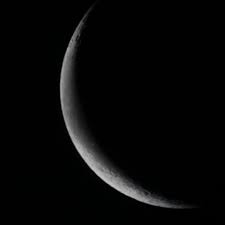
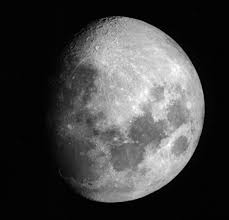
Name the moon phase
a)
waning crescent
b)
waxing crescent
c)
waning gibbous
d)
waxing gibbous
53.
Name the moon phase
a)
waning crescent
b)
waxing crescent
c)
waning gibbous
d)
waxing gibbous
54.
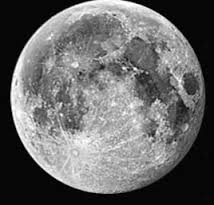
Name the moon phase
a)
First Quarter
b)
Last Quarter
c)
New Moon
d)
Full Moon
55.

When the sun gets higher in the sky, shadows get ______.

a)

longer

b)

gone

c)

shorter

d)

darker

56.

When the sun gets lower in the sky, shadows get______.

a)

longer

b)

gone

c)

shorter

d)

darker

57.

Shadows are longest during _______.

a)

morning and evening

b)

noon

c)

night

58.

Shadows are shortest around______.

a)

morning and evening

b)

noon

c)

night

59.

The sun appears to __________.

a)

rise in the east, set in the west

b)

rise in the west, set in the east

60.
Where does the sun rise? 
a)
North
b)
South
c)
East
d)
West
61.
Where does the sun set? 
a)
North 
b)
South
c)
East
d)
West
62.

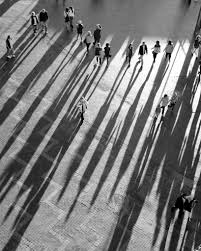
When was this picture most likely taken?

(Hint: think about the shadow's length)

a)

morning or evening

b)

night

c)

noon

d)

afternoon

63.

What do shadows on Earth help show?

a)

Earth's rotation

b)

Earth's revolution

c)

Earth's equator

d)

Earth's axis