wayground logo

Free Printable Worksheets

Font size

S
M
L
XL
Worksheets

Biology - Spring Midterm Review - FLS 2019

Total questions: 100

Worksheet time: 2hrs 33mins

Name
Class
Date
1.
A possible explanation to a problem that has not yet been tested. 
a)
data
b)
theory
c)
hypothesis
d)
fact
2.
This variable in an experiment is the one being deliberately changed by the scientist. 
a)
dependent variable
b)
independent variable
c)
data
d)
control group
3.
What step does every scientific experiment begin with?
a)
hypothesis
b)
question/problem
c)
procedures
d)
conclusion
4.
The summary at the end of an experiment that explains the results. 
a)
conclusion
b)
procedures
c)
materials
d)
responding variable
5.
Testing a hypothesis often involves a(n):
a)
answer
b)
experiment
c)
problem
d)
safety check
6.

How close a measurement is to the true value is called..

a)

Accuracy

b)

Precision

c)

Significant

d)

Estimate

7.
When a measurement is repeatable and consistent it is said to have...
a)
High precision
b)
Low precision
c)
High accuracy
d)
Low accuracy
8.
Which of the following is NOT a unit in the SI system of units?
a)
kilogram
b)
second
c)
inch
d)
meter
9.
Part 9
a)
Body tube
b)
Eyepiece
c)
Objective
d)
Light Source
10.
Part 10
a)
Stage
b)
Arm
c)
Base
d)
Diaphragm
11.
Part 11
a)
Stage Clips
b)
Stage
c)
Diaphragm
d)
Illuminator
12.

Uses words to describe an observation (senses)

a)

Qualitative Observation

b)

Quantitative Observation

c)

International System of Units

d)

Significant Digits

13.

What is this kind of graph called?

a)

line plot

b)

line graph

c)

bar graph

d)

frequency table

14.

What is missing from this graph? Select all that apply.

a)

Graph title

b)

Y-axis title

c)

X-axis title

d)

Units

15.
What type of graph is this?
a)
Line Graph
b)
Pictograph
c)
Bar Graph
d)
Histogram
16.
What type of graph is this?
a)
Bar graph
b)
Histogram
c)
Pie Chart
d)
Stem Chart
17.
In order for something to be considered a living organism, it must display _____ of the eight characteristics of living things.
a)
all
b)
some
c)
one
d)
more than half
18.
Which of the following is NOT a characteristic shared by all living organisms?
a)
Ability to move
b)
Ability to grow and develop
c)
Made up of one or more cells
d)
Responds to stimuli
19.

Maintaining a stable internal

environment is called

a)

homeostasis

b)

equilibrium

c)

balance

d)

evenness

20.
An organism is another name for a(n) _____________ factor, or living thing.
a)
biotic
b)
abiotic
21.
Temperature and sunlight would be examples of ____________ factors within an environment.
a)
abiotic
b)
biotic
22.
Which of the following molecules is responsible for carrying and transmitting genetic information
a)
DNA
b)
Lipids
c)
Proteins
d)
Carbohydrates
23.
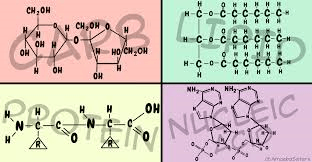
Which biomolecule is also known as enzymes?
a)
Carbohydrate
b)
Lipid
c)
Nucleic Acid
d)
Protein
24.
Which biomolecule is made of nucleotides and contain you DNA?
a)
Carbohydrate
b)
Lipids
c)
Protein
d)
Nucleic Acid
25.
Which biomolecule is responsible for insulation and energy storage?
a)
Protein
b)
Nucleic Acid
c)
Lipid
d)
Carbohydrate
26.
Which biomolecule is your main source of quick energy?
a)
Nucleic Acid
b)
Protein
c)
Lipid
d)
Carbohydrate
27.
What elements are common to all 4 biomolecules?
a)
Carbon, hydrogen, nitrogen
b)
Carbon, Nitrogen, Phosphorus
c)
Carbon, Hydrogen, Oxygen
d)
Carbon, Hydrogen, Phosphorus
28.
The positive particles of an atom are 
a)
electrons 
b)
positrons 
c)
neutrons 
d)
protons 
29.
Particles in an atom that are neutral and have no charge are 
a)
negatrons 
b)
electrons 
c)
neutrons 
d)
protons 
30.
The subatomic particle with a negative charge is the
a)
electron
b)
proton
c)
neutron
d)
nucleus 
31.
the central region of an atom where its neutrons and protons are is its 
a)
nucleus 
b)
electron cloud
c)
core 
d)
center 
32.
What two elements make up water?
a)
Helium and oxygen
b)
Hydrogen and oxygen
c)
helium and carbon
d)
oxygen and carbon
33.

A insect like a water strider can skate along the top of a pond because:

a)

covalent bonds result in water cohesion

b)

hydrogen bonds result in water cohesion (surface tension)

c)

low surface tension of water

34.
What word describes when water is attracted to other substances?
a)
cohesion
b)
adhesion
c)
capillary action
d)
surface tension
35.
Attractions between the negative Oxygen atom of one water molecule and the positive Hydrogen atom of another water molecule are called
a)
Covalent bonds
b)
Ionic bonds
c)
Polar bonds
d)
Hydrogen bonds
36.
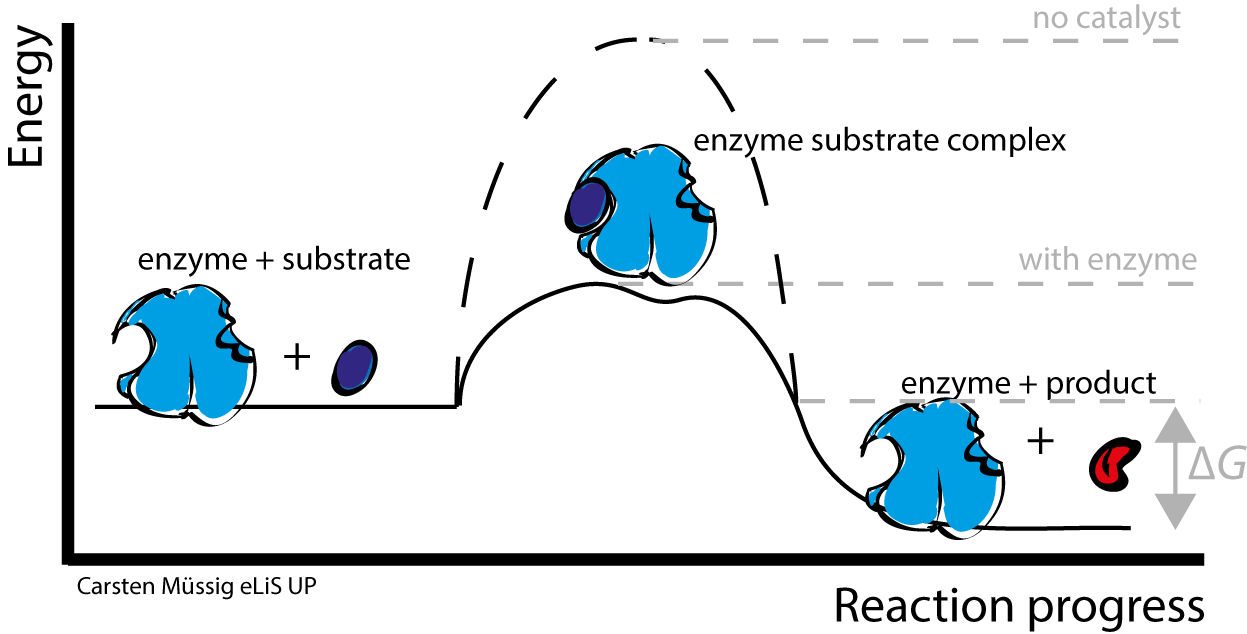
An enzyme speeds up a reaction by
a)
lowering the activation energy.
b)
raising the activation energy.
c)
releasing energy.
d)
absorbing energy.
37.
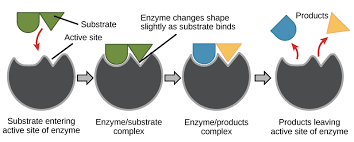
In a chemical reaction, a reactant binds to an enzyme at a region known as the
a)
catalyst.
b)
product.
c)
substrate.
d)
active site. 
38.
Chemical reactions always involve
a)
the breaking of bonds in reactants.
b)
the formation of new bonds in products.
c)
the breaking of bonds in reactants and the formation of new bonds in products.
d)
enzymes. 
39.
An enzyme is a 
a)
Protein
b)
Carbohydrate
c)
Lipid
d)
Nucleic Acid
40.

The system that contains all living things on Earth.

a)

Biosphere

b)

Atmoshpere

c)

Hydrosphere

d)

Geosphere

41.

The effects of people and their actions on the biosphere is called

a)

human impact

b)

biome

c)

environmental change

42.

Regions of the planet with similar types of life and climates are called

a)

biomes

b)

kingdoms

c)

spheres

d)

systems

43.

Lush tropical region that receives lots of rainfall and supports a wide variety of life.

a)

rainforest

b)

desert

c)

tundra

d)

temperate forest

44.

A community of organisms and their abiotic environment.

a)

Environment

b)

Biosphere

c)

Ecosystem

d)

Community

45.

All the non-living things in an environment

a)

Biotic

b)

Biome

c)

Abiotic

d)

Biosphere

46.
What is the ultimate energy source for most life on Earth? 
a)
sunlight
b)
moonlight
c)
oxygen
d)
air
47.
What is another name for autotrophs? 
a)
producers
b)
secondary producers
c)
primary producers
d)
first producers
48.
What captures light energy and uses it to power chemical reactions 
a)
synthesis
b)
photosynthesis
c)
chemosynthesis
49.
What must get energy from other organisms by consuming them? 
a)
heterotrophs
b)
primary producer
c)
autotrophs
d)
categories
50.
What kills and eats only other meat animals? 
a)
omnivores
b)
herbivores
c)
carnivores
d)
detritivores
51.
What eats the carcasses of animals that have already been killed? 
a)
herbivores
b)
carnivores
c)
scavengers
d)
omnivores
52.
shows a series of organisms that eat other organisms.  *It follows a strait line, like a rope
a)
food chain
b)
food web
c)
energy pyramid
53.
is made up of many food chains in an ecosystem.  *It branches out and connects many organisms
a)
food chain
b)
food web
c)
energy pyramid
54.
Energy is lost at every step of the food chain. Each organism only passes on _____%.
a)
50
b)
90
c)
10
d)
100
55.
Which of the following best explains why matter must travel through cycles?
a)
There is an unlimited amount of matter in the universe, so it can take on any form at any time
b)
There is a fixed amount of matter in the universe, so it must take on different forms at different times
56.
What is another name for evaporation of water through the leaves of plants?
a)
Transpiration
b)
Condensation
c)
Precipitation
d)
Percolation
57.
What is the process by which a gas changes to a liquid?
a)
Percolation
b)
Evaporation
c)
Condensation
d)
Precipitation
58.
Rain, sleet, snow, and hail are all forms of _____.
a)
Percolation
b)
Evaporation
c)
Condensation
d)
Precipitation
59.
Approximately 78% of the Earth's atmosphere is made up of ____.
a)
Oxygen
b)
Water
c)
Carbon Dioxide
d)
Nitrogen
60.
Many nitrogen fixing bacteria are found in the roots of plants.  The plants receive fixed nitrogen and the bacteria receive nutrients from the plant.  This is an example of which type of symbiotic relationship?
a)
Competition
b)
Mutualism
c)
Parasitism
d)
Commensalism
61.
What process returns nitrogen back to the atmosphere?
a)
Nitrogen fixation
b)
Elimination
c)
Denitrification
d)
Digestion
62.
Greenhouse gases...
a)
make plants green
b)
trap heat from the sun
c)
produce oxygen
d)
decrease the earth's temperature
63.
The biggest factor in determining climate is?
a)
elevation
b)
an ocean
c)
latitude
d)
mountain
64.
What is climate?
a)
What's happening in space at a time and place.
b)
What's happening in our atmosphere at a time and place
c)
The average weather over many years
d)
The average temperature over many years.
65.
The seasons are caused by___________?
a)
The direction the Earth's axis is tilted toward the sun
b)
Tropical Storms
c)
Changes in the moon
d)
The Earth's rotation on its axis
66.
Which of the following does NOT have an affect on a region's climate?
a)
Large bodies of water
b)
Latitude
c)
Mountains
d)
Longitude
67.
Which BEST describes why latitudes closest to the equator have warmer climates?
a)
they are at lower elevations
b)
they receive more solar energy
c)
they are nearer to ocean currents
d)
they get more winds that carry energy in the form of heat
68.
What are the 3 major climate zones in order from equator to the poles?
a)
polar, temperate, tropical
b)
tropical, temperate, polar
c)
temperate, polar, tropical
69.

What are the two main factors that determine the climate of an area?

a)

precipitation and humidity

b)

temperature and air pressure

c)

wind conditions and humidity

d)

temperature and precipitation

70.

The ecological role an organism performs in their specific environment is considered the organism's...

a)

Habitat

b)

Population

c)

Biome

d)

Niche

71.
The ecological niches of three bird species are shown in the diagram. What is the advantage of each bird species having a different niche?
a)
As more birds feed higher in the tree, available energy increases.
b)
More abiotic resources are available for each bird.
c)
Predators are less likely to feed on birds in a variety of locations.
d)
There is less competition for food.
72.

What is a keystone species?

a)

A species that helps to hold an ecosystem together

b)

A species that lives in or around rocks

c)

Keys and stones have nothing to do with ecology

d)

A keystone isn't a living thing, it's just a stone

73.

Barnacles create a home by attaching themselves to the skin of a whale. The barnacle is a filter feeder and obtains food as it rides on the whale. The whale is not affected.

a)

Mutualism

b)

Commensalism

c)

Parasitism

d)

Not Symbiosis

74.

Fleas obtain nutrients by feeding on the blood of a dog.

a)

Mutualism

b)

Commensalism

c)

Parasitism

d)

Not Symbiosis

75.
A plover bird eats parasites off a crocodile’s skin.  The crocodile provides the plover protection from predators. 
a)
Mutualism
b)
Commensalism
c)
Parasitism
d)
Not Symbiosis
76.
succession that occurs in an area with no soil
a)
ecological succession 
b)
primary succession 
c)
secondary succession
d)
pioneer speciles
77.
succession that occurs in an area where soil is already present
a)
ecological succession 
b)
primary succession 
c)
secondary succession
d)
pioneer speciles
78.
How do lichens contribute to primary succession?
a)
Lichens decompose organic matter from animals and plants
b)
Lichens begin to break down rock to form soil
c)
Lichens are nitrogen fixing bacteria
d)
Lichens convert carbohydrates into fossil fuels.
79.
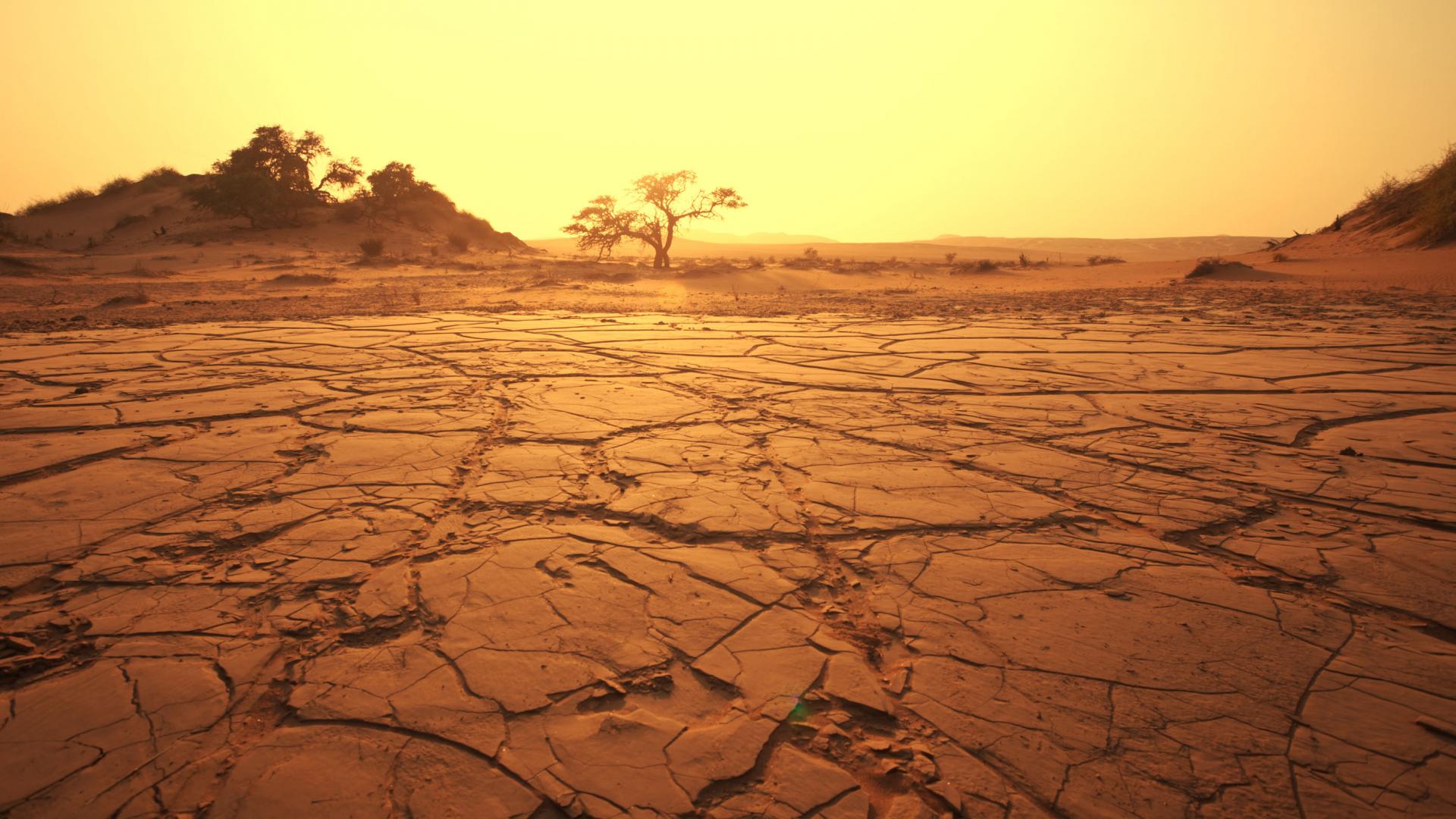
Which biome is the driest?
a)
Desert
b)
Tundra
c)
Taiga
d)
Rainforest
80.

Which Biome has permafrost?

a)

Temperate Forest

b)

Rainforest

c)

Taiga

d)

Tundra

81.
Which biome has deciduous trees (which lose their leaves)?
a)
Temperate Forest
b)
Rainforest
c)
Grasslands
d)
Taiga
82.

Which biome has coniferous trees (which don't lose their leaves)?

a)

Taiga

b)

Temperate Forest

c)

Tundra

d)

Grasslands

83.
Which biome has wide-open fields of grass?
a)
Taiga
b)
Grasslands
c)
Temperate Forest
d)
Rainforest
84.
Which biome has the most variety of plants and animals?
a)
Temperate Forest
b)
Rainforest
c)
Tundra
d)
Grasslands
85.

What is at the base of the food chain in the ocean?

a)

whales

b)

plankton

c)

turtles

d)

seaweed

86.

Which factor(s) affect aquatic ecosystems?

a)

depth

b)

flow

c)

dissolved nutrients

d)

temperature

e)

none of these

87.
What point on the graph represents the carrying capacity?
a)
A
b)
B
c)
C
d)
D
88.
What does the graph represent?
a)
Emigration
b)
Exponential growth
c)
Immigration
d)
Logistic Growth
89.
The three types of biodiversity are
a)
genetic, species and ecosystem
b)
medical, agricultural, ethical
c)
habitat loss, pollution, overharvesting
d)
camera traps, invasive species, cookies
90.

What point on the graph represents exponential growth?

a)

A

b)

B

c)

C

d)

D

91.
Competition, disease, predation, and parasitism are considered ___________ ____________ limiting factors
a)
Density-dependent
b)
Density-independent
92.

Natural disasters and weather patterns like earthquakes, floods, and tornadoes, blizzards, and heatwaves are considered ___________ ____________ limiting factors

a)

Density-dependent

b)

Density-independent

93.
The human population experienced exponential growth just after
a)
agriculture began.
b)
plowing and irrigation began.
c)
the bubonic plague began.
d)
the Industrial Revolution began.
94.
Demographic transition is change from high birthrates and high death rates to
a)
exponential growth.
b)
low birthrates and low death rates.
c)
low birthrates and high death rates.
d)
indefinite growth.
95.

Using Figure 5–6, describe the type of growth Mexico is experiencing.

a)

Mexico is experiencing a rapid growth rate because there are more children than adults.

b)

Mexico is experiencing no growth because people are living longer.

c)

Mexico is experiencing slowed growth because there are fewer adults.

d)

Mexico is experiencing a rapid decline because there are more children than adults.

96.

What evidence do you see in Figure 5–6 that the United States is gradually entering the last stage of demographic transition?

a)

The age structure for the US has fewer children in the younger age categories

b)

The age structure for the US has fewer adults in the middle age categories

c)

The age structure for the US has greater numbers in the 15-19 age category

d)

The age structure for the US shows females living longer than males.

97.

Refers to the increasing changes in the measures of climate over a long period of time - including precipitation, temperature, and wind patterns.

a)

climate change

b)

deforestation

c)

global warming

d)

invasive species

98.

An organism (plant, animal, fungus, or bacterium) that is not native and has a negative effect on an ecosystem.

a)

deforestation

b)

climate change

c)

global warming

d)

invasive species

99.

What human activities have transformed the biosphere?

a)

Agriculture

b)

Development

c)

Industry

d)

Fishing

e)

Music

100.

Which of the following are the three renewable resources that need to be used wisely in order for life on Earth to continue?

a)

Soil resources

b)

Water resources

c)

Atmospheric resources

d)

Fossil fuel resources