Wayground logo

Free Printable Worksheets

Font size

S
M
L
XL
Worksheets

6th Grade: Semester 1 Review

Total questions: 140

Worksheet time: 2hrs 12mins

Name
Class
Date
1.
You are doing an experiment recording the growth of plants under different amounts of sunlight. What is the dependent variable?
a)
The sunlight
b)
The growth
c)
The experiment
d)
The amounts of photons
2.
The variable that causes a change is the
a)
constant
b)
independent variable
c)
dependent variable
d)
control
3.
The variable that is the result of the experiment is the 
a)
constant
b)
independent variable
c)
dependent variable
d)
control
4.
A variable that never changes is known as a 
a)
constant
b)
independent variable
c)
dependent variable
d)
control
5.
"Will ice melt faster in salt water?", is an example of a
a)
Hypothesis
b)
Question
c)
Dependent variable
d)
Control
6.
"Ice will melt faster in salt water.", would make a good
a)
Hypothesis
b)
Question
c)
Analysis
d)
Conclusion
7.
What is the independent variable for the hypothesis: If ice melts in salt & fresh water, then it will melt faster in salt water.
a)
The amount of water
b)
The melt time
c)
The size of the ice cube
d)
The amount of salt
8.
What is the dependent variable for the hypothesis: If ice melts in salt & fresh water, then it will melt faster in salt water.
a)
The melt time
b)
The amount of salt
c)
The fresh water
d)
The size of the beaker
9.
A student wants to test the effects of type of exercise on heart rate.  What is the dependent variable?
a)
heart rate
b)
type of exercise
c)
amount of exercise
d)
time of day exercise occurs
10.
What is a constant variable for the hypothesis: If ice melts in salt & fresh water, then it will melt faster in salt water.
a)
The amount of salt
b)
The melt Time
c)
The fresh water.
d)
The temperature of the water
11.
How many manipulated variables does an experiment have?
a)
0
b)
1
c)
between 1 and 5
d)
as many as needed
12.
The variable that is being tested or changed
a)
independent variable
b)
dependent variable
c)
control variable
13.
Mr. S. sets up an experiment to see how the mass of a ball affects the distance it rolls off a ramp.  Identify the independent variable.
a)
distance traveled by the ball
b)
height of the ramp
c)
mass of the ball
d)
weight of the ball
14.
An experiment is performed on plants to see how different liquids affect plant growth. Each plant in the experiment is given a different liquid; water, apple juice, or milk. Each plant has the same amount of soil, sunlight, and listens to the same music. In this investigation, what is the dependent variable?
a)
Type of plant
b)
Water, apple juice, milk
c)
Plant growth
15.
When experimenting with the growth of a plant, a scientist uses three (of the same type of) plants, two different fertilizers, equal light, and equal water. What type of variable is the fertilizer?
a)
Dependent
b)
Independent
c)
Control
d)
Compound
16.
The educated guess you make at the beginning of the scientific method is called the....
a)
variable
b)
conclusion
c)
hypothesis
d)
procedure
17.
The variable that is being measured
a)
independent variable
b)
dependent variable
c)
control variable
18.
Mr. S. normally uses praise as a reward to train his dog.  He wants to know the best way to train his dog, so he sets up an experiment to find out if there is a better way to get his dog to respond to commands. What is his independent variable?
a)
amount of times the dog follows the command
b)
type of reward
c)
 praise
d)
type of dog
19.
If plants are exposed to sunlight, then they will grow taller.
What part of the scientific method is this an example of?
a)
Procedure
b)
Hypothesis
c)
Question
d)
Results
20.
Which scientific instrument would best be used to measure a small distance?
a)
Ruler
b)
Stopwatch
c)
Balance
d)
Pipette
21.
Information that you gather with your senses is called
a)
an opinion
b)
a question
c)
a belief
d)
an observation
22.
Which is the BEST way to identify a qualitative observation? 
a)
Look for words, pictures or diagrams
b)
Look for words such as see, hear, touch, smell, and taste.
c)
Look for units such as meters or liters.
d)
Look for number words such as more than, fewer, and none.
23.
Which is NOT the way to identify a quantitative observation?
a)
Look for words that describe things.
b)
Look for words that have to do with measuring and units, like centimeters and inches. 
c)
Look for something that was counted.
d)
Look for number words such as more than, fewer, and none.
24.
Which of these is a qualitative observation?
a)
The boy is 5 feet tall.
b)
There are six birds in the tree.
c)
The birds are tiny.
d)
There are more blue birds than black birds. 
25.
Which of these is NOT a scientific observation?
a)
All birds have feathers.
b)
Some birds have colorful feathers.
c)
There are many different types of birds.
d)
Birds are a great pet.
26.
What type of tool would you use to make a qualitative observation? 
a)
telescope
b)
ruler
c)
thermometer
d)
rain guage
27.
What tool do you use to separate white light into the visible spectrum?
a)
prism
b)
binoculars
c)
telescope
d)
anemometer
28.
What tool do you use to measure wind speed?
a)
prism
b)
binoculars
c)
telescope
d)
anemometer
29.
What tool do you use to reflect light?
a)
prism
b)
binoculars
c)
telescope
d)
mirror
30.
What statement is an inference?
a)
There are two fish in the bowl.
b)
They are eating their food.
c)
They like their food.
d)
Both fish are blue.
31.
Why do scientists conduct experiments?
a)
To make a lot of money.
b)
To ask a question. 
c)
To make a hypothesis.
d)
To prove a prediction is correct.
32.
What are the steps in the Scientific Method?
a)
Ask a Question, Make a Hypothesis, Do Background research, Conduct an Experiment, Analyze your data, Report your results. 
b)
Ask a Question, Make a Hypothesis, Analyze your data, Do Background research,  Conduct an Experiment,  Report your results. 
c)
Ask a Question, Do Background research, Make a Hypothesis, Conduct an Experiment, Analyze your data, Report your results. 
d)
Ask a Question, Do Background research, Conduct an Experiment, Make a Hypothesis, Analyze your data, Report your results. 
33.
An experiment is a when scientists test their hypothesis, or prediction. They carefully plan their test, and decided what the variables will be. A controlled variable are the factors that 
a)
will change in the experiment.
b)
will stay the same in the experiment.
34.
The responding variable is the factor that will change based on what happens to the 
a)
controlled variables 
b)
manipulated variable
35.
What does a line graph do?
a)
Show change over time.
b)
Collect categorical data.
c)
Compare quantities.
d)
Measure quantities. 
36.
If a student spills something when they are conducting an experiment they should
a)
clean it up quickly.
b)
tell their teacher.
c)
ask another student to help them clean it up.
d)
tell another student to clean it up.
37.
When you are conducting experiments you should do all of the following except
a)
wear safety equipment like goggles, gloves, and an apron.
b)
listen to the teacher, and read all of the directions and procedures before you start.
c)
make sure you understand what you are doing, and ask any questions you may have. 
d)
Make sure that you have all your materials, a snack, and something to drink.
38.
Why do scientists write down everything they do when they conduct experiments including the materials they use, the procedure they follow, and the results they concluded. 
a)
In case other scientists want to check their work.
b)
To make sure they did everything correctly.
c)
Their boss wants to see all of their work.
d)
To make sure they do everything correctly.
39.

Kinetic energy is the energy of

a)

movement.

b)

heat.

c)

storage.

d)

teachers throwing chairs at students who just won't stop talking no matter how much they ask.

40.

Potential energy

a)

is the energy of motion.

b)

causes objects to move toward each other.

c)

is the flow of electrons.

d)

is stored energy.

41.

Electrical energy

a)

is the flow of electrons.

b)

is a form of potential energy.

c)

is a form of thermal energy.

d)

cannot cause a change.

42.

Nuclear energy

a)

is a form of matter.

b)

is the energy stored in and released from the nucleus of an atom.

c)

cannot cause a change.

d)

is only found in radioactive materials.

43.

Chemical energy

a)

cannot be produced outside of a laboratory.

b)

is seen in a moving baseball.

c)

is the energy stored in the bonds between atoms.

d)

is the energy of motion.

44.

Kinetic energy

a)

is the energy of motion.

b)

can be converted from potential energy.

c)

can be the motion of the particles in an object at rest.

d)

All these

45.

Mechanical energy

a)

can only be seen in machines.

b)

is kinetic energy plus potential energy.

c)

is a form of potential energy.

d)

always increases.

46.

Sound energy

a)

does not cause any change.

b)

is a form of potential energy.

c)

is carried by sound waves.

d)

is produced only by seventh graders.

47.

Which form of energy transfer required that the objects be in direct contact?

a)

Conduction

b)

Convection

c)

Radiation

d)

Electrification

48.

Which form of energy transfer requires that the energy be transferred through a fluid?

a)

Conduction

b)

Convection

c)

Radiation

d)

Pouring

49.

Which form of energy transfer can happen through empty space?

a)

Conduction

b)

Convection

c)

Radiation

50.

The Law of Conservation of Energy states that

a)

all energy comes from the sun.

b)

energy cannot be created or destroyed.

c)

energy can be converted from potential to kinetic.

d)

thermal energy is the most powerful type of energy.

51.
Energy that is stored in bonds between atoms is:
a)
Mechanical energy
b)
Chemical energy
c)
Kinetic energy
d)
Nuclear energy
52.
According to which law of energy, energy can't be created or destroyed?
a)
First law of motion
b)
The law of tacos
c)
Laws of Energy
d)
law of conservation of energy
53.
The ability to do work or cause change is...
a)
Gravity
b)
Energy
c)
Work
d)
Power
54.
Describe the energy conversion of a clothes dryer. 
a)
Chemical→ Thermal and Radiant
b)
Electrical → Elastic, Thermal and Sound 
c)
Gravitational → Nuclear, Sound and Thermal 
d)
Electrical → Thermal, Motion and Sound 
55.
What kind of energy is represented in this picture?
a)
Thermal
b)
Potential
c)
Nuclear
d)
Mechanical
56.
Food is a form of this type of energy.
a)
Light energy
b)
Chemical energy
c)
Sound energy
d)
Thermal energy
57.
Objects in motion have ______ energy.
a)
Sound
b)
Thermal
c)
Mechanical
d)
Electrical
58.
A device that converts electrical energy to light energy.
a)
A blender
b)
A light bulb
c)
A bycycle
d)
A balloon
59.
Turning on the radio is what type of energy conversion?
a)
sound to light
b)
electrical to sound
c)
electrical to light
d)
light to electrical
60.
A device that converts electrical energy and into thermal energy.
a)
A Battery
b)
A Hair Dryer
c)
A Bicycle
d)
Your Stomach
61.
4. A group of campers create a campfire by burning several wooden logs.  Which statement best describes the energy transformations that occur when the logs burn?
a)
Chemical energy from the wood is converted into light and heat energy.
b)
Heat energy from the logs is converted into chemical and light energy.
c)
Chemical energy from the air is converted into mechanical and light energy.
d)
Heat energy from the air is converted into mechanical and light energy.  
62.
a)
chemical energy → mechanical energy → electrical energy
b)
mechanical energy → chemical energy → electrical energy
c)
electrical energy → chemical energy → mechanical energy
d)
chemical energy → electrical energy → mechanical energy
63.
Potential energy is the energy an object has because of its _____. 
a)
shape
b)
condition
c)
position
d)
all of the above
64.
When a pendulum swings, at which point is potential energy at its greatest?
a)
2
b)
3
c)
4
d)
5
65.
Which of the following energy transformations occur when a lamp that is plugged into a wall socket is functioning correctly?
a)
Chemical to light
b)
Electrical to chemical
c)
Electrical to light
d)
Chemical to electrical
66.
What energy transformations take place when a battery-operated radio is in use?
a)
Electrical to chemical to light
b)
Sound to chemical to mechanical
c)
Chemical to electrical to sound
d)
Light to electrical to thermal
67.
Which of the following devices transforms electrical energy into mechanical energy?
a)
An e-reader
b)
a fan
c)
a manual pencil sharpener
d)
ipod
68.

Which of the following best describes the energy transformations that occur when a flashlight that runs on batteries is turned on?

a)

chemical to mechanical to electrical to radiant

b)

radiant to electrical to sound

c)

chemical to radiant to mechanical to electrical

d)

electric to radiant to chemical

69.
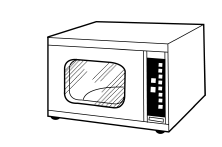
The picture shows a microwave oven. As a microwave oven is operated, electrical energy is transformed into all of the following types of energy EXCEPT —
a)
solar
b)
light
c)
thermal
d)
mechanical
70.
Turning on a lamp is an example of energy transformation from electrical to 3 forms of energy. Which of these is NOT created by the lamp?
a)
radiant
b)
light
c)
heat
d)
chemical
71.
Which of the following energy transfers occurs when food is digested?
a)
chemical to mechanical
b)
radiant to nuclear
c)
mechanical to potential
d)
thermal to chemical
72.
In energy transformations, "wasted energy" usually takes what form?
a)
heat
b)
chemical energy
c)
light
d)
sound waves
73.
On a roller coaster, where is maximum kinetic energy?
a)
At the bottom of a big hill
b)
When going around a corner
c)
When going upside down
d)
At the top of a big hill
74.
Gravitational potential energy depends on the ________ and ________ of the object. 
a)
Height and mass
b)
Friction and movement
c)
Mass and Movement
d)
Height and Friction 
75.
The roller coaster cart has the most gravitational potential energy at position-
a)
W
b)
X
c)
Y
d)
Z
76.
A swing has potential energy if _____________.
a)
it is in motion
b)
it is swinging backward
c)
it is sitting still
d)
it is spinning
77.

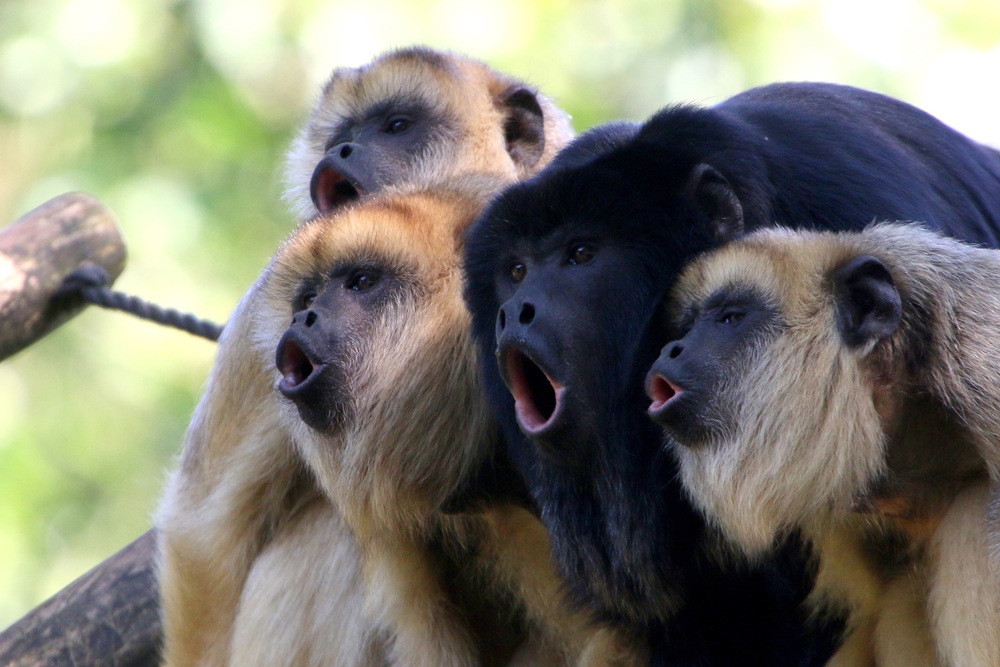
What energy transformation occurs as howler monkeys loudly call to each other in the forest?

a)

Chemical --> Mechanical --> Sound

b)

Chemical --> Sound --> Thermal

c)

Sound --> Chemical --> Radiant

d)

Mechanical --> Chemical --> Sound

78.
A balloon is rubbed all over with wool.  The balloon will now attract wool because the balloon and wool
a)
are magnets
b)
have opposite charges
c)
have like charges
d)
have neutral charges
79.
In a static discharge, which particles move from one object to another?
a)
protons
b)
neutrons
c)
electrons
d)
atoms
80.
Which of the following could be used as the core of a simple electromagnet?
a)
drinking straw
b)
iron nail 
c)
a soda bottle
d)
an ink pen
81.
A piece of nickel will be attracted to
a)
only the north pole of an electromagnet
b)
only the south pole of an electromagnet
c)
either pole of an electromagnet
d)
the iron core of an electromagnet
82.
Which of these in an insulator?
a)
a copper wire
b)
a silver spoon
c)
a plastic coating on a wire
d)
an aluminum coating on a wire
83.
What is the purpose of a switch in an electric circuit?
a)
to allow the circuit to be opened or closed
b)
to change the direction of the current
c)
to provide a push for the current
d)
to increase the electric power to the load
84.
What is the purpose of an electric motor?
a)
to convert electrical energy to mechanical energy
b)
to convert chemical energy to electrical energy
c)
to convert mechanical energy to electrical energy
d)
to convert mechanical energy to heat energy
85.
Electric current flowing through a wire produces
a)
static electricity
b)
an open circuit
c)
a permanent magnet
d)
a magnetic field
86.
What is the purpose of an iron core in an electromagnet?
a)
to hold the loops of wire in place
b)
to make the magnetic force stronger
c)
to change the direction of the electric current
d)
to change the direction of the magnetic force
87.
Each time a lightbulb is added to a series circuit, the other bulbs in the circuit 
a)
get brighter
b)
get dimmer
c)
stay the same brightness
d)
release more heat
88.
A group of lights are connected in a parallel circuit.  One of the lights is removed.  The rest of the lights will
a)
get brighter
b)
get dimmer
c)
go out
d)
not change
89.
A scientist observed that the needle of a compass moved when it was placed near a wire carrying an electric current.  What did this observation show?
a)
Opposite charges attract.
b)
Electric current generates a magnetic field.
c)
Magnetized wires generate electricity.
d)
Like charges repel.
90.
Two lightbulbs are connected to an energy source by two loops.  What is this setup an example of?
a)
a parallel circuit
b)
a static discharge
c)
a series circuit
d)
an electromagnet
91.
When a switch connects two parts of a circuit, the circuit is
a)
series
b)
parallel
c)
open
d)
closed
92.
A string of lights is lit.  They are part of a series circuit.  One of the bulbs is removed.  The rest of the lights will
a)
go out
b)
stay lit
c)
get brighter
d)
get dimmer
93.
What is the purpose of a generator?
a)
to convert electrical energy to mechanical energy
b)
to convert chemical energy to electrical energy
c)
to convert mechanical energy to electrical energy
d)
to convert mechanical energy to heat energy
94.
A student is investigating how changing the size of the core of an electromagnet affects its strength.  Which of these is most likely the dependent variable in the student's investigation?
a)
the number of wire coils wrapped around the core
b)
the number of paper clips picked up by the electromagnet
c)
the voltage of the battery used in the circuit
d)
the size of the piece of iron used as the core
95.
Electricity that flows in a closed path is called a
a)
path
b)
current
c)
circuit
96.
The flow of electricity in a circuit-
a)
current
b)
flow
c)
circuit
97.
Magnetism created by an electric current
a)
electricity
b)
electromagnetism
c)
wind energy
98.
____________ allows electricity to flow.
a)
A conductor
b)
An insulator
c)
A magnet
99.
____________ stops the flow of electricity.
a)
A conductor
b)
An insulator
c)
A magnet
100.
To complete a circuit the switch must be
a)
unattached
b)
open
c)
closed
101.
When the switch is closed, the light
a)
comes on
b)
stays off
c)
burns out
102.
The plastic around the wire is
a)
conductor
b)
insulator
c)
decoration
103.
Two batteries in a circuit make the lights in the circuit brighter than one battery.
a)
true
b)
false
104.
If the lights are off, the circuit is
a)
closed
b)
open
105.
Two types of circuits are
a)
parallel and magnetic
b)
electromagnetic and series
c)
series and parallel
106.
The flow of electricity requires a
a)
complete path
b)
incomplete path
c)
insulated current
107.
What will happen when these magnets are brought close together?
a)
They will attract each other.
b)
They will repel each other.
c)
Both magnets will turn to the left
d)
Both magnets will turn to the right
108.
Magnets have a north and a south ___________
a)
shape
b)
color
c)
pole
d)
region
109.
Where is the strongest attraction force of the magnet?
a)
at the poles
b)
in the middle
c)
above the magnet
d)
below the magnet
110.
What happens when two north poles of a magnet are placed together?
a)
they repel
b)
they attract
c)
they cancel each other out
d)
the strength of the magnet is doubled
111.
Which of the following is true about a bar magnet?
a)
Its magnetic field is strongest near its center.
b)
It is surrounded by a magnetic field.
c)
The north pole is stronger than the south pole.
d)
The south pole is stronger than the north pole.
112.
The space around a magnet where the force of a magnet can attract best is called__________
a)
magnetism
b)
bar magnet
c)
horseshoe magnet
d)
magnetic field
113.

In which of the following circuits will all of the remaining light bulbs go out if bulb 3 burns out?

a)
b)
c)
d)
114.

Which object does NOT conduct electricity?

a)

copper wire

b)

iron nail

c)

salt water

d)

wood

115.

What happens if there is a break at any point in a series circuit?

a)

no current flows

b)

current flows through an alternative path

c)

resistance goes to infinity

d)

current reverses direction

116.

Dave notices that a wire is magnetic and attracts metal objects, What can be concluded about the wire?

a)

an electric current is passing through it

b)

heat is passing through it

c)

radiation is passing through it

d)

sound waves are passing through it

117.

An electrical current flows down the power line. What type of force would the flow of the current produce around the power line?

a)

mechanical

b)

gravitational

c)

magnetic

d)

chemical

118.

Which of the following would be a good conductor of electricity?

a)

plastic

b)

rubber

c)

cotton

d)

iron

119.

Which of the following is a series circuit?

a)
b)
c)
d)
120.

Which of the following is a simple parallel circuit?

a)
b)
c)
d)
121.

Which switch, when opened, will make the light go out?

a)

Q

b)

R

c)

S

d)

T

122.

Which circuit will not light the bulb?

a)
b)
c)
d)
123.
Name this simple machine.
a)
Lever
b)
Wedge
c)
Pulley
d)
Inclined Plane
124.
Name this simple machine. 
a)
Pulley
b)
Wheel and Axle
c)
Inclined Plane
d)
Lever
125.
Name this simple machine. 
a)
Inclined Plane
b)
Lever
c)
Pulley
d)
Wedge
126.
Which choice is an example of a lever?
a)
Axe
b)
Seesaw
c)
Bottle Cap
d)
Tunnel
127.
Which choice is an example of a pulley?
a)
Axe
b)
Seesaw
c)
Crane 
d)
Tunnel
128.
Which choice is an example of an inclined plane?
a)
A ramp
b)
Seesaw
c)
Bottle Cap
d)
Ferris Wheel 
129.
The fixed point on the lever is called 
a)
load
b)
resistance
c)
bar
d)
fulcrum
130.
Two examples of a pulley...
a)
knife & axe blade
b)
lightbulb & screw
c)
flagpole hoist & window blinds
d)
catapult & teeter totter
131.
A _____ is a fixed bar that is free to move around a fixed point known as a fulcrum.
a)
pulley
b)
inclined plane
c)
lever
132.
A lever is designed to:
a)
reduce the amount of force required to do work
b)
increase the amount of effort required
c)
increase the amount of energy needed to work
133.
A motor will make electrical energy change into 
a)
motion energy
b)
chemical energy
c)
mechanical energy
d)
nothing
134.
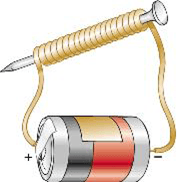
What is the device seen here?
a)
generator
b)
electric motor
c)
electromagnet
d)
magnet
135.
What is formed when a wire in an electric circuit is wrapped around an iron core producing a magnetic field?
a)
electromagnet
b)
generator
c)
magnet
d)
electric motor
136.
Generators are devices that convert _____ energy into _____ energy.
a)
chemical; mechanical
b)
mechanical; electrical
c)
electrical; mechanical
d)
potential; kinetic
137.
Electric motors are devices that convert _____ energy into  _____ energy.
a)
electrical; mechanical
b)
mechanical; electrical
c)
chemical; potential
d)
mechanical; kinetic
138.
What happens when the circuit is open?
a)
light bulb comes on
b)
device won't work
c)
static discharge
d)
lightning
139.
A force exerted over a distance to move an object is ______________________.
a)
power
b)
work
c)
momentum
d)
Watt
140.
A wheelbarrow is an example of
a)
First Class Lever
b)
Second Class Lever
c)
Third Class Lever
d)
Fourth Class Lever