wayground logo

Free Printable Worksheets

Font size

S
M
L
XL
Worksheets

8th Grade Final Review

Total questions: 125

Worksheet time: 1hrs 29mins

Name
Class
Date
1.

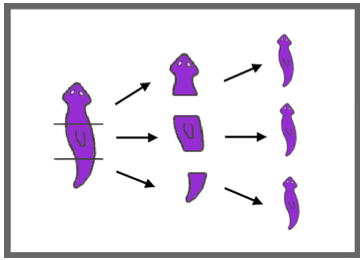
A mode of reproduction by which an organism arises from a single organism and inherit the identical genes of that parent

a)

Asexual Reproduction

b)

Sexual Reproduction

c)

Genetic Variation

d)

Alleles

2.

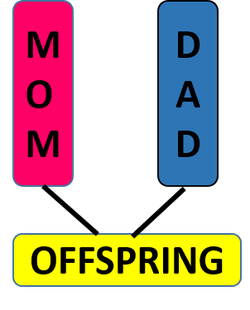
A mode of reproduction in which an organism arises from two organisms and inherits half of its DNA from each parent

a)

Sexual Reproduction

b)

Asexual Reproduction

c)

Cloning

d)

Fragmentation

3.

Requires two parents

a)

sexual

b)

asexual

4.

Requires only one parent

a)

sexual

b)

asexual

5.
If two organisms reproduce sexually, then their offspring will exhibit a genetic makeup that is -
a)
identical to only one parent
b)
identical to all of its siblings
c)
a unique combination of traits
d)
the recessive traits of each parent
6.

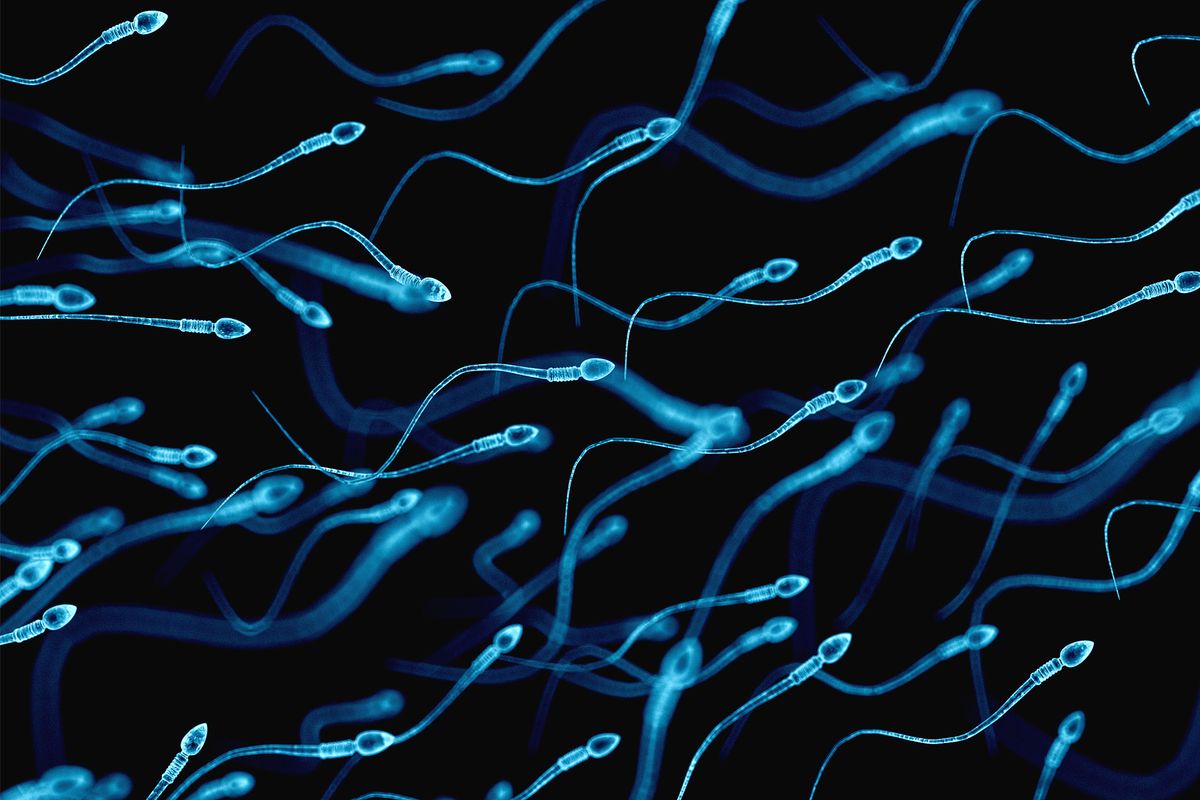
In sexual reproduction the male produces ___ cells.

a)

Malex

b)

Quack

c)

Egg

d)

Sperm

7.

In sexual reproduction the female produces ___ cells.

a)

Femalex

b)

Quack

c)

Egg

d)

Sperm

8.

___________________ is a type of asexual reproduction in which a piece of a parent organism breaks off to form an new organism (ex. starfish).

a)

fission

b)

budding

c)

fragmentation

d)

fertiliztion

9.

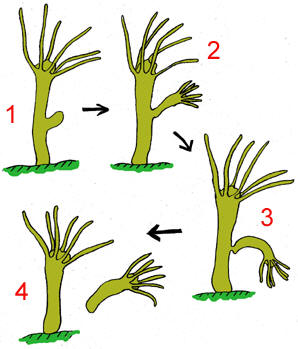
When an offspring grows off from the body of a parent organism it is called __________________.

a)

budding

b)

fission

c)

fragmentation

d)

sporulation

10.

What are some disadvantages to sexual reproduction? (select all that apply)

a)

it takes a lot of energy to find a mate

b)

you don't need another mate

c)

it requires a male and a female

d)

more genetic errors can occur

11.

Some advantages of sexual reproduction include: (select all that apply)

a)

genetic variation

b)

improves chances of adapting to the environment

c)

helps species survive catastrophes

d)

it doesn't take as much energy as asexual reproduction

12.

What are some advantages of asexual reproduction are: (select all that apply)

a)

it only requires one organism

b)

it takes less energy than sexual reproduction

c)

offspring are already well-adapted for the environment

d)

there is a lot of genetic variety

13.

Male and female reproductive cells are collectively known as:

a)

spores

b)

pollen

c)

gametes

d)

offspring

14.

____________________ occurs when a male gamete (sperm) combines with a female gamete (egg).

a)

sporulation

b)

fertilization

c)

fission

d)

regeneration

15.
Which of these phases of mitosis take place first?
a)
anaphase
b)
telophase
c)
prophase
d)
metaphase
16.
Which of these lists presents the stages of the cell cycle in the correct order?
a)
interphase, mitosis, cytokinesis
b)
cytokinesis, mitosis, interphase
c)
mitosis, interphase, cytokinesis
d)
interphase, cytokinesis, mitosis
17.
Identify the stage of mitosis.
a)
interphase
b)
prophase
c)
anaphase
d)
cytokinesis
18.
Identify the stage of mitosis. 
a)
interphase
b)
prophase
c)
anaphase
d)
cytokinesis
19.
What kind of cells are made in MEIOSIS?
a)
Haploid cells
b)
Diploid Cells
c)
Skin Cells
d)
Liver Cells
20.
Which cellular process is shown?
a)
meiosis
b)
endocytosis
c)
mitosis
d)
phagocytosis
21.
Which of the following best describes a DNA molecule?
a)
double helix
b)
contains ribose
c)
made of amino acids
d)
contains uracil
22.
Which sequence of complementary DNA bases would pair with this partial strand
ATG TGA CAG?
a)
ATG TGA CAG
b)
TAC ACT GTC
c)
GTA AGT GAC
d)
CAT TCA CTG
23.
A set of traits an organism receives from its parents
a)
heredity
b)
DNA
c)
chromosome
d)
allele
24.
The carrier of genetic information
a)
DNA
b)
RNA
c)
phenotype
d)
nucleus
25.
Threadlike structures that carry DNA
a)
allele
b)
genotype
c)
chromosome
d)
phenotype
26.
Different forms of the same gene
a)
recessive
b)
dominant
c)
alleles
d)
genes
27.
Weak and can be overpowered
a)
dominant
b)
recessive
c)
chromosome
d)
DNA
28.
Strong and cannot be overpowered
a)
dominant
b)
recessive
c)
trait
d)
gene
29.
A chart that shows all the possible combinations of alleles from parents
a)
T-square
b)
Gene Chart
c)
Punnett Square
d)
DNA organizer
30.
A characteristic that an organism can pass on to its offspring
a)
heredity
b)
punnett square
c)
trait
d)
phenotype
31.
A unit that determines a trait
a)
gene
b)
genetics
c)
genome
d)
jeans
32.
the study of heredity
a)
hair studies
b)
genetics
c)
heredetics
d)
biology
33.
the genetic makeup of an organism
a)
genotype
b)
phenotype
34.
How the trait appears or looks like
a)
genotype
b)
phenotype
35.
What did Gregor Mendel use to discover the principles that rule heredity?
a)
Pea Plant
b)
Pigeons
c)
Pear trees
d)
Photosynthesis
36.
Gregor Mendel is known as the father of _________
a)
Modern Medicine
b)
Father of the Green Revolution
c)
Father of Genitics
d)
The Pea Plant Man
37.

What is the advantage of having different shaped beaks?

a)

To look different from other species.

b)

To be able to eat the food readily available in the environment.

c)

To protect itself against predators.

d)

To protect itself against prey.

38.

An inherited trait that helps those organisms that have it to survive

a)

niche

b)

structure

c)

characteristic

d)

adaptation

39.

Which term refers to a farmer choosing the best corn from this year to plant next year?

a)

natural selection

b)

selective breeding

c)

genetic engineering

d)

genetic transformation

40.

A group of organisms that share similar characteristics and can reproduce among themselves to produce fertile offspring.

a)

Mutation

b)

Species

c)

Adaptation

d)

Variation

41.

This is the organisms with traits best suited to their environment are more likely to survive and reproduce.

a)

Variation

b)

Mutation

c)

Natural Selection

d)

Gradualism

42.

This is any variation that makes an organism better suited to its environment.

a)

Evolution

b)

Graduation

c)

Species

d)

Adaptation

43.
Which feature helps an animal hide from other animals?
a)
looking like a dangerous animal
b)
being the same color as the place it lives (camoflauge)
c)
having sharp claws or a strong shel
d)
having only a few young and caring for them
44.

A giraffe has a long neck in order to better reach leaves to eat. This is an example of _____.

a)

an adaptation

b)

environment

c)

response

d)

stimulus

45.

How do adaptations help animals?

a)

To escape animals

b)

to hunt for food

c)

to survive in their habitats

d)

All of these are correct

46.

Plants with spines and waxy leaves are well suited for life in which environment?

a)

Desert

b)

Temperate forest

c)

Grassland

d)

Tropical Rainfroest

47.

Evolution is best defined as:

a)

the process which organisms die.

b)

the process which organisms change over time.

c)

the process which organisms that are extinct become revived.

d)

the process which non-living things fossilize.

48.

The solidified remain or imprint of a once living thing are called:

a)

Fossils

b)

Homologous Structures

c)

Vestigial Structures

d)

DNA

49.

What type of evidence is represented in the picture above:

a)

Fossils

b)

Vestigial Structures

c)

DNA

d)

Homologous Structures

50.

What type of evidence is shown in this picture?

a)

Fossils

b)

Homologous Structures

c)

Vestigial Structures

d)

DNA

51.

What type of evidence are shown in the picture above?

a)

Fossils

b)

Embryology

c)

Homologous Structures

d)

Vestigial Structures

52.
The similarities of the bones in the diagram provide evidence that---
a)
The organisms shown lived in the same natural envionrment
b)
The organisms shown may have developed from a common ancestor
c)
The organisms shown have the same genetic diseases
d)
All vertebrate species have identical forelimbs
53.
What process is being shown in this image?
a)
Variation
b)
Natural Selection
c)
Selective Breeding
d)
Homeostasis
54.

Which scientist is known for his work that he did on the Galapagos Islands to develop his theory of natural selection?

a)

Gregor Mendel

b)

Charles Darwin

c)

Anton Van Leewenhoek

d)

Robert Brown

55.

The process by which two populations of the same species become so different that they can no longer interbreed.

a)

natural selection

b)

artificial selection

c)

speciation

d)

fossilization

56.

Which layer is the youngest?

a)

A

b)

B

c)

C

d)

D

e)

E

57.

Created when existing rock is subjected to very high heat and pressure.

a)

Sedimentary Rock

b)

Igneous Rock

c)

Metamorphic Rock

58.

The settling out of sediment.

a)

Weathering

b)

Erosion

c)

Deposition

d)

Cementation & Compaction

59.

Created from the cooling and solidification of magma or lava.

a)

Sedimentary Rock

b)

Igneous Rock

c)

Metamorphic Rock

60.

The creation of smaller pieces of rock through physical or chemical means.

a)

Weathering

b)

Erosion

c)

Deposition

d)

Cementation & Compaction

61.

The moving of weathered products from their original position.

a)

Weathering

b)

Erosion

c)

Deposition

d)

Cementation & Compaction

62.

Which layer is the oldest?

a)

A

b)

B

c)

C

d)

D

63.

Which fossil is the youngest?

a)

Trilobite

b)

Skeleton

c)

Ammonite

64.

Which layer is the youngest?

a)

D

b)

E

c)

F

65.

a model scientists use to describe the timing of events and the relationships between those events in earth’s history.

a)

geologic time scale

b)

era

c)

period

d)

epoch

66.

a division of geologic time; a subdivision of a period. Shortest length of time.

a)

geologic time scale

b)

era

c)

period

d)

epoch

67.

What Era were mammals first seen?

a)

Precambrian

b)

Paleozoic

c)

Mesozoic

d)

Cenozoic

68.
What type of rock do fossils form in?
a)
Igneous
b)
Sedimentary
c)
Metamorphic
d)
Classic
69.
The Geologic Time Scale is a record of what?
a)
old geologists
b)
sweet geology music
c)
the known history of rocks and fossils
d)
a list of every living thing ever
70.
What causes tectonic plates to move along the Earth's surface?
a)
wind
b)
ocean currents
c)
convection in the mantle
d)
expansion of the Earth
71.
What type of boundary occurs when two plates move away from each other?
a)
transform
b)
subduction
c)
convergent
d)
divergent
72.
What forms at a divergent boundary between two oceanic plates?
a)
rift valley
b)
mountain
c)
mid-ocean ridge
d)
trench
73.
Which type of crust is more dense?
a)
oceanic
b)
continental
c)
divergent
d)
pizza
74.
What type of boundary occurs when two plates move toward each other?
a)
convergent
b)
divergent
c)
transform
d)
lateral
75.
What forms at a convergent boundary between a continental plate and an oceanic plate?
a)
volcanoes
b)
rift valleys
c)
faults
d)
mid-ocean ridges
76.
What is the process in which hot molten rock rises, then cools and sinks back to the core?
a)
plate tectonics
b)
continental drift
c)
convection
d)
divergence
77.
Mountains form at a ___________ boundary.
a)
transform
b)
divergent
c)
convergent
d)
subduction
78.
What type of boundary occurs when two plates slide past each other?
a)
divergent
b)
transform
c)
lateral
d)
convergent
79.
A fault forms at a _________ boundary.
a)
transform
b)
divergent
c)
horizontal
d)
convergent
80.
What type of boundary is shown at A?
a)
transform
b)
convergent
c)
divergent
d)
subduction
81.
What is happening at point B?
a)
subduction
b)
a divergent boundary
c)
convection
d)
an earthquake
82.
The Himalayan mountains have some of the highest peaks like Mt. Everest, on which type of convergent boundary are they located?
a)
Oceanic/Continental
b)
Oceanic/Oceanic
c)
Continental/Continental
d)
None of the above
83.
The San Andréa fault in California is one example of a...  
a)
Divergent boundary
b)
Convergent boundary
c)
Transform boundary
d)
All of the above
84.

Resources that are not able to be reproduced as quickly as they are used are called _____.

a)

renewable resources

b)

replaceable resources

c)

non renewable resources

d)

non replaceable resources

85.

Geothermal energy uses heat from ____ to produce electricity.

a)

the earth

b)

coal

c)

oil

d)

natural gas

86.

Renewable resources ...

a)

are not replaceable

b)

are used more frequently than non renewables

c)

are never going to run out

d)

going to run out

87.

What type of power plant uses the potential energy of water trapped behind a dam?

a)

nuclear power plant

b)

hydroelectric power plant

c)

solar station

d)

coal burning power plant

88.

What are fossil fuels?

a)

coal, oil, uranium

b)

oil, natural gas, uranium

c)

coal, oil, natural gas

d)

geothemals, coal, natural gas

89.

Uranium atoms are split to create a tremendous amount of heat in a _____ power plant.

a)

biomass

b)

geothermal

c)

nuclear

d)

hydroelectric

90.

Which of these is renewable energy?

a)

coal

b)

petroleum

c)

oil

d)

biomass

91.
What is an example of a renewable resource?
a)
hydroelectric
b)
oil
c)
coal
d)
fossil fuel
92.
__________ is an energy resource that WILL NOT run out in the next several hundred years.
a)
Renewable Energy Resource
b)
Nonrenewable Energy Resource
93.
What happens to frequency when the energy increases?
a)
it increases
b)
it decreases
c)
it stays the same
94.
What part of the wave is shown at letter A?
a)
crest
b)
trough
c)
wavelength
d)
frequency
95.
Which part of the wave is shown at letter B?
a)
crest
b)
trough
c)
wavelength resting point
96.
Which part of the wave is shown at letter C?
a)
crest
b)
wavelength
c)
resting point
d)
amplitude
97.
Which part of the wave is shown at letter D?
a)
trough
b)
resting point
c)
wavelength
d)
frequency
98.
Which part of the wave is shown at letter E?
a)
trough
b)
crest
c)
resting point
d)
amplitude
99.
What does a wave carry?
a)
boats
b)
matter
c)
energy
d)
water
100.
Which wave has a longer wavelength?
a)
wave C
b)
wave D
101.
Which wave has a greater frequency?
a)
wave B
b)
wave C
102.
Which wave has the most energy?
a)
top wave
b)
bottom wave
103.
What is the distance between crests or troughs?
a)
amplitude
b)
wavelength
104.
Sound travels fastest in:
a)
solids
b)
liquids
c)
gases
105.
When you yell under water, what is the medium that sound travels through?
a)
air
b)
water
106.
What type of wave move a slinky back and forth?
a)
longitudinal
b)
transverse
107.
What type of waves move a slinky up and down or side to side?
a)
longitudinal
b)
transverse
108.
What travels faster, light or sound
a)
Light
b)
Sound
109.

What does the picture below illustrate?

a)

Visible Light Spectrum

b)

Electromagnetic Spectrum

c)

Frequency Indicator

d)

Color Line

110.

What is the saying that can help you remember the order of the visible spectrum?

a)

ROYGBIV

b)

RYOBIVG

c)

ROYBVIG

d)

RIBYOVG

111.

How are we able to see the color white?

a)

All colors except red are absorbed

b)

All colors are absorbed

c)

All colors are reflected

d)

All colors except red are reflected

112.

What does reflection mean?

a)

Bending Light

b)

Bouncing Light

113.

Of the visible spectrum, what color has the longest wavelength?

a)

Blue

b)

Green

c)

Yellow

d)

Red

e)

Violet

114.

Light is a type of energy that travels as an ______________ ____________.

a)

Longitudinal Wave

b)

Electric Current

c)

Electromagnetic Wave

d)

Magnetic Wave

115.

What is this a picture of?

a)

Reflection

b)

Refraction

116.
Which has the SHORTEST wavelength and, therefore, the highest frequency/most energy
a)
Radio waves
b)
Ultraviolet Rays
c)
Gamma Rays
d)
X-rays
117.
Which has the LONGEST wavelength and, therefore, the lowest frequency/energy
a)
Gamma Rays
b)
Radio Waves
c)
Visible Light
d)
Infrared rays
118.
Which section of the spectrum is the ONLY one we can see?
a)
X-rays
b)
Visible Light
c)
Gamma Rays
d)
Ultraviolet Rays
119.
An object that let some light through it is 
a)
opaque
b)
transparent
c)
translucent
d)
rays
120.
An object that lets light through it is 
a)
transparent
b)
opaque
c)
translucent
d)
ray
121.
An object that lets no light pass through it is ___.
a)
transparent
b)
opaque
c)
translucent
d)
a bully
122.
Refraction is when light is bent.
a)
true
b)
false
123.
Reflections is to _____, as refraction is to bent.
a)
bounce
b)
mirror
c)
transparent
124.
The bending of a wave around the edge of a barrier is called
a)
reflection
b)
diffraction 
c)
interference
d)
refraction
125.
The bouncing back of a wave when it hits a surface through which it can NOT pass is called —
a)
rarefaction
b)
reflection
c)
diffraction
d)
refraction