wayground logo

Free Printable Worksheets

Font size

S
M
L
XL
Worksheets

Practice Quiz Circulatory System

Total questions: 85

Worksheet time: 1hrs 22mins

Name
Class
Date
1.
Which side of the heart has oxygen-rich blood?  
a)
right
b)
left
c)
top
d)
bottom
2.
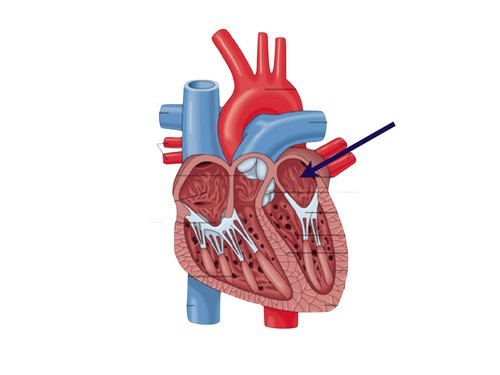
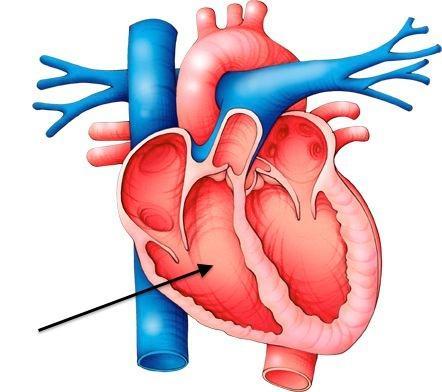
Name the part of the heart with the arrow pointing. 
a)
right atrium
b)
right ventricle
c)
left ventricle
d)
left atrium
3.
When the blood flow of the heart slows or stops completely, resulting in damage to the mucle of the heart, it is called a 
a)
heart attack
b)
hypertension
c)
stroke
d)
artherosclerosis
4.
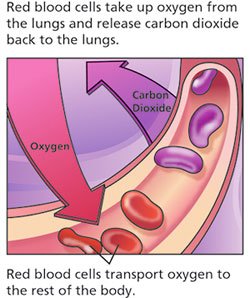
What gas is a waste product carried by the blood?
a)
Oxygen (O2)
b)
nutrients
c)
Water (H2O)
d)
Carbon Dioxide (CO2)
5.
The three types of blood vessels are
a)
capillaries, pulmonary veins and pulmonary arteries
b)
aorta, atria and ventricles
c)
arteries, veins and pulmonary veins
d)
arteries, veins, and capillaries
6.
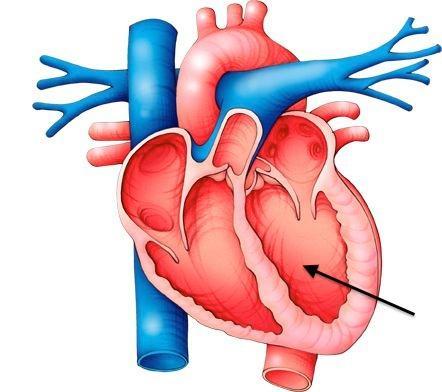
Name the part of the heart with the arrow pointing.
a)
right atrium
b)
right ventricle
c)
left atrium
d)
left ventricle
7.
The functions of the circulatory system are 
a)
to carry waste products from the body's cells
b)
to deliver vital substances to the body's cells
c)
to fight diseases
d)
all of the above
8.
Name the largest artery in the body.  It carries blood from the heart to all of the body’s cells.  
a)
vena cava
b)
aorta
c)
pulmonary artery
d)
pulmonary vein
9.
Where does the blood go after it leaves the right ventricle?
a)
pulmonary artery
b)
pulmonary vein
c)
aorta
d)
vena cava
10.
How many chambers are there in the human heart?  
a)
1
b)
2
c)
3
d)
4
11.
The heart receives oxygen-rich blood from the lungs via the
a)
pulmonary vein
b)
pulmonary artery
c)
vena cava
d)
aorta
12.
Name the part of the heart with the arrow pointing.
a)
right ventricle
b)
septum
c)
aorta
d)
left ventricle
13.
Name the one-way structures that control the flow of blood into and out of the chambers of the heart.
a)
valves
b)
atria
c)
ventricles
d)
septum
14.
The top 2 chambers of the heart ___  blood and are called atria.
a)
pump
b)
atria
c)
receive
d)
ventricles
15.
The vessels with thick elastic walls made of smooth muscle tissue.
a)
arteries
b)
veins
c)
capillaries
d)
heart
16.
The vessels with one-way valves to prevent blood from flowing backwards.
a)
veins
b)
arteries
c)
capillaries
d)
heart
17.

How many chambers of the heart are there?

a)

25

b)

4

c)

2

d)

3

18.
a)

Right Ventricle

b)

Left Ventricle

c)

Left Atrium

d)

Right Atrium

19.
a)

Left Atrium

b)

Right Atrium

c)

Left Ventricle

d)

Right Ventricle

20.
a)

Left Ventricle

b)

Right Ventricle

c)

Left Atrium

d)

Right Atrium

21.
a)

Left Atrium

b)

Left Ventricle

c)

Right Atrium

d)

Right Ventricle

22.

What is the function of the right atrium?

a)

Receives blood from the systemic circuit

b)

To cool the blood

c)

To oxygenate the blood

d)

No function

23.

Function of right ventricle

a)

To move water

b)

No function

c)

Blood travels through the bicuspid valve

d)

Blood travels from the right atrium through the tricuspid valve

24.

Function of left atrium

a)

Delivers blood to the right ventricle through the tricuspid valve

b)

Delivers blood to the left ventricle through the bicuspid valve

c)

Delivers blood to the left ventricle through the tricuspid valve

d)

Delivers blood to the right ventricle through the bicuspid valve

25.

Function of left ventricle

a)

Pumps blood through the systemic circuit

b)

Receives blood through the systemic circuit

c)

Pumps water

d)

Nothing

26.
Separates the chambers of the heart.
a)
mitral valve
b)
septum
c)
aortic valve
27.
What portion of the heart is supposed to be  the most muscular?
a)
upper
b)
lower
c)
septum
28.
About how large is the human heart?
a)
the size of an onion
b)
the size of a fist
c)
4.5 pounds
29.
Which number is the vena cava?
a)
1
b)
2
c)
3
d)
8
30.
Which number is the pulmonary artery?
a)
4
b)
5
c)
6
d)
8
31.
Where is the blood in 3 coming from?
a)
All over the body
b)
The upper half of the body, head and arms
c)
The lower half of the body, legs and abdomen
d)
The lungs
32.
The two chambers of the heart which receive blood are known as the _________
a)
atria
b)
ventricles
c)
systemics
d)
pulmonic
33.
Blood leaves the right ventricle through the ___________.
a)
pulmonary artery
b)
aorta
c)
superior vena cava
d)
right atrium
34.
What does letter D represent?
a)
aorta
b)
left atrium
c)
left ventricle
d)
right atrium
35.
What does letter B represent?
a)
aorta
b)
superior vena cava
c)
inferior vena cava
d)
right pulmonary artery
36.
Which valve is letter X?
a)
aortic
b)
bicuspid
c)
tricuspid
d)
pulmonary
37.
Freshly oxygenated blood is delivered to the _____________ and then it passes into the  __________ to be pumped to the entire body.
a)
right ventricle; right atrium
b)
left ventricle; left atrium
c)
left atrium; left ventricle
d)
right atrium; right ventricle
38.
Which letters carry deoxygenated blood?
a)
A, B, D
b)
G, A
c)
A, D
d)
B, C, D
39.
Identify
a)
Pulmonary veins
b)
Pulmonary artery
c)
Aorta
d)
Vena cava
40.

Your heart is an involuntary muscle that is always working.

a)

True

b)

False

41.

The heart is made of which of the following types of muscles?

a)

Cardiac muscle

b)

Striated muscle

c)

Smooth muscle

d)

None of the above

42.

Your heart always pumps at the same rate.

a)

True

b)

False

43.

Electricity cause your muscles to contract.

a)

True

b)

False

44.

Which of the following are chambers of the heart?

a)

Valves

b)

Atrium and ventricle

c)

Arteries and veins

d)

Sinoatrial nerve

45.

Which of the following is true about your heart?

a)

Your heart may stop beating from time to time.

b)

You have to think in order to keep your heart beating.

c)

Your heart pushes blood through your body.

d)

All of the above

46.

What can happen sometimes when you stand up to quickly?

a)

You become light-headed.

b)

Your blood stays down at your legs and feet.

c)

Your blood does not get to your head fast enough.

d)

All of the above.

47.

The pulmonary artery is the artery that carries the blood to your heart from your lungs.

a)

True

b)

False

48.
The aorta is the largest artery in the body. The blood leaving the aorta  is full of?
a)
Oxygen 
b)
Carbon Dioxide 
c)
White blood Cells 
d)
Potassium 
49.
What does Deoxygenated mean?
a)
Oxygen-rich
b)
Blood flow
c)
Oxygen-poor
d)
Water Flow
50.
About how many times does the heart beat during an average life time?
a)
60,000
b)
3 billion
c)
3,000
d)
300,000
51.
arteries, veins, and capillaries are three types of __________
a)
heart valves
b)
blood vessels
c)
cells
d)
veins
52.
The human heart is a ____-chambered organ.
a)
1
b)
2
c)
3
d)
4
53.
blood flows back to the heart in these
a)
cytoplasm
b)
lungs
c)
circulatory system
d)
vein
54.
What is a system of organs that transport blood throughout the body called?
a)
Lymphatic System
b)
Blood System
c)
Cardiovascular System
d)
Digestive System
55.
What is the function of the right side of the heart?
a)
It takes oxygen rich blood from the lungs
b)
IT CARRIES OXYGEN AND NUTRIENTS FROM ARTERIES TO THE TISSUES
c)
IT RELEASES OXYGEN RICH BLOOD TO THE VEINS
d)
IT TAKES BLOOD FROM THE BODY THAT HAS NO OXYGEN
56.
What is the function of arteries in the circulatory system?
a)
TO CARRY DEOXYGENATED BLOOD TO THE HEART
b)
CARRY OXYGEN RICH BLOOD AWAY FROM THE HEART
c)
CARRY BLOOD WITH NO OXYGEN AWAY FROM THE HEART
d)
CARRY OXYGEN RICH BLOOF TO THE HEART
57.
WHICH OF THE FOLLOWING CARRIES OXYGEN AND NUTRIENTS FROM ARTERIES TO THE TISSUES?
a)
VEINS
b)
THE AORTA
c)
THE RIGHT VENTRICLE
d)
CAPILLARIES
58.
WHICH VEIN IS THE ONLY VEIN THAT CARRIES OXYGEN-RICH BLOOD?
a)
THE VENA CAVA
b)
THE PULMONARY VEIN
c)
THE AORTA
d)
THE LEFT ATRIUM
59.
Ho does blood flow into the right atrium?
a)
THROUGH THE VENA CAVA
b)
THROUGH THE AORTA
c)
THROUGH THE PULMONARY ARTERY
d)
THROUGH THE LEFT VENTRICLE
60.

What is the main organ of the circulatory system?

a)

small intestine

b)

bone

c)

lungs

d)

heart

61.
How many types of blood vessels are in our body?
a)
1
b)
2
c)
3
d)
4
62.

Arteries carry oxygen rich blood away from the heart.

a)

True

b)

False

63.

Veins carry oxygen poor blood back to the heart.

a)

False

b)

True

64.

The job of the heart is to . . .

a)

pump blood around the body.

b)

send food to the small intestines.

c)

break down food.

d)

give energy to the body.

65.

The heart is about the size and shape of your . . .

a)

head

b)

fist

c)

hand

d)

foot

66.
______________ are the smallest blood vessels.
a)
Arteries
b)
Veins
c)
Capillaries
67.
______________ are the second largest blood vessel. 
a)
Arteries
b)
Veins
c)
Capillaries
68.
The circulatory system works with the ___________ system to provide our body with oxygen.
a)
respiratory
b)
digestive
c)
muscular
d)
skeletal
69.
The circulatory system works with the __________ system to obtain energy from nutrients that we eat. 
a)
respiratory 
b)
digestive
c)
skeletal
d)
nervous
70.
Which is a function of the cardiovascular system?
a)
to move water throughout the body
b)
to transport gases throughout the body 
c)
to eliminate waste from the body
d)
to provide structural support for the body 
71.
Which of the following is a synonym for the circulatory system?
a)
respiratory system
b)
digestive system
c)
nervous system
d)
cardiovascular system
72.
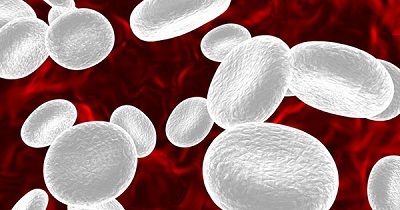
These cells, in the blood, carry oxygen and give the blood its color.
a)
white blood cells
b)
plasma
c)
platelets
d)
red blood cells
73.
This type of vessel carries blood TO the heart:
a)
vein
b)
nerve
c)
muscle
d)
artery
74.
When oxygen-rich blood is carried AWAY from the heart, it travels through an...
a)
artery
b)
neuron
c)
vein
d)
straw
75.
Veins have special ________________ to stop blood from flowing backward.
a)
gravity
b)
valves
c)
arteries
d)
ventricles
76.
The cells in the blood that help fight germs and illnesses are the...
a)
red blood cells
b)
platelets
c)
white blood cells
d)
axons
77.
The circulatory system works with the ___________ system to provide our body with oxygen.
a)
respiratory
b)
digestive
c)
muscular
d)
skeletal
78.
Which best describes the relationship between the muscular system and the circulatory system? 
a)
The circulatory system captures carbon dioxide from the air for muscle energy.
b)
The circulatory system produces red blood cells to bring oxygen to the muscles
c)
The circulatory system provides a framework for muscle movement
d)
The circulatory system delivers oxygen for muscle energy
79.
Identify
a)
Left atrium
b)
Right atrium
c)
Left ventricle
d)
Right ventricle
80.
Identify
a)
Left atrium
b)
Right atrium
c)
Left ventricle
d)
Right ventricle
81.
Identify
a)
Left atrium
b)
Right atrium
c)
Left ventricle
d)
Right ventricle
82.
Veins carry oxygen poor blood back to the heart.
a)
False
b)
True
83.
What is a pacemaker?
a)
Electronic device used to help the heart beat regularly
b)
To help kidneys filtrate blood
c)
To measure your blood pressure
84.
What do red blood cells do?
a)
Carry oxygen
b)
Fight infection and disease
c)
Produce carbon dioxide 
85.
A general term that describes the force blood exerts against the walls of vessels is called _____________.
a)
ventricular pressure
b)
blood pressure
c)
atriaoventricular pressure
d)
pulse pressure