wayground logo

Free Printable Worksheets

NEW

Font size

S
M
L
XL
Worksheets

EOC Review

Total questions: 55

Worksheet time: 1hrs 6mins

Name
Class
Date
1.
How do lichens contribute to primary succession?
a)
Lichens decompose organic matter from animals and plants
b)
Lichens begin to break down rock to form soil
c)
Lichens are nitrogen fixing bacteria
d)
Lichens convert carbohydrates into fossil fuels.
2.
What is formed during primary succession that doesn't need to be formed during secondary succession?
a)
pioneer species
b)
soil
c)
climax community
d)
lichens
3.
What type of succession is shown going from figure A to figure B?
a)
primary succession
b)
eutrophication
c)
secondary succession
d)
intermediate
4.
After a forest fire, an ecosystem would start regrowth through -
a)
primary succession
b)
secondary succession
c)
climax community
d)
limiting factors
5.
Which catastrophic event will most likely have the effect of returning an ecosystem to primary succession?
a)
A tornado
b)
A volcanic eruption
c)
A flood
d)
A drought
6.

An example of typical pioneer species, that is one that appears in the earliest stages of ecological succession is:

a)

Oak Trees

b)

Spiders

c)

Weeds

d)

Small Conifer Trees

7.

Primary succession occurs in areas with:

a)

very little soil

b)

lots of soil

c)

no soil

d)

soil that has been disturbed

8.
A giraffe has a long neck in order to better reach leaves to eat.  This is an example of _____. 
a)
an adaptation
b)
environment
c)
response
d)
stimulus
9.
Plants with spines and waxy leaves are well suited for life in which environment?
a)
Desert
b)
Temperate forest
c)
Grassland
d)
Tropical Rainfroest
10.

The ability of Waffles to maintain a stable internal environment no matter what is going on in his external environment is called.

a)

Homeostasis

b)

Camouflage

c)

Dormancy

d)

Hibernation

11.

Occurs when breeders produce a new breed of animal over a period of time by selecting animals that have certain desired traits and breeding them.

a)

Natural Selection

b)

Artificial Selection

c)

Adaptation

d)

Hibernation

12.

Organisms better suited to their environment survive easier and longer than those who aren't

a)

Natural Selection

b)

Adaption

c)

Artificial Selection

d)

Speciation

13.

The action of an organism changing to better suit its new or old environment.

a)

Natural Selection

b)

Physical Trait

c)

Camouflage

d)

Adaptation

14.
Which biome is more biodiverse?
a)
Desert
b)
Sand
c)
Tundra
d)
Rainforest
15.
Which option is abiotic?
a)
Plants
b)
Rocks
c)
Animals
d)
Fungi
16.
Which option is biotic?
a)
Light
b)
Water
c)
Salt in the water
d)
Angel fish
17.
Which option is abiotic?
a)
Plants
b)
Bacteria
c)
Water
d)
Fungi
18.

Image "B" shows more biodiversity than image "A". Why?

a)

Because "B" shows more different species than image "A"

b)

Because image "B" has less different species than "A"

c)

"A" has a greater number of same species plants so this statement is wrong.

d)

Both images show the same biodiversity

19.

Biodiversity is important to keep an area (biome) healthy. In this example "Food Web A" is sustainable. Why is sustainability important for an ecosystem in "Food Web A".

a)

If one organism is removed the food web can still operate (work) with little or no negative effect.

b)

If an organism is removed the food web will collapse and will affect the environment.

20.
When there is higher biodiversity
a)
more organisms are likely to die because they can't adapt to environmental changes.
b)
there is less diversity.
c)
there is more diversity and higher sustainability of life.
d)
there is more diversity and lower sustainability of life
21.
A signal in the environment that makes you react.
a)
stimulus
b)
registry
c)
omen
d)
preparation
22.

A structure made up of different types of tissue and performs a specific job.

a)

cells

b)

tissue

c)

organ

d)

organ system

23.
The basic unit of structure and function for the body.
a)
cell
b)
atom
c)
organelle
d)
nucleus
24.
A group of similar cells that perform the same function.
a)
tissue
b)
organelle
c)
mass
d)
tendon
25.

Which situation best describes the act of maintaining homeostasis?

a)

An organism sweating when their body temperature begins to rise

b)

A plant on a window sill growing towards sunlight

c)

A bear hibernating in the winter months

d)

All of the above

26.
Phototropism is a plant's response to -
a)
Light - an external stimulus
b)
Light - an internal stimulus
c)
Gravity - an external stimulus
d)
Gravity - an internal stimulus
27.
Thigmotropism is a plant's response to -
a)
Touch - an external stimulus
b)
Touch - an internal stimulus
c)
Gravity - an external stimulus
d)
Gravity - an internal stimulus
28.
Geotropism is a plant's response to -
a)
Light - an external stimulus
b)
Light - an internal stimulus
c)
Gravity - an external stimulus
d)
Gravity - an internal stimulus
29.

Identify the stimulus..."Roots growing down towards gravity"

a)

Roots growing down

b)

The force of gravity

30.

Identify the response..."A squirrel scratches at a flea bite"

a)

A flea bite

b)

A squirrel scratches

31.
What is multicellular? 
a)
one cell 
b)
no cells 
c)
many cells 
d)
no nucleus 
32.
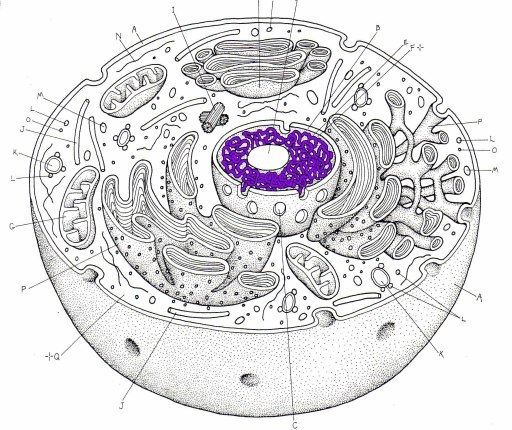
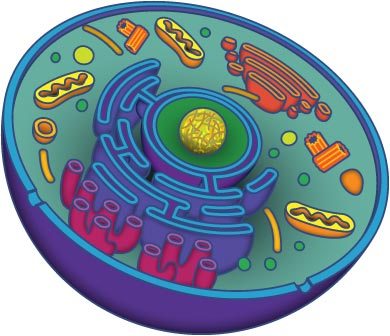
What type of cell has a nucleus? 
a)
eukaryotic
b)
prokaryotic 
33.
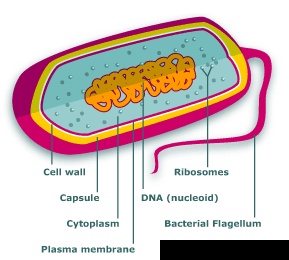
Which type of cell?
a)
Prokaryote
b)
Eukaryote
34.
What kind of cell is this?
a)
Eukaryotic
b)
Prokaryotic
35.
Which of the following is NOT a cell theory.
a)
All non-living things are made of cells
b)
All cells come from pre-existing cells
c)
Cells are the basic unit of structure and function of all living things
36.
All living things are made up of...
a)
cells
b)
cell tissues
c)
organ
d)
organ systems
37.
How are Bacteria and Archaea similar?
a)
They are both multicellular
b)
They are both Prokaryotes
c)
They both have peptioglycan
38.
Which domain do humans belong to ?
a)
Homo
b)
Animalia
c)
Archaea
d)
Eukarya
39.
Characteristics of an organism:
1. Cells have nuclei
2. Cannot move itself
3. Makes its own food
4. Made of many cells
Which word would NOT describe this organism?
a)
Multicellular
b)
Autotrophic
c)
Prokaryotic
d)
Immotile
40.
The organism absorbs nutrients from its environment for food. 
a)
Heterotrophic
b)
Autotrophic
41.
Homozygous is when...
a)
the alleles are the same
b)
the alleles are different
c)
the alleles are absent
d)
the alleles are present
42.
Heterozygous is when...
a)
the alleles are the same
b)
the alleles are different
c)
the alleles are absent
d)
the alleles are present
43.
In a heterozygous genotype, the ___________ allele takes over in the phenotype.
a)
recessive
b)
dominant
c)
lower case letter
d)
both 
44.
B = brown fur  b = white fur
In the punnett square, what is the probability for white fur? 
a)
0%
b)
25%
c)
50%
d)
75%
45.
Which of the following genotypes is heterozygous?
a)
Bb
b)
BB
c)
bb
d)
B
46.
In a certain species of plant, the color purple (P) is dominant to the color white (p).
According to the Punnett Square, what is the probability of an offspring being purple?
a)
25%
b)
0%
c)
100%
d)
50%
47.
What is the probability of heterozygous offspring?
a)
25%
b)
50%
c)
0%
d)
100%
48.

Why is heredity important?

a)

It keeps organisms in their species.

b)

It makes the DNA inside cells similar.

c)

It passes traits from parents to offspring.

d)

It create cell walls.

49.

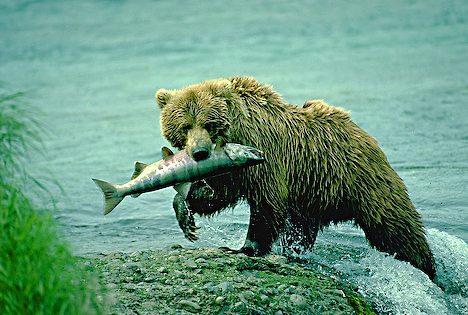
A grizzly bear survives because he is well-adapted to his environment. When he reproduces he passes on those traits to his offspring. this process is called

a)

Natural Selection

b)

Selective Breeding

c)

Random mutations

d)

Variations in a species

50.
The overall function of selective breeding is to
a)
Create organisms with desirable traits
b)
Create bigger organisms
c)
Create smaller organisms
d)
Create animals with more genetic mutations
51.
A farmer has bred his pineapple plants from the sweetest pineapples from his last harvest to get even sweeter pineapple plants. What is this an example of?
a)
Selective breeding
b)
Natural selection
c)
Extinction
d)
Mutagenesis
52.
In asexual reproduction, all of the offspring are:
a)
Physically Identical
b)
Genetically Identical
c)
Physically and Genetically Identical
d)
Not Identical
53.
What are some of the facts about asexual reproduction?
a)
Takes only one mate to reproduce and takes a longer time to reproduce
b)
Takes a shorter amount of time to reproduce and it takes two mates to reproduce
c)
Reproduces diverse offspring and takes a longer time to reproduce
d)
Takes only one mate to reproduce and takes a shorter time to reproduce
54.
What parts of the chromosomes code for traits?
a)
Genes
b)
Deoxyribonucleic Acid
c)
Chromosomes
d)
Nucleus
55.
What does heredity mean?
a)
DNA being passed down from one generation to the next.
b)
Passing down acquired characteristics to your offspring.
c)
Leaving money in a will to your children
d)
all DNA is kept in the nucleus