wayground logo

Free Printable Worksheets

Font size

S
M
L
XL
Worksheets

MCAS Review

Total questions: 123

Worksheet time: 2hrs 7mins
Name
Class
Date
1.
Which force produces a change in motion?
a)
unbalanced force
b)
balanced force
c)
gravitational force
d)
frictional force
2.
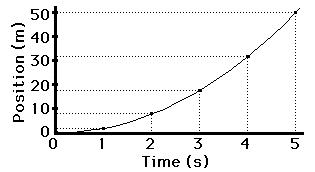
The picture of the position vs. time graph shows an object that is...
a)
accelerating/speeding up
b)
moving at a constant speed 
c)
not moving 
d)
accelerating/slowing down. 
3.
What is Newton's First Law known as? The Law of
a)
Friction
b)
Mass
c)
Inertia
d)
Gravity
4.
What is the formula for force?
a)
F=M/A
b)
F=MA
c)
F=AX
d)
what is force?
5.
What is Newton's Third Law?
a)
Object in motion stays in motion and an object at rest stays at rest unless acted on by a outside force
b)
Force = mass x acceleration
c)
For every action there is an equal and opposite reaction
6.
According to Newton's second law, if you increase the force applied to an object :
a)
it accelerates more
b)
it doesn't move
c)
you get more inertia
d)
it decelerates
7.
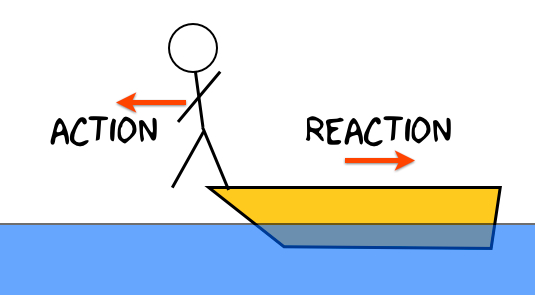
What law of motion does this picture represent?
a)
Newtons 1st law
b)
Newtons 4th law 
c)
Newtons 3rd law 
d)
Newtons 2nd law
8.
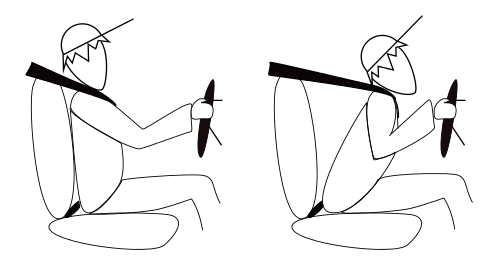
What Newtons law does this picture represent
a)
Newtons 2nd law 
b)
Law of gravity 
c)
Newtons 1st law
d)
Newtons 5th law
9.
The distance between 2 corresponding parts of a wave  (example- crest to crest) is its _____________________
a)
trough
b)
frequency
c)
amplitude
d)
wavelength
10.
How often a wave occurs is the wave's __________________
a)
crest
b)
frequency
c)
wavelength
d)
resting point
11.
Any material that a wave travels through is called a ____________________.
a)
vibration
b)
compression
c)
medium
d)
crest
12.
What are the highest parts of a transverse wave called?
a)
amplitude
b)
trough
c)
resting point
d)
crest
13.
What number represents the wavelength?
a)
1
b)
2
c)
3
d)
4
14.
What number represents the amplitude?
a)
1
b)
2
c)
3
d)
4
15.
As the frequency of a wave increases, the __________________ decreases.
a)
amplitude
b)
resting point
c)
wavelength
d)
crest
16.
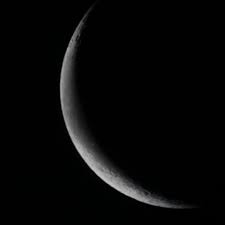
Name the moon phase
a)
waning crescent
b)
waxing crescent
c)
waning gibbous
d)
waxing gibbous
17.
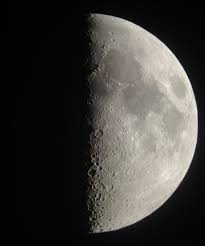
Name the moon phase
a)
First Quarter
b)
Last Quarter
c)
New Moon
d)
Full Moon
18.
Name the phase of the moon for letter f
a)
Waning Gibbous
b)
Waxing Gibbous
c)
Waning Crescent
d)
Waxing Crescent
19.
Name the moon phase that would come AFTER this moon.
a)
waning crescent
b)
waxing crescent
c)
waning gibbous
d)
waxing gibbous
20.
What is the correct order of the Earth, Moon, and Sun in order for a lunar eclipse to occur?
a)
Earth, Moon, Sun
b)
Moon, Sun Earth
Moon, Sun, Earth
c)
Sun, Earth, Moon
21.
What type of eclipse is occuring inthe diagram?
a)
solar
b)
lunar
22.
What is the correct order of the Earth, Moon, and Sun in order for a solar eclipse to occur?
a)
Earth, Moon, Sun
b)
Moon, Sun Earth
Moon, Sun, Earth
c)
Sun, Earth, Moon
23.
Which of the following orders the rock layers accurately from youngest to oldest?
a)
1, 2, 3, 4, 5
b)
5, 4, 3, 2, 1
c)
2, 3, 4, 5, 1
d)
1, 2, 3, 5, 4
24.
Which of the following rock layers is relatively the oldest?
a)
H
b)
P
c)
L
d)
M
25.
A cell is...
a)
the basic unit of structure and function in living organism
b)
an organism
c)
a basic part of everything that we see
d)
found only in animals, not plants
26.
Which of the following are NOT found in animal cells
a)
chloroplasts and cytoplasm
b)
chloroplasts and cell wall
c)
cell wall and cell membrane
d)
mitochondria and nucleus
27.

Which of the following converts food into energy for the cell?

a)

vacuole

b)

mitochondria

c)

cytoplasm

d)

cell membrane

28.
What do vacuoles do? 
a)
They actually do not have an important role
b)
They protect the cell
c)
They are the brain of the cell
d)
storage area for cells; water storage in plants 
29.
Which of the following is a correct list of structures found in both plant AND animal cells?
a)
mitochondria, vacuole, nucleus, cell membrane, cytoplasm
b)
mitochondria, vacuole, nucleus, cell membrane, cytoplasm, cell wall, chloroplasts
c)
mitochondria, vacuole, nucleus, cell membrane, cell wall, chloroplasts
d)
mitochondria, vacuole, nucleus, cell membrane, cell wall
30.
Under a microscope, a student observes a specimen containing a cell wall, nucleus, and chloroplasts. Which of the following could the specimen being observed belong to?
a)
oak tree leaf
b)
human
c)
bacteria
d)
cat hair
31.
Which of the following would help you determine if the image shown comes from a plant or an animal?
a)
the number of mitochondria
b)
the size of the vacuole
c)
the presence of a cell wall
d)
all of these could be used
32.
In an endothermic reaction, heat is ,,,
a)
taken in
b)
given out
33.
When iron nails get rusty, heat is released.  What process is this?
a)
Exothermic
b)
Endothermic
34.
What happens to particles as they heat up?
a)
They slow down
b)
Nothing
c)
They don't move
d)
They speed up
35.
Which of the following is a sign that a chemical reaction has occurred?
a)
change in shape
b)
melting
c)
bubbles of gas appear
d)
dissolving
36.
Jack has a rock. The rock has a mass of 14g and a volume of 2cm3. What is the density of the rock?
a)
7 mL
b)
7 g/cm3
c)
28 g/cm3
d)
1/7 g/cm3
37.
Which lab tool might you use to measure the volume of a liquid?
a)
electric scale
b)
bunsen burner
c)
test tube
d)
graduated cylinder
38.
An object with which of the following densities will float on water?
a)
0.7 g/cm3
b)
1.2 g/cm3
c)
3.5 g/cm3
d)
11.4 g/cm3
39.
The following liquids are poured together in a beaker: alcohol (density=0.79), corn syrup (density=1.38), water (density=1.0), and cooking oil (density=0.93).  Which of these liquids will sink to the bottom of the beaker?
a)
alcohol
b)
corn syrup
c)
water
d)
cooking oil
40.
Why do some substances float on water?
a)
they are warmer than water
b)
they are cooler than water
c)
they are more dense than water
d)
they are less dense than water
41.
Helium balloons rise on earth because
a)
helium is less dense than air
b)
helium is more dense than air
c)
helium is cooler than air
d)
helium is warmer than air
42.

___________ are the smallest unit of an element that maintains the properties of that element.

a)

Atoms

b)

Elements

c)

Compounds

d)

Mixtures

43.

An _______________ is made up of one or more of the same kind of atom chemically combined.

a)

atom

b)

element

c)

molecule

d)

compound

44.

A __________________ is a substance that has definite physical and chemical properties such as appearance, melting point, and reactivity.

a)

mixture

b)

pure substance

c)

compound

d)

element

45.

True or False: elements AND compounds are pure substances.

a)

True

b)

False

46.

Biochemicals are divided into 4 categories: carbohydrates, lipids, nucleic acids, and _______________.

a)

proteins

b)

fats

c)

sugars and starches

d)

fibers

47.

A ______________ mixture is one that does not have a uniform composition.

a)

heterogeneous

b)

homogenous

c)

pure substance

48.

A _________________ mixture is one where the substances are evenly spread throughout.

a)

heterogeneous

b)

homogeneous

c)

pure substance

49.

In a ______________, one substance is dissolved in another substance.

a)

solution

b)

suspension

c)

colloid

50.

Fruit Loops, pizza, and Skittles are examples of ____________________ mixtures.

a)

heterogeneous

b)

homogeneous

c)

pure

51.

Coffee, mouthwash, and vinegar are examples of __________________ mixtures.

a)

heterogeneous

b)

homogeneous

c)

pure

52.
The water that falls from the sky can be _______ or collected, and stored in rivers, lakes, and oceans.
a)
accumulated
b)
runoff
c)
ground water
d)
transpiration
53.
Water from rain or snow that flows over the surface of the land into streams, rivers, and lakes is called...
a)
accumulation
b)
runoff
c)
ground water
d)
surface water
54.
The process by which plants release water through the pores in their leaves is called...
a)
accumulation
b)
dormancy 
c)
photosynthesis 
d)
transpiration
55.
The transformation of water vapor back into liquid water by cooling is called...
a)
condensation
b)
evaporation
56.
If a rain drop lands in the ocean, it will eventually _______, and return to the clouds.
a)
condense
b)
evaporate
57.
The higher water vapor rises in the atmosphere the _______ it gets.
a)
warmer
b)
colder
58.
What collects in cracks and spaces in the rocks and sediments beneath Earth's surface?
a)
runoff
b)
surface water
c)
ground water
d)
water vapor
59.
Rock that forms when sediment from older rocks get pressed and cemented together.
a)
Sedimentary Rock
b)
Metamorphic Rock
c)
Igneous Rock
60.
The process by which metamorphic rocks are formed...
a)
heat and pressure
b)
erosion and deposition
c)
melting and cooling
61.
The process by which igneous rocks are formed...
a)
heat and pressure
b)
melting and cooling
c)
weathering and erosion
62.
This rock was formed by smaller pieces of rock that settled at the bottom of a lake millions of years ago. What type of rock is this?
a)
Sedimentary
b)
Igneous
c)
Metamorphic
63.
True or False: Once a rock is sedimentary, it cannot become an igneous rock.
a)
True
b)
False
64.
The process when rocks break into smaller pieces due to exposure to natural elements is called
a)
erosion
b)
weathering
c)
sediments
65.
Which of the following is an example of an interaction between a living and nonliving organism?
a)
a snake using a mouse for food
b)
a worm using the soil as shelter
c)
a bird using an insect for food
66.
Is fire a natural event that causes a change in the environment?
a)
Yes
b)
No
67.
Is people cutting down trees a natural event that causes a change in the environment?
a)
yes
b)
no
68.
Which of these organisms is a producer?
a)
strawberries
b)
insect
c)
mouse
d)
owl
69.
What is a source of energy for the mouse?
a)
strawberries
b)
insects
c)
other mice
d)
owls
70.
An ecosystem is made up of _______ and ________ things.
a)
Living and nonliving
b)
Alive and dead
c)
Plants and animals
d)
Land and water
71.
What does the word organism mean?
a)
Living thing
b)
Nonliving thing
c)
Organs in your body
d)
Organ player
72.
What is the long-lasting relationship between two different organisms?
a)
Symbiosis
b)
Mutualism
c)
Parasitism
d)
Commensalism
73.
Which type of symbiosis has both organisms benefit?
a)
Symbiosis
b)
Commensalism
c)
Parasitism
d)
Mutualism
74.
In which type of symbiosis does one organism benefit and one is not affected?
a)
Symbiosis
b)
Commensalism
c)
Mutualism
d)
Parasitism
75.
In which type of symbiosis does one benefit and one is harmed?
a)
Symbiosis 
b)
Mutualism
c)
Parasitism
d)
Commensalism
76.
A clownfish cleaning a sea anemone and the anemone protecting the clownfish is an example of what?
a)
Commensalism
b)
Parasitism
c)
Organism
d)
Mutualism
77.
A hookworm living in the intestines of a dog and taking nutrients away from the dog, making it sick shows:
a)
Parasitism
b)
Organism
c)
Mutualism
d)
Commensalism
78.
A cattle egret hanging out on top of an elephant and eating insects that fly up out of the grass as the elephant walks shows:
a)
Parasitism
b)
Commensalism
c)
Mutualism
d)
Organism
79.
When you breathe in air, you inhale oxygen into your lungs and exhale ____.
a)
carbon dioxide
b)
oxygen
c)
nitrogen
d)
carbon monoxide
80.
With circulation, the heart provides your body with which of the following? Choose the best answer. 
a)
oxygen
b)
nutrients
c)
a way to get rid of waste
d)
all of the above
81.
The main purpose of the ____________ system is to break food particles into pieces that can be used.
a)
circulatory
b)
respiratory
c)
digestive
d)
skeletal
82.
When tissues come together, they form ___________.
a)
cells
b)
atoms
c)
organs
d)
systems
83.
Which of the following body systems work together for support, protection, and movement?
a)
respiratory and cardiovascular
b)
skeletal and muscular
c)
skeletal and integumentary
d)
digestive and respiratory
84.
Which of the following shows the levels of organization of an organism from LEAST to MOST complex.
a)
cells-tissues-systems-organs
b)
organs-cells-systems-tissues
c)
systems-organs-tissues-cells
d)
cells-tissues-organs-systems
85.

Gravity is...

a)

the force of attraction between any two objects

b)

the force of attraction and repulsion between like and unlike poles

c)

any phenomenon associated with stationary or moving electrons,ions or other charged particles

d)

the force that attracts a body toward the center of the earth, or toward any other physical body having mass.

86.

Magnetism is...

a)

the force of attraction between any two objects

b)

the force of attraction and repulsion between like an unlike poles

c)

any phenomenon associated with stationary or moving electrons,ions, or other charged particles

87.

Electricity is...

a)

the force of attraction between any two objects

b)

the force of attraction and repulsion between like an unlike poles

c)

any phenomenon associated with stationary or moving electrons,ions, or other charged particles

88.

What factor affects the force of a magnet

a)

Mass

b)

Distance

c)

Density

d)

Weight

89.

The moon causing tides on Earth's oceans is an example of...

a)

Magnetism

b)

Gravity

c)

Electricity

d)

A chemical reaction

90.

If a magnet breaks in half, does it still have two poles...

a)

Yes

b)

No

91.

Two factors that affect the magnitude of the gravitational force between two objects are...

a)

mass and distance

b)

weight and distance

c)

density and size

d)

mass and weight

92.

Which of the following would exert the greatest gravitational force?

a)

Earth's moon

b)

The Sun

c)

Earth

d)

JUpiter

93.

The solar system is kept in flow due to...

a)

the sun's exertion of heat

b)

the sun's exertion of gravity on the planets

c)

the planets having natural instincts of revolving around the sun

d)

an electric connection between the planets and the sun

94.

The amount of gravity acting on an object is that object's...

a)

mass

b)

weight

c)

height

d)

density

95.

A material that allows heat and electrons to flow through easily is a(n)...

a)

conductor

b)

generator

c)

insulator

d)

electron

96.

Electrons that flow in a closed path is called a...

a)

path

b)

current

c)

circuit

d)

wire

97.

Protons have a _____ charge, while electrons have a _____ charge.

a)

negative/positive

b)

positive/negative

c)

positive/neutral

d)

neutral/negative

98.

Energy in motion is ____________ energy.

a)

Potential

b)

Energy

c)

Kinetic

d)

Friction

99.

____________ is the ability to do work or cause change.

a)

Energy

b)

Force

c)

Friction

d)

Motion

100.

The faster an object moves, the ________ kinetic energy it has.

a)

more

b)

less

101.

__________ energy is stored energy.

a)

Potential

b)

Kinetic

c)

Force

d)

Gravity

102.

At which point is potential energy greatest?

a)

W

b)

X

c)

Y

d)

Z

103.

When a pendulum swings, at which point is kinetic energy greatest?

a)

1

b)

2

c)

3

d)

4

104.

What is happening to the potential energy between position 1 to 3?

a)

Decreasing

b)

Increasing

c)

Stays the same

105.

The Lay of Conservation of Energy states that energy cannot be ________ or ________, but it can change from one form to another.

a)

created, destroyed

b)

gravity, force

c)

heat, created

106.

What are the two factors that affect kinetic energy?

a)

time and energy

b)

power and mass

c)

mass and speed

d)

time and work

107.
Conduction can only occur between two objects when –
a)
one object is less dense than the other.
b)
both objects are in physical contact with each other.
c)
one of the objects is made of a metal.
d)
both objects are exactly the same temperature.
108.
Radiation is a method of thermal energy transfer that moves -
a)
through empty space.
b)
when objects touch.
c)
only through solids.
d)
in the motion of fluids.
109.
Which of the following describes a way in which heat energy will be transferred by conduction?
a)
Sample 1 to Sample 2
b)
Sample 3 to Sample 2
c)
Sample 3 to Sample 1
d)
Sample 2 to Sample 3
110.
Which was the most effective at preventing heat transfer from the water to the environment?
a)
Container P
b)
Container Q
c)
Container R
d)
Container S
111.
What two kinds of heat transfer are represented?
a)
stove→pot=radiation pot→egg=conduction
b)
stove→pot=conduction pot→egg=radiation
c)
stove→pot=convection pot→egg=conduction
d)
stove→pot=conduction pot→egg=convection
112.
Which container allowed the most transfer of thermal energy from the water to the environment?
a)
Glass
b)
Wood
c)
Paper
d)
Plastic
113.
The passing of traits from parents to offspring
a)
heredity
b)
genetics
c)
trait
d)
alleles
114.
An organism's physical appearance or visible traits
a)
fertilization
b)
genotype
c)
phenotype
d)
homozygous
115.
An organism's genetic makeup, or allele combination
a)
fertilization
b)
genotype
c)
phenotype
d)
heterozygous
116.
A new organism begins to form when egg and sperm join in a process called
a)
fertilization
b)
phenotype
c)
homozygous
d)
heterozygous
117.
An organism that has two different alleles for a trait (hybrid)
a)
fertilization
b)
genotype
c)
homozygous
d)
heterozygous
118.
An organism that has two identical alleles for a trait (purebred)
a)
genotype
b)
phenotype
c)
homozygous
d)
heterozygous
119.

During the moon phase shown in the image Earth will experience a -

a)

Spring Tide

b)

Neap Tide

120.

During the moon phase shown in the image Earth will experience a -

a)

Spring Tide

b)

Neap Tide

121.

During the moon phase shown in the image Earth will experience a -

a)

Spring Tide

b)

Neap Tide

122.

During which moon phases will Earth experience the strongest, or greatest difference between high and low tides?

a)

First Quarter and Full Moon

b)

First Quarter and Last Quarter

c)

New Moon and Full Moon

d)

New Moon and Last Quarter

123.

During which moon phases will Earth experience the weakest, or least difference between high and low tides?

a)

First Quarter and Full Moon

b)

First Quarter and Last Quarter

c)

New Moon and Full Moon

d)

New Moon and Last Quarter