
 Worksheets
6th Grade Earth Science Review Game
Total questions: 72
Worksheet time: 1hrs 10mins
Name
Class
Date
1.

What kind of galaxy is this?
a)
Ring
b)
Irregular
c)
Spiral
d)
Elliptical
2.
What is the name of our galaxy?
a)
Snickers
b)
Andromeda
c)
Local Group
d)
Milky Way
3.

The graph below shows the diameters of the planets. The diameter of a planet is the distance from one side to the other through the middle at the widest part. Which two planets are closest in size?
a)
Uranus and Neptune
b)
Venus and Mars
c)
Jupiter and Saturn
d)
Mercury and Earth
4.

Pluto is called a dwarf planet. It is smaller than the planets in the solar system. The size of each solar system planet is listed in the table below. Which planet is MOST likely closest to Pluto in size?
a)
Mars
b)
Mercury
c)
Jupiter
d)
Neptune
5.

Which set of planets is in order, from largest to smallest?
a)
Jupiter, Mars, Mercury
b)
Jupiter, Venus, Earth
c)
Uranus, Saturn, Mars
d)
Uranus, Mars, Venus
6.

How do gas giants compare to the terrestrial planets?
a)
terrestrial planets are much larger
b)
terrestrial planets are much smaller
c)
gas giants are slightly larger
d)
gas giants are slightly smaller
7.

Melinda learned that days in some seasons have more daylight hours than in other seasons. Which season receives the MOST hours of sunlight in the Northern Hemisphere?
a)
Fall
b)
Spring
c)
Summer
d)
Winter
8.
What is the approximate length of time it takes the Moon to complete one lunar cycle?
a)
14 Days
b)
29 Days
c)
180 Days
d)
365 Days
9.
The moon revolves around Earth about once every________.
a)
day
b)
year
c)
week
d)
month
10.
Day and night are caused by _______________.
a)
Earth's rotation
b)
Earth's revolution
c)
Moon's revolution
d)
Moon's rotation
11.
The astronomer ____________ theorized a _______________ that said everything revolved around the Earth.
a)
Galileo; heliocentric universe
b)
Ptolemy; geocentric universe
c)
Ptolemy; heliocentric universe
d)
Galileo; geocentric universe
12.
_______________ Law of Universal Gravitation says that all objects in the universe have a gravitational force. This force of gravity depends on __________________.
a)
Copernicus; size and distance
b)
Newton; weight and distance
c)
Newton; mass and distance
d)
Galileo; size and distance
13.
List the following items from smallest to largest.
a)
universe, solar system, galaxy
b)
galaxy, solar system, universe
c)
solar system, galaxy, universe
d)
solar system, universe, galaxy
14.
______________ improved on earlier models of the telescope to identify 4 moons of Jupiter, rings of Saturn, phases of Venus, and more to become known as the "Father of Modern Observational Astronomy."
a)
Copernicus
b)
Newton
c)
Galileo
d)
Ptolemy
15.

Our solar system has several terrestrial planets. They include:
a)
Jupiter, Earth, Mars
b)
Venus, Mercury, Mars
c)
Saturn, Neptune, Uranus
d)
Pluto, Jupiter, Earth
16.

True or False: One half of the whole moon is ALWAYS illuminated.
a)
True
b)
False
17.
The asteroid belt is located between which two planets?
a)
Earth and Mars.
b)
Venus and Earth.
c)
Mars and Jupiter.
d)
Mercury and Earth.
18.

A _______ is a burning body of matter that has entered Earth's atmosphere; "shooting star"
a)
Meteor
b)
Comet
c)
Asteroid
d)
Solar Flare
19.

Which phase of the Moon is this?
a)
Full Moon
b)
First Quarter
c)
Last Quarter
d)
New Moon
20.

Which phase of the moon is this?
a)
Full Moon
b)
Waxing Crescent
c)
Waning Crescent
d)
Waxing Gibbous
21.

It takes one year for the Earth to orbit the Sun. based on the data in the table, which planet has the longest year?
a)
Jupiter
b)
Mars
c)
Mercury
d)
Neptune
22.

If the time for Earth to REVOLVE once around the sun DECREASED, what would happen?
a)
A day would be longer.
b)
A day would be shorter.
c)
A year would be longer.
d)
A year would be shorter.
23.

When the sun, earth, and moon form a 90 degree angle, we have _____________.
a)
Neap Tides
b)
Spring Tides
c)
Medium Tides
d)
Winter Tides
24.
The study of the universe
a)
Galaxy
b)
Geocentric
c)
Astonomy
d)
Heliocentric
25.
The earth centered view of the universe
a)
Galaxy
b)
Geocentric
c)
Astonomy
d)
Heliocentric
26.
The sun centered view of the universe
a)
Galaxy
b)
Geocentric
c)
Astonomy
d)
Heliocentric
27.
Copernicus' view of the universe
a)
Galaxy
b)
Geocentric
c)
Astonomy
d)
Heliocentric
28.
Ptolemy's view of the universe
a)
Galaxy
b)
Geocentric
c)
Astonomy
d)
Heliocentric
29.
the time required for the earth to orbit around the sun
a)
Year
b)
Month
c)
Day
d)
6 Months
30.
the time required for the Moon to orbit around the Earth
a)
Year
b)
Month
c)
Day
d)
6 Months
31.
the time required for the earth to rotate once on it axis
a)
Year
b)
Month
c)
Day
d)
6 Months
32.
Tycho Brahe is a danish astronomer who
a)
recorded precise observation using large tools
b)
developed the Laws of Planetary Motion
c)
was the 1st to use a Telescope
d)
developed the Law's of Gravity
33.
Johannes Kepler
a)
recorded precise observation using large tools
b)
developed the Laws of Planetary Motion
c)
was the 1st to use a Telescope
d)
developed the Law's of Gravity
34.
Issac Newton
a)
recorded precise observation using large tools
b)
developed the Laws of Planetary Motion
c)
was the 1st to use a Telescope
d)
developed the Law's of Gravity
35.
Edwin Hubble
a)
was the 1st to use a telescope
b)
discovered that other galaxies existed beyond out galaxy.
c)
developed the laws of planetary motion
d)
developed the laws of gravity
36.
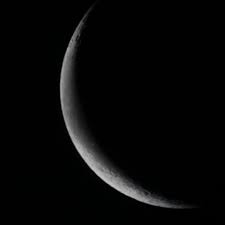
Name the moon phase
a)
waning crescent
b)
waxing crescent
c)
waning gibbous
d)
waxing gibbous
37.
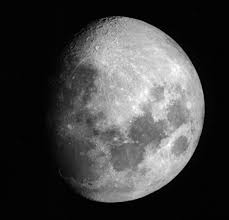
Name the moon phase
a)
waning crescent
b)
waxing crescent
c)
waning gibbous
d)
waxing gibbous
38.

Name the phase of the moon for letter a
a)
First Quarter
b)
Last Quarter
c)
Waxing Gibbous
d)
Waning Gibbous
39.

Name the phase of the moon for letter f
a)
Waning Gibbous
b)
Waxing Gibbous
c)
Waning Crescent
d)
Waxing Crescent
40.
Planets that are closer to the sun
a)
take more time to orbit
b)
take less time to orbit
41.
The order of the planets is:
a)
Mars,Venus,Earth,
Mercury,Saturn
Jupiter, Uranus, Neptune
Mercury,Saturn
Jupiter, Uranus, Neptune
b)
Earth,Venus,Mars
Jupiter, Neptune,
Mercury,Saturn,
Uranus
Jupiter, Neptune,
Mercury,Saturn,
Uranus
c)
Mercury,Venus,Earth
Mars,Jupiter,
Saturn,Uranus
Neptune
Mars,Jupiter,
Saturn,Uranus
Neptune
42.

Which planet is the largest?
a)
Jupiter
b)
Saturn
c)
Uranus
d)
Neptune
43.
Which planet is fifth from the sun?
a)
Saturn
b)
Jupiter
c)
Mars
d)
Earth
44.
Which planet is seventh from the sun?
a)
Saturn
b)
Earth
c)
Venus
d)
Uranus
45.

When the Northern Hemisphere of Earth is Leaning away from the Sun, What season is the Southern Hemisphere experiencing?
a)
Summer
b)
Winter
c)
Spring
d)
Fall
46.
What are the reasons for the seasons?
a)
Earth's tilt and rotation.
b)
Earth's rotation and revolution.
c)
Earth's tilt and revolution.
d)
Earth's tilt and resolution
47.
How long does it take for Earth to complete on full rotation?
a)
365 days
b)
23 hours
c)
24 hours
d)
1 month
48.
How long does it take the Earth to make one REVOLUTION around the Sun?
a)
12 hours
b)
24 hours
c)
365 days
d)
29.5 days
49.
Ocean currents are caused by-
a)
underwater earthquakes
b)
human influence
c)
sun moon and Earth interaction
d)
density differences
50.
Seawater is typically denser than freshwater due to seawaters-
a)
greater depth
b)
smaller mass
c)
higher salinity
d)
lower freezing point
51.
What first accurately mapped the ocean floor?
a)
The Spanish armada
b)
Chinese army
c)
Magellan
d)
sonar
52.
What is not a type of ocean pollution?
a)
oil spill
b)
non-point source pollution
c)
upwelling
d)
trash dumping
53.
What causes the tides to change?
a)
rotation of the Earth
b)
magic
c)
gravitational pull from the moon
d)
ocean currents
54.

What do the arrows represent in the picture?
a)
waves
b)
currents
c)
tides
55.
The Gulf Stream is
a)
a stream behind the school
b)
a current in the Atlantic Ocean that flows on the eastern coast of North America
c)
a boat
d)
part of the ocean floor
56.
The Coriolis Effect is caused by
a)
Earth rotating around the sun
b)
Earth rotating on its axis
c)
The tides
d)
Gravity
57.
Two types of water currents are
a)
local and global
b)
sea and land
c)
surface and deep
d)
warm and cold
58.
As you go deeper in the ocean, the water is colder and less salty.
a)
True
b)
False
59.

Compared with surface currents, deep currents are
a)
colder and less dense.
b)
warmer and less dense.
c)
warmer and denser.
d)
colder and denser.
60.
What is the cause of rising surface temperatures of the Pacific Ocean, drought in the western United States, and flooding on the Pacific coast of South America?
a)
the Gulf Stream
b)
the Jet Stream
c)
La Nina
d)
El Nino
61.
Temperature and salinity affect the ______ of water.
a)
none of the other choices
b)
wave speed
c)
depth
d)
density
62.
Clean Water Act 1972
a)
established the National Park Service (NPS), an agency of the U.S. Department of the Interior.
b)
U.S. federal law that regulates the discharge of pollutants into the nation's surface waters, including lakes, rivers, streams, wetlands, and coastal areas. Passed in 1972 and amended in 1977 and 1987, the Clean Water Actwas originally
c)
legislation that grants public access to documents or other data in the possession of a government agency or public authority, unless the information falls into a category that is specifically excluded from the terms of the legislation.
63.

Free-floating forms with little power of locomotion.
a)
Plankton
b)
Nekton
c)
Benthos
64.

Free swimmers
a)
Plankton
b)
Nekton
c)
Benthos
65.

Bottom Dwellers
a)
Plankton
b)
Nekton
c)
Benthos
66.
A possible explanation to a problem that has not yet been tested.
a)
data
b)
theory
c)
hypothesis
d)
fact
67.

Wha type of tide would this arrangement of earth-moon-sun create?
a)
full moon tide
b)
new moon tide
c)
neap tide
d)
spring tide
68.

What type of tides would this arrangement of earth-moon-sun create?
a)
neap tide
b)
spring tide
c)
new moon tide
d)
full moon tide
69.
Tides are caused by
a)
strong winds that blow over ocean waters.
b)
the interaction of Earth, the moon and the sun.
c)
the shifting of the plates on the ocean floor.
d)
variations in the salinity of ocean water
70.
Most scientists believe the Big Bang Theory explains which of the following questions?
a)
How our planets and moons formed
b)
How our universe began
c)
How the sun turns hydrogen into helium
d)
How fast light travels through space
71.
As galaxies move away from our galaxy
a shift on the electromagnetic spectrum is noticed. This phenomena is
called _____________.
a)
redshift
b)
blueshift
72.
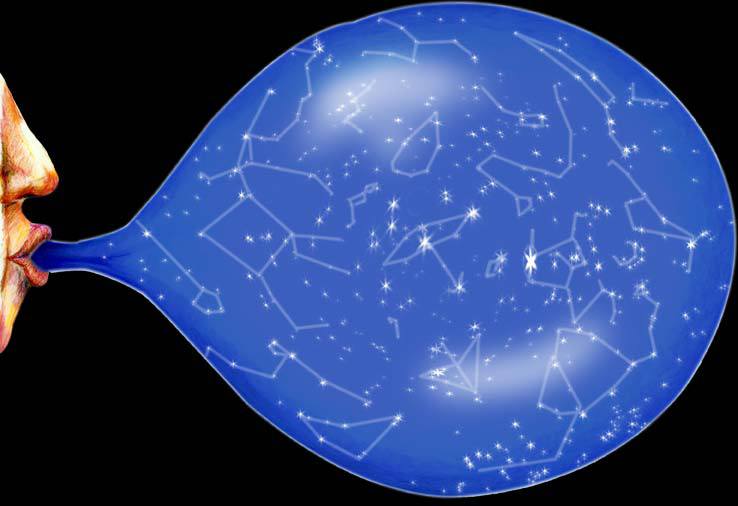
What does the Big Bang theory suggest?
a)
The universe was just there
b)
The Milky Way is the only solar system
c)
The universe is continually expanding
d)
The universe is collapsing in toward a single point
100 %

