Wayground logo

Free Printable Worksheets

Font size

S
M
L
XL
Worksheets

Properties of Matter

Total questions: 74

Worksheet time: 43mins

Name
Class
Date
1.

_____________________ is the amount of space something takes up.

a)

density

b)

volume

c)

mass

d)

matter

2.

What are the three main states of matter?

a)

solid, volume, mass

b)

density, volume, mass

c)

solid, liquid, gas

d)

density, gas, volume

3.
Liquid matter takes the shape of _______________.
a)
a gas
b)
water
c)
a pet
d)
Its container
4.
What is the measure of gravity on an object?
a)
matter
b)
mass
c)
weight
d)
volume
5.

__________ have a definite shape and volume.

a)

Liquids

b)

Solids

c)

Gases

6.

______________ have an indefinite shape and volume.

a)

Liquids

b)

Solids

c)

Gases

7.

_______________ is anything that has mass and takes up space.

a)

Energy

b)

Matter

c)

Volume

d)

Gravity

8.

Texture, color, states of matter, flexibility, freezing & melting points are examples of

a)

Chemical Properties

b)

Physical Properties

c)

States of Mass

9.
Which of the following is an example of a chemical property?
a)
melting
b)
bending a paper clip
c)
rusting
d)
boiling water
10.
An example of a physical property is 
a)
flammability
b)
acidic
c)
color
d)
ability to rust
11.

_______________________ have an indefinite shape but do have a definite volume.

a)

Solids

b)

Liquids

c)

Gasses

12.
In which state of matter are the particles closest together?
a)
Solid
b)
Liquid
c)
Gas
13.
In which state of matter are the particles farthest apart?
a)
Solid
b)
Liquid
c)
Gas
14.
In which state of matter are the particles close together but are able to slide past one another?
a)
Solid
b)
Liquid
c)
Gas
15.

Which is an example that show evaporation.

a)

Ice cube tray being filled

b)

Ice pop melting

c)

Hot soup

d)

A puddle of water slowly "disappearing" in the sun

16.

The amount of matter in an object

a)

Mass

b)

Volume

c)

Equation

d)

Particle

17.

A change that does not result in a new substance being formed

a)

Physical Change

b)

Chemical Change

c)

Transformation

d)

Substance

18.

Which unit is used to measure volume?

a)

degrees celsius

b)

milliliters

c)

meters

d)

grams

19.

Which unit is used to measure length?

a)

degrees celsius

b)

milliliters

c)

meters

d)

grams

20.

Which unit is used to measure mass?

a)

degrees celsius

b)

milliliters

c)

meters

d)

grams

21.

Which unit is used to measure temperature?

a)

degrees celsius

b)

milliliters

c)

meters

d)

grams

22.

If you have a gas in a container that has a stopper on the top and you take the stopper off the gas will

a)

stay the same.

b)

be compacted.

c)

will flow out of the container.

23.

If you have a liquid in a container that has a stopper on the top and you take the stopper off the liquid will

a)

stay the same.

b)

be compacted.

c)

will flow out of the container.

24.

Mrs. Lavere and Mrs. Paulisczak were each given 20 grams of clay. Mrs. LaVere made a dish, Mrs. Paulisczak didn't make anything. When they each placed their clay in a pan balance what would they observe?

a)

The pan balance would be level.

b)

One side would be heavier than another.

25.
An object with which of the following densities will float on water?
a)
0.7 g/cm3
b)
1.2 g/cm3
c)
3.5 g/cm3
d)
11.4 g/cm3
26.

A can of Coke will sink in a bowl of water. A can of Diet Coke will float in a bowl of water. What does this tell you about the density of the Diet Coke?

a)

it is greater than 1

b)

it is less than 1

c)

it is equal to 1

d)

it is equal to -1

27.
Which property of matter is determined by dividing its mass by its volume?
a)
elasticity
b)
buoyancy
c)
density
d)
viscosity
28.
The following liquids are poured together in a beaker: alcohol (density=0.79), corn syrup (density=1.38), water (density=1.0), and cooking oil (density=0.93).  Which of these liquids will sink to the bottom of the beaker?
a)
alcohol
b)
corn syrup
c)
water
d)
cooking oil
29.
Will an object with a density of 1.01 g/cm3 float or sink?
a)
float
b)
sink
30.
Mercury is a metal that is liquid at room temperature and has a density of 13.5 g/cm3.  Which of these metals would sink below the mercury if dropped into a container of mercury?
a)
gold (density=19.3 g/cm3)
b)
lead (density=11.4 g/cm3)
c)
iron (density=7.9g/cm3)
d)
aluminum (density=2.7g/cm3)
31.
A brick sinks in water while a wooden block of the same size floats.  This is because the brick has a
a)
lower volume than the wooden block
b)
lower density than the wooden block
c)
higher volume than the wooden block
d)
higher density than the wooden block
32.
What is the density of water?
a)
0 g/ml
b)
1 g/ml
c)
10 g/ml
d)
100 g/ml
33.
Why do some substances float on water?
a)
they are warmer than water
b)
they are cooler than water
c)
they are more dense than water
d)
they are less dense than water
34.
Helium balloons rise on earth because
a)
helium is less dense than air
b)
helium is more dense than air
c)
helium is cooler than air
d)
helium is warmer than air
35.

The word that best describes any substance that is able to dissolve in a solvent is...

a)

Solute

b)

Solvent

c)

Miscible

d)

Insoluble

36.

Which of the following describes miscible?

a)

2 or more gases that can not dissolve in each other

b)

2 or more solids that can not dissolve in each other

c)

2 or more substances (regardless of phase) that can not dissolve in each other

d)

2 or more liquids that can dissolve in each other

37.

Two liquids that can be mixed together but separate shortly after are:

a)

immiscible

b)

insoluble

c)

miscible

d)

soluble

38.

More solute can be dissolved in a(n) ____________ solution.

a)

saturated

b)

supersaturated

c)

suspended

d)

unsaturated

39.

Any substance that dissolves in another substance is described as

a)

insoluble

b)

immiscible

c)

soluble

d)

miscible

40.

A __________________ solution contains the maximum amount of dissolved solute for a given amount of solvent.

a)

saturated

b)

supersaturated

c)

suspended

d)

unsaturated

41.

Oil does not dissolve in water. Which term would best describe a mixture of oil and water?

a)

miscible

b)

immiscible

c)

saturated

d)

unsaturated

42.

Kool-Aid powder, sugar, and water


Identify the solvent

a)

water

b)

powder

c)

sugar

d)

powder and sugar

43.

What is the term for when a solid does not dissolve in?

a)

soluble

b)

insolube

c)

immiscible

d)

miscible

44.

A temperature scale on which water freezes at 0 degrees and boils at 100 degrees

a)

boiling point

b)

farenheit

c)

celsius

d)

temperature

45.

The temperature at which a substance changes from a liquid to a solid (for water, this is 0 degrees Celsius, 32 degrees Fahrenheit)

a)

freezing point

b)

boiling point

c)

melting point

d)

evaporation

46.

The temperature at which a substance changes from a solid to a liquid (for water, this is 0 degrees Celsius, 32 degrees Fahrenheit)

a)

boiling point

b)

freezing point

c)

melting point

d)

evaporation

47.

___ is the physical change in a matter from a liquid to a gas

a)

evaporation

b)

melting point

c)

boiling point

d)

condensation

48.
What is happening at the boiling point?
a)
liquid to gas
b)
gas to liquid
c)
solid to liquid
d)
liquid to solid
49.

In EXPANSION particles are

a)

heated

b)

cooled

50.

In EXPANSION particles move

a)

fast

b)

slow

51.

In EXPANSION particles

a)

spread out (increase volume)

b)

come close together ( decrease volume)

52.

In CONTRACTION particles are

a)

heated

b)

cooled

53.

In CONTRACTION particles move

a)

fast

b)

slow

54.

In CONTRACTION particles

a)

spread out (increase volume)

b)

come close together ( decrease volume)

55.
Which of the following best describes an atom?
a)
protons and neutrons grouped together
b)
protons and electrons grouped together
c)
a core (center) of protons and neutrons surrounded by electrons
d)
a core of electrons and neutrons surrounded by protons
56.
Which of the following is found farthest from the center of an atom?
a)
nucleus
b)
proton
c)
neutron
d)
electron
57.
the smallest particle of matter
a)
atom
b)
element
c)
molecule
d)
compound
58.
made up of one or more of the same type of atom
a)
atom
b)
element
c)
molecule
d)
compound
59.
made up of two or more atoms chemically combined
a)
atom
b)
element
c)
molecule
d)
compound
60.
Which of the following cannot be broken down into something simpler?
a)
A compound
b)
An element
c)
A mixture
d)
A chemical formula
61.
What needs to occur in order for elements to form a compound?
a)
An elemental reaction
b)
An atomic reaction
c)
An electric reaction
d)
A chemical reaction
62.
Which of the following is not a compound?
a)
HCl
b)
Cl
c)
NaCl
d)
CO2
63.
Salt water boils and the water completely evaporates, salt (NaCl) is left in the bottom of the beaker. Which of the following is left in the beaker?
a)
Compound
b)
Element
c)
Mixture
d)
None of the Above
64.
What is made up two or more elements that are chemically combined?
a)
Element
b)
Mixture
c)
Compound
d)
Solids
65.
What is the left part of a chemical equation called?
H2 + O → H2O
a)
Reactants
b)
Products 
c)
Yields 
d)
Chemical Equation 
66.
In chemical reactions, what does the principle of conservation of mass mean?
a)
Matter is not created or destroyed.
b)
The total mass of the reactants is greater than the total mass of the products.
c)
The total mass of the reactants is less than the total mass of the products.
d)
Matter is not changed.
67.
Consider the chemical equation CH4 + 2 O2 → CO2 + 2 H2O. In this equation, CH4 is a
a)
product
b)
reactant
c)
displacement
68.
Protons have this type of charge
a)
positive
b)
negative
c)
neutral - no charge
69.

What does the nucleus of an atom contain?

a)

Electrons and neutrons

b)

Protons and neutrons

c)

Neutrinos and positrons

d)

Electrons and megatrons

70.
Neutrons have this type of charge
a)
positive
b)
negative
c)
neutral - no charge
71.
The atomic number of an atom is the number of 
a)
protons in its electron cloud
b)
protons in its nucleus
c)
neutrons in its nucleus
d)
electrons and neutrons in the nucleus
72.
All matter is made of what?
a)
energy 
b)
atoms 
c)
volume
d)
compounds 
73.
An atom with atomic number 6 would have how many protons?
a)
6
b)
12
c)
3
d)
cannot be determined 
74.

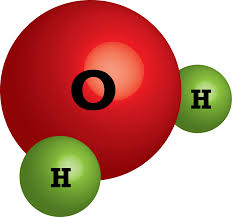
How many atoms are in this molecule?

a)

1

b)

2

c)

3

d)

4