wayground logo

Free Printable Worksheets

Font size

S
M
L
XL
Worksheets

Bio final sem 2

Total questions: 122

Worksheet time: 2hrs 20mins

Name
Class
Date
1.
True/False
A cells divide to create more cells.
a)
True
b)
False
2.
This picture shows which process? 
a)
mitosis
b)
meiosis
c)
the cell cycle
3.
The division of the cytoplasm following mitosis ...
a)
cytoplasm
b)
cytokinesis
c)
telophase
d)
mitosis
4.
The uncontrolled division of cells...
a)
meiosis
b)
cancer
c)
nondisjunction
d)
crossing over
5.
Stage in which the cell's nuclear material divides and separates...
a)
G1
b)
Synthesis
c)
G2
d)
Mitosis
6.
How many daughter cells are produced in mitosis?
a)
4 new cells
b)
2 new cells
c)
One new cell
d)
none of these
7.
How many times does the cell divide in meiosis?
a)
twice (PMAT)
b)
none of these
c)
3 times
d)
once
8.
How many daughter cells are produced in meiosis?
a)
4 daughter cells
b)
none of these
c)
3
d)
1
9.
The cells produced via meiosis are called:
a)
gametes
b)
somatic cells
c)
body cells
d)
skin cells
10.
This produces cells for growth and repair.
a)
mitosis
b)
meiosis
11.
The end of meiosis results in  ________ to each other.
a)
2 cells that are identical
b)
4 cells that are identical
c)
2 cells that are not identical
d)
4 cells that are not identical
12.
During the ___ phase, DNA is replicated.
a)
G1
b)
S
c)
G2
d)
M
13.
G1, S, and G2 phases are combined into one long phase called _____________.
a)
interphase
b)
mitosis
c)
cytokinesis
d)
cell cycle
14.
There are a TOTAL of ___ chromosomes in human body cells.
a)
23
b)
46
c)
92
d)
scientists don't know
15.
What is this phase of mitosis?
a)
prophase
b)
metaphase
c)
anaphase
d)
telophase
16.
Who is considered the "father" of modern genetics?
a)
Einstein
b)
Mendel
c)
Disney
d)
Trump
17.
TT,tt,PP,pp,SS,ss are examples of alleles that are?
a)
homozygous
b)
heterozygous
c)
different
d)
homologous 
18.
The exact genetic makeup of an organism, such as RR, Tt, PP is its?
a)
phenotype
b)
dominance
c)
genotype
d)
trait
19.
Y for yellow body is dominant over y for blue body.  What alleles would produce yellow bodies?
a)
YY,yy
b)
Yy,yy
c)
YY only
d)
YY,Yy
20.
Females-XX; MalesXY.  A couple has 4 girls.  What is the chance the next child will be a boy?
a)
75%
b)
100%
c)
25%
d)
50%
21.
A physical characteristic that can be passed from parent to offspring.
a)
behavior
b)
trait
c)
strong muscles
d)
ability to fly a plane.
22.
This is an example of ___________.
a)
 Incomplete Dominance
b)
 Codominance
23.
What type of inheritance do two alleles have if their traits blend together? 
a)
Incomplete Dominance
b)
Co-Dominance
24.
A tall plant (TT) is crossed with a short plant (SS) and a medium plant (TS) results. This is what type of inheritance pattern?
a)
Incomplete Dominance
b)
Codominance
25.
Which of the following is heterozygous
a)
FF
b)
tt
c)
Gg
d)
RR
26.
Which of the following is homozygous recessive?
a)
rr
b)
AA
c)
TT
d)
Ff
27.
Which of the following is heterozygous
a)
Ww
b)
ii
c)
DD
d)
kk
28.
The physical appearance of a trait is known as the-
a)
genotype
b)
phenotype
c)
characteristics
d)
intelligence
29.
Mary is heterozygous. If F for freckles, and f is for no freckles, what is Mary's phenotype?
a)
Freckles
b)
No Freckles
c)
A few Freckles
d)
One Freckle
30.
Alternative forms of a gene are called
a)
Alleles
b)
Homozygous
c)
DNA
d)
Genetics
31.
This trait will always be expressed if present because it will mask the expression of others
a)
stem cells
b)
heterozygous
c)
dominant
d)
recessive
32.
Determine the sex of the individual whose karyotype is displayed in the image.
a)
female
b)
male
33.
What makes this individual's karyotype not normal?
a)
An extra sex chromosome
b)
An extra autosome
c)
A missing sex chromosome
d)
A missing autosome
34.
What is the sex of this individual?
a)
female
b)
male
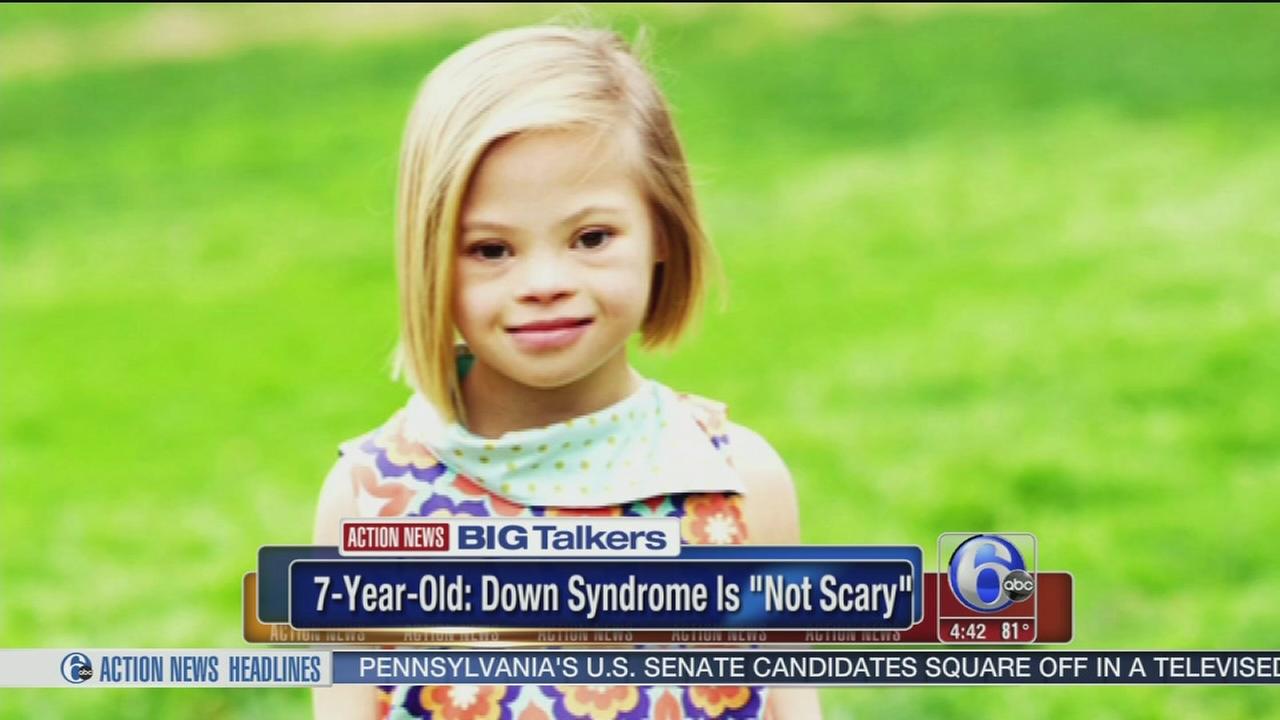
35.
Down's syndrome occurs because of a(n)
a)
missing sex chromosome
b)
extra sex chromosome
c)
additional 21st chromosome
d)
additional 18th chromosome
36.
Chromosome pairs 1-22 are referred to as
a)
sex chromosomes
b)
sister chromatids
c)
a karyotype
d)
autsomes
37.
Which best describes the process shown?
a)
mutation in which the DNA content of the gene is ltered
b)
segregation of sister chromatids
c)
condensation and segregation of the alleles
d)
crossing-over which alleles are exchanged
38.
What was the name of the scientist who had the theory of evolution?
a)
Lamarck
b)
Einstein
c)
Washington
d)
Darwin
39.
A trait or behavior that helps organisms survive and reproduce 
a)
multiplication 
b)
revolt
c)
adaptation 
d)
populate 
40.

A _________ is defined as a way an animal responds to a stimulus.

a)

response

b)

instinct

c)

attitude

d)

behavior

41.

A process by which an animal decreases or stops its responses to a repetitive stimulus.

a)

Operant Conditioning

b)

Habituation

c)

Insight Learning

d)

Classical Conditioning

42.
Which layer is oldest?
a)
A
b)
W
c)
G
d)
Z
43.
According to the law of superposition, which layer is the youngest?
a)
A
b)
B
c)
C
44.
A dog has 78 chromosomes in its body cells.  What is the diploid number?
a)
78
b)
39
c)
1
d)
100
45.
A Goat has 60 chromosomes in its body cells.  What is the haploid number?
a)
60
b)
30
c)
100
d)
120
46.
A human has 46 chromosomes in their body cells.  What is the haploid number?
a)
46
b)
92
c)
23
d)
12
47.
Meiosis produces cells with a haploid or diploid number of chromosomes?
a)
Haploid
b)
Diploid
48.
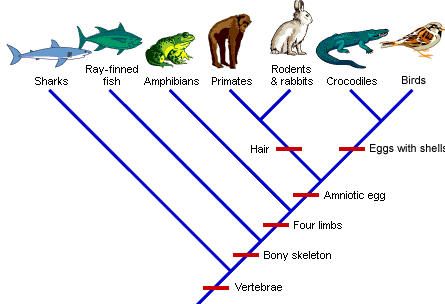
Who is the closest relative to the birds?
a)
crocodiles
b)
sharks
c)
fish
d)
amphibians
49.
Who is the closest relative to the sharks?
a)
crocodiles
b)
sharks
c)
ray-finned fish
d)
amphibians
50.
_______ believed that organisms develop traits needed for survival and that traits that were unused would become weaker and gradually disappear. 
a)
Darwin
b)
Lamarck
c)
Mendel
d)
Watson
51.
Whose theory included "acquired traits" such as a giraffe needing a long neck so they stretch it over time?
a)
Darwin
b)
Lamarck
52.
Similar structures that are found in different species are called _____________. 
a)
Homologous Structures
b)
Vestigial Structures 
c)
Identical Structures
d)
Necessary Structures
53.
Wisdom teeth in humans would be an example of what? 
a)
Homologous Structures
b)
Mandatory Structures
c)
Ancestry Structures
d)
Vestigial Structures
54.

A nucleotide is composed of

a)

A phosphate, sugar and nitrogenous base

b)

A protein, protein and Guanine

c)

A phosphate, Adenine, and nitrogenous base

d)

A protein, Adenine and nitrogenous base

55.

Which of the following is a base pair?

a)

Adenine - Cytosine

b)

Cytosine - Thymine

c)

Deoxyribose - Cytosine

d)

Cytosine - Guanine

56.

The weak bonds between base pairs is a ___

a)

Covalent Bond

b)

Polar Bond

c)

Non Polar Bond

d)

Hydrogen

57.
Which of the following best describes a DNA molecule?
a)
double helix
b)
contains ribose
c)
made of amino acids
d)
contains Uracil
58.
Adenine bonds with ______________.
a)
Guanine
b)
Thymine
c)
Cytosine
d)
Adenine
59.
Why is DNA important?
a)
it is very small and very complicated
b)
it's in everything
c)
it serves as the blueprint for traits of all living things
d)
because we eat it every day for energy
60.
Which 2 molecules forms the sides (backbone) of the DNA ladder?
a)
deoxyribose and adenine
b)
deoxyribose and a hydrogen bond
c)
sugar and the nucleus
d)
deoxyribose (sugar) and phosphate
61.
Which sequence of DNA bases would pair with this partial strand
ATG TGA CAG
a)
ATG TGA CAG
b)
TAC ACT GTC
c)
GTA AGT GAC
d)
CAT TCA CTG
62.
Replicate the following strand of DNA: 
AATCATGGA
a)
AATCATGGA
b)
TTAGTACCT
c)
UUAGUACCU
d)
GGATAUCUA
63.
The sugar in DNA is ?
a)
sucrose
b)
glucose
c)
deoxyribose
d)
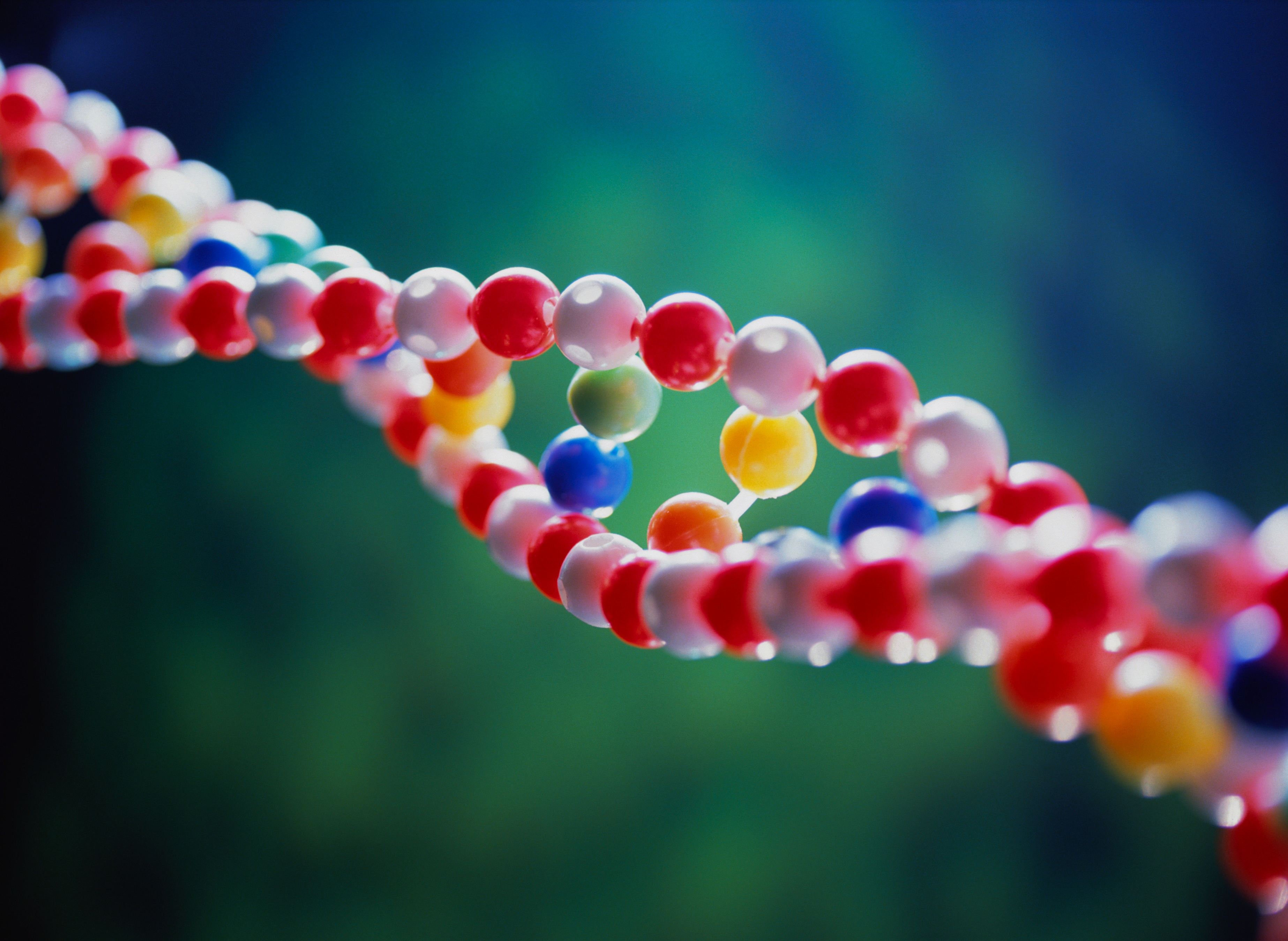
fructose
64.
The following picture must be
a)
DNA because it's double stranded
b)
RNA because it's single stranded
c)
DNA because it's single stranded
d)
RNA because it's double stranded
65.
I include the bases Guanine, Cytosine, Adenine and Uracil .
a)
DNA
b)
RNA
66.
I travel outside of the nucleus.
a)
DNA
b)
RNA
67.
I have the sugar ribose.
a)
DNA
b)
RNA
68.
Which two bear species are most closely related?
a)
Bear 1 and Bear 2
b)
Bear 1 and Bear 3
c)
Bear 2 and Bear 3
d)
There’s no way to tell
69.

change in a DNA sequence that affects genetic information

a)

rollover

b)

transcription

c)

mutation

d)

cancer

70.

All are types of RNA except

a)

messenger

b)

mitochondrial

c)

transfer

d)

ribosomal

71.

Which statement is true?

a)

The galaxies are moving toward us.

b)

The galaxies are moving away from us.

c)

The universe remains static or unchanged in motion.

d)

None of the above

72.

Which elements are most

abundant in the visible

universe?

a)

Hydrogen and Carbon

b)

Carbon and Helium

c)

Hydrogen and Oxygen

d)

Hydrogen and Helium

73.

As galaxies move away from our galaxy

a shift on the electromagnetic spectrum

(EMS) is noticed. This phenomena is

called _____________.

a)

redshift

b)

blueshift

c)

unshift

d)

blackshift

74.

The Big Bang Theory explains the formation of the...

a)

Earth

b)

Sun

c)

Universe

d)

Solar System

75.
What does the Big Bang theory suggest?
a)
The universe was just there
b)
The Milky Way is the only solar system
c)
The universe is continually expanding
d)
The universe is collapsing in toward a single point
76.
The universe is expanding!  This means that:
a)
all of the galaxies are spreading out.
b)
the universe must have started from a single point.
c)
the universe is cooling down.
d)
all of the above.
77.
The universe is ____________ years old.
a)
8.13 billion
b)
13.8 billion
c)
1.83 billion
d)
381 million
78.
A nebula is:
a)
A cloud of ice
b)
A cloud of dust and gas
c)
A cloud of just gas
d)
A cloud of just dust
79.
Our Sun is average-sized, average temperature, and middle aged.
a)
False
b)
True
80.

How many main sequence stars is in our solar system?

a)

2

b)

8

c)

1

d)

None

81.

The universe starts shrinking then crushes to an infinitesimally small space and possibly spawns a new big bang - least likely to happen end according to data currently.

a)

Big Rip

b)

Big Crunch

c)

Big Freeze

82.

the universe stops expanding at an accelerating rate but doesn’t contract or expands at a constant non accelerating rate, slowly all energy is converted to heat, no more useful energy conversions and the universe freezes to death. Most likely end to universe according to data currently.

a)

Big Rip

b)

Big Crunch

c)

Big Freeze

83.
What is the graph that shows the relations between a star's surface temperature and absolute magnitude?
a)
H-R Diagram
b)
Star Cluster Map
c)
Einstein's Diagram
d)
Newton's Chart of Stars
84.
Compared to the rest of the stars, our sun is considered...
a)
Extremely Large and Cold
b)
Small with a medium temperature
c)
Medium size with medium temperature
85.
According to this cladogram, primates are most closely related to -
a)
Amphibians
b)
Rodents and rabbits
c)
Crocodiles
d)
Birds
86.
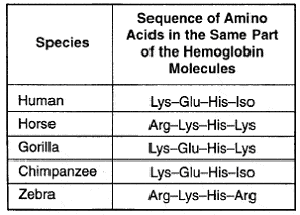
You look at two species and see very similar amino acid sequences. What does this likely tell you?
a)
These are the same animal.
b)
These animals have a common ancestor.
c)
These animals are not likely related.
d)
These animals are likely becoming one species.
87.
Cancer creates abnormal cells by disrupting
a)
the cell cycle
b)
red blood cell formation
c)
DNA replication
d)
ATP synthesis
88.
Any substance that is known to cause cancer is called a
a)
carcinogen
b)
nicolyte
c)
pathogen
d)
retrovirus
89.

Apoptosis is

a)

the process of programmed cell death

b)

the process of programmed cell growth

c)

the process of programmed cell birth

d)

the process of programmed cell regulation

90.
What is a checkpoint in the cell cycle?
a)
A check to see if the cell is ready to move on
b)
A check to slow mitosis down
c)
A check to see if the cell is performing mitosis or meiosis
d)
A check to make sure the cell doesn't die
91.
Fruit fly body cells have 8 chromosomes. After mitosis, you would expect a resulting fruit fly daughter cell to have ...
a)
16 chromosomes.
b)
46 chromosomes.
c)
8 chromosomes.
d)
4 chromosomes.
92.

How does the body repair a cut on your skin?

a)

Meiosis-new cells grow and divide

b)

Mitosis-new cells grow and divide until the cells touch

c)

Cancer-the new cells mutate to form cancer

d)

Tumor-the new cells' DNA is mutated forming a large cluster of cells.

93.

A ________________is a critical point where stop and go signals can regulate the cycle

a)

tumor

b)

checkpoint

c)

growth factor

d)

oncogene

94.

All of the following are reasons cancerous chicken stomach cells go through the cell cycle faster than normal cells except?

a)

They go through mitosis

b)

They do not respond to the cell cycle regulators

c)

They have mutated DNA

d)

They have lost the programmed cell death for abnormal cells

95.

What term describes when stem cells become specialized, such as when a stem cell becomes a red blood cell?

a)

Specialization

b)

Differentiation

c)

Adaptation

d)

Manipulation

96.

What statement is true about a heart cell, a brain cell, and a skin cell that all come from the same individual?

a)

They have different DNA

b)

They all have the same role in the body

c)

They are all made by meiosis

d)

They have all differentiated

97.

What type of cell can become other cell types?

a)

Sperm cells

b)

Plant cells

c)

Nerve cells

d)

Stem cells

98.
The process on the left is:
The process on the right is:
a)
Left: meiosis
Right: meiosis
b)
Left: meiosis
Right: cloning
c)
Left: mitosis
Right: meiosis
d)
Left: mitosis
Right: mitosis
99.

Choose the sequence of the mRNA strand that would be match up with to the following strand:

GTAGTCA

a)

UATUAGA

b)

ACGACTG

c)

CAUCAGU

d)

CATCAGT

100.
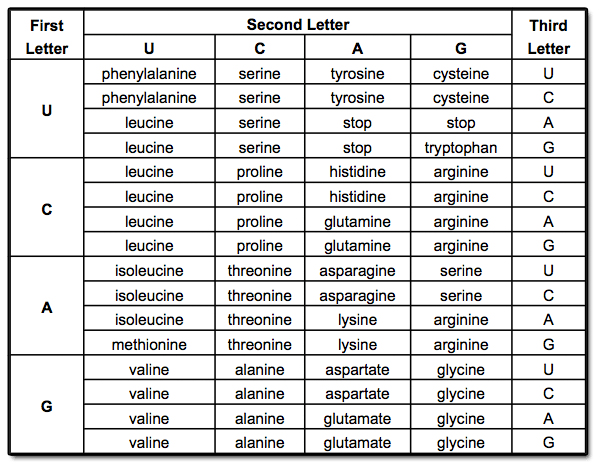
What amino acid is represented by the codon UUA?
a)
Phenylalanine
b)
Tyrosine
c)
Leucine
d)
Stop codon
101.

What is the correct amino acid sequence for the mRNA code AUGCCAGUAUGA

a)

Met-Pro-Ala-Val

b)

Met-Pro-Val

c)

Tyr-Gly-His

d)

Tyr-Gly-Arg-His

102.

In what process is mRNA synthesized?

a)

Transcription

b)

Translation

c)

DNA Replication

d)

Mitosis

103.

When these bond together, they form a protein

a)

Amino Acids

b)

Peptide Bonds

c)

Ribose

d)

Nucleotides

104.
The process to go from DNA to mRNA is _______
a)
translation
b)
transcription
c)
replication
105.
The process to go from mRNA to a protein is called ____
a)
transcription
b)
rRNA
c)
replication
d)
translation
106.
The DNA sequence ATCAGCGCTGGC is part of a gene. how many amino acids are coded for by this message?
a)
4
b)
8
c)
12
d)
20
107.

Which organelle is the location where protein is made?

a)

Ribosome

b)

Nucleus

c)

Cytoplasm

d)

Nucleotide

108.

Provided clear x-ray crystallography images of DNA

a)

Watson & Crick

b)

Franklin

c)

Wilkins

d)

Pauling

e)

Chargaff

109.

Discovered that there was the same amount of A and T in a cell, and C and G in a cell.

a)

Watson & Crick

b)

Franklin

c)

Wilkins

d)

Pauling

e)

Chargaff

110.
By using radioactive isotopes, Hershey and Chase were able to conclude that __ is/are the carrier(s) of genetic information.
a)
nucleic acid
b)
Proteins
c)
Carbohydrates
d)
Lipids
111.
How did Hershey and Chase's use of radiolabeled bacteriophages to study the genetic material validate Avery's research?
a)
It demonstrated conclusively that the genetic material is not protein.
b)
It showed that bacteriophages are not digested by bacterial enzymes.
c)
It proved that bacteria will take up phosphorus, but not sulfur.
d)
It confirmed that bacteriophages cannot inject radiolabeled DNA.
112.
Who was responsible for the experiment depicted by the image?
a)
Oswald Avery, et. al.
b)
Watson and Crick
c)
Frederick Griffith
d)
Rosalind Franklin
113.

Used bacteria, viruses, radioactive isotopes, a centrifuge, & a blender to prove once and for all that DNA was the hereditary molecule.

a)

Frederick Griffith & Oswald Avery

b)

Maurice Wilkins & Rosalind Franklin

c)

Alfred Hershey & Martha Chase

d)

James Watson & Francis Crick

e)

Erwin Chargaff

114.

When a Red Giant runs out of fuel, it become a:

a)

Supernova

b)

Nebula

c)

White Dwarf

d)

Main Sequence Star

115.

What is a red giant?

a)

It is what happens when a star begins fusing helium into carbon.

b)

It is a star on the main sequence of the HR diagram.

c)

It is a star that has died and is no longer fusing any material.

116.
What determines if a star becomes a giant or a supergiant?
a)
star size
b)
star temperature
c)
star color
d)
star luminosity
117.
The life cycles of stars are determined by their:
a)
mass (size)
b)
color
c)
distance from Earth
d)
luminosity
118.
After the main sequence, a low mass star becomes a
a)
black dwarf
b)
protostar
c)
red giant
d)
supergiant
119.

After the main sequence, a high mass star becomes a

a)

black dwarf

b)

protostar

c)

red giant

d)

supergiant

120.
After a supergiant, a high mass star explodes and forms a
a)
supernova
b)
red giant
c)
black hole
d)
planetary nebula
121.
Which of the following list the correct order of the life cycle of massive stars?
a)
Nebula --> protostar --> main sequence --> red supergiant --> supernova --> blackhole
b)
Nebula --> protostar --> main sequence --> red giant --> planetary nebula --> white dwarf --> black dwarf
c)
Nebula --> protostar --> main sequence --> supernova --> red giant --> blackhole
d)
Nebula --> protostar --> blackhole --> red supergiant --> supernova --> main sequence
122.

What is the correct order of life cycle of an average star?

a)

nebula, main sequence, white dwarf, red supernova

b)

nebula, main sequence, white dwarf, white dwarf

c)

red giant, black hole, white dwarf, black dwarf

d)

white dwarf, black hole, supernova, red giant