wayground logo

Free Printable Worksheets

Font size

S
M
L
XL
Worksheets

Invertebrates Exam

Total questions: 100

Worksheet time: 2hrs 40mins

Name
Class
Date
1.

The sponge has no organs and no nervous system.

a)

True

b)

False

2.

Flagella inside a sponge keep water moving through its body. Why is this necessary?

a)

It prevents the sponge from floating away

b)

It allows the sponge to feed

c)

It allows the sponge to absorb carbon dioxide

d)

It maintains the water pressure inside the sponge

3.
Most sponges are hermaphrodites.  What does this mean?
a)
sponges can produce their own food
b)
sponges can produce both eggs and sperm
c)
sponges cannot reproduce
d)
sponges can swim around
4.

What is the name of the phylum sponges belong to?

a)

sponges

b)

chordate

c)

cnidarians

d)

porifera

5.

The cells inside the sponge that have flagella (and absorb/capture food) are called...

a)

Collar cells

b)

Flagella

c)

Osculum

d)

Amoebocytes

6.

Sponges are primarily sessile organisms. What does this mean?

a)

They live permanently in one palce

b)

They move around their whole life

7.
Asexual sponge reproduction where a piece of the adult sponge breaks off and settles in a new area growing to adulthood.
a)
broadcast spawning
b)
branching
c)
budding
d)
forcast spawning
8.

Cnidarians have...

a)

No symmetry

b)

Radial symmetry

c)

Bilateral symmetry

9.

What causes coral bleaching?

a)

Warmer water temperatures

b)

Loss of algae

c)

Stress/Pollution

d)

All of the above

10.

Cnidarians are mostly freshwater organisms

a)

True

b)

False

11.

True or False: Cnidarians do not have a central nervous system.

a)

True

b)

False

12.

True or False: All cnidarians are sessile.

a)

True

b)

False

13.

Based on their diet, cnidarians are _____.

a)

herbivores

b)

omnivores

c)

carnivores

d)

photosynthetic

14.

True or False: Cnidarians generally undergo two life stages: a polyp stage and a medusa stage

a)

True

b)

False

15.

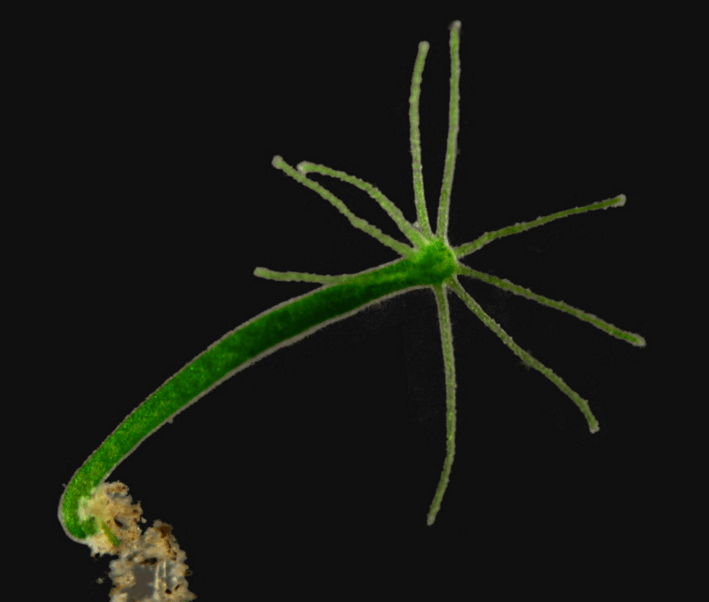
What body type does this cnidarian possess?

a)

Polyp

b)

Medusa

16.

What body type does this cnidarian posses?

a)

Polyp

b)

Medusa

17.
What is an invertebrate?
a)
An animal with a backbone
b)
a mammal
c)
An animal without a backbone
d)
birds
18.
I have a digestive cavity with one opening, and have tentacles.  I am a hydra.
a)
Echinoderm
b)
Cnidarian
c)
Arthropod
d)
Mollusk
19.

Which phylum is mainly asymmetrical?

a)

cnidaria

b)

porifera

c)

echinodermata

d)

arthropoda

20.
Most animals have this type of symmetry?
a)
radial
b)
asymmetrical
c)
bilateral
d)
trilateral
21.
These organisms all have nematocysts.
a)
cnidaria
b)
mollusca
c)
arthropoda
d)
porifera
22.

What type of symmetry is shown

a)

Bilateral

b)

Radial

c)

Asymmetry

d)

No symmetry

23.

Which type of symmetry is shown

a)

Bilateral

b)

Radial

c)

Asymmetrical

d)

No symmetry

24.
Which of the following phyla contains mostly parasitic flatworms?
a)
Annelida
b)
Cnidaria
c)
Nematoda
d)
Platyhelminthes
25.
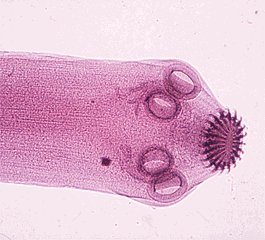
What is the function of the scolex of a tapeworm?
a)
To attach to the intestinal wall of the host 
b)
To reproduce
c)
To get rid of waste
d)
To carry the eggs
26.
How do planarians reproduce asexually?
a)
laying eggs
b)
they don't reproduce asexually
c)
regeneration of missing parts
d)
planarians fertilize their own eggs
27.
How would an individual acquire a tapeworm?
a)
You are born with it
b)
Eating a tapeworm's remains
c)
Eating raw meat
d)
Pure luck
28.
Which of the 3 types of flatworms we talked about are not parasites?
a)
planarians
b)
flukes
c)
tapeworms 
d)
roundworms 
29.

Roundworms are in the Phylum

a)

Nematoda

b)

Platyhelminthes

30.

How many openings do Cnidarians have to their Gastrovascular Cavity?

a)

one

b)

two

c)

three

d)

four

31.

Having a distinct head end with sensory organs is described as:

a)

radial symetry

b)

cephalization

c)

medula oblongata

d)

having more than one midline

32.
What phylum?
a)
Platyhelminthes
b)
Nematoda
c)
Annelida
d)
Rotifera
33.
Which phylum of worms has a bilateral symmetry, one-way digestive system, respiration through skin, hydrostatic skeleton and segmented body?
a)
Annelida
b)
Platyhelminthes
c)
Nemotoda
d)
Nemertea
34.
Annelida means:
a)
"pore bearing"
b)
"little rings"
c)
"soft body"
d)
"earth worm"
35.
A stiff hair, bristle or bristle like process or part on an organism
a)
Ganglia
b)
Setae
c)
Parapodia
d)
Nephridia
36.
Which structure is NOT associated with digestion?
a)
Gizzard
b)
pharynx
c)
nephridia
d)
crop
37.

Which of the following is a thickened segment of the earthworm’s body is used in reproduction?

a)

Septa

b)

Setae

c)

Clitellum

d)

Ganglia

38.
Most complex worm Phylum
a)
Phylum Platyhelminthes
b)
Phylum Nematoda
c)
Phylum Annelida
39.

This Bobbit worm has a segmented body. What Phylum of Marine Worm would that be?

a)

Platyhelminthes

b)

Annelida

c)

Tube Worm

d)

Nematoda

40.

F

a)

Intestines

b)

Eye Spots

c)

Nerve Cords

d)

Brain

41.

D

a)

Intestines

b)

Pharynx

c)

Brain

d)

Anus

42.
What does the name Arthropod mean?
a)
"Suit of Armor"
b)
"Hard Cover"
c)
"Jointed Foot"
d)
"Tough Foot"
43.
The hard, flexible exoskeleton of arthropods is made of a substance called ________.
a)
Polycarbonate
b)
Calcium
c)
Nacre
d)
Chitin
44.
Which of the following is a function of the exoskeleton? 
a)
Defense/protection
b)
Prevention of Dessication
c)
Attachment for Muscles
d)
All of the Above
45.
In your backyard, you find an almost clear, crunchy shape attached to a tree. It looks like a bug of some kind, but it is just the hollow exterior. You decide that this must have come from an insect that just shed its exoskeleton during __________________. 
a)
Reproduction
b)
Molting
c)
Digestion
d)
Regeneration
46.
Most arthropods have separate males and females, meaning they are ___________.
a)
Monoecious
b)
Hermaphroditic
c)
Dioecious
d)
Asexual
47.

3

a)

Mouth

b)

Pharynx

c)

Ovary

d)

Nerve Ring

48.

6

a)

Intestine

b)

Pharynx

c)

Ovary

d)

Nerve Ring

49.

Are male or female nematodes larger?

a)

Male

b)

Female

50.
a)

Roundworm

b)

Flatworm

c)

Segmented Worm

d)

Cnidaria

51.
a)

Roundworm

b)

Flatworm

c)

Segmented Worm

d)

Cnidaria

52.
a)

Coral

b)

Hydra

c)

Sea anemone

d)

Sponge

53.

What type of muscles do roundworms have for thrashing?

a)

Circular

b)

Longitudinal

c)

Circular AND Longitudinal

54.

What type of muscles do earthworms have for crawling?

a)

Circular

b)

Longitudinal

c)

Circular AND Longitudinal

55.

2

a)

Nephridia

b)

Hearts

c)

Brain

d)

Intestines

56.

4

a)

Nephridia

b)

Hearts

c)

Brain

d)

Intestines

57.
a)
Poriferan
b)
Coelenterates
c)
Echinoderms
d)
Mollusks
58.
a)
Poriferan
b)
Arthropod
c)
Echinoderm
d)
Mollusk
59.
a)
Poriferan
b)
Mollusk
c)
Annelids
d)
Arthropods
60.
a)
Poriferan
b)
Mollusk
c)
Platyhelminthes
d)
Echinoderm
61.
a)
Poriferan
b)
Mollusk
c)
Annelid
d)
Coelenterates
62.
Which annelid has developed the ability to suck blood from other organisms?
a)
Oligochaeta
(earthworms)
b)
Polychaeta
(bristle worms)
c)
Hirudinea
(leeches)
d)
Nematoda
(roundworms)
63.
Which structure aids in eating for a mollusk?
a)
siphon
b)
radula
c)
visceral mass
d)
ganglia
64.
Which of the following is NOT a class in phylum Mollusca?
a)
Gastropoda
b)
Bivalvia
c)
Cephalopoda
d)
Hirudinea
65.
Which class of mollusks is shown in the picture?
a)
Gastropoda
b)
Molluska
c)
Bivalia
d)
Polychaeta
66.
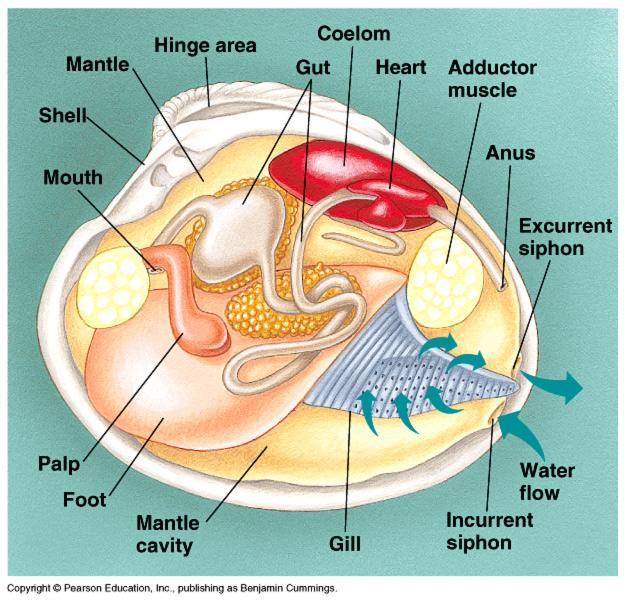
How does a clam move?
a)
Using the radula
b)
Using the mantle
c)
Using the foot
d)
Using the gills
67.
Which class of mollusks do snails and slugs belong to?
a)
Gastropoda
b)
Bivalvia
c)
Cephalopoda
d)
Hirudinea
68.
What do earthworms eat?
a)
grass
b)
insects
c)
dirt
d)
organic matter in the soil
69.
Which part of the Mollusk body is specialized for burrowing, feeding, and movement?
a)
trochophores
b)
visceral mass
c)
mantle
d)
foot
70.
Which part of the Mollusk body is the tissue covering the body and secretes the shell?
a)
Mantle
b)
Trochophore
c)
Foot
d)
Visceral Mass
71.
Which class of Mollusks have the most advanced nervous system?
a)
Gastropods
b)
Bivalves
c)
Cephalopods
d)
arthropods
72.
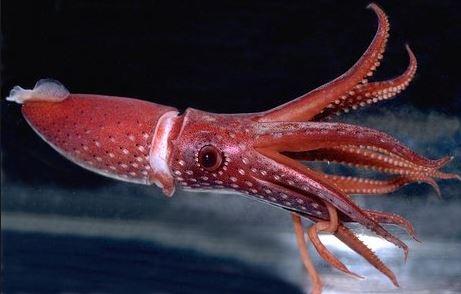
What Mollusk group does the picture belong to?
a)
Gastropod
b)
Bivalve
c)
Cephalopod
73.
Organs that are in contact with blood supply and specialized for gas exchange
a)
trochopore
b)
radulas
c)
bivalves
d)
gills
74.
Which class of Mollusks include clams, oysters, and mussels?
a)
Gastropods
b)
Bivalves
c)
Cephalopods
75.
Which class of Mollusks all have tentacles?
a)
Gastropods
b)
Bivalves
c)
Cephalopods
76.
Which of the following is the correct description of reproduction in Mollusks?
a)
Mostly asexual
b)
Budding
c)
Regeneration
d)
Mostly sexual
77.
Which of the following is the correct description of respiration in Mollusks?
a)
They use diffusion through their moist skin and gills in marine environments
b)
They use primitive lungs in marine environments and gills on land.
c)
They use nephridia to exchange oxygen and carbon dioxide
d)
They use gills in marine environments and primitive lungs on land.
78.
What type of body do all Mollusks have?
a)
Segmented
b)
Soft
c)
Rigid
d)
Clear
79.
Which class of Mollusks have a closed circulatory system?
a)
Gastropods
b)
Bivalves
c)
Cephalopods
d)
All of the classes
80.
What is the oldest part of the bivalve shell?
a)
Umbo
b)
Hinge
c)
Anterior adductor 
d)
Mantle
81.
What do the rings on the clam shell indicate?
a)
species
b)
age
c)
size
d)
genus
82.
What muscle opens and closes the clam?
a)
Labial Palp
b)
Adductor
c)
Incurrent
d)
Excurrent 
83.

Octopuses can protect themselves by

a)

changing their color

b)

spray dark ink

c)

swim very fast

d)

all of the above

84.
The siphon is attached to an octopuses head, it
a)
squirts water to make the octopus move
b)
squirts water to make the octopus eat
c)
squirts water to siphon
d)
squirts water to make the octopus hear
85.
The suckers on an octopus help
a)
get a grip on its prey
b)
to get a good grip on its prey, feel and taste its prey
c)
feel and taste its prey
d)
to help move along the ocean floor
86.
Echinoderms have an internal skeleton and a system of fluid-filled tubes called a(n)...(hint: this helps them move)
a)
water vascular system
b)
nervous system
c)
notochord
d)
ampulla
87.
Sea stars feed by
a)
Injecting poison that digests the prey 
b)
Everting their stomach to digest prey
c)
Chewing their prey with jaws and teeth
d)
squeezing their prey until it dies
88.
What echinoderm is this?
a)
sea lily 
b)
sea urchin 
c)
sea cucumber 
d)
sand dollar 
89.
Sea stars often feed on...
a)
cniderians
b)
sponges
c)
cephalopods
d)
Bivalve mollusks
90.
By what process will starfish regrow an arm torn off by a predator?
a)
Reconstructive meiosis
b)
Regeneration
c)
Tissue regenesis
d)
Mitotic restoration
91.
What type of skeleton do echinoderms have?
a)
Exoskeleton
b)
Hydrostatic skeleton
c)
Endoskeleton
d)
Mesenteric skeleton
92.

Which of the following is NOT a characteristic of arthropods?

a)

Exoskeleton

b)

Jointed appendages

c)

Segmented body

d)

Endoskeleton

93.

What type of circulatory system do arthropods have?

a)

open

b)

closed

94.

Which of the following are considered to be "true jaws" that chew food?

a)

Mandibles

b)

Maxillae

c)

Maxillipeds

95.

Which of the following crayfish appendages contain the claws?

a)

Uropods

b)

Telson

c)

Maxillipeds

d)

Chelipeds

96.

Which class of arthropods are mainly aquatic?

a)

Crustacea

b)

Insecta

c)

Diplopoda

d)

Chilopoda

97.

The phylum arthropoda is the largest animal group on the planet.

a)

True

b)

False

98.

Which of the following would you expect to be in the Class Insecta?

a)
b)
c)
d)
99.

Which of the following would you expect to be called a "Centipede"?

a)
b)
c)
d)
100.

How would you describe this creature?

a)

A millipede - it has two legs for every segment

b)

A centipede - it has one leg at every segment

c)

An arachnid - it has 8 legs

d)

An insect - it has 6 legs