wayground logo

Free Printable Worksheets

Font size

S
M
L
XL
Worksheets

EOC Review Questions

Total questions: 88

Worksheet time: 2hrs 42mins

Name
Class
Date
1.
Which of the following are NOT found in animal cells
a)
chloroplasts and cytoplasm
b)
chloroplasts and cell wall
c)
cell wall and cell membrane
d)
mitochondria and nucleus
2.

Which of the following converts food into energy for the cell?

a)

vacuole

b)

mitochondria

c)

cytoplasm

d)

cell membrane

3.

The fluid that surrounds the organelles is... (hint... "Try to pull a fast one and..."

a)

chloroplast

b)

cytoplasm

c)

vacuole

d)

cell wall

4.
What do vacuoles do? 
a)
They actually do not have an important role
b)
They protect the cell
c)
They are the brain of the cell
d)
storage area for cells; water storage in plants 
5.

Which organelle takes in "sun showers" and helps plants with the process or photosynthesis?

a)

Vacuole

b)

Mitochondria

c)

Cytoplasm

d)

Chloroplast

6.
If you were some bad guy trying to sneak into an animal cell, who would be there to stop you?
a)
nucleus
b)
mitochondria
c)
cell membrane
d)
cell wall
7.
Which of the following, found ONLY in plant cells, provides structure?
a)
cell wall
b)
chloroplast
c)
mitochondria
d)
vacuole
8.
Michael looked at a cell through a microscope.  He identified a nucleus, chloroplast, and cytoplasm.  What kind of cell did Michael observe?
a)
animal
b)
plant
c)
vertebrate
d)
bacteria
9.

The hereditary material in a cells is...

a)

Cytoplasm

b)

ATP

c)

DNA

d)

ER

10.

When compared to a prokaryotic cell, a eukaryotic cell ...

a)

does not have a nucleus

b)

has DNA that is circular

c)

has more types of organelles

d)

stores it's DNA in a nucleus rather than in the cytoplasm

11.

Why do plants need mitochondria when they already have chloroplasts?

a)

Plant cells do not have mitochondria.

b)

Mitochondria produce food for the cell.

c)

Mitochondria break down food into energy.

12.
Osmosis is the movement of _____ across a membrane.
a)
food
b)
energy
c)
oxygen
d)
water
13.
Which is true about active transport?
a)
It requires energy
b)
it does not require energy
c)
It moves substances down the concentration gradient
d)
it moves material from high to low concentration
14.
This picture represents which type of cellular transport?
a)
passive transport
b)
endocytosis
c)
exocytosis
d)
osmosis
15.
The cell below is in a _________ solution.
a)
Hypotonic
b)
Hypertonic
c)
Isotonic
16.
A cell in an isotonic solution will
a)
swell
b)
shrink
c)
stay the same size
d)
impossible to tell
17.
What are two types of passive transport?
a)
endo and exocytosis 
b)
cookies and milk
c)
active and passive 
d)
Osmosis and diffusion
18.
A saltwater fish is accidentally placed in a freshwater aquarium in a few short hours it sadly died. Which explains why this occurred?
a)
The cells of the fish body were dehydrated by the quick loss of water. 
b)
The cells of the fish quickly absorbed massive amounts of water and it ended up killing the fish.  
c)
The fish hated the new decor in the freshwater tank. 
d)
It was just its time. 
19.
Molecules diffusing with the concentration gradient through a protein channel is...
a)
Facilitated Diffusion
b)
Simple Diffusion
c)
Active Transport
d)
Osmosis
20.
Moving from areas of LOW concentration to areas of HIGH concentration is called?
a)
Passive Transport
b)
Active Transport
c)
Diffusion
d)
Osmosis
21.
If the question asks about Osmosis, I will look for an answer about?
a)
Particles
b)
Salt
c)
Sugar
d)
Water
22.
A person with swollen gums rinses his mouth with warm salt water, and the swelling decreases.  What has occurred?
a)
The water in his gums moved from high to low concentration
b)
The water in his gums moved from low to high concentration
23.
Molecules diffusing with the concentration gradient through a protein channel is...
a)
Facilitated Diffusion
b)
Simple Diffusion
c)
Active Transport
d)
Osmosis
24.
What biomolecule do enzymes belong to? 
a)
Carbohydrate
b)
Lipid
c)
Nucleic Acid
d)
Protein
25.
Which biomolecule is a main source of quick energy?
a)
Nucleic Acid
b)
Protein
c)
Lipid
d)
Carbohydrate
26.
What is the function of a nucleic acid?
a)
Stores genetic information
b)
Stores energy
c)
Quick source of energy
d)
Builds structures
27.
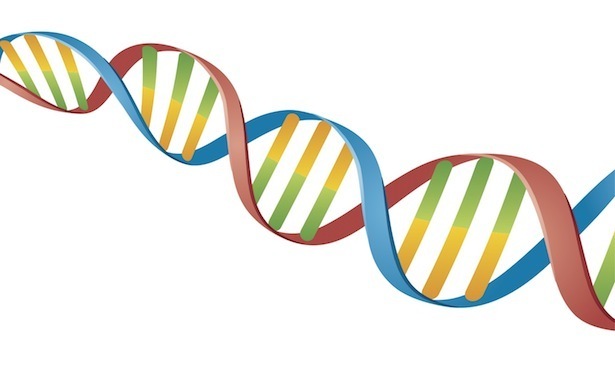
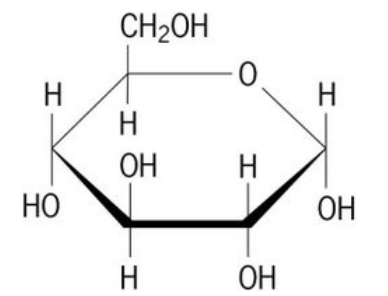
Which biomolecule is this a picture of?
a)
Protein
b)
Nucleic Acid
c)
Lipid
d)
Carbohydrate
28.
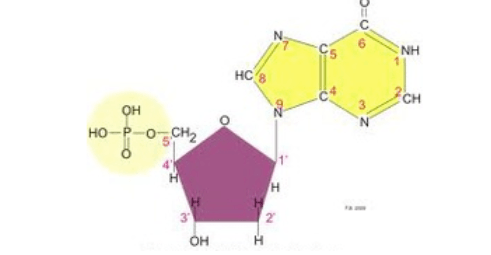
Which biomolecule is this a picture of?
a)
Protein
b)
Nucleic Acid
c)
Lipid
d)
Carbohydrate
29.
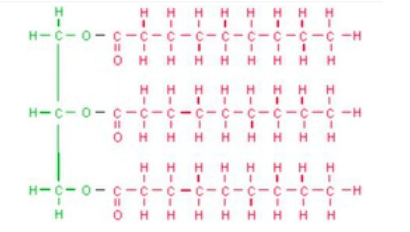
Which biomolecule is this a picture of?
a)
Protein
b)
Nucleic Acid
c)
Lipid
d)
Carbohydrate
30.
Which biomolecule is made of nucleotides and contain you DNA?
a)
Carbohydrate
b)
Lipids
c)
Protein
d)
Nucleic Acid
31.
What is the purpose  of an enzyme?
a)
give permission for the reaction
b)
raise activation energy
c)
speed up reactions
d)
control how many reactions occur
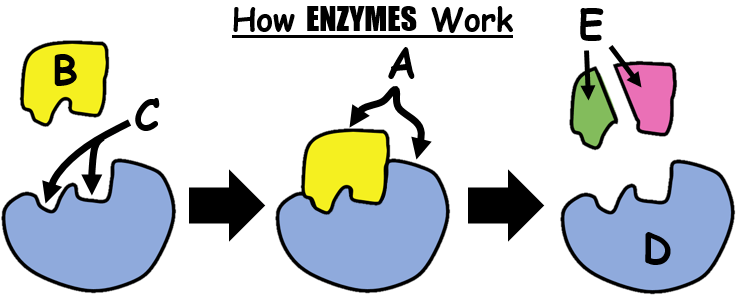
32.
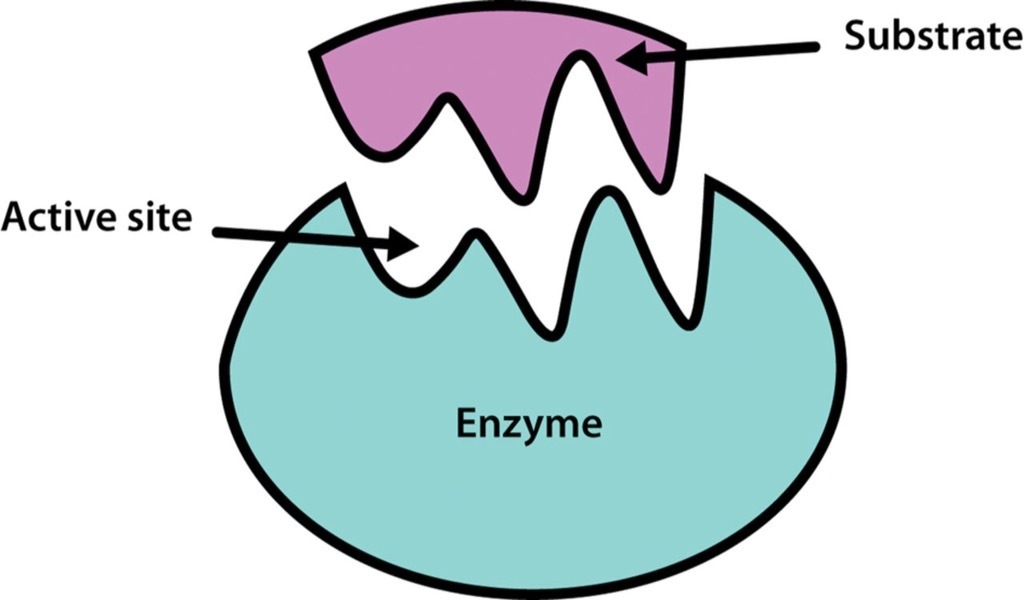
Letter D...
a)
active site
b)
enzyme
c)
substrate
d)
products
33.
What are the four biological molecules?
a)
proteins, carbohydrates, lipids, nucleic acids
b)
A, T, C, G
c)
water, air, earth, and fire
d)
Joe, Nick, and Kevin Jonas
34.
Which biomolecule is responsible for insulation and energy storage?
a)
Protein
b)
Nucleic Acid
c)
Lipid
d)
Carbohydrate
35.
Which biomolecule is made of amino acids?
a)
Nucleic Acid
b)
Carbohydrate
c)
Protein
d)
Lipid
36.
The process that builds molecules by removing water to bind them together is
a)
Hydrolysis
b)
Protein Synthesis
c)
Dehydration Synthesis
d)
Lysis
37.
The process that builds molecules by removing water to bind them together is
a)
Hydrolysis
b)
Protein Synthesis
c)
Dehydration Synthesis
d)
Lysis
38.
The chemical reaction that breaks down a molecule by adding water is
a)
Dehydration Synthesis
b)
Hydrophobia
c)
Hydrolysis
d)
Dehydration
39.
Which organelle performs PHOTOSYNTHESIS?
a)
Chloroplast
b)
Mitochondria
40.
Which of the following is the correct equation for PHOTOSYNTHESIS?
a)
CO+ light + H2O --> O+ Sugar
b)
CO+ sugar + H2O --> O+ light
c)
O2 + light + H2O --> CO+ Sugar
d)
CO+ O2 + H2O --> Light+ Sugar
41.
What is the pigment in chloroplasts that performs photosynthesis?
a)
Chlorosynthesis
b)
Chlorophyll
c)
ADP
d)
Electron Transport
42.
Which gas is removed from the atmosphere during photosynthesis?
a)
hydrogen
b)
oxygen
c)
nitrogen
d)
carbon dioxide
43.
What are the products of photosynthesis?
a)
water and carbon dioxide
b)
oxygen and glucose
c)
oxygen and carbon dioxide
d)
oxygen and water
44.
Most plants appear green because chlorophyll
a)
absorbs green light.
b)
absorbs violet light.
c)
does not absorb green light.
d)
does not absorb violet light.
45.
Does the Calvin Cycle require light?
a)
yes
b)
no
c)
depends on the amount of carbon dioxide
46.
What is one of the reactants of cellular respiration?
a)
energy
b)
glucose
c)
carbon dioxide
d)
water
47.
______________ produces the most ATP.
a)
photosnthesis
b)
aerobic respiration
c)
anaerobic respiration
d)
glycolysis
48.
What type of respiration requires oxygen?
a)
Aerobic
b)
Anaerobic
49.
What is the correct equation for cellular respiration?
a)
6O2 + C6H12O6 -> 6CO2 + 6H2O + Energy
b)
6O2 + C6H12O6 + Energy -> 6CO2 + 6H2O
c)
6CO2 + 6H2O -> 6O2 + C6H12O6 + Energy
d)
6CO2 + 6H2O + Energy -> 6O2 + C6H12O6
50.
Cellular Respiration's goal is to
a)
make water
b)
make ATP
c)
make glucose
d)
make  oxygen
51.

What type of fermentation occurs in most organisms, including animals?

a)

Aerobic

b)

Alcoholic

c)

Citric Acid

d)

Lactic Acid

52.

What is the correct order for aerobic cellular respiration?

a)

glycolysis-->ETC--> Krebs Cycle

b)

ETC-->glycolysis-->Krebs Cycle

c)

glycolysis-->Krebs Cycle-->ETC

d)

Krebs Cycle-->glycolysis-->ETC

53.

Approximately how many ATP's can breaking down one molecule of glucose generate?

a)

2

b)

118

c)

36

d)

15

54.

Where in the cell does glycolysis occur?

a)

mitochondrion

b)

chloroplast

c)

cytoplasm

d)

nucleus

55.

Which of the following is a PRODUCT of cellular respiration?

a)

glucose

b)

nitrogen

c)

oxygen

d)

carbon dioxide

56.

Which of the following are done by plants?

a)

photosynthesis

b)

cellular respiration

c)

both

d)

neither

57.
What 3 things make up a nucleotide?
a)
Sugar, Phosphate, Nitrogen Base
b)
Sugar, Hydrogen, Carbon
c)
Carbon, Phosphate, Nitrogen
d)
mRNA, tRNA and rRNA
58.
What is assembled during transcription?
a)
transfer RNA
b)
messenger RNA
c)
DNA replication
d)
court proceedings
59.
What is made during translation?
a)
transfer RNA
b)
messenger RNA
c)
Proteins
d)
Spanish Rice
60.
The site of protein synthesis?
a)
nucleus
b)
ER
c)
Ribosome
d)
Golgi Body
61.
Which sequence of DNA bases would pair with this partial strand
ATG TGA CAG
a)
ATG TGA CAG
b)
TAC ACT GTC
c)
GTA AGT GAC
d)
CAT TCA CTG
62.
Transcription is a process that in eukaryotic cells takes place in the:
a)
Nucleus
b)
Cytoplasm
c)
Golgi Apparatus
d)
Rough E.R.
63.
Translation is a process in eurkaryotic cells takes place in the:
a)
Cytoplasm
b)
Nucleus
c)
Nucleolus
d)
Golgi Bodies
64.
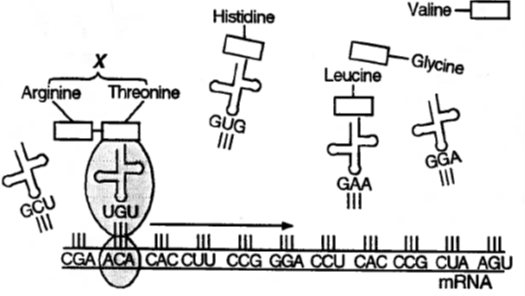
What process is going on in this photo? 
a)
Transcription 
b)
Translation 
c)
Replication 
d)
All the above 
65.
When a cell is not actively dividing, it is in what phase?
a)
interphase
b)
anaphase
c)
prophase
d)
telophase
66.
Before a cell can divide, what must happen?
a)
Nothing, it is always ready to divide
b)
The number of chromosomes must be cut in half
c)
The number of chromosomes must double
d)
The number of chromosomes must triple.
67.
In which type of cells will mitosis occur?
a)
egg cells
b)
sperm cells
c)
jail cells
d)
Body cells except the sperm and egg cells
68.
When you start with 1 cell, at the end of mitosis, how many identical cells will you have?
a)
1
b)
2
c)
3
d)
4
69.
What is the diploid number of cells found in a human body cell?
a)
23
b)
46
c)
92
d)
47
70.
In meiosis, the haploid number of chromosomes in a human sex cell is:
a)
46
b)
92
c)
22
d)
23
71.
The process on the left is:
The process on the right is:
a)
Left: meiosis
Right: meiosis
b)
Left: meiosis
Right: cloning
c)
Left: mitosis
Right: meiosis
d)
Left: mitosis
Right: mitosis
72.
Place these cells in order of mitosis.
a)
A, B, C, D, E
b)
B, E, D, A, C
c)
C, E, A, D, B
d)
B, D, A, E, C
73.
What scientific process is being shown?
a)
Mixing
b)
Crossing under
c)
Crossing over
d)
square dancing
74.
What is an advantage of sexual reproduction?
a)
Allows genetic variation
b)
Only needs one parent
c)
Happens very quickly
d)
Offspring are exact copies of parent
75.
What is a phenotype
a)
The genetic make up (code)
b)
The physical trait
76.
having two of the same genes for the trait (sometimes called purebred).
a)
homozygous
b)
hetrozygous
c)
protein
d)
chromosome
77.
having two different genes for a trait (sometimes called hybrid).
a)
protein
b)
homozygous
c)
heterozygous
d)
genotype
78.
G = green, g = yellow
The genotype for a yellow plant is...
a)
GG
b)
Gg
c)
gg
d)
all of the choices result in yellow
79.
Where, in the eukaryotic cell, is DNA located?
a)
ribosomes
b)
nucleus
c)
E.R.
d)
cytoplasm
80.
Term for an organism that display two dominant phenotypes at the same time
a)
codominance
b)
incomplete dominance
c)
multiple alleles
d)
linked genes
81.
Incomplete dominance means that the traits are
a)
expressed equally
b)
dominant
c)
recessive
d)
blended
82.
Which of the following is homozygous dominant?
a)
Yy
b)
Y
c)
yy
d)
YY
83.
Complex molecule that carries genetic information that defines an organism's traits. It is stored in the nucleus.
a)
DNA
b)
protein
c)
RNA
d)
glucose nucleic acid (GNA)
84.
An allele whose trait only shows up when no dominant allele is present.
a)
hidden allele
b)
dominant allele
c)
recessive allele
d)
present allele
85.
Snapdragon flowers come in red, pink and white.  What type of inheritance is this?
a)
Complete Dominance
b)
Incomplete Dominance
c)
Codominance
d)
Polygenic Inheritance
86.
 Dominant alleles are-
a)
capital
b)
lowercase
c)
both
d)
neither
87.
Are recessive traits shown with capital or lowercase letters? 
a)
Capital
b)
Lowercase
88.
Which is a true statements about this picture?
a)
Brown is recessive
b)
Brown is dominant
c)
Blue is dominant
d)
Blue is codominant