wayground logo

Free Printable Worksheets

Font size

S
M
L
XL
Worksheets

Earth Science Review

Total questions: 100

Worksheet time: 1hrs 25mins

Name
Class
Date
1.
What is the process that picks up and moves weathered rocks?
a)
Deposition
b)
Landslide
c)
Weathering
d)
Erosion
2.
Which of these is an example of erosion?
a)
Light shining onto a mountain.
b)
Rain breaking down rocks on a mountain into smaller pieces. 
c)
Wind blowing away sediment to a new place on the mountain.
d)
All of the above.
3.
Most volcanoes and earthquakes occur...
a)
along the coast
b)
along tectonic plate boundaries
c)
in the Arctic
d)
in the ocean
4.
What is the correct order (starting from the surface) of Earth’s layers?
a)
mantle, outer core, inner core, crust
b)
crust, mantle, outer core, inner core
c)
outer core, inner core, crust, mantle
d)
crust, outer core, inner core, mantle
5.

Rock particles carried and deposited by water, wind & ice.

a)

sedimentary rock

b)

sediment

c)

metamorphic rock

d)

igneous rock

6.
A fossil found over a large area deposited within a short time period is _____________.
a)
a specimen interval
b)
an index fossil
c)
a time differential
d)
an indicator marker
7.

Trilobites are found in the _____________ Era.

a)

Cenozoic

b)

Mesozoic

c)

Paleozoic

d)

Cretaceous

8.
The method used when determining if a layer is older or younger from another is:
a)
index dating
b)
relative dating
c)
absolute dating
d)
fossil fractionization
9.

The Mesozoic Era is best known for what?

a)

Sharks

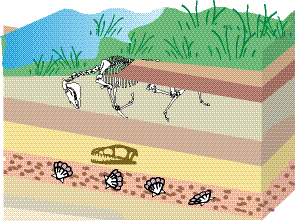
b)

Dinosaurs

c)

Jellyfish

d)

Ferns

10.

About how long has Earth existed?

a)

4.6 billion years

b)

1 billion years

c)

2,018 years

d)

2 million years

11.

What era are we in now?

a)

Mesozoic

b)

Cenozoic

c)

Paleozoic

d)

Precambrian

12.

Plates move because of ___________ in the mantle.

a)

Earthquakes

b)

Volcanoes

c)

Convection Currents

13.

At convergent boundaries, plates move....

a)

Towards each other

b)

Away from each other

c)

Past each other

14.

At divergent boundaries, plates move....

a)

Towards each other

b)

Away from each other

c)

Past each other

15.
Which rock layer in the diagram seems to be the oldest?
a)
F
b)
E
c)
B
d)
A
16.
In rock layers, jellyfish fossils are found lower than trilobite fossils, and trilobite fossils are found lower than ammonite fossils. What can be determined from this information?
a)
Trilobites existed before jellyfish and ammonites.
b)
Jellyfish existed before trilobites and ammonites. 
c)
Ammonites existed before trilobites and jellyfish.
d)
Jellyfish, trilobites, and ammonites lived together.
17.
What causes rocks to break down?
a)
Weathering
b)
Erosion
c)
Deposition
d)
Cementation
18.

Layers of rock formed when sediment is deposited and then compacted and cemented over time.

a)

igneous rock

b)

metamorphic rock

c)

sedimentary rock

d)

rock cycle

19.
These rocks were broken apart from the continuous freeze/thaw of water in the cracks of the rocks. This is an example of:
a)
ice wedging
b)
acid rain
c)
permeability
d)
abrasion
20.
Weathering causes rocks and minerals to break into smaller pieces.  Which event is the best example of weathering?
a)
a raindrop splashing in a lake
b)
a snowball rolling down a mountain
c)
a tree root growing into the crack of a rock
21.
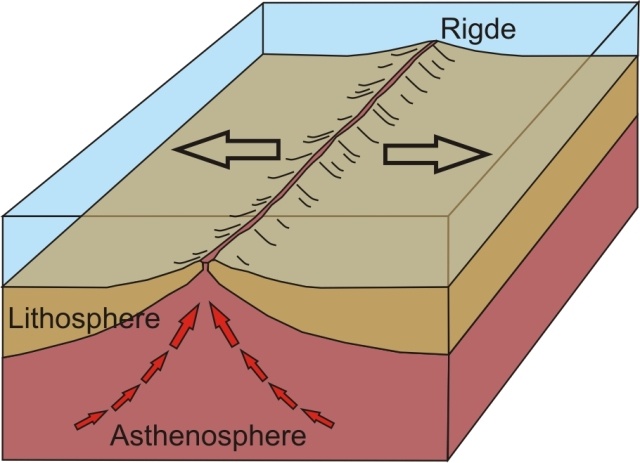
What kind of plate boundary is shown here?
a)
divergent
b)
convergent
c)
transform
d)
subducting
22.

The Great Rift Valley in Africa and the Mid-Ocean Ridge were all created by this boundary

a)

Divergent

b)

Convergent

c)

Reform

d)

Transform

23.

Fold mountains can generally be found parallel to _____________ ?

a)

Convergent Plate Boundaries

b)

Divergent Plate Boundaries

c)

Transform Plate Boundaries

d)

Volcanic Islands

24.
What would be at a CONVERGENT as two LANDS hit? 
a)
Volcano
b)
Mountains
c)
Rift
d)
Island Arc
25.
What types of air masses form over oceans?
a)
Maritime
b)
Continental
c)
Polar
d)
Tropical
26.
What's the humidity and temperature of a maritime tropical air mass?
a)
Wet and cold
b)
Dry and warm
c)
Wet and warm
d)
Dry and cold
27.
A wet and cold air mass would be a...
a)
Maritime polar
b)
Continental polar
c)
Maritime tropical
d)
Continental tropical
28.
A dry and cold air mass would be...
a)
Maritime polar
b)
Continental polar
c)
Maritime tropical
d)
Continental tropical
29.
Usually, fair and dry/hot weather is associated with __________ pressure, with rainy and stormy weather associated with ___________ pressure. 
a)
high, low
b)
high, high
c)
low, high
d)
low, low
30.
The place where two air masses meet.
a)
air mass
b)
air pressure
c)
water cycle
d)
front
31.
Select the best answer- What is weather?
a)
Weather is what is happening in the atmosphere in a certain place at a certain time.
b)
Weather is the atmosphere.
c)
Weather is precipitation.
d)
Weather is wind.
32.
Where does a hurricane form?
a)
Over a cold body of water
b)
Over a warm body of water
c)
Over cold land
d)
Over warm land
33.
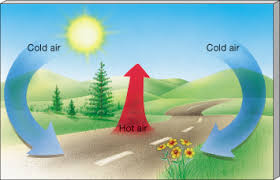
What causes warm air to rise?
a)
the fact that it's less dense than cold air 
b)
The fact that it weighs more than cold air 
c)
The fact that it has higher pressure than cold
d)
the fact that its more dense than cold air 
34.

What causes differences in air pressure?

a)

even heating of the Earth

b)

Even cooling of the earth

c)

uneven heating of the earth

d)

global warming

35.
What is responsible for warming the Earth’s surface and creating wind?
a)
The Moon
b)
Earth's interior (inside)
c)
Coriolis effect
d)
The Sun
36.
Which statement correctly defines wind?
a)
Wind is the movement of air from areas of low pressure to areas of high pressure
b)
Wind is the movement of air to a colder area in the atmosphere.
c)
Wind is the movement of air from areas of high pressure to areas of low pressure.
d)
Wind is the movement of air pushed around and bouncing off Earth's surface.
37.

Warm air ____________ at the equator.

a)

rises

b)

sinks

c)

mixes

d)

goes down

38.
In which direction do prevailing westerlies flow?
a)
from east to west
b)
from west to east
c)
from north to south
d)
from south to north
39.

In the United States, our weather travels from _____ with the jet stream.

a)

east to west

b)

north to south

c)

south to west

d)

west to east

40.
Where do most hurricanes develop?
a)
Middle of the United States
b)
Near the Equator
c)
Near Canada and Alaska
d)
Antarctica
41.
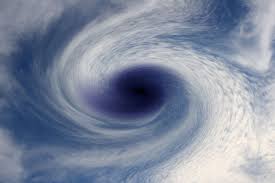
What is the calm area in the center of a hurricane called?
a)
Wall
b)
Eye
c)
Arm
d)
Hole
42.

___________is the result of the weight of a column of air pushing on the surface of Earth.

a)

air pressure

b)

density

c)

volume

d)

none of the above

43.
As you climb up a mountain what happens to the air pressure?
a)
decreases
b)
increases
c)
stays the same
44.
Convection takes place because
a)
warm air is more dense than humid air
b)
warm and cold air have the same density
c)
cold air is less dense than warm air
d)
cold air is more dense than warm air
45.
Warm air rising at the equator and cold air sinking at the poles is one reason for which event?
a)
hurricanes
b)
Coriolis Effect
c)
Earth's rotation
d)
convection currents
46.
Air pressure is greatest when near Earth's surface because?
a)
The air molecules are farther apart.
b)
The air molecules are closer together.
c)
Air molecules collide.
d)
Air molecules are tightly packed.
47.
What are the reasons for the season?
a)
Earth's tilt & rotation
b)
Earth's tilt & revolution
c)
Earth's rotation & rovolution
d)
Earth's tilt & resolution
48.
What causes there to be longer number of hours of light during the summer
a)
Earth tilt's away from the sun in summer
b)
Earth's revolves slower in summer
c)
Earth tilts toward the sun in summer
d)
Earth is closer to the sun
49.

In summer, the axis of the earth is pointed _____ the sun.

a)

towards

b)

up

c)

down

d)

away

50.
Why is it warmer in the summer?
a)
Closer to the sun
b)
More direct light from Earth's tilt
c)
Stronger light from the sun
d)
Earth spins slower
51.
Why is the Equator warmest?
a)
Because it is closest to the sun.
b)
Because it receives the most direct sunlight
c)
Because no clouds form here.
d)
Because it is far from the sun
52.
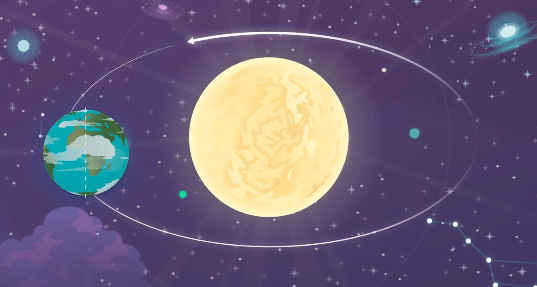
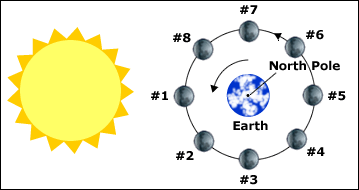
Which season is taking place in the Northern Hemisphere in Position 3?
a)
Winter
b)
Spring
c)
Summer
d)
Fall
53.
If its ____ in the Northern hemisphere, then its summer in the Southern hemisphere. 
a)
spring
b)
summer
c)
fall
d)
winter
54.
How long does it take for the Earth to make one full orbit around the Sun?
a)
one day
b)
one week
c)
one month
d)
one year
55.
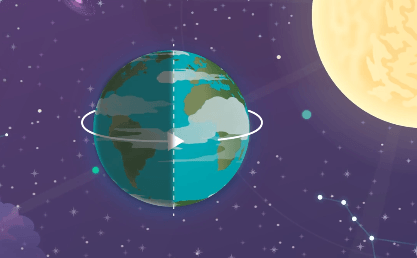
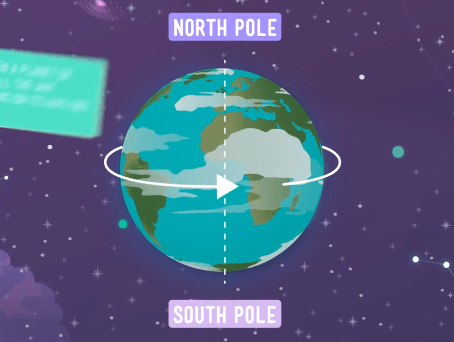
The Earth is rotating on its axis, creating _____
a)
the 12 months
b)
the years
c)
the seasons
d)
day and night
56.

The spinning movement of the Earth on its axis is called the Earth's _____

a)

revolution

b)

rotation

c)

precession

d)

orbit

57.
What moon phase is this picture?
a)
This is the full moon phase.
b)
This is the waxing gibbous moon phase.
c)
This is the waning gibbous moon phase.
d)
This is the first quarter moon phase.
58.
What moon phase is this image?
a)
This is the full moon phase.
b)
This is the last quarter moon phase.
c)
This is the waxing gibbous moon.
d)
This is the new moon phase.
59.
Phases of the moon in which the moon appears to be getting larger are referred to as _.
a)
waxing
b)
waning
c)
new
d)
eclipse
60.
The cycle of the moon lasts about a _.
a)
day
b)
year
c)
week
d)
month
61.
How long is a lunar month?  
a)
30
b)
29.5
c)
27
d)
27.3
62.
How many phases does the moon go through?
a)
4
b)
8
c)
10
d)
16
63.
How does the position of the Moon and Sun affect the tides?
a)
The Moon has a strong gravitational pull on the Earth
b)
The Sun has a weak gravitational pull on the Earth
c)
The Moon and Sun have the same gravitational pull on the Earth
d)
Moon has a strong pull / Sun has a weak pull
64.
Why does the Moon seem to change shape?
a)
As the Moon revolves around Earth, different parts are lit by the Sun.
b)
The viewpoint from Earth of the illuminated side of the Moon changes.
c)
Earth’s shadow is blocking light from the Sun.
d)
The way the Moon produces light changes, so we see different shapes.
65.
What is the phase of the moon during a solar eclipse?
a)
Full Moon
b)
New Moon
c)
First Quarter
d)
A solar eclipse can happen any time
66.
What phase is the moon when in position #5?
a)
New Moon
b)
First Quarter
c)
Full Moon
d)
Third Quarter
67.
A lunar eclipse only occurs during which moon phase?
a)
New Moon
b)
3rd Quarter
c)
Full Moon
d)
1st Quarter
68.

What causes the phases of the moon that we see from Earth?

a)

The moon's rotation on its axis

b)

The moon's revolution around Earth

c)

The Earth's rotations on its axis

d)

The Earth's revolution around the Sun

69.
An air mass is a large body of air which has similar
a)
temperature
b)
humidity
c)
air pressure
d)
all of these
70.

Which layer of the atmosphere do we live in?

a)

exosphere

b)

thermosphere

c)

mesosphere

d)

troposphere

71.

Which level of the atmosphere do you see weather, clouds, rain, etc?

a)

troposphere

b)

thermosphere

c)

mesosphere

d)

exosphere

72.

The 2 most abundant gases in the atmosphere are

a)

helium and nitrogen

b)

nitrogen and oxygen

c)

oxygen and helium

d)

argon and nitrogen

73.
Which body has the greater effect on Earth's tides?
a)
Sun
b)
Saturn
c)
Moon 
d)
Venus
74.
Collectively, the states of Texas, Oklahoma, Kansas and Nebraska, where tornadoes occur often, are all called
a)
Tornado towns
b)
Storm centers
c)
Tornado Alley
d)
Cyclone counties
75.
What happens in Tornado Alley to create so many tornadoes?
a)
The rate of condensation is higher than the rate of precipitation
b)
Warm air from Canada meets cold air from Virginia
c)
Cold, dry air from Canada meets warm dry air from Gulf of Mexico
d)
Warm air in Texas clashes with even warmer air in Texas
76.

What is the name of a person that studies the weather?

a)

Weather watcher

b)

Storm Chaser

c)

Meteorologist

d)

Tornado warning

77.

What is a tornado?

a)

A fast spinning column of air that reaches from the clouds to the ground

b)

A thunderstorm that never touches the ground

c)

A bolt of lightning that reaches from the clouds to the ground

d)

A low hanging cloud that does not spin

78.

In what country are tornadoes the most common?

a)

Brazil

b)

Italy

c)

United States

d)

China

79.
What is a large ocean wave that results from an underwater earthquake, landslide, or volcanic eruption?
a)
Aftershock
b)
Liquefaction
c)
Seismic Gap
d)
Tsunami
80.

Which feature is created by all 3 types of plate boundaries.

a)

Earthquakes

b)

Mountains

c)

Subduction Zones

d)

Volcanoes

81.

What type of fault is the San Andreas in California?

a)

Convergent

b)

Transform

c)

Optimus Prime

d)

Divergent

82.

Which seismic wave travels the fastest, always being the first detected by seismic stations?

a)

P waves

b)

S waves

c)

Surface waves

d)

Tsunami waves

83.

What does a seismograph measure?

a)

The amount of oil and gas underground.

b)

The amount of damage an earthquake causes.

c)

The temperature of the earth's core.

d)

The amount of shaking of the crust.

84.
What causes us to only see the same side of the moon?
a)
The Moon's tilt.
b)
The Moon's gravity.
c)
The Moon's rotation and revolution are at the same pace.
d)
None of the above
85.

The reason that the Sun appears to rise in the East and set in the West.

a)

Sun revolving around the Earth

b)

Sun rotating on its axis

c)

Earth revolving around the Sun

d)

Earth rotating on its axis

86.
What is the main cause of tides on Earth?
a)
the gravitational pull of the Earth
b)
The rotation of the Earth on its axis
c)
The gravitational pull of the moon
d)
the revolution of the Earth around the sun
87.

When the moon completely blocks our view of the sun, it is called...

a)

a lunar eclipse

b)

a super moon

c)

a Solar eclipse

d)

Solar flare

88.
If it is day on one side of Earth, then what is happening on the other side of Earth?
a)
It is day there, too!
b)
It is raining.
c)
It is very hot.
d)
It is night.
89.
What is at the center of the Solar System?
a)
Earth
b)
Moon
c)
Sun
d)
Jupiter
90.

The _____________ is the closest star to the Earth.

a)

North Star

b)

moon

c)

Sun

d)

blue star

91.
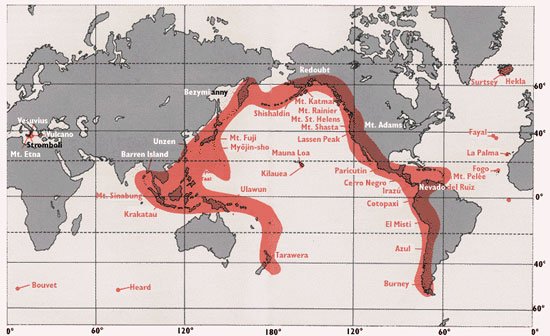
This is the name for the chain of volcanos around the edge of the Pacific Plate.
a)
Circle of Fire
b)
Ring of Lava
c)
Ring of Fire
d)
Circle of Magma
92.
This plate is involved in all of the Ring of Fire Volcanoes.
a)
The Nazca Plate
b)
The North American Plate
c)
The Pacific Plate
d)
The Indian Plate
93.
A subduction zone is...
a)
plates pull apart.
b)
the continental plate slides under the oceanic plate.
c)
where the oceanic plate slides under the continental plate.
d)
plates slap each other a high five.
94.

What is a volcano?

a)

A weak spot in Earth’s crust where magma can come to the surface.

b)

A mix of rocks, minerals, gases, and water from the mantle.

c)

Hot semifluid rock that becomes solid rock as it cools off.

d)

A special kind of mountain.

95.

What protects Earth from ultraviolet rays from the sun?

a)

ozone layer

b)

mesosphere

c)

air pressure

d)

troposphere

96.
In what layer would you find the ozone layer?
a)
troposphere
b)
stratosphere
c)
mesosphere
d)
thermosphere
97.
This is the layer where meteors, or shooting stars, burn up.
a)
Troposphere
b)
Stratosphere
c)
Mesosphere
d)
Thermosphere
98.
In which kind of rock do we usually find a fossil?
a)
sedimentary  rock
b)
rock candy
c)
hard rock
99.
What is a fossil?
a)
the remains or physical evidence of an organism preserved by geologic processes
b)
fossils can be preserved in rock, amber, asphalt, or ice
c)
any naturally preserved evidence of animal activity
d)
fossil of an organism that lived during a relatively short period of time
100.
According to the law of superposition, the oldest fossils are found 
a)
At the top of the rock layers
b)
Near the bottom of the rock layers
c)
In the middle of the rock layers
d)
Somewhat near the surface