wayground logo

Free Printable Worksheets

Font size

S
M
L
XL
Worksheets

YEAR 9 SEMESTER 1 ULTIMATE QUIZ

Total questions: 156

Worksheet time: 2hrs 8mins

Name
Class
Date
1.

When light shines through a prism it creates ________________

a)

visible light

b)

infrared radiation

c)

ultraviolet rays

d)

electromagnetic wave

2.
Material that allows light to pass through allowing you to see "clearly" to the other side
a)
opaque
b)
translucent
c)
transparent
3.
Light is a form of 
a)
energy
b)
radiation
c)
reflection
4.
Light travels in a straight line
a)
True
b)
False
5.
Light bounces when it is 
a)
reflected
b)
absorbed
c)
refracted
6.
Light bends when it is 
a)
refracted
b)
reflected
c)
absorbed
7.
mirror
a)
absorbs
b)
reflects 
c)
refracts
8.
lenses
a)
reflect
b)
refract
c)
absorb
9.
air into water
a)
reflecting
b)
refracting
c)
absorbing
10.
rainbow
a)
light is reflected
b)
light is refracted
c)
light is absorbed
11.
Which images are opaque?
a)
A & C
b)
A,C,E, & F
c)
D, E, & F
d)
A & E
12.
When a rainbow is formed outside naturally, what causes the light to refract?
a)
A. Small raindrops
b)
B. Sunlight rays
c)
C. Tiny mirrors
d)
D. Glass prisms
13.
Which explains why the fork looks different under water?
a)
light can't pass through the glass
b)
the wavelength of light lengthens
c)
the amount of light increases when going through water
d)
light is refracted at an angle
14.
Why do we see objects as white?
a)
They absorb all light
b)
They reflect all light
c)
They absorb some light and reflect some light
15.
The Law of Reflection:
The angle of incidence is _________ the angle of reflection
a)
bigger than
b)
the same as
c)
smaller than
16.
Opaque means...
a)
No light passes through it
b)
All light passes through it
c)
Some light passes through it
17.
When light passes through a prism the light is bent and breaks into the visible spectrum. What color bends the most and has the shortest wavelength?
a)
Red
b)
Yellow
c)
Blue
d)
Violet
18.
_____ is a lens that is thicker in the middle and makes an object appear bigger.
a)
prism
b)
convex lens
c)
concave lens
d)
mirror
19.
______ is a lens that is thicker on its edges and makes an object appear smaller?
a)
mirror
b)
convex lens
c)
concave lens
d)
prism
20.
What Does a Concave Lens Do?
a)
Make things bigger
b)
Make things smaller
c)
Make things closer
d)
Make things happy
21.
What Does a Convex Lens Do?
a)
Make things bigger
b)
Make things smaller
c)
Make things closer
d)
Make things sader
22.
Fill in the blank with the best answer: After light passes through a convex lens the light comes together at a __________. 
a)
Spot
b)
Focal point
c)
point
d)
Local Point
23.
Blurs light as it passes through
a)
Transparent
b)
Translucent
c)
Opaque
d)
Refraction
24.
If light strikes a mirror at a 50⁰ angle, what angle will it come off of the mirror?
a)
50⁰
b)
70⁰
c)
45⁰
d)
30⁰
25.

What is the greatest visible source of light?

a)

campfire

b)

flashlight

c)

the sun

26.
Light has the highest velocity in which medium?
flint glass n=1.70
barium glass n=1.60
crown glass n=1.523
water n=1.33
diamond n=2.45
a)
diamond
b)
water
c)
flint glass
d)
barium glass
27.
Light has the lowest velocity in which medium?
flint glass n=1.70
barium glass n=1.60
crown glass n=1.523
water n=1.33
diamond n=2.45
a)
diamond
b)
water
c)
flint glass
d)
barium glass
28.
This is an example of...
a)
Reflection
b)
Refraction
c)
Polarization
d)
Spectrum
29.
A Concave lens is a __________ device.
a)
Convergent
b)
Divergent
c)
Reflective
d)
None of the above
30.
The full spectrum of light energy is called the__________
a)
broad spectrum
b)
electromagnetic spectrum
c)
helium spectrum 
d)
natural light spectrum
31.
4 is 
a)
radio
b)
UV 
c)
Visible Light
d)
X-ray
32.
Which of the following types of radiation has the shortest wavelength and the highest frequency?
a)
Radio Waves
b)
Infrared
c)
Visible
d)
X-Rays
33.
The back of the eye;  an upside-down image of whatever you are looking at is projected here. 
a)
lens
b)
cornea
c)
pupi
d)
retina
34.
The part of Earth where organisms can live.
a)
biotic factors
b)
biosphere
c)
ecology
d)
biology
35.
A system made up of organisms interacting with one another
a)
biology
b)
abiotic
c)
biotic
d)
ecosystem
36.
Organisms that make up the living part of an ecosystem.
a)
abiotic
b)
biotic factors
c)
ecology
d)
ecosystems
37.
Nonliving things found in an ecosystem.
a)
factories
b)
factor trees
c)
biotic factors
d)
abiotic factors
38.
The study of interactions in an ecosystem.
a)
ecology
b)
philosophy
c)
scientology
d)
biology
39.
A group of the same type of organisms living in the same place at the same time.
a)
threatened species
b)
populations
c)
community
d)
limiting factor
40.

All of the populations that live in one area together

a)

limiting factors

b)

populations

c)

community

d)

speed limit

41.
Which is a biotic factor?
a)
sunlight
b)
air 
c)
bacteria
d)
all of the above
42.
Deserts, mountains, and rivers are all examples of ________.
a)
vacation spots
b)
tundra
c)
ecosystems
d)
wetlands
43.
Ecosystems are always______.
a)
always changing
b)
always balanced
c)
never changing
d)
never balanced
44.
The role of an organism in its ecosystem is called the organism's __________.
a)
hot roll
b)
niche
c)
leading role
d)
role of a lifetime
45.
Decomposers get their food by __________.
a)
making it themselves
b)
eating live organisms
c)
using dead organisms
d)
eating themselves
46.
In an ecosystem, producers and consumers are both __________.
a)
biotic factors
b)
very nice
c)
cranky
d)
abiotic factors
47.
Which is a non-living part of an ecosystem?
a)
Sunlight
b)
Air
c)
Water
d)
All of these
48.
Which is an abiotic factor that most limits the number of frogs living in a pond? 
a)
the color of the water 
b)
the number of predators 
c)
the temperature of the water 
d)
the populations of producers 
49.
Field mice are the primary food source for horned owls in an area. Due to a drought, many field mice left the area. Which result would this drought most likely have on the horned owls?
a)
The horned owl population will consume more field mice.
b)
Horned owls will follow the field mice to a different area.
c)
The horned owl population will increase in the area.
d)
Horned owls will change to a plant-based diet.
50.
Which best describes a way photosynthesis provides resources to animals?
a)
Photosynthesis produces carbon dioxide, decreasing the animal’s need for oxygen.
b)
Photosynthesis increases plant growth, providing places for many animals to live
c)
Photosynthesis produces excess moisture from the plants, reducing the need for a water supply.
d)
Photosynthesis increases plant growth, providing food for carnivores and eliminating the need to hunt.
51.
Below is an example of a simple food chain.

Acorn → Squirrel → Fox → Mountain Lion 

What will most likely happen if squirrels are removed from the food chain?
a)
The fox will eat acorns
b)
The fox population will decrease
c)
The trees will produce fewer acorns.
d)
The mountain lion population will increase
52.
Energy flow for an ecosystem starts with...
a)
Sun
b)
Moon
c)
Neither
53.
Barnacles create home sites by attaching themselves to whales. This relationship neither harms nor benefits the whales. 
a)
parasitism
b)
commensalism
c)
mutualism
54.
 A flea feeds on a mouse’s blood and harms the mouse.
a)
parasitism
b)
commensalism
c)
mutualism
55.
 Hermit crabs live in shells made and then abandoned by snails. This relationship neither helps nor harms the snails.
a)
parasitism
b)
commensalism
c)
mutualism
56.
Which symbols best describe parasitism?
a)
+,+
b)
+,-
c)
+,0
d)
-,0
57.
A relationship between two organisms in which both organisms benefit. 
a)
Mutualism 
b)
Competition
c)
Parasitsm 
d)
Commensalism 
58.
Which of these animals is an introduced animal to Australia?
a)
Rabbit
b)
Kangaroo
c)
Koala
d)
Platypus
59.
Which of these animals are killing native animals in Australia?
a)
Cane toad
b)
Fox
c)
Dingo
d)
All of the above
60.
Biodiversity refers to
a)
extinct species
b)
the variety of species on Earth
c)
nonrenewable resources
d)
the rate of species decline
61.
When taken to a new habitat, non-native plants often threaten native plants of the new habitat.  Why do they do this?
a)
Non-native plants are able to mutate rapidly
b)
Non-native  plants cause native animals to relocate
c)
Non-native plants are able to be used for medicine
d)
Non-native plants compete with native plants for resources
62.
What effect will an invasive species have on the carrying capacity of an ecosystem?
a)
The carrying capacity will increase
b)
The carrying capacity for everyone will decrease
c)
The carrying capacity will only decrease for those in competition for same resource
d)
The carrying capacity for all animals will stay the same
63.
1. What makes a species invasive?
a)
Moving to a new ecosystem and taking resources from natives 
b)
Not having papers
c)
Species that can't adapt
d)
Plants that take up too much space
64.
What is a native specie?
a)
A specie that is local and has lived in the same place
b)
A specie who has come from another state or country
c)
A specie that has no "home" and travels for its whole life
d)
None of the above
65.
The place where an organism lives in order to obtain its food, water, shelter and other things needed for survival is called what?
a)
Niche
b)
Habitat
c)
Home
d)
Ecosystem
66.
What is the correct order for the Levels of Organization listed SMALLEST to LARGEST
a)
Organism, Biome, Population, Community, Ecosystem
b)
Biome, Ecosystem, Community, Population, Organism
c)
Population, Ecosystem, Biome, Organism, Community
d)
Organism, Population, Community, Ecosystem, Biome
67.
A deer eats from Farmer McClard's cornfield. A flood destroyed the field of crops. What will happen to the deer now that the corn is destroyed?
a)
The deer will plant more crops.
b)
The deer will leave the area to find food.
c)
None of the Above
68.
The parts of the food chain in the picture are out of order.  Which picture should be first in the food chain shown?
a)
snake
b)
sun
c)
carrot
d)
rabbit
69.
An ecosystem is made up of _______ and ________ things.
a)
Living and nonliving
b)
Alive and dead
c)
Plants and animals
d)
Land and water
70.
What is the long-lasting relationship between two different organisms?
a)
Symbiosis
b)
Mutualism
c)
Parasitism
d)
Commensalism
71.
What subatomic particles would you find in the nucleus of an atom?
a)
Protons only
b)
Protons and Neutrons
c)
Neutrons and Electrons
d)
Protons and Electrons 
72.
Which subatomic particles contribute the most to the mass of an atom?
a)
Protons, Neutrons, Electrons
b)
Protons only
c)
Protons and Electrons
d)
Protons and Neutrons
73.
What is the number of protons that the element in this image contain?
a)
14
b)
7
c)
15
d)
18
74.
If an atom has 12 positively charged subatomic particles, which of the following must it also have to be considered a neutral atom?
a)
12 neutrons
b)
12 electrons
c)
12 protons
d)
24 protons and neutrons
75.
An atom has 10 protons, 15 neutrons and 10 electrons what is its mass number.
a)
20
b)
10
c)
5
d)
25
76.
An element with a mass number of 11 and an atomic number of 5 has how many neutrons?
a)
11
b)
5
c)
6
d)
16
77.
The particles of the atom you can find by knowing the atomic number.
a)
neutrons
b)
protons and electrons
c)
protons and neutrons
d)
atomic mass
78.
Which letter represents a proton?
a)
A
b)
B
c)
C
d)
D
79.
Which letter represents an electron?
a)
A
b)
B
c)
C
d)
D
80.
Which letter represents a neutron?
a)
A
b)
B
c)
C
d)
D
81.
What is the atomic mass of the atom pictured? 
a)
9
b)
10
c)
18
d)
19
82.
What is the atomic mass of the atom pictured? 
a)
9
b)
10
c)
18
d)
19
83.
What is the element name of the atom pictured? 
a)
Fluorine
b)
Neon
c)
Argon
d)
Potassium
84.
What is the atomic number of the atom pictured? 
a)
9
b)
10
c)
18
d)
19
85.
What is an atom mostly made up of?
a)
protons
b)
electrons
c)
empty space
d)
neutrons
86.
An isotope has three forms.  30% have a mass of 4 amu, 20% have a mass of 5 amu and 50% have a mass of 3 amu.  Average atomic mass will be closest to
a)
2 amu
b)
3 amu
c)
4 amu
d)
5 amu
87.
How many electron shells/levels does this atom have?
a)
1
b)
2
c)
3
d)
4
88.
How many electrons does this picture show?
a)
4
b)
5
c)
6
d)
3
89.
An electron has a _____ charge.
a)
negative
b)
positive
c)
neutral
90.
What are the maximum number of electrons that go on the first 3 energy levels?
a)
2,4,16
b)
2,8,18
c)
4,8,12
d)
3,4,6
91.
What is the mass number and name of an element with 8 protons and 8 neutrons?
a)
16 - Carbon
b)
16 - Oxygen
c)
24 - Oxygen
d)
8 - Neon
92.
Which element is located at Period 7, Group 4? 
a)
Maganese
b)
Chlorine
c)
Rutherfordium
d)
Iodine
93.
Which element is located at Period 5, Group 2? 
a)
Niobium
b)
Strontium
c)
Nitrogen
d)
Phosphorus
94.
Elements in the periodic table are arranged in order by their ...
a)
atomic number
b)
atomic mass (mass number)
c)
metal, nonmetal, or metalloid properties
95.
Each column in the periodic table is called a 
a)
period
b)
group
c)
cluster
d)
unit
96.
What do these isotopes of carbon all have in common?
a)
neutrons & mass number
b)
atomic number and neutrons
c)
atomic number and electrons
d)
protons, atomic number, and mass number
97.
What quantities vary between isotopes of an element?
a)
protons, electrons, and atomic mass
b)
protons, electrons, and atomic number
c)
neutrons and electrons
d)
neutrons and atomic mass
98.
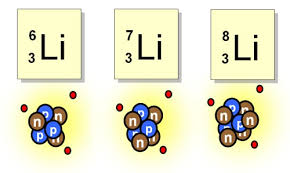
which atom has  4 neutrons?
a)
Li-6
b)
Li-7
c)
Li-8
d)
they have the same # of neutrons
99.

In Carbon-14, what does the "14" represent?

a)

The atomic number

b)

The mass number

c)

All the subatomic particles

d)

The number of protons

100.

Isotopes of an element have differing numbers of ...

a)

protons

b)

neutrons

c)

electrons

101.
How many neutrons does the isotope below have?     89 36Kr
a)
53
b)
36
c)
89
d)
125
102.

What is an alpha particle?

a)

An electron

b)

A helium atom

c)

A helium nucleus

d)

A ray of energy in the e-m spectrum

103.
What is emitted during Beta Radiation?
a)
A high-energy Electron.
b)
Protons.
c)
Neutrons.
d)
Nuclei
104.
What is the most penetrating radiation?
a)
gamma
b)
alpha
c)
beta
d)
positron
105.
Alpha makes the atomic number decrease by how many? 
a)
1
b)
2
c)
3
d)
5
106.
What is NOT a characteristic of gamma radiation?
a)
Most dangerous type of radiation
b)
High energy, high penetration
c)
stopped by thin metal
d)
Stopped by several feet of concrete or several inches of lead
107.
What is NOT a characteristic of a Beta particle?
a)
Stopped by thin metal
b)
The most dangerous type of radiation
c)
High speed, High energy electrons or positrons
d)
can penetrate skin
108.
What is the most penetrating radiation?
a)
gamma
b)
alpha
c)
beta
d)
positron
109.
In order of most to least penetrating radiation we have
a)
Alpha , Beta,  Gamma
b)
Beta , Gamma , Alpha
c)
Gamma, Beta, Alpha
d)
Gamma, Alpha, Beta
110.
Which type of nuclear radiation is being emitted here?
a)
Alpha
b)
beta
c)
gamma 
d)
none
111.
A material that can stop gamma radiation is
a)
lead
b)
jello
c)
sunscreen
d)
wood
112.
The nervous system is composed of the ___, ___, and ___.
a)
heart, brain, kidneys
b)
lungs, liver, stomach
c)
brain, spinal cord, nerves
d)
eyes, pancreas, veins
113.

The CENTRAL nervous system is made up of which two organs?

a)

Brain and Spinal Cord

b)

Spinal Cord and Peripheral Nerves

c)

Peripheral Nerves and Heart

d)

Heart and Lungs

114.

____________ ---> ____________ ---> _______________

a)

Response, Stimulus, Interpret

b)

Interpret, Stimulus, Response

c)

Stimulus, Interpret, Response

d)

Response, Interpret, Stimulus

115.

As organisms get more complex, cells become specialized to perform specific functions in the body. What is the function for the cell shown?

a)

contract and shorten movement

b)

provide coverage and protection

c)

carry impulses around the body

d)

connects parts together

116.

Which cell relays messages from one tissue to another?

a)

Red Blood Cell-RBC

b)

White Blood Cell-WBC

c)

Neuron

d)

Tissue

117.

What level of structure is represented by the diagram?

a)

organ

b)

organ system

c)

cell

d)

tissue

118.

Which system is responsible for the overall control of all the internal processes that occur in the body?

a)

muscular system

b)

nervous system

c)

digestive system

d)

skeletal system

119.
The _______ send and receive messages from the brain.
a)
Nerves
b)
Spinal Cord
c)
Brain
120.

These three parts work together to make up the Central Nervous System. They are the ________, ______, and _______.

a)

Brain, Spinal Cord, and Nerves

b)

Heart, Lungs, Brain

c)

Cerebrum, Cerebral Cortex, Cerebellum

121.
When you react to catch a dropped ruler your body reacts in this order:
a)
1) muscles contract 2) eyes sense ruler move 3) message sent to brain 4) message sent to the muscles
b)
1) message sent to muscles 2) muscles contract 3) message sent to brain 4) eyes sense ruler move
c)
1) eyes contract 2) muscles sent to brain 3) message sense moves 4) ruler is sent to muscles
d)
1) eyes sense ruler move 2) message sent to brain 3) message sent to muscles 4) muscles contract
122.
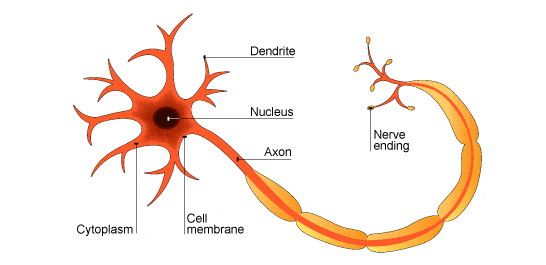
The part of the neuron that conducts action potentials is the:
a)
Axon
b)
Dendrite
c)
Axon Terminal
d)
Cell Body
123.
The part of the neuron that receives signals is the:
a)
Axon
b)
Dendrite
c)
Axon Terminal
d)
Cell Body
124.
The part of the neuron that transmits signals to muscles is the:
a)
Axon
b)
Dendrite
c)
Axon Terminal
d)
Cell Body
125.

How do your nerves work?

a)

They carry messages back and forth from the brain to the rest of the body

b)

The send messages only to the spinal cord

c)

They only receive messages from the spinal cord

d)

They really don't work. They are lazy and want everything done for them.

126.

What is the Peripheral Nervous System consist of?

a)

The brain

b)

The spinal Cord

c)

The nerves that connect the CNS to all parts of the body.

d)

All of the above.

127.
Name 3 reflexes. 
a)
Blinking, coughing, and looking at your phone.
b)
Jerking your leg when the Dr. taps your knee, blinking and texting on your phone
c)
coughing, sneezing
d)
Blinking, jerking your let when the Dr. taps your knee, pulling away when something is hot
128.
What do sensory organs do?
a)
regulate our heart rate
b)
They take in information we need about our environment
c)
conduction of impulses from the spinal cord
d)
understand the impulses from motor neurons
129.
How does your body prevent your temperature from rising excessively? 
a)
by drinking water, that lowers body temperature when it is absorbed in the body cells
b)
by shivering that acts as air conditioner in the body
c)
by having "goosebumps" that make the hair stand up trapping air that cools the body. 
d)
by sweating, that lowers body temperature when it exavprates, which draws hear energy away from the body
130.
What is a stimulus? 
a)
A change or interesting event
b)
A change in the external environment.
c)
A change within our bodies.
d)
IDK
131.
Give and example of a stimulus.
a)
you hear screaming
b)
a loud noise like thunder
c)
feeling a spider crawling on your back
d)
all of these 
132.
What is a response? 
a)
a change in the external environment
b)
any change in an organism
c)
how an organism reacts to a stimulus
d)
how a plant turns away from the light
133.
Give examples of a response:
a)
getting a drink because you are thirsty
b)
screaming when you are startled
c)
taking your hand away from a hot surface
d)
all of these are responses
135.
When you see something scary and you run for safety, you are using which systems? 
a)
both the CNS and PNS
b)
just the CNS
c)
just the PNS
d)
your motor system
135.
When you see something scary and you run for safety, you are using which systems? 
a)
both the CNS and PNS
b)
just the CNS
c)
just the PNS
d)
your motor system
136.
What are the different types of neurons? 
a)
sensory, motor, and interneurons
b)
sensory, interneurons and muscle
c)
interneurons, motor and nephrons
d)
lymphatic, autonomic, and cerebrum
137.

what might be a job of a motor neuron?

a)

connecting to a muscle and helping you move

b)

connecting within the brain to help you make a decision

c)

sending a message toward your brain from a pain receptor in your skin

d)

all of these

138.

Which best describes myelin?

a)

it is a neurotransmitter that triggers muscle contraction

b)

it is a protein that builds the axon

c)

it is a fat that speeds the message along the axon

d)

it is a fat that helps the neuron "hear" messages

139.

In the reflex arc shown, which number would be the effector?

a)

B

b)

D

c)

G

d)

F

140.
The part of the nervous system that consists of nerves that branch out from the CNS (central nervous system) and connect to other body parts
a)
Sympathetic
b)
Parasympathetic
c)
Autonomic
d)
Peripheral
141.
The tiny gap between neurons where nerve impulses are sent from one neuron to another.  It is where communication occurs between an axon and dendrite
a)
synapse
b)
axon terminal
c)
impulse
d)
myelin
142.
The nerve cell that connects sensory and motor neurons is a _______________.
a)
Motor Neuron
b)
Sensory Neuron
c)
Interneurons 
d)
Glial cells
143.
What part of the neuron is myelinated?
a)
Cell Body
b)
Axon
c)
Synapse
d)
Dendrite
144.
Sensory neurons carry nerve impulses from the sense organs and internal organs (like your stomach) to the
a)
peripheral nervous system (PNS)
b)
central nervous system (CNS)
c)
muscles
d)
sense organs
145.
What is NOT part of the peripheral nervous system (PNS)?
a)
axons
b)
sensory receptors
c)
spinal cord
d)
motor neurons
146.
maintain stable internal conditions. Examples include fever and vomiting.
a)
homeostasis
b)
telekinesis
c)
alveoli
d)
epidermis
147.
Homeostasis
a)
allows for a wildly fluctuating internal environment
b)
is impossible in vertebrates
c)
is the maintenance of a relatively stable internal environment and often incorporates a form of feedback regulation
d)
is the maintenance of a relatively stable external environment and often incorporates a form of feedback regulation
148.
Homeostasis in the human body is often maintained by a: 
a)
neutral feedback loop 
b)
solar feedback loop
c)
positive feedback loop
d)
negative feedback loop
149.
What is mean by homeostasis?
a)
Controls and coordinates body activities through chemical 
b)
controls and coordinates body activities through electrical impulses
c)
For maintenance of a steady state in the internal environment
d)
remove metabolic waste products from the cel
150.
which of the factors not affecting the internal environment?
a)
Temperature
b)
Respiration
c)
pH value
d)
Osmotic pressure
151.
which of the factors not affecting the internal environment?
a)
Temperature
b)
Respiration
c)
pH value
d)
Osmotic pressure
152.

Which body system controls the body to maintain homeostasis?

a)

excretory

b)

nervous

c)

circulatory

d)

skeletal

153.

Which of the following detects a change & sends the info to the Control Center?

a)

Receptors

b)

Effectors

c)

Muscles & Glands

d)

Brain & Spinal Cord

154.

This receives information from Receptors, coordinates a response, & sends it to the Effectors.

a)

Control Center

b)

Sense Organs

c)

Muscles & Glands

d)

Hormones

155.
The two types of feedback systems that help organisms maintain homeostasis are:
a)
positive and negative 
b)
receptor and effector
c)
static and dynamic
d)
minor and major
156.
 What is always coming, but never arrives?
a)
Yesterday 
b)
Never 
c)
Tomorrow
d)
IDK