wayground logo

Free Printable Worksheets

Font size

S
M
L
XL
Worksheets

Year 7 End of Year Quiz

Total questions: 96

Worksheet time: 1hrs 29mins

Name
Class
Date
1.
What is the hazard shown in this hazard sign?
a)
Fireworks
b)
Broken Glass
c)
Explosive
d)
Corrosive
2.
What is the hazard shown in this hazard sign?
a)
Fire
b)
Goku
c)
Flammable
d)
Inflammable
3.
What is the hazard shown in this hazard sign?
a)
Corrosive
b)
Irritant
c)
Danger
d)
Caution
4.
What is the hazard shown in this hazard sign?
a)
Explosive
b)
Corrosive
c)
Irritant
d)
High level Irritant
5.
What is the hazard shown in this hazard sign?
a)
Death
b)
Pirates
c)
Corrosive
d)
Toxic
6.
At higher temperatures
a)
particles in an object have less energy
b)
particles in an object move faster
c)
a gas contracts
7.
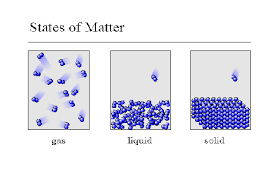
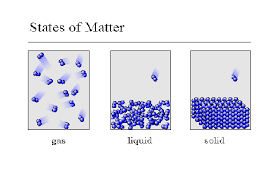
A gas
a)
has a definite shape but no definite volume
b)
has a definite volume but no definite shape
c)
has fast-moving particles
8.
Freezing
a)
Solid to gas
b)
Liquid to solid
c)
Gas to solid
d)
Liquid to gas
9.
Boiling
a)
liquid to gas
b)
gas to solid
c)
gas to liquid
d)
solid to liquid
10.
Which state of matter has tightly packed molecules?
a)
solid
b)
liquid
c)
gas
11.
Which state of matter has a definite shape?
a)
solid
b)
liquid
c)
gas
12.
What is happening when my ice cream changes from a solid to a liquid?
a)
freezing
b)
melting
c)
burning
d)
evaporation
13.
The state of matter that has no definite size or shape is
a)
Solid
b)
Liquid
c)
Gas
14.
Particles (molecules) in a ______________________ have more energy than the other states of matter.
a)
gas
b)
solid
c)
liquid
15.
What term describes a solid changing to a gas?
a)
Deposition
b)
Sublimation
c)
Evaporation
d)
Freezing
16.
Particles of a liquid
a)
are tightly packed together and stay in a fixed position.
b)
have no viscosity.
c)
decrease in volume with increasing temperature.
d)
are free to move around one another but still touch.
17.
Particles (molecules) in a ______________________ have more energy than the other states of matter.
a)
gas
b)
solid
c)
liquid
18.
What is condensation?
a)
gas to solid
b)
gas to liquid
c)
liquid to solid 
d)
solid to liquid 
19.
Which has a greater distance between particles?
a)
Solid
b)
Liquid
20.
The slower the particles in a substance move,
a)
the colder it is.
b)
the warmer it is.
c)
the more energy it has.
d)
the less energy it has.
21.

Both a plant and animal cells have a cell wall

a)

True

b)

False

22.

What is the power house in the plant and animal cell?

a)

nucleus

b)

mitochondria

c)

Cell membrane

d)

none of the above

23.

Which cell has a cell wall?

a)

Animal Cell

b)

Plant Cell

c)

Both

24.

How many nucleus' are in a plant cell?

a)

1

b)

5

c)

9

d)

3

25.

Which cell has chloroplast?

a)

Plant cell

b)

Animal cell

c)

Both

d)

Neither one of them have chloroplast

26.

This is the brain or control center of the cell.

a)

Cytoplasm

b)

Nucleus

c)

Cell membrane

27.

What cell part is NOT found in all cells?

a)

Chloroplasts

b)

Cell Membrane

c)

Cytoplasm

d)

Nucleus

28.

True or False:

Plant cells have a more rigid structure than animal cells.

a)

True

b)

False

29.

This cell part is in ALL cells. It is the gel-like substance that provides cell shape.

a)

Chloroplasts

b)

Cell membrane

c)

Cytoplasm

d)

Nucleus

30.

Plants perform photosynthesis through this organelle. It captures energy from the sun and uses it to produce food for the cell.

a)

Cytoplasm

b)

Chloroplasts

c)

Cell Wall

d)

Nucleus

31.
It is the  jelly-like fluid interior of the cell
a)
cytoplasm
b)
nucleus
c)
endoplasmic reticulum
d)
golgi bodies
32.
What tool do you use to view the cells?
a)
metric ruler
b)
pipette
c)
centrifuge
d)
microscope
33.
What is the function of a cell wall?
a)
to protect and support the cell
b)
to perform different functions in each cell
c)
to prevent water from passing through it
34.
Tube that carries swallowed food to the stomach
a)
esophagus
b)
liver
c)
pancreas
d)
rectum
35.
What happens when the food goes to the small intestine?
a)
nutrients gets into the blood
b)
the food keeps on going
c)
nothing
36.
The organ in orange represents the:
a)
Liver
b)
Lung
c)
Stomach
d)
Pancreas
37.
The highlighted organ is the
a)
liver
b)
large intestine
c)
small intestine
d)
stomach
38.
Chewing food is an example of _____________.
a)
chemical digestion
b)
mechanical digestion
39.
The acid in your stomach used for digestion.
a)
sodium bicarbonate
b)
insulin
c)
hydrochloric
d)
amylase
40.
The main purpose of the large intestine.
a)
absorb hormones
b)
absorb protein
c)
absorb nutrients
d)
absorb water
41.
The opening at the end of the digestive system where solid waste comes out is the...
a)
rectum
b)
anus
c)
mouth
d)
large intestine
42.
a)
Liver
b)
Esophagus
c)
Urethra
d)
Large Intestine
43.
a)
Pancreas
b)
Stomach
c)
Small Intestine
d)
Liver
44.
Nutrients from digested food are absorbed in which digestive organ?
a)
Small Intestine
b)
Stomach
c)
Large Intestine
d)
Gallbladder
45.
What are the three primary colours of light?
a)
Red,Yellow,Blue
b)
Red,Green,Yellow
c)
Red,Green,Blue
d)
Yellow,Blue,Green
46.
Primary colors of light can combine to make
a)
black light
b)
white light
c)
primary pigments
d)
ultraviolet light
47.
How do you make a secondary color?
a)
Mixing primary colors together
b)
Mixing secondary colors together
c)
Mixing primary and secondary colors together
d)
Mixing the complementary colors together
48.
An object appears red because it
a)
reflects light waves of all colors
b)
reflects light waves of red
c)
absorbs light waves of red
d)
transmits light waves of all colors
49.
The color that we perceive an object has depends on the 
a)
The light that is reflected by the object.
b)
The light that is absorbed by the object.
c)
The light that is transmitted by the object.
d)
The light that is created by the object.
50.
Which is true of a green grape?
a)
It absorbs green light.
b)
It absorbs white light.
c)
It reflects green light.
d)
It reflects white light.
51.
Red objects appear 'red' because:
a)
red objects are made from red materials
b)
red objects absorb red light
c)
red objects absorb all other colour except red light
d)
red objects don't reflect any light
52.
What colours is white light made from?
a)
Orange, Green, Pink, Magenta, Peach, Rose, Lemon
b)
Red, Orange Yellow, Green, Black, Indigo, Violet
c)
Red, Orange, Yellow, Green, Blue, Indigo, Violet
d)
Red, Orange, Yellow, Grey, Blue, Indigo, Violet
53.
Why does this the t-shirt appear red and the shorts appear blue?
a)
The t-shirt reflects red light, the shorts reflect green light, other colours are absorbed.
b)
The t-shirt reflects blue light, the shorts reflect red light, other colours are absorbed.
c)
The t-shirt reflects red light, the shorts absorb yellow light, all other colours are reflected
d)
The t-shirt reflects red light, the shorts reflect blue light, other colours are absorbed.
54.
If you are using a green color filter, what color will you only see?
a)
blue
b)
green
c)
white
d)
red
55.
Which color absorbs all light?
a)
White
b)
Black
c)
Orange
d)
Green
56.
Which color reflects all light?
a)
White
b)
Black
c)
Orange 
d)
Green
57.
The number of wavelengths that pass a point each second
a)
frequency
b)
wavelength
c)
pitch
d)
amplitude
58.
How high or low a sound is; depends on the frequency (greater frequency= higher pitch)
a)
pitch
b)
frequency
c)
sound
d)
medium
59.
A reflected sound wave
a)
frequency
b)
pitch
c)
echo
d)
rarefaction
60.
The term for how loud or soft a sound is:
a)
pitch
b)
volume
c)
sound
d)
medium
61.
The term for how high or low a sound is:
a)
pitch
b)
volume
c)
sound
d)
medium
62.
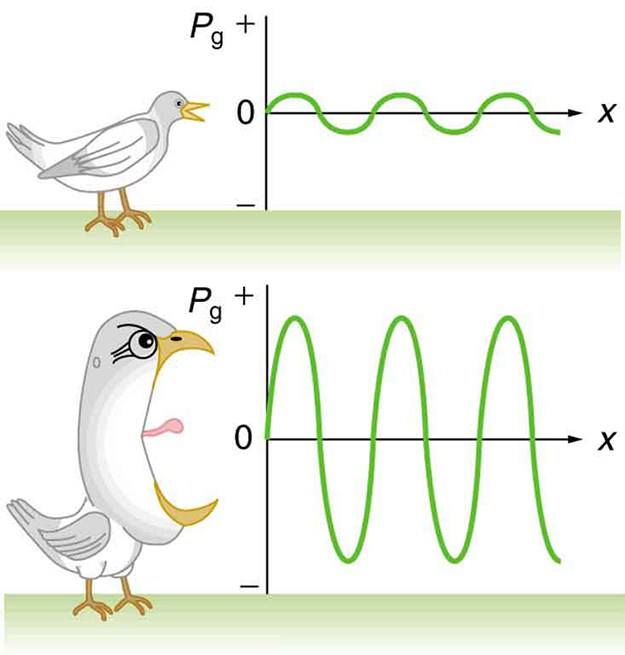
Which feature of sound is determined by amplitude?
a)
Pitch
b)
Smoothness
c)
Loudness
63.
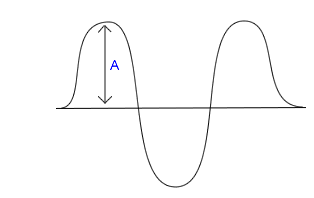
If the distance represented by the letter A (the amplitude) were increased, how would it change the sound?
a)
The sound would be higher. 
b)
The sound would be lower. 
c)
The sound would be softer. 
d)
The sound would be louder. 
64.
When a sound is louder what measurement gets bigger?
a)
Frequency 
b)
Amplitude 
c)
Wavelength 
d)
Crest
65.
What products are produced when we react an acid with an alkali?
a)
salt + carbon dioxide + water
b)
salt + hydrogen
c)
salt + water
d)
salt + water + hydrogen
66.
What salt is produced if you react sodium hydroxide with hydrochloric acid?
a)
sodium hydroxide
b)
sodium sulfate
c)
sodium nitrate
d)
sodium chloride
67.
A salt is formed when nitric acid combines with sodium hydroxide. What is the name of the salt?
a)
Sodium chloride
b)
Sodium nitrate
c)
Hydrogen Nitrate
d)
Nirate
68.
The products of a neutralisation reaction are lithium sulfate and water. What is the name of the acid used to neutralise the alkali lithium hydroxide?
a)
hydrochloric acid
b)
sulfuric acid
c)
nitric acid
d)
phosphoric acid
69.
Name the salt produced when reacting potassium hydroxide and phosphoric acid?
a)
Potassium chloride
b)
potassium nitrate
c)
potassium sulfate
d)
potassium phosphate
70.
Which reactants are used to produce sodium chloride (salt and water)
a)
sodium hydroxide and nitric acid
b)
sodium hydroxide and sulfuric acid
c)
sodium hydroxide and phosphoric acid 
d)
sodium hydroxide and hydrochloric acid
71.
Sodium hydroxide + sulphuric acid —> ...?
a)
sodium carbonate
b)
sodium sulphate
72.
hydrochloric acid
a)
HCl
b)
HClO
c)
H3ClO3
d)
HClO3
73.

The pH of pure water

a)

5.6

b)

7.0

c)

8.1

d)

0.0

74.

Which substance is avid?

a)

Toothpaste

b)

Vinegar

c)

Soap

d)

Ammonia

75.

The color of litmus in acid:

a)

Red

b)

Blue

c)

Purple

d)

Green

76.

The color of litmus in alkali:

a)

Red

b)

Blue

c)

Purple

d)

Green

77.

The color of litmus in neutral solution:

a)

Red

b)

Blue

c)

Purple

d)

Green

78.

The color of universal indicator in pure water:

a)

Red

b)

Blue

c)

Purple

d)

Green

79.

Acids taste .....

a)

sour

b)

bitter

c)

sweet

d)

umami

80.

Rain water is slightly acidic. What is its pH?

a)

1.0

b)

5.6

c)

7.0

d)

8.2

81.

Indigestion can be treated by drinking ....

a)

water

b)

antacid

c)

vinegar

d)

sodium hydroxide

82.

Reaction between acid and alkali producing salt and water:

a)

Combustion

b)

Neutralization

c)

Precipitation

d)

Decomposition

83.

Something that can be used to identify acid/alkali:

a)

Indicator

b)

Oxidator

c)

Reductor

d)

Terminator

84.
What will cause an object to move?
a)
Applied forces
b)
Balanced forces
c)
Unbalanced forces
85.
If an object is stationary (not moving) the forces acting upon it are _____________
a)
unbalanced
b)
weak
c)
balanced
d)
Hulk Smash!
86.
The force that pulls things toward earth.
a)
Speed
b)
Gravity
87.
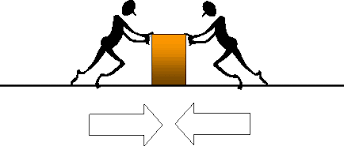
Which one is balanced?
a)
top
b)
bottom
c)
both
88.
Force is measured in....
a)
Galileos 
b)
Newtons
c)
Di Vincis
d)
Einsteins 
89.
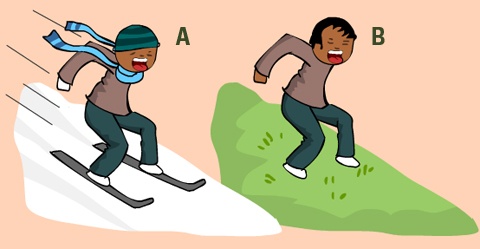
Why is it harder for the boy in Image B to get down the hill?
a)
Motion
b)
Friction
c)
Work
d)
Displacement
90.

If a student has two magnets, how might it be determined which magnet is stronger?

a)

Count how many paper clips each magnet can lift.

b)

Submerge each magnet in a bowl of water.

c)

Examine each magnet to determine the north pole.

d)

Measure the length and the mass of both magnets.

91.
The drinking of alcoholic beverages by a pregnant woman is harmful to the development of her fetus. This is most damaging early in a pregnancy because during this time
a)
the lungs of the fetus become functional.
b)
alcohol can easily enter the mouth of the fetus.
c)
many of the essential organs of the fetus are forming.
d)
the fetus cannot excrete wastes.
92.
The 3 functions of the MALE reproductive system:
a)
produce sex hormones, produce eggs, provide nourishing environment for the baby
b)
produce sex hormones, produce/store sperm. deliver sperm to female reproductive system
c)
produce hormones, urination, cleansing of reproductive organs
93.
The 3 functions of the FEMALE reproductive system:
a)
produce sex hormones, produce eggs, provide nourishing environment for baby
b)
produce sex hormones, produce/store sperm. deliver sperm to female reproductive system
c)
produce hormones, urination, cleansing of reproductive organs
94.
Where does fertilization usually occur?
a)
ovary
b)
uterus
c)
vagina
d)
fallopian tube
95.
The ___________ is the fetus' link to life.
a)
umbilical cord
b)
fallopian tubes
c)
placenta
96.
producing one mature egg cell each month
a)
penis
b)
ovaries
c)
menstrual cycle
d)
fertilization