wayground logo

Free Printable Worksheets

Font size

S
M
L
XL
Worksheets

Mr Coumbe 8 AEP - Cell Theory, Organelles and Mitosis

Total questions: 64

Worksheet time: 42mins
Name
Class
Date
1.
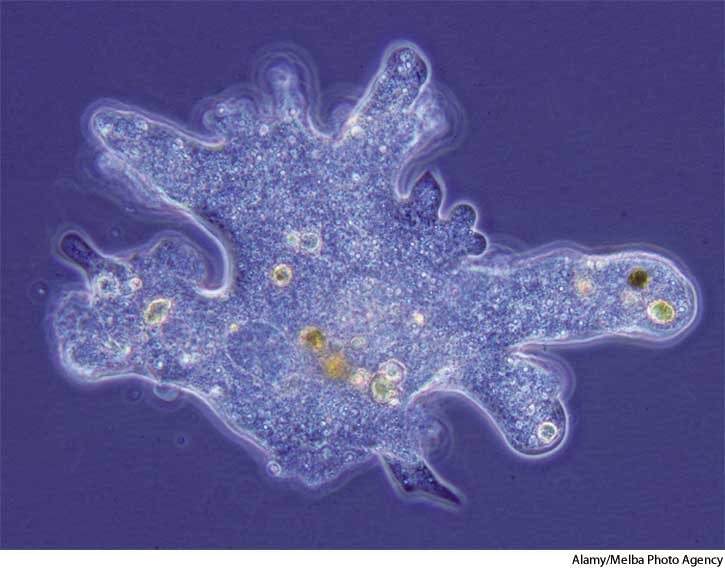
An Amoeba is a unicellular, animal-like protist that lives in ponds and streams. According to cell theory, where did this cell come from?
a)
another pre-existing amoeba cell.
b)
energy from sun that allowed the protist to reproduce.
c)
a multicellular organism.
d)
the nonliving environment.
2.
Robert Hooke, Anton van Leeuwenhoek, Theodor Schwann, Rudolf Virchow, and Matthias Schliden were all responsible for what theory?
a)
The Theory of Gravity
b)
The Theory of Relativity
c)
The Cell Theory
d)
The Theory of Continental Drift
3.
What tool do you use to view the cells?
a)
metric ruler
b)
centrifuge
c)
microscope
d)
telescope
4.
Which of the following is NOT a cell theory.
a)
All non-living things are made of cells
b)
All cells come from pre-existing cells
c)
Cells are the basic unit of structure and function of all living things
5.
All living things are made up of...
a)
cells
b)
cell tissues
c)
organ
d)
organ systems
6.
All cells come from___________ cells.
a)
pregnant
b)
pre-existing
c)
paternal
d)
pin size
7.
Rocks are not living because
a)
they never move
b)
they aren't needed for humans
c)
they are not made of cells
d)
they don't break down
8.
What is the basic structural and functional unit of all living things? 
a)
atom
b)
cell
c)
molecule
d)
human
9.
An organism made of one cell is called
a)
unicellular organism
b)
multicellular organism
10.
What is one way in which all living things on Earth are alike?
a)
All living things have hair.
b)
All living things are made of cells and come from other cells.
c)
The cells of all living things have chloroplast.
d)
All living things can move. 
11.
Which of the following statements is not part of the cell theory?
a)
Cells are the basic unit of structure and function in all living things.
b)
All cells are produced from other cells.
c)
Only animal cells are composed of cells.
d)
All living things are composed of cells.
12.
Which of the following scientists concluded that all animals are made of cells?
a)
Rudolf Virchow
b)
Matthais Schleiden
c)
Robert Hooke
d)
Theodor Schwann
13.
Which of the following scientists was the first to observe bacteria under a microscope?
a)
Anton van Leuwenhoek
b)
Matthais Schleiden
c)
Robert Hooke
d)
Theodor Schwann
14.
what is a cell classified as?
a)
a basic unit of structure and function of all living organisms
b)
a unit based on only plants and animals that are living
15.
In order to sustain life, all cells must...
a)
digest nutrients and water
b)
excrete waste and fluids
c)
must be able to maintain a homeostasis environment (aka cellular respiration and regulation)
d)
All of the above
16.

Which of these are major elements in the body

a)

Oxygen, carbon, cholestrol and nitrogen

b)

Selenium, lipids, chromium and nitrogen

c)

Oxygen, carbon, hydrogen and nitrogen

d)

Oestrogen, carbon, hydrogen and nitrogen

17.
This organelle is a rigid outer layer that protects plant cells.
a)
Cell Membrane
b)
Cell Wall
c)
Nucleus
d)
Chloroplast 
18.

This organelle controls what goes in and out of plant and animal cells.

a)

Cell Wall

b)

Cell Membrane

c)

Chloroplasts

d)

Cytoplasm

19.

The _____________ stores food, water, wastes, and other materials in both plant and animal cells.

a)

Vacuole

b)

Mitochondria

c)

Cytoplasm

d)

Nucleus

20.
An organelle that captures energy from the sunlight in order to use it to produce food in plant cells is ______________.
a)
Chromatin
b)
Chloroplast
c)
Cytoplasm
d)
Cell Membrane
21.

The _____________ holds the DNA, and controls the functions of eukaryotic cells.

a)

Nucleus

b)

Nuclear Membrane

c)

Mitochondria

d)

Chloroplast

22.

The _____________ is a gel-like fluid that fills plant and animal cells. It holds the organelles in place and gives each cell its shape.

a)

Cytoplasm

b)

Cell Membrane

c)

Cell Wall

d)

Chloroplast

23.

What can only be found in plant cells?

a)

Cell membrane

b)

Vacuole

c)

Chloroplast

d)

Mitochondria

24.

What is found in both plant and animal cells but is much larger in plant cells because it helps to provide structure and support?

a)

Nucleus

b)

Mitochondrion

c)

Chloroplast

d)

Vacuole

25.
Cell membranes are found in
a)
Only animal cells
b)
Only plant cells
c)
Some plant and animal cells
d)
All plant and animal cells
26.
Tiny holes that allow nutrients to enter the nucleus:
a)
Cytoplasm
b)
Mitochondria
c)
Flagellum
d)
Nuclear Pores
27.
"Garbage collectors" of the cell that remove waste: 
a)
Cell Membrane
b)
Centrioles
c)
Lysosomes
d)
Nucleus
28.
Protective membrane that surrounds the nucleus: 
a)
Chromatin
b)
Vesicles 
c)
Centrioles
d)
Nuclear Envelope
29.
Makes protein for the cell: 
a)
Nucleus
b)
Ribosomes
c)
Cytoplasm
d)
Cell Membrane
30.
Maze-like organelle that makes ribosomes: 
a)
Rough Endoplasmic Reticulum
b)
Lysosomes
c)
Nucleus
d)
Chromatin
31.
Creates fat for storing energy: 
a)
DNA
b)
Centrioles
c)
Lysosomes
d)
Smooth Endoplasmic Reticulum
32.
"Post office" of the cell that packages proteins and fats: 
a)
Rough ER
b)
Smooth ER
c)
Golgi Apparatus
d)
Lysosome
33.
"Envelopes" of the cell, used for transporting material: 
a)
Vesicles
b)
Centrioles
c)
ATP
d)
Mitochondria
34.
Long, stringy fibers that help with cell division: 
a)
Nuclear Envelope
b)
Nucleus
c)
Centrioles
d)
Chromatin
35.
What process does a multi-cellular organism use to replace its damaged body cells?
a)
mitosis
b)
meiosis
c)
replication
d)
transcription
36.
Which of these lists presents the stages of the cell cycle in the correct order?
a)
interphase, mitosis, cytokinesis
b)
cytokinesis, mitosis, interphase
c)
mitosis, interphase, cytokinesis
d)
interphase, cytokinesis, mitosis
37.
Which of these phases of mitosis take place first?
a)
anaphase
b)
telophase
c)
prophase
d)
metaphase
38.
Matt uses a microscope to look at slides of plant cells.  He sees a cell with two nuclei that have visible chromosomes. In which stage of cell division is this cell?
a)
anaphase
b)
prophase
c)
telophase
d)
interphase
39.
Which of these organisms relies on mitosis for reproduction?
a)
grumpy cat
b)
angry bird
c)
unicellular paramecium
d)
squishy jellyfish
40.
What phase of mitosis is occuring in the picture?
a)
Prophase
b)
Metaphase
c)
Cytokinesis
d)
Telophase
41.
In which phase does the cell spend most of it's life?
a)
Interphase
b)
Nuclear Division
c)
Telophase
d)
Mitosis
42.
DNA will condense into...
a)
Centromeres
b)
Chromosomes
c)
Nuclei
d)
Spindle fibers
43.
What phase of mitosis is pictured?
a)
Metaphase
b)
Telophase
c)
Prophase
d)
Anaphase
44.
Which of the following is NOT occuring during interphase?
a)
Cell growth
b)
DNA being copied
c)
DNA condensing
d)
Two new cells are made
45.
Which is Metaphase?
a)
A
b)
E
c)
C
d)
F
46.
Why would it be important to replicate DNA before a cell divides in mitosis or meiosis?
a)
In order for genetic information to be transferred into daughter cells.
b)
In order for the cell to be able to increase in size.
c)
In order for the DNA to be contained in the nucleus.
d)
In order for the cell to re-order the DNA sequencing in the new cells.
47.
Which phase comes NEXT?
a)
prophase
b)
metaphase
c)
anaphase
d)
telophase
48.
Before cells can divide, what must be copied?
a)
mitochondria
b)
cytoplasm
c)
DNA
d)
Cell Wall
49.
Name the previous phase.
a)
Prophase
b)
Metaphase
c)
Anaphase
d)
Telophase
50.
What phase of mitosis is shown in the picture?
a)
Prophase
b)
Anaphase
c)
Telophase
d)
Metaphase
51.
Chromatid pairs line up in the middle of the cell.
a)
Metaphase
b)
Telophase
c)
Anaphase
d)
Interphase
52.

What phase of mitosis is shown in the picture?

a)

Prophase

b)

Anaphase

c)

Telophase

d)

Metaphase

53.
Mitosis is a type of ________________ reproduction.
a)
Sexual
b)
Asexual
54.
A new organism is produced from one parent organism.
a)
Sexual Reproduction
b)
Asexual Reproduction
55.
What phase of mitosis is shown in the picture?
a)
Prophase
b)
Anaphase
c)
Telophase
d)
Metaphase
56.
Chromatid pairs separate and move to opposite ends of the cell
a)
Metaphase
b)
Telophase
c)
Interphase
d)
Anaphase
57.
Chromosomes duplicate, the cell grows and develops
a)
Metaphase
b)
Telophase
c)
Interphase
d)
Anaphase
58.
What phase of mitosis is shown in the picture?
a)
Prophase
b)
Anaphase
c)
Telophase
d)
Metaphase
59.
Results of cell division or mitosis include all of the following EXCEPT?
a)
growth
b)
repair damaged cells
c)
replace damaged cells
d)
dead cells
60.
Chromatid pairs can be seen, spindle fibers form and nuclear membrane disappears
a)
Metaphase
b)
Telophase
c)
Anaphase
d)
Prophase
61.
Two new nuclei form and the cytoplasm splits
a)
Metaphase 
b)
Telophase
c)
Anaphase
d)
Prophase
62.
How many chromosomes does a human cell have?
a)
42
b)
46
c)
24
d)
64
63.
Which of the following lists, in order, the phases of mitosis?
a)
interphase, metaphase, anaphase, telophase
b)
prophase, metaphase, anaphase, telophase
c)
prophase, metaphase, anaphase, interphase
d)
prophase, anaphase, metaphase, telophase
64.
How many daughter cells are produced in mitosis?
a)
1
b)
2
c)
4
d)
6