wayground logo

Free Printable Worksheets

NEW

Font size

S
M
L
XL
Worksheets

Yr 8 - Cells

Total questions: 63

Worksheet time: 40mins

Name
Class
Date
1.

Plants and animal cells have...

a)

Mitochondria and chloroplasts

b)

Nucleus and chloroplast

c)

Cell wall and chloroplast

d)

Mitchochodria and cytoplasm

2.

Which organelle is the command center for eukaryotic (plant and animal) cells?

a)

Cell wall

b)

Nucleus

c)

Mitochondria

d)

Lysosome

3.

what is the function of a lysosome?

a)

To create energy for the cell

b)

To command the cell what to do

c)

To remove waste using digestive enzymes from the cell

d)

To protect the cell

4.

What is the purpose of the nucleus?

a)

It is the command center, contains DNA, and cell division

b)

It protects the cell

c)

It stores energy for the cell

d)

It gets rid of waste in the cell

5.

What is the difference between mitochondria and chloroplast?

a)

Mitochondria produces energy and chloroplasts breaks down energy

b)

There is no difference. They are the same.

c)

Mitochondria breaks down energy from food and chloroplasts produce energy from sunlight.

d)

Mitochondria contains DNA and chloroplasts are green

6.

The outermost layer of a plant cell and animal cell is...

a)

Plant cell - cell membrane, animal cell - cell wall

b)

Plant cell - cell wall; animal cell - cell membrane

c)

Plant and animal cell - cell wall

d)

Plant and animal cell - cell membrane

7.

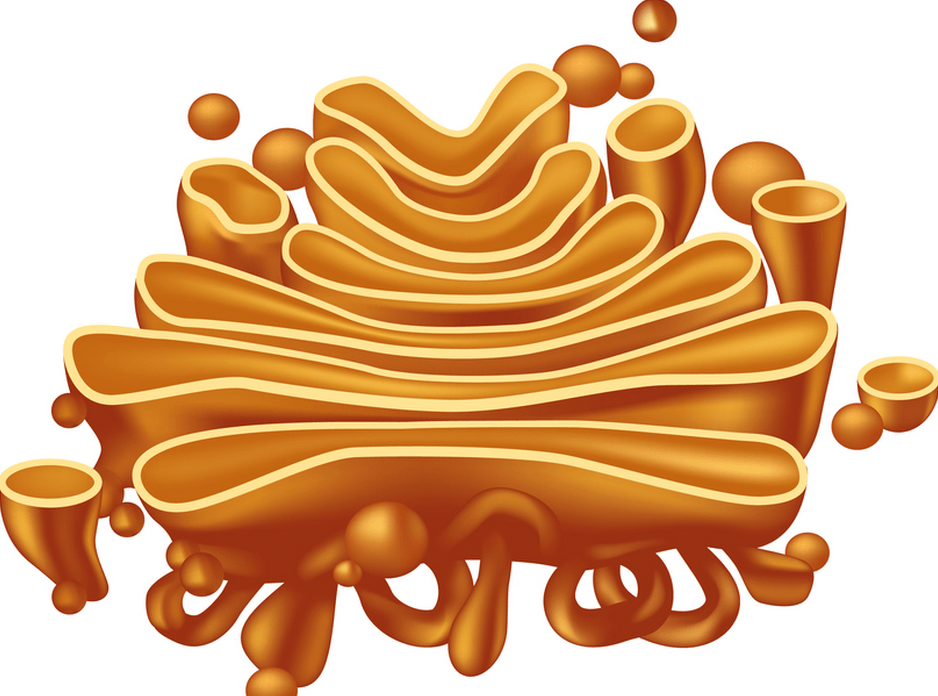
"Post office" of the cell that packages proteins and fats:

a)

ER

b)

Golgi Body

c)

Nucleus

d)

Cytoplasm

8.

What does a plant cell have that an animal cell doesn't have?

a)

Cell Membrane and Cell Wall

b)

Cell Wall and Mitochondria

c)

Cell Wall and Nucleus

d)

Cell Wall and Chloroplast

9.

What is the jelly-like substance that keeps the organelles floating?

a)

Cell Membrane

b)

Nucleus

c)

ER

d)

Cytoplasm

10.

Which organelle holds the cell together? (found in both an animal and plant cell)

a)

Cell Wall

b)

Nucleus

c)

Cell Membrane

d)

Ribosome

11.

What are the "protein-makers" of a cell?

a)

Ribosomes

b)

Mitochondria

c)

ER

d)

Golgi Body

12.
This organelle converts energy from carbohydrates.
a)
Nucleus
b)
Ribosome
c)
Mitochondria
d)
ER
13.
Where is DNA stored in a cell? 
a)
Lysosomes
b)
Golgi Complex
c)
Ribosomes
d)
Nucleus
14.
What is the fluid inside a cell called? 
a)
Endoplasimic Reticulum
b)
Orange Juice
c)
Water
d)
Cytoplasm
15.
This organelle turns the light energy into a simple sugar. 
a)
Mitochondria
b)
ER
c)
Chloroplast
d)
Nucleus
16.
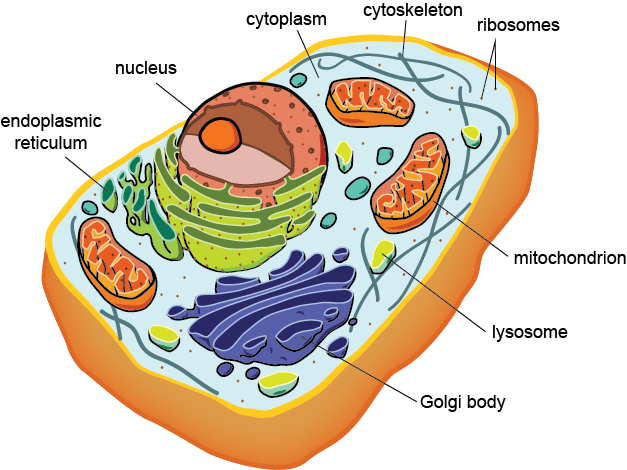
What is the role of organelle #4?
a)
convert solar energy into ATP
b)
site of photosynthesis
c)
site of protein synthesis
d)
stores materials such as water
17.
Golgi apparatus...
a)
creates energy for the cell
b)
cleans up waste
c)
sorts and packages molecules
d)
provide protection
18.
A _______ is the basic unit of life
a)
cell
b)
atom
c)
compound
d)
organ
19.
I am a protein packaging and shipping machine! Who am I?
a)
vacuole
b)
ribosome
c)
mitochondrion
d)
golgi apparatus
20.
What is found in both plant and animal cells but is much larger in plant cells?
a)
Nucleus
b)
Mitochondria
c)
Chloroplast
d)
Vacuole
21.
What organelle is called the "powerhouse" of a cell?

a)
Endoplasmic Reticulum
b)
Nucleus
c)
Mitochondria
d)
Nucleolus
22.
All cells come from___________ cells.
a)
pregnant
b)
pre-existing
c)
paternal
d)
pin size
23.
What do all of these organisms have in common?
a)
They all have uniform offspring
b)
They are all made of cells
c)
They possess the same features
d)
They have the same internal and external structures
24.
Which of the following is NOT a cell theory.
a)
All non-living things are made of cells
b)
All cells come from pre-existing cells
c)
Cells are the basic unit of structure and function of all living things
25.
Rocks are not living because
a)
they never move
b)
they aren't needed for humans
c)
they are not made of cells
d)
they don't break down
26.
Chloroplasts carry out...
a)
Phagocytocis
b)
Phylocytosis
c)
Photosynthesis
d)
Respiration
27.
This organelle is like a recycling center for the cell. It breaks down old materials. It is like a vacuum cleaner that cleans up the waste in cells.
a)
Ribosomes
b)
Lysosomes
c)
Mitochondria
d)
Chloroplasts
28.
Tiny cell structures that carry out specific functions within the cell.
a)
membranes
b)
nucleus
c)
organelles
d)
animalicules
29.
What am I?
a)
mitochondria
b)
lysosomes
c)
chloroplast
d)
endoplasmic reticulum
30.
What am I?
a)
cell wall
b)
mitochondria
c)
cytoplasm
d)
chloroplast
31.
What am I?
a)
vacuole
b)
ribosome
c)
endoplasmic reticulum
d)
golgi apparatus
32.
What am I?
a)
Nucleus
b)
Golgi Body
c)
Mitochondrion
d)
Plasma Membrane
33.
Which of the following statements is not part of the cell theory?
a)
Cells are the basic unit of structure and function in all living things.
b)
All cells are produced from other cells.
c)
Only animal cells are composed of cells.
d)
All living things are composed of cells.
34.
The invention of the microscope made it possible for people to discover and learn about
a)
Plants
b)
Skin 
c)
Animals 
d)
Cells
35.
What is one way in which all living things on Earth are alike?
a)
All living things have hair.
b)
All living things are made of cells and come from other cells.
c)
The cells of all living things have chloroplast.
d)
All living things can move. 
36.

When cells are damaged, new cells are created by cell a process called cell division. How does the cell theory support this fact?

a)

It states that all cells have a nucleus which divides.

b)

It states that all living things are made up of one or more cells.

c)

It states that cells come from previously existing cells.

d)

It states that the basic units of structure and function are cells.

37.
The ___ is the basic unit of sturucture and function of organisms
a)
atom
b)
cell
c)
matter
d)
all other answers are correct
38.
Which of the following is NOT a cell theory.
a)
All non-living things are made of cells
b)
All cells come from pre-existing cells
c)
Cells are the basic unit of structure and function of all living things
39.
Which scientist did NOT contribute to the cell theory?
a)
Anton Van Leeuwenhoek
b)

Robert Hooke
c)
Albert Einstein 
d)

Matthias Schleiden
40.
In order to sustain life, all cells must...
a)
digest nutrients and water
b)
excrete waste and fluids
c)
must be able to maintain a homeostasis environment (aka cellular respiration and regulation)
d)
All of the above
41.
How are unicellular organisms different from multicellular organisms? 
a)
There are no differences.
b)
They are made of many cells. 
c)
They are only classified as prokaryotes.
d)
They are made of only one cell. 
42.
A plant and an animal are both living things. According to the Cell Theory, what can you conclude about these two very different organisms?
a)
Plants have cells but animals do not.
b)
They are both made of one or more cells. 
c)
They both come from the same kind of cell.
d)
They both come from a non-living organism.
43.
A caterpillar hibernates in a cocoon and emerges as a butterfly.
a)
All living things adapt to their environment
b)
All living things use energy
c)
All living things respond to their environment
d)
All living things grow
44.
A baby song bird hatches from its egg with both parent songbirds watching.
a)
All living things reproduce
b)
All living things maintain homeostasis
c)
All living things use energy
d)
All living things grow
45.
A tulip opens in the morning at sunrise and closes in the evening at sunset.
a)
All living things have cells
b)
All living things use energy
c)
All living things respond to their environment
d)
All living things grow
46.
Over three years, Tim's height has increased from 5'4" to 5'11".
a)
All living things contain cells
b)
All living things maintain homeostasis
c)
All living things use energy
d)
All living things grow
47.

What does the "M" in MRSGREN stand for

a)

Movement

b)

Molecules

c)

Momentum

d)

Magma

48.

What does the "N" in MRSGREN stand for?

a)

Nutrition

b)

Nutella

c)

Nothing

d)

Nematodes

49.

What is one of the "R's" in MRSGREN?

a)

Resolution

b)

Respiration

c)

Recitation

d)

Repulsion

50.
Multicellular Organisms
a)
Made of 1 cell
b)
Made of more than 1 cell
51.
2. What does unicellular means?
a)
1. many cell
b)
2. one cell
c)
3. two cell
d)
4.more cell
52.
7. Classify the following examples (pictures) as unicellular or multicellular
a)
1. Unicellular
b)
2. Multicellular
53.
Which best explains why humans are multicellular organisms?
a)
Human cells are too small to function alone.
b)
Human cells join together to form one large cell.
c)
Humans need many cells to carry out life processes.
d)
Humans have many systems that perform the same function.
54.
Molly is reading a book in science class. She reads one sentence that says, “This organism is capable of surviving as a single cell.” Which organism is she most likely reading about?
a)
amoeba
b)
flower
c)
mushroom
d)
insect
55.
Which is the best way to classify grasshoppers?
a)
Grasshoppers are multi-celled organisms because they are made up of one cell that carries out all of their life processes.
b)
Grasshoppers are single-celled organisms because they are made up of one cell that carries out all of their life processes.
c)
Grasshoppers are single-celled organisms because they are made up of many cells that carry out all of their life processes.
d)
Grasshoppers are multi-celled organisms because they are made up of many cells that carry out all of their life processes.
56.
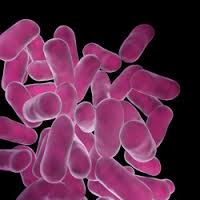
Which is a difference between frogs and bacteria?
a)
Frogs are able to control all life processes in one cell, while bacteria cannot.
b)
Frogs are single-celled organisms, while bacteria are multi-celled organisms.
c)
Frogs are multi-celled organisms, while bacteria are single-celled organisms.
d)
Frogs must rely on other single-celled organisms for survival, while bacteria are dependent only on themselves.
57.
Fungi and bacteria are both single-celled organisms. What do they most likely have in common?
a)
Both fungi and bacteria are large organisms.
b)
Both fungi and bacteria can carry out all life functions in their one cell.
c)
Both fungi and bacteria need sunlight and nutrients from the soil to be able to grow.
d)
Both fungi and bacteria are highly specialized to do only one job so they must work with other cells to obtain food.
58.

The lens or systems of lenses in a microscope that is nearest the object being viewed.

a)

light source

b)

eyepiece

c)

objectives

d)

tube

59.

Light or mirror that projects light through the diaphram

a)

stage clips

b)

light source

c)

tube

d)

arm

60.

Small platform where the specimen is mounted for examination

a)

base

b)

arm

c)

tube

d)

stage

61.

The bottom of the microscope, used for support

a)

base

b)

adjustment knob

c)

arm

d)

stage clips

62.

Animal cells can be distinguished from plant cells easily because of which of the following?

a)

Animal cells have mitochondria and plant cells do not.

b)

Plant cells have lysosomes and animal cells do not.

c)

Only plant cells have centrioles around their nucleus.

d)

Only plant cells have large central vacuoles and cell walls.

63.

Jared observes a cell in biology lab with the light microscope. The cell has the following structures: nucleus, cell wall, and chloroplast. Identify the type of cell that Jared is observing.

a)

animal

b)

plant

c)

fungus

d)

bacteria